February 6, 2012

New sincerity is a term that has been used in music, aesthetics, film criticism, poetry, literary criticism and philosophy, generally to describe art or concepts that run against prevailing modes of postmodernist irony or cynicism. ‘New Sincerity’ was used as a collective name for a loose group of alternative rock bands, centered in Austin, Texas in the years from about 1985 to 1990, who were perceived as reacting to the ironic outlook of then-prominent music movements like punk rock and New Wave.
The use of ‘New Sincerity’ in connection with these bands began with an off-handed comment by Austin punk rocker/author Jesse Sublett to his friend, local music writer Margaret Moser: ‘All those new sincerity bands, they’re crap.’
read more »
Posted in Art, Humor, Language |
Leave a Comment »
February 6, 2012


A cult following is a group of fans who are highly dedicated to a specific area of pop culture. A film, book, band, or video game, among other things, will be said to have a cult following when it has a small but very passionate fan base. A common component of cult followings is the emotional attachment fans have with the object of the cult following, often identifying themselves and other fans as members of a community.
Cult followings are also commonly associated with niche markets. Cult media are often associated with underground culture, and are considered too eccentric, bizarre, controversial or anti-establishment to be appreciated by the general public.
read more »
Posted in Art, Language, Money |
Leave a Comment »
February 6, 2012

A cult film, also commonly referred to as a cult classic, is a film that has acquired a highly devoted but specific group of fans. Often, cult movies have failed to achieve fame outside the small fanbases; however, there have been exceptions that have managed to gain fame among mainstream audiences. Many cult movies have gone on to transcend their original cult status and have become recognized as classics; others are of the ‘so bad it’s good’ variety and are destined to remain in obscurity.
Cult films often become the source of a thriving, obsessive, and elaborate subculture of fandom, hence the analogy to cults. However, not every film with a devoted fanbase is necessarily a cult film. Usually, cult films have limited but very special, noted appeal. Cult films are often known to be eccentric, often do not follow traditional standards of popular cinema and usually explore topics not considered in any way mainstream—yet there are examples that are relatively normal. Many are often considered controversial because they step outside standard narrative and technical conventions.
read more »
Posted in Art, Language, Money |
1 Comment »
February 6, 2012
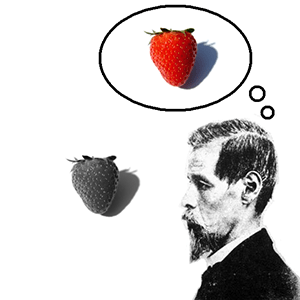
Qualia [kwah-lee-uh], singular ‘quale’ [kwah-lee], from a Latin word meaning for ‘what sort’ or ‘what kind,’ is a term used in philosophy to refer to subjective conscious experiences as ‘raw feels.’ Examples of qualia are the pain of a headache, the taste of wine, the experience of taking a recreational drug, or the perceived redness of an evening sky.
American philosopher Daniel Dennett writes that qualia is ‘an unfamiliar term for something that could not be more familiar to each of us: the ways things seem to us.’ Erwin Schrödinger, the famous physicist, had this counter-materialist take: ‘The sensation of color cannot be accounted for by the physicist’s objective picture of light-waves. Could the physiologist account for it, if he had fuller knowledge than he has of the processes in the retina and the nervous processes set up by them in the optical nerve bundles and in the brain? I do not think so.’
read more »
Posted in Language, Philosophy, Science |
1 Comment »
February 6, 2012
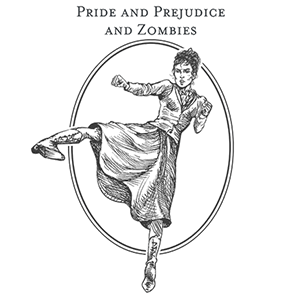
A mashup novel is a work of fiction which combines a pre-existing text, often a classic work of fiction, with a certain popular genre such as vampire or zombie narratives. ‘Pride and Prejudice and Zombies,’ which combines Jane Austen’s classic novel ‘Pride and Prejudice’ with elements of modern zombie fiction, is arguably the first, and certainly one of the most famous and successful works in the genre, and has been credited with spawning a rash of imitations. The term ‘Mashup’ was borrowed from the world of computers and music. Mashup books are seen as distinct from parody novels like ‘Bored of the Rings,’ and parallel novels like ‘The Wind Done Gone’ or ‘Wicked’ since they do not merely make fun of the original text, or tell an alternative version of it, but also introduce the themes and characteristics of a wholly different genre.
While most works in this genre (or cross-genre trend) rely on fictional texts as their basis, other works like ‘Abraham Lincoln, Vampire Hunter’ superimpose the popular genres over historical figures and events. A more recent phenomenon within the genre is the combination of more than two original works, or genres, as in the case of ‘Robinson Crusoe (The Eerie Adventures of the Lycanthrope),’ which combines the original novel with elements borrowed from the works of H.P. Lovecraft as well as the popular genre of werewolf fiction, and is accordingly attributed to three authors – Daniel Defoe, H.P. Lovecraft, and Peter Clines.
Posted in Art, Humor, Language |
Leave a Comment »
February 4, 2012

A gentlemen’s agreement is an informal agreement between two or more parties. It is typically oral, though may be written, or simply understood as part of an unspoken agreement by convention or through mutually beneficial etiquette.
The essence of a gentlemen’s agreement is that it relies upon the honor of the parties for its fulfillment, rather than being in any way enforceable. It is, therefore, distinct from a legal agreement or contract, which can be enforced if necessary. A variation on the gentlemen’s agreement is the gentlemen’s bet, wherein there is nothing to win or lose through the bet, other than the honor of winning and shame of losing.
read more »
Posted in Language, Money, Politics |
Leave a Comment »
February 2, 2012

Goldbricking, in today’s terms, generally refers to staff who use their work internet access for personal reasons while maintaining the appearance of working, which can lead to inefficiency. The term originates from the confidence trick of applying a gold coating to a brick of worthless metal. Some employees do two non-work activities at once, a practice known as multishirking. In modern usage, the practice is also known as cyberslacking, cyberloafing or cyberbludging.
Instances of goldbricking have increased markedly since broadband Internet connections became commonplace in workplaces. Before that the slow speed of dial-up connections meant that the practice was rarely worthwhile. Many firms employ surveillance software to track employees’ Internet activity in an effort to limit liability and improve productivity. Other methods used to reduce goldbricking include installation of proxy servers to prevent programs from accessing resources like Internet Relay Chat, AOL Instant Messenger, or some online gambling services, strict disciplinary measures for employees found goldbricking, and carrot and stick measures like providing free or subsidized Internet access for employees outside of working hours.
read more »
Posted in Language, Money, Technology |
Leave a Comment »
February 2, 2012
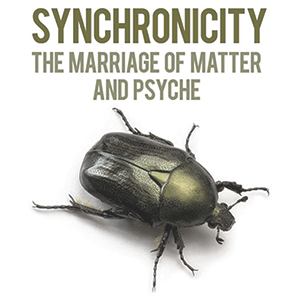
The Celestine Prophecy is a 1993 novel by James Redfield that discusses various psychological and spiritual ideas which are rooted in many ancient Eastern Traditions and New Age spirituality. The main character of the novel undertakes a journey to find and understand a series of nine spiritual insights on an ancient manuscript in Peru. The book is a first-person narrative of the narrator’s spiritual awakening as he goes through a transitional period of his life and begins to notice instances of synchronicity, which is the realization that coincidences may have deep meaning. Redfield has acknowledged that the work of Dr. Eric Berne, the developer of Transactional Analysis, and his 1964 bestseller ‘Games People Play’ as a major influence on his work. Specifically, the ‘games’ which Berne refers in his theories are tools used in an individual’s quest for energetic independence.
The novel has received some criticism, mostly from the literary community, who point out that the plot of the story is not well developed and serves only as a delivery tool for the author’s ideas about spirituality. Redfield has admitted that, even though he considers the book to be a novel, his intention was to write a story in the shape of a parable, a story meant to illustrate a point or teach a lesson. Critics point to Redfield’s heavy usage of subjective validation (a cognitive bias by which a person will consider a piece of information to be correct if it has any personal significance to them) and reification (making something real). Another point of criticism has been directed at the book’s attempt to explain important questions about life and human existence in an overly simplified fashion.
Posted in Language, Philosophy |
Leave a Comment »
February 2, 2012

‘Games People Play: The Psychology of Human Relationships’ is a 1964 bestselling book by psychiatrist Eric Berne. Since its publication it has sold more than five million copies. The book describes both functional and dysfunctional social interactions.
In the first half of the book, Berne introduces transactional analysis as a way of interpreting social interactions. He describes three roles or ego states, known as the Parent, the Adult, and the Child, and postulates that many negative behaviors can be traced to switching or confusion of these roles. The book uses casual, often humorous phrases such as ‘See What You Made Me Do,’ ‘Why Don’t You — Yes But,’ and ‘Ain’t It Awful’ as a way of briefly describing each game. In reality, the ‘winner’ of a mind game is the person that returns to the Adult ego-state first.
read more »
Posted in Games, Health, Language |
1 Comment »
January 31, 2012

‘It girl‘ is a term for a young woman who possesses the quality ‘It,’ absolute attraction.’ The early usage of the concept is seen in a story by Rudyard Kipling: ‘It isn’t beauty, so to speak, nor good talk necessarily. It’s just ‘It.” British writer Elinor Glyn lectured: ‘With ‘It’ you win all men if you are a woman and all women if you are a man. ‘It’ can be a quality of the mind as well as a physical attraction.’
The expression reached global attention in 1927, with the film ‘It,’ starring Clara Bow. While ‘it girls’ of today are commonly young females in the worlds of fashion or show-business, the original concept focused on personality. Kipling’s ‘Mrs. Bathurst’ was a middle-aged widow, and Glyn significantly kept both Benito Mussolini and the doorman at the Ambassador hotel on her ‘It men’ list.
read more »
Posted in Language, Love, Sex |
1 Comment »
January 31, 2012

15 minutes of fame is short-lived, often ephemeral, media publicity or celebrity of an individual or phenomenon. The expression was coined by Andy Warhol, who said in 1968 that ‘In the future, everyone will be world-famous for 15 minutes.’ The phenomenon is often used in reference to figures in the entertainment industry or other areas of popular culture, such as reality TV and YouTube. It is believed that the statement was an adaption of a theory of Marshall McLuhan, explaining the differences of media, where TV differs much from other media using contestants.
The expression is a paraphrase of a line in Warhol’s catalog for a 1968 exhibit at the Moderna Museet in Stockholm. In 1979 Warhol reiterated his claim, ‘…my prediction from the sixties finally came true: In the future everyone will be famous for 15 minutes.’ Becoming bored with continually being asked about this particular statement, Warhol attempted to confuse interviewers by changing the statement variously to ‘In the future 15 people will be famous’ and ‘In 15 minutes everybody will be famous.’
read more »
Posted in Art, Humor, Language |
Leave a Comment »
January 30, 2012

The Yiddish Policemen’s Union is a 2007 novel by American author Michael Chabon. The novel is a detective story set in an alternative history version of the present day, based on the premise that during World War II, a temporary settlement for Jewish refugees was established in Sitka, Alaska, in 1941, and that the fledgling State of Israel was destroyed in 1948.
The novel is set in Sitka, which it depicts as a large, Yiddish-speaking metropolis. As a result, two million Jews are killed in the Holocaust, instead of the six million in reality.
read more »
Posted in Language, Philosophy, War |
Leave a Comment »


 The Daily Omnivore