February 2, 2012

Goldbricking, in today’s terms, generally refers to staff who use their work internet access for personal reasons while maintaining the appearance of working, which can lead to inefficiency. The term originates from the confidence trick of applying a gold coating to a brick of worthless metal. Some employees do two non-work activities at once, a practice known as multishirking. In modern usage, the practice is also known as cyberslacking, cyberloafing or cyberbludging.
Instances of goldbricking have increased markedly since broadband Internet connections became commonplace in workplaces. Before that the slow speed of dial-up connections meant that the practice was rarely worthwhile. Many firms employ surveillance software to track employees’ Internet activity in an effort to limit liability and improve productivity. Other methods used to reduce goldbricking include installation of proxy servers to prevent programs from accessing resources like Internet Relay Chat, AOL Instant Messenger, or some online gambling services, strict disciplinary measures for employees found goldbricking, and carrot and stick measures like providing free or subsidized Internet access for employees outside of working hours.
read more »
Posted in Language, Money, Technology |
Leave a Comment »
February 2, 2012

The Celestine Prophecy is a 1993 novel by James Redfield that discusses various psychological and spiritual ideas which are rooted in many ancient Eastern Traditions and New Age spirituality. The main character of the novel undertakes a journey to find and understand a series of nine spiritual insights on an ancient manuscript in Peru. The book is a first-person narrative of the narrator’s spiritual awakening as he goes through a transitional period of his life and begins to notice instances of synchronicity, which is the realization that coincidences may have deep meaning. Redfield has acknowledged that the work of Dr. Eric Berne, the developer of Transactional Analysis, and his 1964 bestseller ‘Games People Play’ as a major influence on his work. Specifically, the ‘games’ which Berne refers in his theories are tools used in an individual’s quest for energetic independence.
The novel has received some criticism, mostly from the literary community, who point out that the plot of the story is not well developed and serves only as a delivery tool for the author’s ideas about spirituality. Redfield has admitted that, even though he considers the book to be a novel, his intention was to write a story in the shape of a parable, a story meant to illustrate a point or teach a lesson. Critics point to Redfield’s heavy usage of subjective validation (a cognitive bias by which a person will consider a piece of information to be correct if it has any personal significance to them) and reification (making something real). Another point of criticism has been directed at the book’s attempt to explain important questions about life and human existence in an overly simplified fashion.
Posted in Language, Philosophy |
Leave a Comment »
February 2, 2012

‘Games People Play: The Psychology of Human Relationships’ is a 1964 bestselling book by psychiatrist Eric Berne. Since its publication it has sold more than five million copies. The book describes both functional and dysfunctional social interactions.
In the first half of the book, Berne introduces transactional analysis as a way of interpreting social interactions. He describes three roles or ego states, known as the Parent, the Adult, and the Child, and postulates that many negative behaviors can be traced to switching or confusion of these roles. The book uses casual, often humorous phrases such as ‘See What You Made Me Do,’ ‘Why Don’t You — Yes But,’ and ‘Ain’t It Awful’ as a way of briefly describing each game. In reality, the ‘winner’ of a mind game is the person that returns to the Adult ego-state first.
read more »
Posted in Games, Health, Language |
1 Comment »
January 31, 2012

‘It girl‘ is a term for a young woman who possesses the quality ‘It,’ absolute attraction.’ The early usage of the concept is seen in a story by Rudyard Kipling: ‘It isn’t beauty, so to speak, nor good talk necessarily. It’s just ‘It.” British writer Elinor Glyn lectured: ‘With ‘It’ you win all men if you are a woman and all women if you are a man. ‘It’ can be a quality of the mind as well as a physical attraction.’
The expression reached global attention in 1927, with the film ‘It,’ starring Clara Bow. While ‘it girls’ of today are commonly young females in the worlds of fashion or show-business, the original concept focused on personality. Kipling’s ‘Mrs. Bathurst’ was a middle-aged widow, and Glyn significantly kept both Benito Mussolini and the doorman at the Ambassador hotel on her ‘It men’ list.
read more »
Posted in Language, Love, Sex |
1 Comment »
January 31, 2012

15 minutes of fame is short-lived, often ephemeral, media publicity or celebrity of an individual or phenomenon. The expression was coined by Andy Warhol, who said in 1968 that ‘In the future, everyone will be world-famous for 15 minutes.’ The phenomenon is often used in reference to figures in the entertainment industry or other areas of popular culture, such as reality TV and YouTube. It is believed that the statement was an adaption of a theory of Marshall McLuhan, explaining the differences of media, where TV differs much from other media using contestants.
The expression is a paraphrase of a line in Warhol’s catalog for a 1968 exhibit at the Moderna Museet in Stockholm. In 1979 Warhol reiterated his claim, ‘…my prediction from the sixties finally came true: In the future everyone will be famous for 15 minutes.’ Becoming bored with continually being asked about this particular statement, Warhol attempted to confuse interviewers by changing the statement variously to ‘In the future 15 people will be famous’ and ‘In 15 minutes everybody will be famous.’
read more »
Posted in Art, Humor, Language |
Leave a Comment »
January 30, 2012

The Yiddish Policemen’s Union is a 2007 novel by American author Michael Chabon. The novel is a detective story set in an alternative history version of the present day, based on the premise that during World War II, a temporary settlement for Jewish refugees was established in Sitka, Alaska, in 1941, and that the fledgling State of Israel was destroyed in 1948.
The novel is set in Sitka, which it depicts as a large, Yiddish-speaking metropolis. As a result, two million Jews are killed in the Holocaust, instead of the six million in reality.
read more »
Posted in Language, Philosophy, War |
Leave a Comment »
January 30, 2012

A maven [mey-vuhn] is a trusted expert in a particular field, who seeks to pass knowledge on to others. The word maven comes from Hebrew, via Yiddish, and means one who understands, based on an accumulation of knowledge. The Hebrew word ‘mevin’ (‘one who understands’) relates to the word ‘binah,’ which denotes understanding or wisdom in general.
It was first recorded in English around 1952, and popularized in the United States in the 1960s by a series of commercials created by Martin Solow for Vita Herring, featuring The Beloved Herring Maven. In network theory and sociology, a maven is someone who has a disproportionate influence on other members of the network. The role of mavens in propagating knowledge and preferences has been established in various domains, from politics to social trends.
Posted in Language, Money, Science |
Leave a Comment »
January 30, 2012
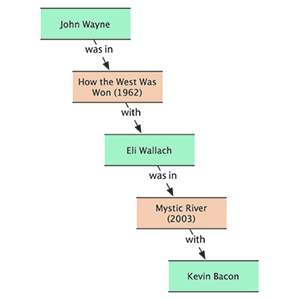
Connectors are said by author Malcolm Gladwell to be people in a community who know large numbers of people and who are in the habit of making introductions. A connector is essentially the social equivalent of a computer network hub. Connectors usually know people across an array of social, cultural, professional, and economic circles, and make a habit of introducing people who work or live in different circles. Although connectors are rare—only one in several thousand people might be thought of as a true connector they are, like mavens (experts) and salesmen, very important in the healthy function of civil society and business. Connectors are also important in trendsetting.
Malcolm Gladwell popularized the term connector in his 2000 book ‘The Tipping Point.’ Paul Revere, Roger Horchow, Ahmed Ibrahim, and Lois Weisberg are notable connectors. Gladwell also suggests that mavens may act most effectively when in collaboration with connectors – i.e., those people who have a wide network of casual acquaintances by whom they are trusted, often a network that crosses many social boundaries and groups. Connectors can thus easily and widely distribute the advice or insights of a maven.
Posted in Language, Science |
Leave a Comment »
January 26, 2012

Dr. K. Anders Ericsson is a Swedish psychologist and Professor of Psychology at Florida State University who is widely recognized as one of the world’s leading theoretical and experimental researchers on expertise. He is the co-editor of ‘The Cambridge Handbook of Expertise and Expert Performance,’ a volume released in 2006.
Dr. Ericsson’s research with Herbert Simon on verbal reports of thinking is summarized in a book ‘Protocol Analysis: Verbal Reports as Data,’ which was revised in 1993. With Bill Chase he developed the Theory of Skilled Memory based on detailed analyses of acquired exceptional memory performance. Currently he studies the cognitive structure of expert performance in domains such as music, chess and sports, and how expert performers acquire their superior performance by extended deliberate practice.
Posted in Language, Science |
Leave a Comment »
January 25, 2012

Culturomics is a form of computational lexicology that studies human behavior and cultural trends through the analysis of digitized texts. Researchers data mine large digital archives to investigate cultural phenomena reflected in language and word usage. The term is an American neologism first described in a 2010 ‘Science’ article called ‘Quantitative Analysis of Culture Using Millions of Digitized Books,’ co-authored by Harvard researchers Jean-Baptiste Michel and Erez Lieberman Aiden. Michel and Aiden helped create the Google Labs project Google Ngram Viewer which uses n-gram’s to analyze the Google Book digital library for cultural patterns in language use over time.
In another study called ‘Culturnomics 2.0,’ Kalev H. Leetaru examined news archives including print and broadcast media (television and radio transcripts) for words that imparted tone or ‘mood’ as well as geographic data. The research was able to retroactively predict the 2011 Arab Spring and successfully estimate the final location of Osama Bin Laden to within 124 miles.
Posted in Language, Science, Technology |
Leave a Comment »
January 24, 2012

James Surowiecki [soor-oh-wik-ee] (b. 1967) is an American journalist. He is a staff writer at ‘The New Yorker,’ where he writes a regular column on business and finance. He was born in Connecticut but grew up in Puerto Rico. He moved back to Connecticut for high school. In 1988 he graduated from the University of North Carolina. He pursued Ph.D. studies in American History on a Mellon Fellowship at Yale University before becoming a financial journalist. He currently lives in Brooklyn and is married to ‘Slate’ culture editor Meghan O’Rourke. He got his start on the Internet when he was hired from graduate school by ‘Motley Fool’ co-founder David Gardner.
In 2002, Surowiecki edited an anthology, ‘Best Business Crime Writing of the Year,’ a collection of articles from different business news sources that chronicle the fall from grace of various CEOs. In 2004, he published ‘The Wisdom of Crowds,’ in which he argued that in some circumstances, large groups exhibit more intelligence than smaller, more elite groups, and that collective intelligence shapes business, economies, societies and nations.
Posted in Language, Money |
Leave a Comment »
January 19, 2012

Astrochicken is the name given to a thought experiment expounded by theoretical physicist Freeman Dyson. In his book ‘Disturbing the Universe’ (1979), Dyson contemplated how humanity could build a small, self-replicating automaton that could explore space more efficiently than a manned craft could. He attributed the idea to John von Neumann, based on a lecture von Neumann gave in 1948 entitled ‘The General and Logical Theory of Automata.’ Dyson expanded on von Neumann’s automata theories and added a biological component to them.
Astrochicken, Dyson explained, would be a one-kilogram spacecraft unlike any before it. It would be a creation of the intersection of biology, artificial intelligence and modern microelectronics—a blend of organic and electronic components. Astrochicken would be launched by a conventional spacecraft, like an egg being laid into space.
read more »
Posted in Humor, Language, Technology |
Leave a Comment »



