January 30, 2012

A maven [mey-vuhn] is a trusted expert in a particular field, who seeks to pass knowledge on to others. The word maven comes from Hebrew, via Yiddish, and means one who understands, based on an accumulation of knowledge. The Hebrew word ‘mevin’ (‘one who understands’) relates to the word ‘binah,’ which denotes understanding or wisdom in general.
It was first recorded in English around 1952, and popularized in the United States in the 1960s by a series of commercials created by Martin Solow for Vita Herring, featuring The Beloved Herring Maven. In network theory and sociology, a maven is someone who has a disproportionate influence on other members of the network. The role of mavens in propagating knowledge and preferences has been established in various domains, from politics to social trends.
Posted in Language, Money, Science |
Leave a Comment »
January 30, 2012
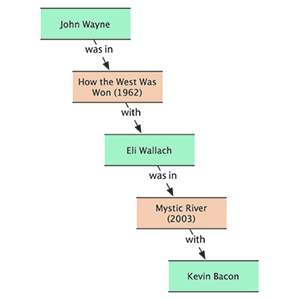
Connectors are said by author Malcolm Gladwell to be people in a community who know large numbers of people and who are in the habit of making introductions. A connector is essentially the social equivalent of a computer network hub. Connectors usually know people across an array of social, cultural, professional, and economic circles, and make a habit of introducing people who work or live in different circles. Although connectors are rare—only one in several thousand people might be thought of as a true connector they are, like mavens (experts) and salesmen, very important in the healthy function of civil society and business. Connectors are also important in trendsetting.
Malcolm Gladwell popularized the term connector in his 2000 book ‘The Tipping Point.’ Paul Revere, Roger Horchow, Ahmed Ibrahim, and Lois Weisberg are notable connectors. Gladwell also suggests that mavens may act most effectively when in collaboration with connectors – i.e., those people who have a wide network of casual acquaintances by whom they are trusted, often a network that crosses many social boundaries and groups. Connectors can thus easily and widely distribute the advice or insights of a maven.
Posted in Language, Science |
Leave a Comment »
January 26, 2012

Dr. K. Anders Ericsson is a Swedish psychologist and Professor of Psychology at Florida State University who is widely recognized as one of the world’s leading theoretical and experimental researchers on expertise. He is the co-editor of ‘The Cambridge Handbook of Expertise and Expert Performance,’ a volume released in 2006.
Dr. Ericsson’s research with Herbert Simon on verbal reports of thinking is summarized in a book ‘Protocol Analysis: Verbal Reports as Data,’ which was revised in 1993. With Bill Chase he developed the Theory of Skilled Memory based on detailed analyses of acquired exceptional memory performance. Currently he studies the cognitive structure of expert performance in domains such as music, chess and sports, and how expert performers acquire their superior performance by extended deliberate practice.
Posted in Language, Science |
Leave a Comment »
January 25, 2012

Culturomics is a form of computational lexicology that studies human behavior and cultural trends through the analysis of digitized texts. Researchers data mine large digital archives to investigate cultural phenomena reflected in language and word usage. The term is an American neologism first described in a 2010 ‘Science’ article called ‘Quantitative Analysis of Culture Using Millions of Digitized Books,’ co-authored by Harvard researchers Jean-Baptiste Michel and Erez Lieberman Aiden. Michel and Aiden helped create the Google Labs project Google Ngram Viewer which uses n-gram’s to analyze the Google Book digital library for cultural patterns in language use over time.
In another study called ‘Culturnomics 2.0,’ Kalev H. Leetaru examined news archives including print and broadcast media (television and radio transcripts) for words that imparted tone or ‘mood’ as well as geographic data. The research was able to retroactively predict the 2011 Arab Spring and successfully estimate the final location of Osama Bin Laden to within 124 miles.
Posted in Language, Science, Technology |
Leave a Comment »
January 24, 2012

James Surowiecki [soor-oh-wik-ee] (b. 1967) is an American journalist. He is a staff writer at ‘The New Yorker,’ where he writes a regular column on business and finance. He was born in Connecticut but grew up in Puerto Rico. He moved back to Connecticut for high school. In 1988 he graduated from the University of North Carolina. He pursued Ph.D. studies in American History on a Mellon Fellowship at Yale University before becoming a financial journalist. He currently lives in Brooklyn and is married to ‘Slate’ culture editor Meghan O’Rourke. He got his start on the Internet when he was hired from graduate school by ‘Motley Fool’ co-founder David Gardner.
In 2002, Surowiecki edited an anthology, ‘Best Business Crime Writing of the Year,’ a collection of articles from different business news sources that chronicle the fall from grace of various CEOs. In 2004, he published ‘The Wisdom of Crowds,’ in which he argued that in some circumstances, large groups exhibit more intelligence than smaller, more elite groups, and that collective intelligence shapes business, economies, societies and nations.
Posted in Language, Money |
Leave a Comment »
January 19, 2012

Astrochicken is the name given to a thought experiment expounded by theoretical physicist Freeman Dyson. In his book ‘Disturbing the Universe’ (1979), Dyson contemplated how humanity could build a small, self-replicating automaton that could explore space more efficiently than a manned craft could. He attributed the idea to John von Neumann, based on a lecture von Neumann gave in 1948 entitled ‘The General and Logical Theory of Automata.’ Dyson expanded on von Neumann’s automata theories and added a biological component to them.
Astrochicken, Dyson explained, would be a one-kilogram spacecraft unlike any before it. It would be a creation of the intersection of biology, artificial intelligence and modern microelectronics—a blend of organic and electronic components. Astrochicken would be launched by a conventional spacecraft, like an egg being laid into space.
read more »
Posted in Humor, Language, Technology |
Leave a Comment »
January 19, 2012


Au jus [oh joos] is French for ‘with [its own] juice.’ In American cuisine, the term is mostly used to refer to a light sauce for beef recipes, which may be served with the food or placed on the side for dipping. In French cuisine, jus is a natural way to enhance the flavor of dishes, mainly chicken, veal and lamb. ‘Jus’ means the natural juices given off by the food. To prepare a natural jus, the cook may simply skim off the fat from the juices left after cooking and bring the remaining meat stock and water to a boil.
Often prepared in the United States is a seasoned sauce with several additional flavorings. American recipes au jus often use soy sauce, Worcestershire sauce, salt, pepper, white or brown sugar, garlic, onion, or other ingredients to make something more like a gravy. So-called jus is sometimes prepared separately, rather than being produced naturally by the food being cooked. An example could be a beef jus made by reducing beef stock to a concentrated form, to accompany a meat dish.
Posted in Food, Language, World |
1 Comment »
January 17, 2012
The word ‘bolide‘ [boh-lahyd] comes from the Greek ‘bolis,’ which can mean ‘missile’ or ‘to flash.’ The International Astronomical Union (IAU) has no official definition of ‘bolide,’ and generally considers the term synonymous with ‘fireball,’ a brighter-than-usual meteor. The IAU defines a fireball as ‘a meteor brighter than any of the planets’ (magnitude −4 or greater). Astronomers tend to use ‘bolide’ to identify an exceptionally bright fireball (magnitude −14 or brighter), particularly one that explodes (sometimes called a detonating fireball).
It may also be used to mean a fireball which creates audible sounds. If the magnitude of a bolide reaches −17 or brighter it is known as a ‘superbolide.’ Geologists use the term ‘bolide’ more often than astronomers do: in geology it indicates a very large impactor. For example, the U.S. Geological Survey uses the term to mean a generic large crater-forming projectile ‘to imply that we do not know the precise nature of the impacting body … whether it is a rocky or metallic asteroid, or an icy comet, for example.’
Posted in Language, Science |
Leave a Comment »
January 16, 2012


‘Slaughterhouse-Five, or The Children’s Crusade: A Duty-Dance with Death’ is a 1969 satirical novel by Kurt Vonnegut about World War II experiences and journeys through time of a soldier called Billy Pilgrim.
The work is also known under the lengthy title: ‘Slaughterhouse-Five, or The Children’s Crusade: A Duty Dance with Death, by Kurt Vonnegut, a Fourth-Generation German-American Now Living in Easy Circumstances on Cape Cod [and Smoking Too Much], Who, as an American Infantry Scout Hors de Combat, as a Prisoner of War, Witnessed the Fire Bombing of Dresden, Germany, ‘The Florence of the Elbe,’ a Long Time Ago, and Survived to Tell the Tale. This Is a Novel Somewhat in the Telegraphic Schizophrenic Manner of Tales of the Planet Tralfamadore, Where the Flying Saucers Come From. Peace.’
read more »
Posted in Humor, Language, War |
Leave a Comment »
January 15, 2012

Plutocracy [ploo-tok-ruh-see] is rule by the wealthy, or power provided by wealth. The combination of both plutocracy and oligarchy is called plutarchy. The word ‘plutocracy’ is derived from the Ancient Greek root ‘ploutos,’ meaning ‘wealth’ and ‘kratos,’ meaning ‘to rule’ or ‘to govern.’
The term is generally used to describe these two distinct concepts: one of a historical nature and one of a modern political nature. The former indicates the political control of the state by an oligarchy of the wealthy. Examples of such plutocracies include the Roman Republic, some city-states in Ancient Greece, the civilization of Carthage, the Italian city-states/merchant republics of Venice, Florence, Genoa, and pre-WWII Empire of Japan zaibatsus.
read more »
Posted in Language, Money, Politics |
1 Comment »
January 15, 2012

Kode9 (born Steve Goodman) is a London-based electronic music artist, DJ, and owner of the Hyperdub record label. MC, The Spaceape, is a frequent collaborator. Initially inspired by what he calls the ‘hardcore continuum,’ he also draws on dub reggae, and was one of the founding members of the early dubstep scene (which he views as a continuation of developments originally stemming from UK Hardcore).
He has released two full-length albums: ‘Memories of the Future’ and ‘Black Sun’ (both featuring the Spaceape). Kode9 has a Ph.D. in philosophy from the University of Warwick. In 2009, MIT Press published his book, ‘Sonic Warfare: Sound, Affect, and the Ecology of Fear,’ exploring the uses of acoustic force and how sound can be deployed to set moods of dread and fear, how sound can be used as torture, as a weapon and as a threat.’
Posted in Art, Language, Technology |
Leave a Comment »
January 12, 2012


Generation X, commonly abbreviated to Gen X, is the generation born after the baby boom ended. While there is no universally agreed upon time frame, the term generally includes people born from the early 1960s through the early 1980s, usually no later than 1981 or 1982. The term had also been used in different times and places for various subcultures or countercultures since the 1950s.
The term Generation X was coined by the Magnum photographer Robert Capa in the early 1950s. He would use it later as a title for a photo-essay about young men and women growing up immediately after the Second World War. The project first appeared in ‘Picture Post’ (UK) and ‘Holiday’ (US) in 1953. Describing his intention, Capa said ‘We named this unknown generation, The Generation X, and even in our first enthusiasm we realized that we had something far bigger than our talents and pockets could cope with.’
read more »
Posted in Language, Politics, World |
Leave a Comment »


 The Daily Omnivore