January 2, 2012

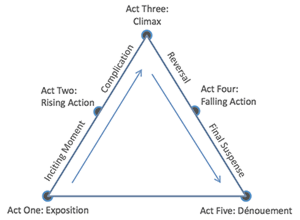
Dramatic structure is the structure of a dramatic work such as a play or film. Many scholars have analyzed dramatic structure, beginning with Aristotle in his ‘Poetics’ (c. 335 BCE). In ‘Poetics,’ Aristotle put forth the idea that ‘A whole is what has a beginning and middle and end.’ This three-part view of a plot structure (with a beginning, middle, and end – technically, the protasis, epitasis, and catastrophe) prevailed until the Roman drama critic Horace advocated a 5-act structure in his ‘Ars Poetica.’ After falling into disuse, renaissance dramatists revived the use of the 5-act structure.
Gustav Freytag’s analysis of ancient Greek and Shakespearean drama is canonical. Although Freytag’s description of dramatic structure is based on five-act plays, it can be applied (sometimes in a modified manner) to short stories and novels as well. Nonetheless it does not always translate well, especially in modern plays such as Alfred Uhry’s ‘Driving Miss Daisy,’ which is actually divided into 25 scenes without concrete acts.
read more »
Posted in Art, Language |
Leave a Comment »
January 2, 2012
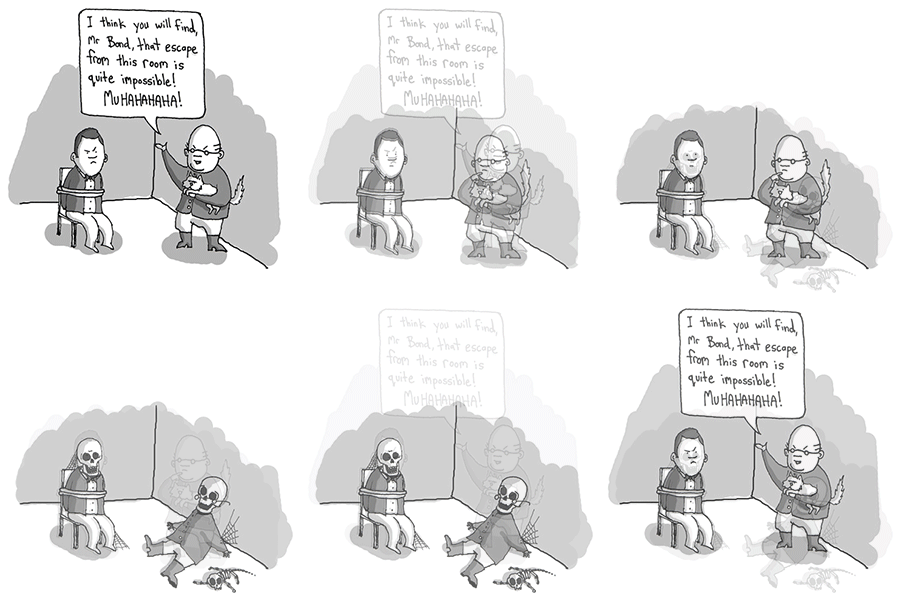
A deathtrap is a literary and dramatic plot device in which a villain, who has captured the hero or another sympathetic character, attempts to use an elaborate and usually sadistic method of murdering him/her. It is often used as a means to create dramatic tension in the story and to have the villain reveal important information to the hero, confident that the hero will shortly not be able to use it. It may also be a means to show the hero’s resourcefulness in escaping, or the writer’s ingenuity at devising a last-minute rescue or deus ex machina.
This plot device is generally believed to have been popularized by movie serials and 19th century theatrical melodramas. A well known example is the cliché of the moustache-twirling villain leaving the heroine tied to railroad tracks. Its use in the James Bond film series and superhero stories is well known.
read more »
Posted in Death, Humor, Language |
1 Comment »
January 2, 2012

When the presentation of information in fiction becomes wordy, it is sometimes referred to as an ‘information dump.’ It is expressed by characters in dialogue or monologue and sometimes referred to as ‘idiot lectures.’ They are sometimes placed at the beginning of stories as a means of establishing the premise of the plot.
They also appear in science fiction, but it is considered poor writing when characters explain things to each other that they would already know. For example, if you need to call someone, you don’t stop to explain to a colleague that you are now going to use a device controlled with digital circuits to use radio waves to transmit your voice. Why? Because your contemporaries already know how cellular radio telephones work.
read more »
Posted in Art, Humor, Language |
Leave a Comment »
January 2, 2012

Show, don’t tell is an admonition to fiction writers to write in a manner that allows the reader to experience the story through a character’s action, words, thoughts, senses, and feelings rather than through the narrator’s exposition, summarization, and description. The advice is not to be heavy-handed, or to drown the reader in adjectives, but to allow issues to emerge from the text instead.
The advice applies equally to fiction and nonfiction, but the approach should not be applied to all incidents in the story. According to author James Scott Bell, ‘Sometimes a writer tells as a shortcut, to move quickly to the meaty part of the story or scene. Showing is essentially about making scenes vivid. If you try to do it constantly, the parts that are supposed to stand out won’t, and your readers will get exhausted.’
read more »
Posted in Art, Language |
Leave a Comment »
December 31, 2011

A welfare queen is a pejorative phrase used in the United States to describe people who are accused of collecting excessive welfare payments through fraud or manipulation. Reporting on welfare fraud began during the early 1960s, appearing in general interest magazines such as ‘Readers Digest.’
The term entered the American lexicon during Ronald Reagan’s 1976 presidential campaign when he described a ‘welfare queen’ from Chicago’s South Side. Since then, it has become a stigmatizing label placed on recidivist poor mothers, with studies showing that it often carries gendered and racial connotations. Although American women can no longer stay on welfare indefinitely due to the Personal Responsibility and Work Opportunity Act, the term continues to shape American dialogue on poverty.
read more »
Posted in Language, Money, Politics |
Leave a Comment »
December 31, 2011


‘The White Negro: Superficial Reflections on the Hipster’ is a 9,000 word essay by Norman Mailer that recorded a number of young white people in the 1920s, 1930s and 1940s who liked jazz and swing music so much that they adopted black culture as their own.
It was first published in the Summer 1957 issue of ‘Dissent,’ before being published separately by ‘City Lights.’ The so-called white negroes adopted black clothing styles, black jive language, and black music. They mainly associated with black people, distancing themselves from white society.
read more »
Posted in Language, Politics |
1 Comment »
December 29, 2011
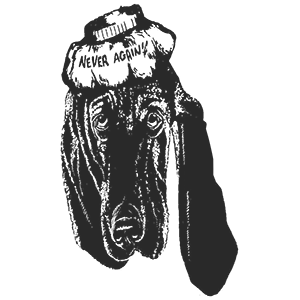
Hair of the dog is a colloquial expression in the English language predominantly used to refer to alcohol that is consumed with the aim of lessening the effects of a hangover. The expression originally referred to a method of treatment of a rabid dog bite by placing hair from the dog in the wound. The use of the phrase as a metaphor for a hangover treatment dates back at least to the time of Shakespeare. It is possible that the phrase was used to justify an existing practice, ‘similia similibus curantur’ (Latin: ‘like cures like’), which dates back to ancient Greece.
Similarly, in the 1930’s cocktails known as Corpse Revivers were served by hotel staff to guests ailing from too much drink.
read more »
Posted in Drugs, Health, Language |
Leave a Comment »
December 24, 2011


Word Lens is an augmented reality translation application for the iPhone from Quest Visual. It uses the built-in phone camera to identify text, such as a sign or a menu, in one language and have the words shown translated into another language. The words are displayed in the original context, on the original background, without connection to the internet. When it was released in 2010 only English and Spanish were supported. Word Lens is best used on clearly printed text and was not designed to translate handwritten or stylized fonts.
This application was created to help tourists understand signs and menus. The application was not designed to read books, but journalist Ben Rooney managed to understand a page from ‘Harry Potter y el Prisionero de Azkaban.’ The Google Goggles application for Android and iPhone also has the capability to translate text or identify objects in an image, but it requires users to take a picture with their phones, and an active internet connection. Word Lens does it on the fly, meaning it’s interpreting frames in video, almost in real time.
Posted in Language, Technology, World |
Leave a Comment »
December 23, 2011


The Schreiber theory is a writer-centered approach to film criticism which holds that the principal author of a film is generally the screenwriter rather than the director. The term was coined by David Kipen, Director of Literature at the US National Endowment for the Arts. In his 2006 book ‘The Schreiber Theory: A Radical Rewrite of American Film History,’ Kipen argues that the influential 1950s-era Auteur theory has wrongly skewed analysis towards a director-centered view of film. In contrast, Kipen believes that the screenwriter has a greater influence on the quality of a finished work and that knowing who wrote a film is ‘the surest predictor’ of how good it will be.
Kipen acknowledges that his writer-centered approach is not new, and pays tribute to earlier critics of Auteur theory such as Pauline Kael and Richard Corliss. He believes that the Auteurist approach remains dominant, however, and that films have suffered as a result of the screenwriter’s role being undervalued. Kipen refers to his book as a ‘manifesto’ and in an interview with the magazine ‘SF360’ stated that he wished to use Schreiber theory as ‘a lever to change the way people think about screenwriting, and movies in general.’ In seeking a name for his theory, Kipen chose the Yiddish word for writer – ‘schreiber’ – in honor of the many early American screenwriters who had Yiddish as their mother tongue.
Posted in Art, Language, Money |
1 Comment »
December 23, 2011
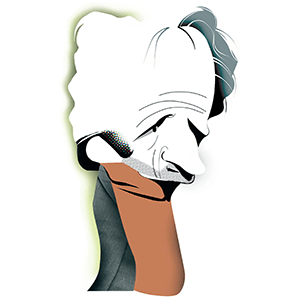
In film criticism, auteur theory holds that a director’s film reflects the director’s personal creative vision, as if they were the primary ‘auteur’ (the French word for ‘author’). In spite of—and sometimes even because of—the production of the film as part of an industrial process, the auteur’s creative voice is distinct enough to shine through all kinds of studio interference and through the collective process.
In law, the film is treated as a work of art, and the auteur, as the creator of the film, is the original copyright holder. Under European Union law, the film director is considered the author or one of the authors of a film, largely as a result of the influence of auteur theory.
read more »
Posted in Art, Language, Money |
2 Comments »
December 21, 2011

A digital native is a person who was born during or after the general introduction of digital technology, and through interacting with digital technology from an early age, has a greater understanding of its concepts.
Alternatively, this term can describe people born in the latter 1960s or later, as the Digital Age began at that time; but in most cases the term focuses on people who grew up with the technology that became prevalent in the latter part of the 20th century, and continues to evolve today.
read more »
Posted in Language, Technology |
2 Comments »
December 20, 2011

Nettime is an internet mailing list that was founded in 1995 during the second meeting of the Medien Zentral Kommittee at the Venice Biennale. Founded by Geert Lovink and Pit Schultz, the list was meant to provide a space for a new form of critical discourse on and with the nets. Since 1995, Nettime has been recognized for building up the discourse of Netzkritik or Net Critique, providing a backdrop and context for the emergence of net.art and influencing critical net culture in general.
Often understood as a European ‘online salon,’ Nettime was initially a pre-publishing platform for international critical thinkers. Originally a mainly English language mailing list, other lists have been created for other languages. While the subscribers have changed over time, the list and lists have had the regular participation of such notable figures as: American poet John Perry Barlow, political writer Hakim Bey, art professor Ricardo Dominquez, Russian artist Alexei Shulgin, and DJ Spooky, among others. The lists has around 3500 subscribers.
Posted in Language, Politics, Technology |
Leave a Comment »


 The Daily Omnivore