November 30, 2011

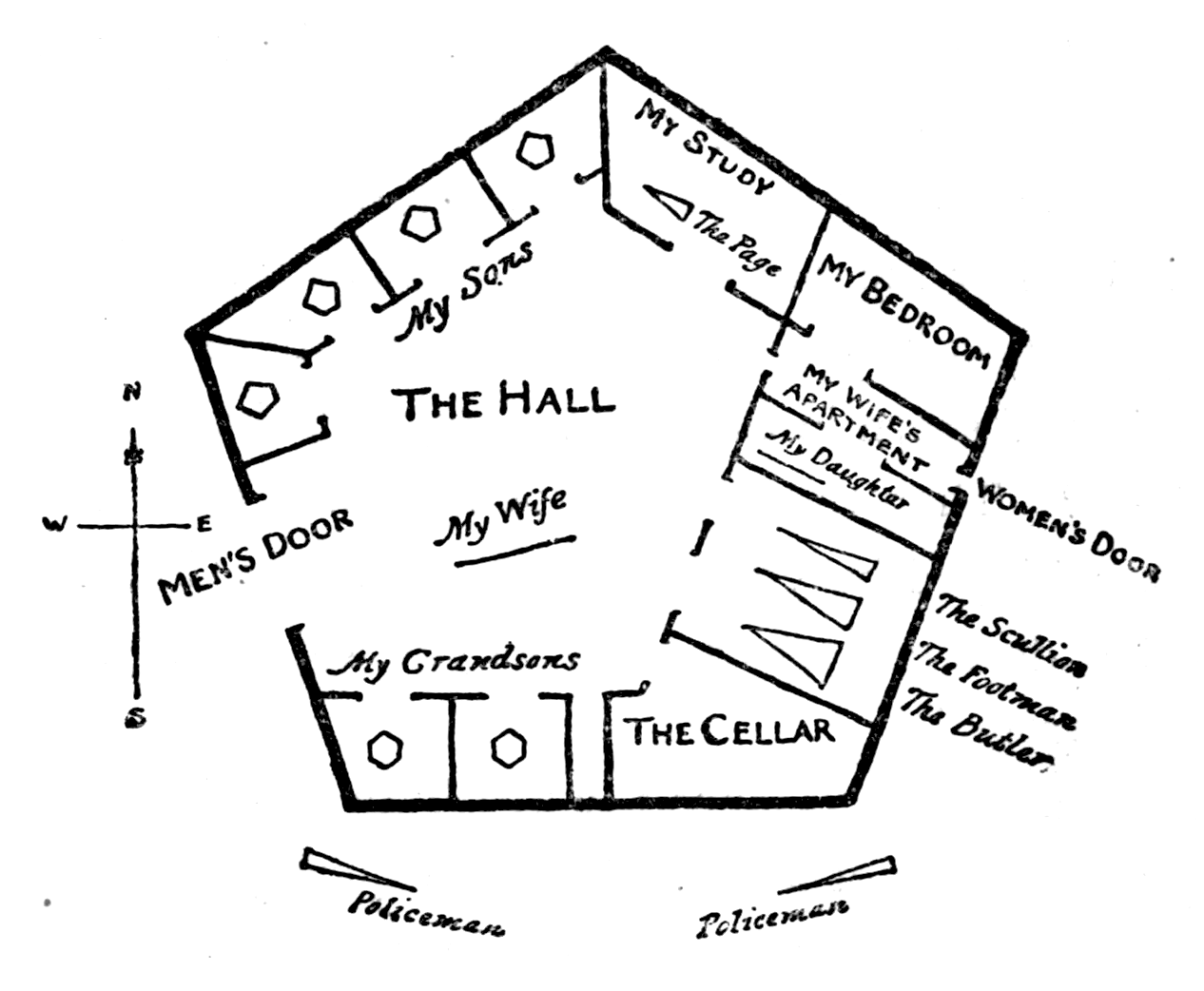
Steven Heller (b. 1950) is an American author, and editor who specializes on topics related to graphic design. He is author and co-author of many works on the history of illustration, typography, and many subjects related to graphic design. He has published more than eighty titles.
For thirty-three years Heller was a senior art director of ‘U&lc’ magazine, a publication devoted to typography. As of 2007, he is co-chair with Lita Talarico of the MFA Designer as Author program at the School of Visual Arts in New York City. He has collaborated on books with graphic designer, Louise Fili, who is his wife, as well as with others including the Design Dialogue series.
Posted in Art, Language, Money |
1 Comment »
November 30, 2011

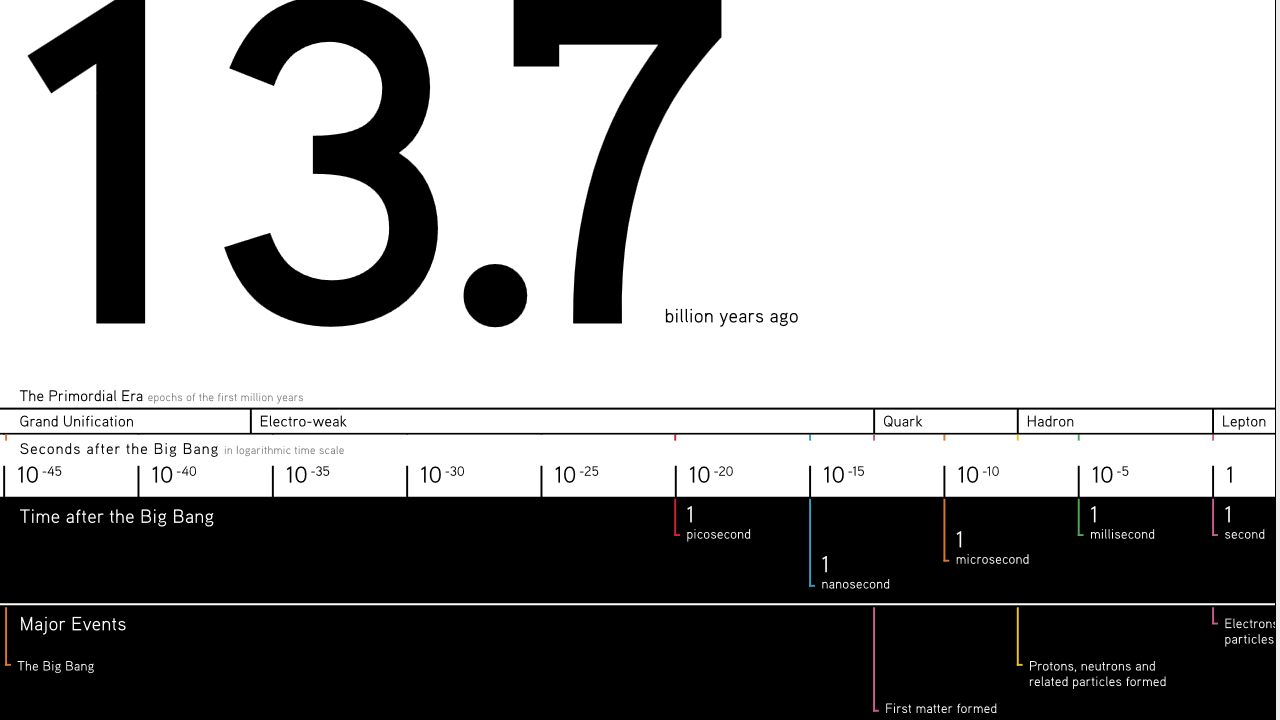
Hajime Sorayama (b.1947) is a Japanese illustrator, known for his precisely detailed, erotic airbrush portrayals of women and feminine robots. Sorayama’s work ‘Sexy Robot,’ published by Genko-sha in 1983, made his organic robotic forms famous around the world.
For the work, he used ideas from pin-up art, which in the book then appear as chrome-plated gynoids in suggestive poses. His next book, ‘Pin-up’ (1984), continues in the same line. A number of his other works similarly revolve around figures in suggestive poses, including highly realistic depictions in latex and leather. His pinups appeared frequently in the pages of ‘Penthouse’ magazine.
Posted in Art, Language, Technology |
1 Comment »
November 30, 2011
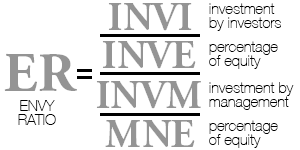

In finance, leverage (sometimes referred to as ‘gearing’ in the UK) is a general term for any technique to multiply gains and losses; common ways to attain leverage are borrowing money, buying fixed assets (non liquid assets such as real estate) and using derivatives (contracts to buy or sell something, such as call and put options respectively).
The most obvious risk of leverage is that it multiplies losses. A corporation that borrows too much money might face bankruptcy during a business downturn, while a less-levered corporation might survive. An investor who buys a stock on 50% margin will lose 40% of his money if the stock declines 20%.
read more »
Posted in Language, Money |
Leave a Comment »
November 29, 2011
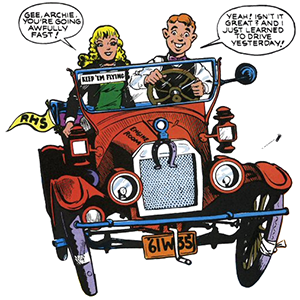
A jalopy [juh-lop-ee] (also clunker or hooptie or beater) is a decrepit car, often old and in a barely functional state. A jalopy is not a well kept antique car, but a car which is mostly rundown or beaten up.
As a slang term in American English, ‘jalopy’ was noted in 1924 but is now slightly passé. The term was used extensively in the book ‘On the Road’ by Jack Kerouac, first published in 1957, although written from 1947. The equivalent English term is old banger, often shortened to banger, a reference to older poorly maintained vehicles’ tendency to backfire.
read more »
Posted in Language, Money, Technology |
1 Comment »
November 28, 2011

A highly sensitive person (HSP) is a person having the innate trait of high psychological sensitivity (or innate sensitiveness as Carl Jung originally coined it). According to American pyschologist Elaine N. Aron, who coined the term, highly sensitive people comprise about a fifth of the population, and process sensory data much more deeply and thoroughly due to a biological difference in their nervous systems.
This is a specific trait with key consequences that in the past has often been confused with innate shyness, social anxiety problems, inhibitedness, or even social phobia and innate fearfulness, introversion, and so on. The existence of the trait of innate sensitivity was demonstrated using a test that was shown to have both internal and external validity. Although the term is primarily used to describe humans, the trait is present in nearly all higher animals.
read more »
Posted in Health, Language, Philosophy |
Leave a Comment »
November 25, 2011
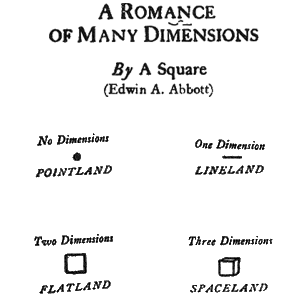
‘Flatland: A Romance of Many Dimensions’ is an 1884 satirical novella by the English schoolmaster Edwin Abbott Abbott. Writing pseudonymously as ‘A Square,’ Abbott used the fictional two-dimensional world of Flatland to offer pointed observations on the social hierarchy of Victorian culture.
However, the novella’s more enduring contribution is its examination of dimensions, for which the novella is still popular amongst mathematics, physics, and computer science students.
read more »
Posted in Art, Language, Politics |
2 Comments »
November 25, 2011
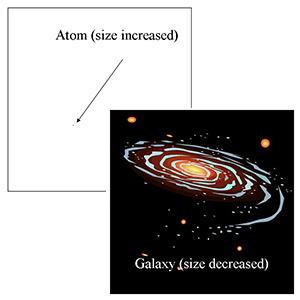
A Short History of Nearly Everything is a popular science book by American author Bill Bryson that explains some areas of science, using a style of language which aims to be more accessible to the general public than many other books dedicated to the subject.
‘A Short History’ deviates from Bryson’s popular travel book genre, instead describing general sciences such as chemistry, paleontology, astronomy, and particle physics.
read more »
Posted in Education, Language, Science |
Leave a Comment »
November 25, 2011
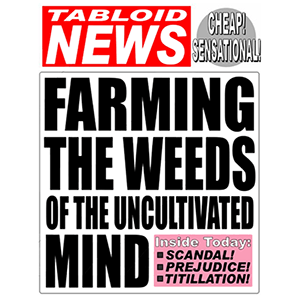
Junk food news is a sardonic term for news stories that deliver ‘sensationalized, personalized, and homogenized inconsequential trivia,’ especially when such stories appear at the expense of serious investigative journalism.
It implies a criticism of the mass media for disseminating news that, while not very nourishing, is ‘cheap to produce and profitable for media proprietors.’
read more »
Posted in Language, Money, Politics |
1 Comment »
November 25, 2011

Deviancy amplification spiral is a media hype phenomenon defined by media critics as a cycle of increasing numbers of reports on a category of antisocial behavior or some other ‘undesirable’ event, leading to a moral panic. The term was coined in 1972 by Stanley Cohen in his book, ‘Folk Devils and Moral Panics.’ According to Cohen the spiral starts with some ‘deviant’ act. Usually the deviance is criminal, but it can also involve lawful acts considered morally repugnant by a large segment of society.
With the new focus on the issue, hidden or borderline examples that would not themselves have been newsworthy are reported, confirming the ‘pattern.’ Reported cases of such ‘deviance’ are often presented as just ‘the ones we know about’ or the ‘tip of the iceberg,’ an assertion that is nearly impossible to disprove immediately. For a variety of reasons, the less sensational aspects of the spiraling story that would help the public keep a rational perspective (such as statistics showing that the behavior or event is actually less common or less harmful than generally believed) tends to be ignored by the press.
read more »
Posted in Language, Money, Politics |
Leave a Comment »
November 25, 2011

In the jargon of the media-industry, ‘development hell‘ is a period during which a film or other project is trapped in development. A film, television program screenplay, computer program, concept, or idea stranded in development hell takes an especially long time to start production, or never does.
The film industry buys rights to many popular novels, video games, and comics, but it may take years for such properties to be successfully brought to the cinema, and often with considerable changes to the plot, characters, and general tone.
read more »
Posted in Art, Language, Money |
1 Comment »
November 24, 2011
A dystopia [dis-toh-pee-uh] is the idea of a society in a repressive and controlled state, often under the guise of being utopian, as characterized in books like ‘Brave New World’ and ‘Nineteen Eighty-Four.’
Dystopian societies feature different kinds of repressive social control systems, various forms of active and passive coercion. Ideas and works about dystopian societies often explore the concept of humans abusing technology and humans individually and collectively coping, or not being able to properly cope with technology that has progressed far more rapidly than humanity’s spiritual evolution. Dystopian societies are often imagined as police states, with unlimited power over the citizens.
read more »
Posted in Language, Politics, Technology |
Leave a Comment »
November 24, 2011
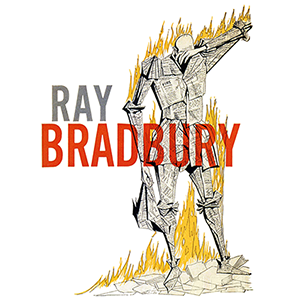
Fahrenheit 451 is a 1953 dystopian novel by Ray Bradbury. The novel presents a future American society where reading is outlawed and firemen start fires to burn books. Written in the early years of the Cold War, the novel is a critique of what Bradbury saw as issues in American society of the era. In 1947, Bradbury wrote a short story titled ‘Bright Phoenix’ (later revised for publication in a 1963 issue of ‘The Magazine of Fantasy & Science Fiction’). Bradbury expanded the basic premise of “Bright Phoenix” into ‘The Fireman,’ a novella published in a 1951 issue of ‘Galaxy Science Fiction.’ First published in 1953 by Ballantine Books, Fahrenheit 451 is twice as long as ‘The Fireman.’ A few months later, the novel was serialized in the March, April, and May 1954 issues of Playboy. Bradbury wrote the entire novel on a pay typewriter in the basement of UCLA’s Powell Library.
The novel has been the subject of various interpretations, primarily focusing on the historical role of book burning in suppressing dissenting ideas. Bradbury has stated that the novel is not about censorship, but a story about how television destroys interest in reading literature, which leads to a perception of knowledge as being composed of factoids, partial information devoid of context.
read more »
Posted in Language, Politics, Technology |
Leave a Comment »