November 24, 2011

Nineteen Eighty-Four (first published in 1949) by George Orwell is a dystopian novel about Oceania, a society ruled by the oligarchical dictatorship of the Party. Life in the Oceanian province of Airstrip One is a world of perpetual war, pervasive government surveillance, and incessant public mind control, accomplished with a political system euphemistically named English Socialism (Ingsoc), which is administrated by a privileged Inner Party elite. Yet they too are subordinated to the totalitarian cult of personality of Big Brother, the deified Party leader who rules with a philosophy that decries individuality and reason as thoughtcrimes; thus the people of Oceania are subordinated to a supposed collective greater good.
The protagonist, Winston Smith, is a member of the Outer Party who works for the Ministry of Truth (Minitrue), which is responsible for propaganda and historical revisionism. His job is to re-write past newspaper articles so that the historical record is congruent with the current party ideology. Because of the childhood trauma of the destruction of his family — the disappearances of his parents and sister — Winston Smith secretly hates the Party, and dreams of rebellion against Big Brother.
read more »
Posted in Language, Politics, Technology |
Leave a Comment »
November 24, 2011

‘We‘ is a dystopian novel by Yevgeny Zamyatin completed in 1921. It was written in response to the author’s personal experiences during the Russian revolution of 1905, the Russian revolution of 1917, his life in the Newcastle suburb of Jesmond, and his work in the Tyne shipyards during the First World War. It was on Tyneside that he observed the rationalization of labor on a large scale. Zamyatin was a trained marine engineer, hence his dispatch to Newcastle to oversee ice-breaker construction for the Imperial Russian navy. The novel was first published in 1924 by E.P. Dutton in New York in an English translation.
‘We’ is set in the future. D-503 lives in the One State, an urban nation constructed almost entirely of glass, which allows the secret police/spies to inform on and supervise the public more easily. The structure of the state is analogous to the prison design concept developed by Jeremy Bentham commonly referred to as the Panopticon. Furthermore, life is organized to promote maximum productive efficiency along the lines of the system advocated by the hugely influential F.W. Taylor. People march in step with each other and wear identical clothing. There is no way of referring to people save by their given numbers. Males have odd numbers prefixed by consonants, females have even numbers prefixed by vowels.
read more »
Posted in Language, Politics, Technology |
Leave a Comment »
November 24, 2011


Brave New World is Aldous Huxley’s fifth novel, written in 1931 and published in 1932. Set in London of CE 2540 (632 A.F. in the book), the novel anticipates developments in reproductive technology and sleep-learning that combine to change society.
The future society is an embodiment of the ideals that form the basis of futurology (the study of postulating possible futures). Huxley answered this book with a reassessment in an essay, ‘Brave New World Revisited (1958),’ and with his final work, a novel titled ‘Island’ (1962), a utopian counterpart to ‘Brave New World’s dystopian setting.
read more »
Posted in Language, Politics, Technology |
Leave a Comment »
November 24, 2011

‘The Mythical Man-Month: Essays on Software Engineering’ is a book on software engineering and project management by Fred Brooks, whose central theme is that ‘adding manpower to a late software project makes it later.’ This idea is known as Brooks’ law, and is presented along with the second-system effect (the tendency of small, elegant, and successful systems to have elephantine, feature-laden monstrosities as their successors) and advocacy of prototyping.
Brooks’ observations are based on his experiences at IBM while managing the development of OS/360. He had mistakenly added more workers to a project falling behind schedule. He also made the mistake of asserting that one project — writing an Algol compiler — would require six months, regardless of the number of workers involved (it required longer). The tendency for managers to repeat such errors in project development led Brooks to quip that his book is called ‘The Bible of Software Engineering,’ because ‘everybody quotes it, some people read it, and a few people go by it.’ The book is widely regarded as a classic on the human elements of software engineering. The work was first published in 1975
read more »
Posted in Language, Money, Technology |
Leave a Comment »
November 23, 2011

Riding shotgun refers to the practice of sitting alongside the driver in a moving vehicle. The expression was apparently not used in the days of actual stagecoach travel. At that time, the position next to the driver was said to be occupied by an ‘express messenger’ or sometimes colloquially a ‘shotgun messenger.’ The phrase ‘riding shotgun’ (not found before 1905) was applied later to print and especially film depiction of stagecoaches and wagons in the Old West in danger of being robbed or attacked by bandits. A special armed employee of the express service using the stage for transportation of bullion or cash would sit beside the driver, carrying a short shotgun, to provide an armed response in case of threat to the cargo, which was usually a strongbox. Absence of an armed person in that position often signaled that the stage was not carrying a strongbox, but only passengers.
More recently, the term has been applied to a game, typically played by groups of friends to determine who rides beside the driver in a car. Typically, this involves claiming the right to ride shotgun by calling out ‘shotgun’ first. There may be elaborate rules involved in the game, such as a requirement that the vehicle be in sight. The phrase also has been used to mean giving actual or figurative support or aid to someone in a situation or project, i.e. to ‘watch their back.’
Posted in Humor, Language |
Leave a Comment »
November 23, 2011


Idiom [id-ee-uhm] (Latin: idioma, ‘special property’) is an expression, word, or phrase that has a figurative meaning that is comprehended in regard to a common use of that expression that is separate from the literal meaning or definition of the words of which it is made. There are estimated to be at least 25,000 idiomatic expressions in the English language.
In linguistics, idioms are usually presumed to be figures of speech contradicting the principle of compositionality; yet the matter remains debated. Linguist John Saeed defines an ‘idiom’ as words collocated that became affixed to each other until metamorphosing into a fossilised term. This collocation—words commonly used in a group—redefines each component word in the word-group and becomes an idiomatic expression. The words develop a specialized meaning as an entity, as an idiom.
read more »
Posted in Language, World |
1 Comment »
November 23, 2011
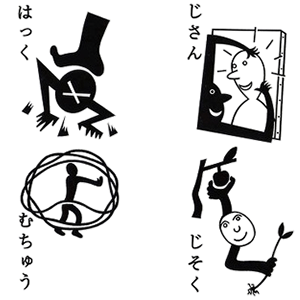
Chengyu are a type of traditional Chinese idiomatic expressions, most of which consist of four characters. Chengyu were widely used in Classical Chinese and are still common in vernacular Chinese writing and in the spoken language today. According to the most stringent definition, there are about 5,000 chengyu in the Chinese language, though some dictionaries list over 20,000. They are often referred to as Chinese idioms or four-character idioms; however, they are not the only idioms in Chinese.
Chengyu are mostly derived from ancient literature. The meaning of a chengyu usually surpasses the sum of the meanings carried by the four characters, as chengyu are often intimately linked with the myth, story or historical fact from which they were derived. As such, chengyu do not follow the usual grammatical structure and syntax of the modern Chinese spoken language, and are instead highly compact and synthetic.
read more »
Posted in Language, World |
Leave a Comment »
November 23, 2011

No pain, no gain is an exercise motto that promises greater value rewards for the price of hard and even painful work. Under this conception competitive professionals such as athletes and artists are required to endure pain and pressure to achieve professional excellence. It came into prominence after 1982 when actress Jane Fonda began to produce a series of aerobics workout videos. In these videos, Fonda would use ‘No pain, no gain’ and ‘Feel the burn’ as catchphrases for the concept of working out past the point of experiencing muscle aches. It expresses the belief that solid large muscle are the result of training hard and suffering sore muscles repeatedly, implying that those who avoid pain will never reach a professional level as bodybuilders. In terms of the expression used for development, the discomfort caused may be beneficial in some instances while detrimental in others.
American author David B. Morris wrote, ‘No pain, no gain’ is an American modern mini-narrative: it compresses the story of a protagonist who understands that the road to achievement runs only through hardship.’
Posted in Games, Health, Language |
Leave a Comment »
November 22, 2011
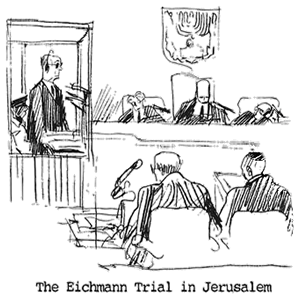
Banality [buh-nal-i-tee] of evil is a phrase coined by Hannah Arendt and incorporated in the title of her 1963 work ‘Eichmann in Jerusalem.’ It describes the thesis that the great evils in history generally, and the Holocaust in particular, were not executed by fanatics or sociopaths, but rather by ordinary people who accepted the premises of their state and therefore participated with the view that their actions were normal.
Explaining this phenomenon, media analyst Edward S. Herman has emphasized the importance of ‘normalizing the unthinkable.’ According to him, ‘doing terrible things in an organized and systematic way rests on ‘normalization.’ This is the process whereby ugly, degrading, murderous, and unspeakable acts become routine and are accepted as ‘the way things are done.’
read more »
Posted in Language, Politics, War |
Leave a Comment »
November 22, 2011
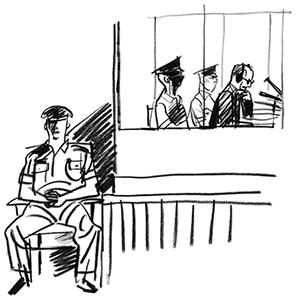
Little Eichmanns [ahyk-muhn] is a phrase used to describe the complicity of those who participate in destructive and immoral systems in a way that, although on an individual scale may seem indirect, when taken collectively would have an effect comparable to Nazi official Adolf Eichmann’s role in The Holocaust. Anarcho-primitivist John Zerzan used the phrase in his essay ‘Whose Unabomber?’ in 1995. The phrase gained prominence in American political culture four years after 9/11, when an essay written by Ward Churchill shortly after the attacks received renewed media scrutiny. In the essay, ‘On the Justice of Roosting Chickens,’ Churchill reiterated the phrase to describe technocrats working at the World Trade Center; his statement caused much controversy.
The use of ‘Eichmann’ as an archetype stems from Hannah Arendt’s 1963 book ‘Eichmann in Jerusalem.’ Arendt wrote that aside from a desire for improving his career, Eichmann showed no trace of anti-Semitism or psychological damage. She called him the embodiment of the ‘banality of evil’ as he appeared at his trial to have an ordinary and common personality and displayed neither guilt nor hatred. She suggested that this most strikingly discredits the idea that the Nazi criminals were manifestly psychopathic and fundamentally different from ordinary people. Lewis Mumford collectively refers to people willing to placidly carry out the extreme goals of megamachines as ‘Eichmanns.’
Posted in Language, Politics, War |
1 Comment »
November 22, 2011
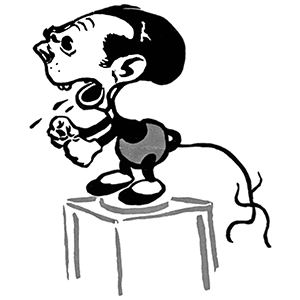
‘Three men make a tiger‘ is a Chinese proverb or chengyu (four-character idiom). Three men make a tiger refers to an individual’s tendency to accept absurd information as long as it is repeated by enough people. It refers to the idea that if an unfounded premise or urban legend is mentioned and repeated by many individuals, the premise will be erroneously accepted as the truth. This concept is analogous to communal reinforcement or the fallacy of argumentum ad populum.
The proverb came from the story of an alleged speech by Pang Cong, an official of the state of Wei in the Warring States Period (475 BCE – 221 BCE) in Chinese History. Before he left on a trip to the state of Zhao, Pang Cong asked the King of Wei whether he would hypothetically believe in one civilian’s report that a tiger was roaming the markets in the capital city, to which the King replied no. Pang Cong asked what the King thought if two people reported the same thing, and the King said he would begin to wonder. Pang Cong then asked, ‘what if three people all claimed to have seen a tiger?’ The King replied that he would believe in it. Pang Cong reminded the King that the notion of a live tiger in a crowded market was absurd, yet when repeated by numerous people, it seemed real. As a high-ranking official, Pang Cong had more than three opponents and critics; naturally, he urged the King to pay no attention to those who would spread rumors about him while he was away. ‘I understand,’ the King replied, and Pang Cong left for Zhao. Yet, slanderous talk took place. When Pang Cong returned to Wei, the King indeed stopped seeing him.
Posted in Language, World |
Leave a Comment »
November 22, 2011

Vampirella is a fictional character, a comic book vampire heroine created by Forrest J Ackerman and costume designer Trina Robbins in Warren Publishing’s black-and-white horror comics magazine ‘Vampirella’ #1 (1969). Writer-editor Archie Goodwin later developed the character from horror-story hostess, in which capacity she remained through issue #8 (1970), to a horror-drama leading character. As comics historian Richard J. Arndt describes, ‘Forrest Ackerman created, or at least had a strong hand in creating, Vampirella and he clearly had a major influence in shaping the lighthearted bad-girl story style of this issue as well.’ Vampirella was originally presented as an inhabitant of the planet Drakulon, a world where people lived on blood and where blood flowed in rivers. Draculon orbits twin suns that were causing droughts across the planet, marking certain doom for Vampirella and her race. The race of which Vampirella was born, the Vampiri, were able to transform themselves into bats at will, sprout wings when required, and drink blood.
The story begins with the inhabitants of Drakulon dying slowly due to the drying up of its blood. The last few lie dying when a spaceship from Earth crashes on the planet. Vampirella, sent to investigate, is attacked; retaliating, she discovers that the astronauts have blood in their veins. In order for her race to survive, she manages to pilot the ship back to Earth where her adventures begin. Vampirella becomes a ‘good’ vampire, and devotes her energy to ridding our world of the homegrown ‘evil’ kind.
Posted in Art, Language |
Leave a Comment »



