November 9, 2011

Ruin value (German: Ruinenwert) is the concept that a building be designed such that if it eventually collapsed, it would leave behind aesthetically pleasing ruins that would last far longer without any maintenance at all. The idea was pioneered by German architect Albert Speer while planning for the 1936 Summer Olympics and published as ‘The Theory of Ruin Value’ (‘Die Ruinenwerttheorie’), although he was not its original inventor. The intention did not stretch only to the eventual collapse of the buildings, but rather assumed such buildings were inherently better designed and more imposing during their period of use.
The idea was supported by Adolf Hitler, who planned for such ruins to be a symbol of the greatness of the Third Reich, just as Ancient Greek and Roman ruins were symbolic of those civilizations.
read more »
Posted in Language, Technology |
Leave a Comment »
November 9, 2011

A body swap is a storytelling device seen in a variety of fiction, most often in television shows and movies, in which two people (or beings) exchange minds and end up in each other’s bodies. Alternatively, their minds may stay where they are as their bodies adjust. The two people usually keep their voices in cartoons, for purposes of knowing who is who. There are three distinct types of body swapping. Switches can be caused by magic items such as amulets, heartfelt wishes, or just strange quirks of the universe. The switches typically reverse after the subjects have expanded their world views, gained a new appreciation for each other’s troubles by literally ‘walking in another’s shoe’ and/or caused sufficient amounts of farce. Notable examples include the books ‘Vice Versa’ (1882) and ‘Freaky Friday’ (1972), as well as the film versions of both.
Switches accomplished by technology, exempting gadgets advanced sufficiently to appear as magic, are the fare of mad scientists. Body-swapping devices are characterized by highly experimental status, straps, helmets with complicated cables that run to a central system and a tendency to direly malfunction before their effects can be reversed. Those without such means may resort to brain transplants. Such experiments can have overtones of horror; evil mad scientists seldom use willing test subjects.
Posted in Art, Humor, Language |
Leave a Comment »
November 8, 2011

Comfort food is food prepared traditionally that may have a nostalgic or sentimental appeal. Many comfort foods are flavorful and easily eaten, having soft consistencies. American comfort foods include apple pie, chicken soup, chili, chocolate chip cookies, fried chicken, macaroni & cheese, mashed potatoes, meatloaf, and potato salad. Australian comfort foods include vegemite, meat pies, fish and chips, chiko rolls, dim sims, and potato cakes.
In Chinese culture the comfort foods might differ between each households. Nevertheless the common theme is usually invoked nostalgic sentiments of home and family. Chinese comfort foods usually served warm, have soft texture and it might be soupy. Some of common Chinese comfort foods are: baozi, rice congee, chinese noodles, and dim sum.
read more »
Posted in Food, Language, World |
Leave a Comment »
November 8, 2011
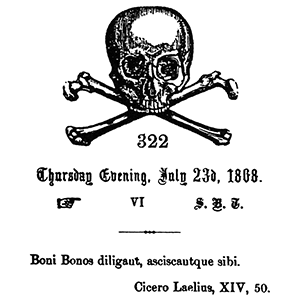
A secret society is a club or organization whose activities and inner functioning are concealed from non-members. The society may or may not attempt to conceal its existence. The term usually excludes covert groups, such as intelligence agencies or guerrilla insurgencies, which hide their activities and memberships but maintain a public presence.
The exact qualifications for labeling a group as a secret society are disputed, but definitions generally rely on the degree to which the organization insists on secrecy, and might involve the retention and transmission of secret knowledge, denial of membership in or knowledge of the group, the creation of personal bonds between members of the organization, and the use of secret rites or rituals which solidify members of the group.
read more »
Posted in Games, Language, Money |
Leave a Comment »
November 1, 2011
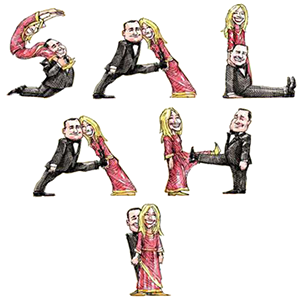
Gate-crashing, gatecrashing or party crashing is the act of attending an invite-only event without invitation. The person doing the gate-crashing is known as a gate-crasher. Gate crashing is also the act of tracing a signal through logic gates in electronics. Reasons for gate-crashing include avoiding entry fees, gaining access to free food and beverages (often alcoholic) , gaining access to a party that they wanted to be invited to, taking pictures of famous people, having pictures taken with famous people, and more serious crimes like stalking, kidnapping, murder, theft, fraud, and causing general disruptions.
Various techniques that involve blending in with the crowd can be used to gain access to some events. Various measures can be taken to prevent gate-crashers from gaining access such as collecting invitations at the door and employing staff to identify potential uninvited guests, but such measures can still be thwarted by a skilled gate-crasher. The 2009 U.S. state dinner security breaches occurred when Michaele and Tareq Salahi, from Virginia, allegedly gate-crashed the state dinner between President Barack Obama and Indian Prime Minister Manmohan Singh.
Posted in Language, Politics, Technology |
1 Comment »
November 1, 2011
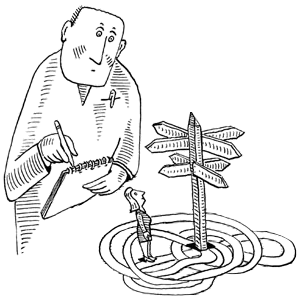
Developmental Topographical Disorientation, also known as DTD, is caused by the inability to segregate landmarks and derive navigational information from them, navigate through a non-verbal process, or generate cognitive maps. This is a newly discovered cognitive disorder in which patients who do not have brain structural abnormalities, such as lesions, and exhibit symptoms since childhood. Not to be confused with healthy individuals who have a poor sense of direction, DTD patients get lost in very familiar surroundings, such as their house or neighborhood, daily. This disorder could stem from a lack of experience in navigation during development and could present in different degrees of severity.
A woman in Vancouver, referred to as Pt1, presented with topographical disorientation in absence of any structural lesions. Despite normal cognitive development, she has never been able to orient with in the environment. Further testing showed that she was able to follow route based, landmark based, and verbal directions to reach a destination in an urban environment. In map based testing, the patient was unable to determine the shortest path between two locations on a map, but was able to follow a route traced on a map. The patient was unable to draw a detailed schematic of her house. Although the number of rooms and their locations were accurate, the spatial scaling was distorted.
Posted in Health, Language |
Leave a Comment »
November 1, 2011


The Fifth Beatle is an informal title that various commentators in the press and entertainment industry have applied to persons who were at one point a member of The Beatles, or who had a strong association with the ‘Fab Four.’ The ‘Fifth Beatle’ claims started appearing in the press immediately upon the band’s sensational rise to global fame in 1963 as the most famous quartet in pop culture. At The Beatles’ 1988 induction into the Rock and Roll Hall of Fame, George Harrison at one point stated that there were only two ‘fifth Beatles’: Derek Taylor and Neil Aspinall (the Beatles’ public relations manager and road manager-turned-business-executive, respectively). In a 1997 BBC interview, Paul McCartney stated: ‘If anyone was the fifth Beatle, it was [Beatles’ manager] Brian Epstein.’
The term is not used to indicate the chronology of band members joining the group. Pete Best joined Lennon, McCartney, Stuart Sutcliffe and Harrison on the eve of their Hamburg sojourn, the five using the monikers, ‘The Silver Beetles’ and ‘The Silver Beatles’ (they would experiment with ‘The Beat Brothers’ and ultimately ‘The Beatles’ while in Hamburg with Best).
read more »
Posted in Art, Language |
Leave a Comment »
October 31, 2011
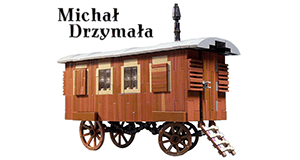

A loophole is an ambiguity or inadequacy in a system, such as a law or security, which can be used to circumvent or otherwise avoid the intent, implied or explicitly stated, of the system. Loopholes are searched for and used strategically in a variety of circumstances, including taxes, elections, politics, the criminal justice system, or in breaches of security, or a response to one’s civil liberties.
Loopholes are distinct from ‘lacunae’ (situations where no law exists to address a particular issue), although the two terms are often used interchangeably. In a loophole, the law exists, but can be legally circumvented due to a technical defect.
read more »
Posted in Language, Politics, War |
1 Comment »
October 31, 2011

Straight edge is a subculture of hardcore punk whose adherents refrain from using alcohol, tobacco, and other recreational drugs. It was a direct reaction to the sexual revolution, hedonism, and excess associated with punk rock. For some, this extends to not engaging in promiscuous sex, following a vegetarian or vegan diet, and not using caffeine or prescription drugs.
The term was coined by the 1980s hardcore punk band Minor Threat in their song ‘Straight Edge.’ Since then, a wide variety of beliefs and ideas have been incorporated into straight edge including vegetarianism, animal rights, communism, and Hare Krishna beliefs. In many parts of the United States, straight edge is treated as a gang by law enforcement officials.
read more »
Posted in Drugs, Language, Sex |
Leave a Comment »
October 31, 2011

Fag hag is a gay slang phrase referring to a woman who either associates mostly or exclusively with gay and bisexual men, or has gay and bisexual men as close friends. The phrase originated in gay male culture in the United States and was historically an insult.
Some women who associate with gay men object to being called fag hags, while others embrace the term. The male counterpart, for men who have similar interpersonal relationships with gay and bisexual men is fag stag, part of hag-ism, the identification of a person with a group—usually united in terms of sexuality, gender identity, or shared sex—of which he or she is not officially a member.
read more »
Posted in Language, Sex |
1 Comment »
October 31, 2011
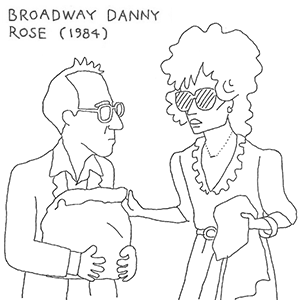
Beard is a slang term describing a person who is used, knowingly or unknowingly, as a date, romantic partner (Boyfriend or Girlfriend), or spouse either to conceal infidelity or to conceal one’s sexual orientation.
The term can be used in heterosexual and homosexual contexts, but with increasing acceptance of gay culture, references to beards are seen in mainstream television and movies as well as other entertainment.
read more »
Posted in Art, Language, Sex |
Leave a Comment »
October 31, 2011

Lavender marriage is a type of male-female marriage of convenience in which the couple are not both heterosexual and conceal the homosexual or bisexual orientation of one or both spouses. In gay slang, the heterosexual spouse in a lavender marriage is referred to as a ‘beard’ for a wife.
Although there have been a number of prominent lavender marriages in history, the phrase itself came into colloquial use during the 1920s, when the imposition of morality clauses into the contracts of Hollywood actors caused some closeted stars to enter into marriages of convenience to protect their public reputations and preserve their careers.
read more »
Posted in Language, Sex |
Leave a Comment »



