October 7, 2011

The Spacing Guild is an organization in Frank Herbert’s science fiction ‘Dune’ universe. With its monopoly on interstellar travel and banking, the Guild is a balance of power against the Padishah Emperor and the assembled noble Houses of the Landsraad. Mutated Guild Navigators use the spice drug melange to successfully navigate ‘folded space’ and safely guide enormous heighliner starships from planet to planet instantaneously. Essentially apolitical, the Guild is primarily concerned with the flow of commerce and preservation of the economy that supports them; though their ability to dictate the terms of and fees for all transport gives them influence in the political arena, they do not pursue political goals beyond their economic ones.
It is noted in ‘Dune’ (1965) that Houses of the Imperium may contract with the Guild to be removed ‘to a place of safety outside the System;’ in the past some Houses in danger of ruin or defeat have ‘become renegade Houses, taking family atomics and shields and fleeing beyond the Imperium.’ The Guild controls a ‘sanctuary planet’ (or planets) known as Tupile intended for such ‘defeated Houses of the Imperium … Location(s) known only to the Guild and maintained inviolate under the Guild Peace.’
read more »
Posted in Art, Language |
1 Comment »
October 7, 2011

A Mentat is a profession or discipline in Frank Herbert’s fictional ‘Dune’ universe. Mentats are humans trained to mimic computers: human minds developed to staggering heights of cognitive and analytical ability. In Herbert’s fiction, following the defeat of the thinking machines by humanity in the Butlerian Jihad, it is forbidden to create sentient machines. The Mentat discipline is developed as a replacement for computerized calculation, just as the Bene Gesserit and the Spacing Guild take on functions previously performed by thinking machines. For thousands of years, society considers Mentats the embodiment of logic and reason.
Unlike computers, however, Mentats are not simply calculators. Instead, the exceptional cognitive abilities of memory and perception are the foundations for supra-logical hypothesizing. Mentats are able to sift large volumes of data and devise concise analyses in a process that goes far beyond logical deduction: Mentats cultivate ‘the naïve mind,’ the mind without preconception or prejudice, so as to extract essential patterns or logic from data and deliver useful conclusions with varying degrees of certainty. They are not limited to formulating syllogisms; they are the supreme counselors of the Dune universe, filling roles as menial as archivist and clerk, or as grand as advisor to the Emperor.
read more »
Posted in Art, Language |
2 Comments »
October 7, 2011
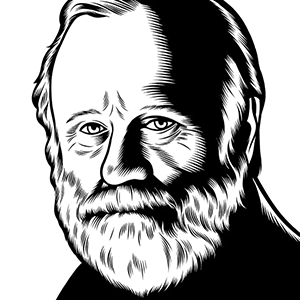
The political, scientific, and social fictional setting of Frank Herbert’s novels and derivative works is known as the Dune universe, or Duniverse. Set tens of thousands of years in the future, the saga chronicles a civilization which has banned computers but has also developed advanced technology and mental and physical abilities. Vital to this empire is the harsh desert planet Arrakis, only known source of the spice melange, the most valuable substance in the universe.
Creative works set in the Dune universe can be said to fall into five general time periods: The Butlerian Jihad; The Corrino-led Imperium; The ascension of the Atreides; The reign and fall of the God Emperor; and The return from the Scattering.
read more »
Posted in Art, Language |
1 Comment »
October 7, 2011

‘Dune‘ is a science fiction novel written by Frank Herbert, published in 1965. It won the Hugo Award in 1966, and the inaugural Nebula Award for Best Novel, the highest honors bestowed in science fiction and fantasy writing.
‘Dune’ is frequently cited as the world’s best-selling science fiction novel. Set in the far future amidst a sprawling feudal interstellar empire where planetary fiefdoms are controlled by noble houses that owe an allegiance to the Imperial House Corrino, Dune tells the story of young Paul Atreides (heir of House Atreides) as he and his family accept control of the desert planet Arrakis, the only source of the ‘spice’ melange, the most important and valuable substance in the universe. The story explores the complex and multi-layered interactions of politics, religion, ecology, technology, and human emotion, as the forces of the Empire confront each other for control of Arrakis and its ‘spice.’
read more »
Posted in Art, Language |
1 Comment »
October 7, 2011

In Internet culture, a lurker is a person who reads discussions on a message board, newsgroup, chatroom, file sharing or other interactive system, but rarely or never participates actively.
Research indicates that lurkers make up over 90% of online groups. Lack of trust represents one of the reasons explaining lurking behavior.
read more »
Posted in Language, Technology |
Leave a Comment »
September 30, 2011


A metal umlaut [oom-lout] (also known as röck döts) is a trema (in Germanic languages called Umlaut) that is sometimes used gratuitously or decoratively over letters in the names of hard rock or heavy metal bands—for example those of Mötley Crüe and Motörhead. Amongst English speakers, the use of umlaut marks and other diacritics with a blackletter style typeface is a form of foreign branding intended to give a band’s logo a Teutonic quality—denoting stereotypes of boldness and strength commonly attributed to ancient northern European peoples, such as the Vikings and Goths. Its use has been attributed to a desire for a ‘Gothic horror’ feel. The metal umlaut is not generally intended to affect the pronunciation of the band’s name.
These decorative umlauts have been parodied in film and fiction; in the mockumentary film ‘This Is Spinal Tap’ (spelled with an umlaut mark over the n and a dotless i), fictional rocker David St. Hubbins (Michael McKean) says, ‘It’s like a pair of eyes. You’re looking at the umlaut, and it’s looking at you.’
read more »
Posted in Art, Humor, Language |
1 Comment »
September 29, 2011


Technophobia is the fear or dislike of advanced technology or complex devices, especially computers. The term is generally used in the sense of an irrational fear, but others contend fears are justified. It is the opposite of technophilia. First receiving widespread notice during the Industrial Revolution, technophobia has been observed to affect various societies and communities throughout the world. This has caused some groups to take stances against some modern technological developments in order to preserve their ideologies. In some of these cases, the new technologies conflict with established beliefs, such as the personal values of simplicity and modest lifestyles.
A number of examples of technophobic ideas can be found in multiple forms of art, ranging from literary works such as ‘Frankenstein’ to films like ‘Metropolis.’ Many of these works portray the darker side of technology as seen by the technophobic. As technologies become increasingly complex and difficult to understand, people are more likely to harbor anxieties relating to their use of modern technologies.
read more »
Posted in Health, Language, Technology |
Leave a Comment »
September 27, 2011
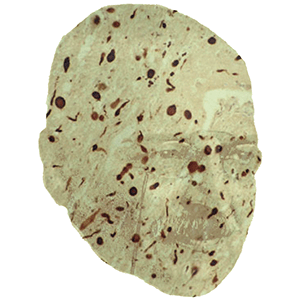
Stigler’s law of eponymy [uh-pon-uh-mee] is a process proposed by University of Chicago statistics professor Stephen Stigler in his 1980 publication of the same name. In its simplest and strongest form it says: ‘No scientific discovery is named after its original discoverer.’ Stigler named the sociologist Robert K. Merton as the discoverer of ‘Stigler’s law,’ consciously making ‘Stigler’s law’ exemplify Stigler’s law.
For example: Alzheimer’s disease, though named after Alois Alzheimer, had been previously described by at least half a dozen others before Alzheimer’s 1906 report which is often (wrongly) regarded as the first description of the disorder. Historical acclaim for discoveries is often allotted to persons of notoriety who bring attention to an idea that is not yet widely known, whether or not that person was its original inventor – theories may be named long after their discovery.
read more »
Posted in Humor, Language, Science |
1 Comment »
September 27, 2011

An eponym [ep-uh-nim] is a word, usually a person’s name, that is used to name something else. One who is referred to as eponymous is someone who gives his or her name to something, e.g., John Schnatter, the eponymous owner of Papa John’s Pizza. A common nonstandard usage is that something eponymous is named after a particular person, e.g., Julian’s eponymous restaurant. In contemporary English, the term self-titled is often used to mean eponymous in the case of a work with the same name as the person or persons who created it (e.g., the song ‘Black Sabbath,’ from the album ‘Black Sabbath,’ by the band Black Sabbath).
In intellectual property law an eponym can refer to a genericized trademark or brand name, a form of metonymy (a figure of speech used in which a thing or concept is not called by its own name, but by the name of something intimately associated with that thing or concept — e.g. ‘Kleenex’ for all tissues).
read more »
Posted in Language, Money, Politics |
Leave a Comment »
September 25, 2011
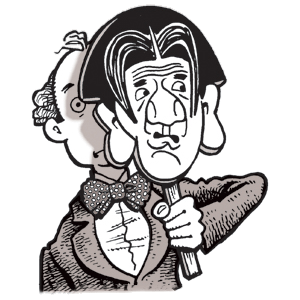
Fake Shemp is the term for someone who appears in a film under heavy make-up, filmed from the back, or perhaps only showing an arm or a foot.
In 1955, Shemp Howard of the ‘Three Stooges’ died suddenly of a heart attack. At the time, the Stooges still had four shorts left to deliver, according to the terms of their annual contract with Columbia Pictures.
read more »
Posted in Art, Language, Money |
1 Comment »
September 25, 2011

The Voyager Golden Records are phonograph records which were included aboard both Voyager spacecraft, which were launched in 1977. They contain sounds and images selected to portray the diversity of life and culture on Earth, and are intended for any intelligent extraterrestrial life form, or for future humans, who may find them. As the probes are extremely small compared to the vastness of interstellar space, the probability of a space faring civilization encountering them is very small, especially since the probes will eventually stop emitting any kind of electromagnetic radiation. If they are ever found by an alien species, it will most likely be far in the future as the nearest star on Voyager 1’s trajectory will only be reached in 40,000 years. Voyager 1 passed the orbit of Pluto in 1990, and left the solar system in 2004. In 2009, it was over 16.5 billion km from the Sun and traveling at a speed of 38,000 mph.
As Carl Sagan noted, ‘The spacecraft will be encountered and the record played only if there are advanced space-faring civilizations in interstellar space. But the launching of this ‘bottle’ into the cosmic ‘ocean’ says something very hopeful about life on this planet.’ Thus the record is best seen as a time capsule or a symbolic statement rather than a serious attempt to communicate with extraterrestrial life. The inscription, by President Jimmy Carter, reads: ‘This is a present from a small, distant world, a token of our sounds, our science, our images, our music, our thoughts and our feelings. We are attempting to survive our time so we may live into yours.’
read more »
Posted in Art, Language, Technology |
Leave a Comment »
September 24, 2011

Expletive infixation is a process by which an expletive or profanity is inserted into a word, usually for intensification. It is similar to tmesis, a word or phrase separated into two parts, e.g. ‘turn it off.’ The most commonly inserted English expletives are adjectival: either participles (fucking, mother-fucking, freaking, blooming, bleeding, damned) or adjectives (bloody). Although most speakers are not exposed to these formations until after childhood, they can form new examples readily once introduced to the process, and their judgments of which formations are acceptable are remarkably consistent. This suggests that the rules for the placement of the expletive are not arbitrary, but instead derive from fundamental aspects of English phonology.
A simple rule is that the insertion occurs at a syllable boundary, usually just before the primary stressed syllable. Thus, one hears abso-fuckin’-lutely rather than *ab-fuckin’-solutely. This rule is insufficient to describe examples such as un-fuckin’-believable, however, so modifications to this rule are proposed such as morpheme boundaries taking precedence over stress. Counterexamples to this exception do exist: unbe-fuckin’-lievable. A more fundamental theory due to John McCarthy is based on prosody, the rhythm, stress, and intonation of speech.
Posted in Humor, Language |
1 Comment »



 The Daily Omnivore