September 8, 2011

Gilberto Hernández (b. 1957), also known by the nickname Beto, is an American comics writer/artist. Along with his brothers Jaime and Mario he co-created the acclaimed independent comic book ‘Love and Rockets,’ published by Fantagraphics Books.
The style of Gilbert’s work has been described as magic realism or as a ‘magic-realist take on Central American soap opera.’ A common theme is the portrayal of independent women, and their strength, with the main example being Luba of Palomar, who character that appears in much of his work. His stories often deal with issues relevant to Latino culture in the United States.
read more »
Posted in Art, Humor, Language |
Leave a Comment »
September 7, 2011

Bowie Bonds are asset-backed securities of current and future revenues of the 25 albums (287 songs) that David Bowie recorded before 1990. Issued in 1997, the bonds were bought for US$55 million by the Prudential Insurance Company. The bonds paid an interest rate of 7.9% and had an average life of ten years. Royalties from the 25 albums generated the cash flow that secured the bonds’ interest payments. By forfeiting ten years worth of royalties, David Bowie was able to receive a payment of US$55 million up front. Bowie used this income to buy songs owned by his former manager.
The Bowie Bond issuance was perhaps the first instance of intellectual property rights securitization. The securitization of the collections of other artists, such as James Brown, Ashford & Simpson and the Isley Brothers, later followed. These Bonds are named Pullman Bonds after David Pullman, the banker who pushed the original Bowie deal. In March 2004, Moody’s Investors Service lowered the bonds from an A3 rating (the seventh highest rating) to Baa3, one notch above junk status. This downgrade was prompted by lower-than-expected revenue ‘due to weakness in sales for recorded music.’ A downgrade to an unnamed company that guarantees the issue was also cited as a reason for the downgrade. However, the success of Apple’s iTunes and other legal online music retailers has led to a renewed interest in Bowie and Pullman Bonds.
Posted in Art, Language, Money |
Leave a Comment »
September 7, 2011

Mushin (‘without mind’) is a mental state into which very highly trained martial artists are said to enter during combat. They also practice this mental state during everyday activities. The term is shortened from’ mushin no shin,’ a Zen expression meaning the mind without mind and is also referred to as the state of ‘no-mindness.’ That is, a mind not fixed or occupied by thought or emotion and thus open to everything. It is somewhat analogous to ‘flow’ experienced by artists deeply in a creative process, or athletes being ‘in the zone’ while playing a sport.
Mushin is achieved when a person’s mind is free from thoughts of anger, fear, or ego during combat or everyday life. There is an absence of discursive thought and judgment, so the person is totally free to act and react towards an opponent without hesitation and without disturbance from such thoughts. At this point, a person relies not on what they think should be the next move, but what is their trained natural reaction or what is felt intuitively. It is not a state of relaxed, near-sleepfulness, however. The mind could be said to be working at a very high speed, but with no intentions, plans or direction. In analogy a clear mind is compared to a still pond, which is able to clearly reflect the moon and trees. But just as waves in the pond will distort the picture of reality, so will the thoughts we hold onto disrupt the true perception of reality.
read more »
Posted in Language, Philosophy, War |
Leave a Comment »
September 7, 2011
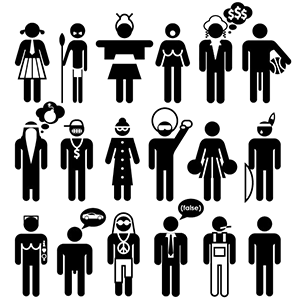
Stereotype threat is the experience of anxiety or concern in a situation where a person has the potential to confirm a negative stereotype about their social group. First described by social psychologist Claude Steele and his colleagues, stereotype threat has been shown to reduce the performance of individuals who belong to negatively stereotyped groups.
For example, stereotype threat can lower the intellectual performance of African-Americans taking the SAT reasoning test used for college entrance in the United States, due to the stereotype that African-Americans are less intelligent than other groups. Since its introduction into the scientific literature in 1995, stereotype threat has become one of the most widely studied topics in the field of social psychology.
read more »
Posted in Language, Science |
Leave a Comment »
September 6, 2011

Tanning addiction is a rare syndrome where an individual appears to have a physical and/or psychological addiction to sunbathing or the use of tanning beds.In 2005, a group of dermatologists published a study showing that frequent tanners experience a loss of control over their tanning schedule, displaying a pattern of addiction similar to smokers and alcoholics. Biochemical evidence indicates that tanning addicts are addicted to an opioid release experienced during tanning. When frequent tanners took an endorphin blocker in a 2006 study, they experienced severe withdrawal symptoms, while infrequent tanners experienced no withdrawal symptoms under the same conditions.
Although the syndrome has not been officially described by the medical community, it may include the following reported symptoms: intense anxiety if a session of tanning is missed, competition among peers to see which can get the darkest tan, and chronic frustration about the color of one’s skin, with the affected person being convinced his or her complexion is constantly lighter than it actually is.
read more »
Posted in Health, Language |
1 Comment »
August 30, 2011

The term anal retentive, commonly abbreviated to anal, is used conversationally to describe a person who pays such attention to detail that the obsession becomes an annoyance to others, and can be carried out to the detriment of the anal-retentive person. The term derives from Freudian psychoanalysis. People who are said to be anal retentive usually suffer from obsessive–compulsive personality disorder. In the psychology of Freud, the anal stage is said to follow the oral stage of infant or early-childhood development. This is a time when an infant’s attention moves from oral stimulation to anal stimulation (usually the bowels but occasionally the bladder), usually synchronous with learning to control his or her excretory functions, a time of toilet training.
Freud theorized that children who experience conflicts during this period of time may develop ‘anal’ personality traits, namely those associated with a child’s efforts at excretory control: orderliness, stubbornness, a compulsion for control. If these qualities continue into later life, the person is said to be ‘anal retentive.’ Conversely, those who reject anal characteristics are said to have ‘anal expulsive’ personality types. Although Freud’s theories on early childhood have been influential on the psychological community, research suggests that the overall pattern of parental attitudes has a much more concrete effect on how an infant will grow up. There is no conclusive research linking anal stage conflicts with ‘anal’ personality types.
Posted in Health, Language |
Leave a Comment »
August 25, 2011
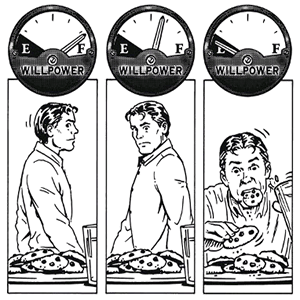
Ego depletion refers to the idea that self-control or willpower is an exhaustible resource that can be used up. When that energy is low, mental activity that requires self-control is impaired. In other words, using one’s self-control impairs the ability to control one’s self later on. In an illustrative experiment on ego depletion, participants who controlled themselves by trying not to laugh while watching a comedian did worse on a later task that required self-control compared to participants who watching the video and were free to laugh.
Much of the early research on ego depletion was performed by social psychologists Roy Baumeister, Mark Muraven, and their colleagues. In a recent series of studies, they suggest that a positive mood stimulus could help restore the depleted energy. For example, watching short clips of stand-up comedy by Robin Williams and Eddie Murphy can restores the capacity to self-regulate. The work is experimental and does not consider in depth the mechanisms by which performance is restored. Whether it is because of an actual restoration of self-regulatory resources or provides an additional motivation to press on with a depleted self remains an open question., and a study from Carol Dweck and other researchers from Stanford University, questions the ego depletion theory, and presents evidence that ‘a person’s mindset and personal beliefs about willpower determine how long and how well they’ll be able to work on a tough mental exercise.’
Posted in Health, Language, Science |
Leave a Comment »
August 25, 2011


Hammerspace (also known as malletspace) is a fan-envisioned extradimensional, instantly accessible storage area in fiction, which is used to explain how animated, comic and game characters can produce objects out of thin air. Inexplicable production of items dates back to the very beginning of animated shorts and was a fairly common occurrence during the golden age of animation. Warner Bros. cartoon characters are particularly well-known for often pulling all sorts of things — guns, disguises, bombs, anvils, mallets— from behind their backs or just offscreen. However, the explanation for this phenomenon was mostly just left to suspension of disbelief.
The term ‘Hammerspace’ itself originates from a gag common in certain anime and manga. A typical example would be when a male character would anger or otherwise offend a female character, who would proceed to produce, out of thin air, an oversized wooden rice mallet (saizuchi) and hit him on the head with it in an exaggerated manner. The strike would be purely for comic effect, and would not have any long-lasting effects. The term was largely popularized first by fans of ‘Urusei Yatsura’ (a comedic manga, popular in the 1980s).
read more »
Posted in Games, Humor, Language |
1 Comment »
August 23, 2011

David Foster Wallace (1962 – 2008) was an American author of novels, essays, and short stories, and a professor at Pomona College in Claremont, California. He was widely known for his 1996 novel ‘Infinite Jest.’ In 1997, Wallace received a MacArthur Fellowship. He was born in Ithaca, New York. His father teaches philosophy at the University of Illinois and his mother teaches English at a community college in Champaign. In fourth grade, he moved to Urbana, Illinois. As an adolescent, he was a regionally ranked junior tennis player.
He attended his father’s alma mater, Amherst College, and majored in English and philosophy, with a focus on modal logic and mathematics. His philosophy senior thesis on modal logic, titled ‘Richard Taylor’s ‘Fatalism’ and the Semantics of Physical Modality’ was awarded the Gail Kennedy Memorial Prize by Amherst. His other senior thesis, in English, would later become his first novel, ‘The Broom of the System,’ which centers on an emotionally challenged, 24-year-old telephone switchboard operator who has issues about whether or not she’s real.
read more »
Posted in Art, Language, Philosophy |
Leave a Comment »
August 23, 2011

Infinite Jest is a 1996 novel by David Foster Wallace that presents a dystopian vision of North America in the near future. The intricate narrative treats elements as diverse as junior tennis, substance abuse and recovery programs, depression, child abuse, family relationships, advertising and popular entertainment, film theory, and Quebec separatism. The novel includes copious endnotes which explain or expound upon points in the story.
In an interview with Charlie Rose, Wallace characterized their use as a method of disrupting the linearity of the text while maintaining some sense of narrative cohesion. The novel’s title is from ‘Hamlet,’ who holds the skull of the court jester, Yorick, and says ‘Alas, poor Yorick! I knew him, Horatio: a fellow of infinite jest, of most excellent fancy: he hath borne me on his back a thousand times; and now, how abhorred in my imagination it is!’
read more »
Posted in Art, Language, Money |
Leave a Comment »
August 17, 2011


Juggalo or Juggalette (the latter being feminine) is a name given to fans of Insane Clown Posse or any other Psychopathic Records hip hop group. Juggalos have developed their own idioms, slang, and characteristics. The term originated during a 1994 live performance by Insane Clown Posse. During the song ‘The Juggla,’ Joseph Bruce addressed the audience as Juggalos, and the positive response resulted in him and Joseph Utsler using the word thereafter to refer to themselves and their friends, family, and fans, including other Psychopathic Records artists.
Juggalos have compared themselves to a family. Common characteristics include drinking the inexpensive soft drink Faygo, wearing face paint and an interest in professional wrestling. They view the lyrics of Psychopathic Records artists (which are often violent in nature) as a catharsis for aggression.
read more »
Posted in Art, Language |
Leave a Comment »
August 17, 2011
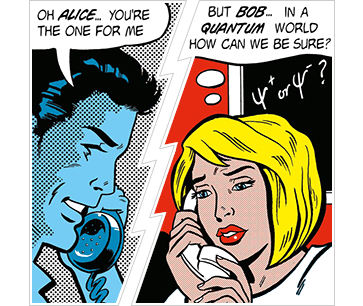
The names Alice and Bob are commonly used placeholder names for archetypal characters in fields such as cryptography and physics. The names are used for convenience; for example, ‘Alice sends a message to Bob encrypted with his public key’ is easier to follow than ‘Party A sends a message to Party B encrypted by Party B’s public key.’ Following the alphabet, the specific names have evolved into common parlance within these fields—helping technical topics to be explained in a more understandable fashion.
In cryptography and computer security, there are a number of widely used names for the participants in discussions and presentations about various protocols. The names are conventional, somewhat self-suggestive, sometimes humorous, and effectively act as metasyntactic variables. In typical implementations of these protocols, it is understood that the actions attributed to characters such as Alice or Bob need not always be carried out by human parties directly, but also by a trusted automated agent (such as a computer program) on their behalf. Despite the advantage of Alice and Bob’s distinct genders in reducing ambiguity, there has been little tendency to introduce inanimate parties so they could be referred by neuter pronouns.
read more »
Posted in Language, Science, Technology |
1 Comment »


 The Daily Omnivore