June 30, 2011
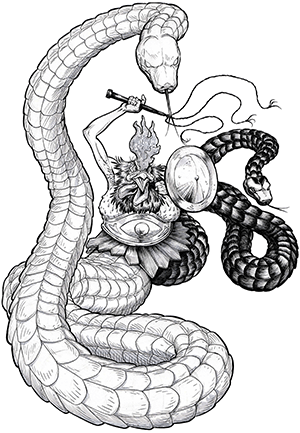
‘Abraxas‘ [uh-brak-suhs] is the second studio album by the latin band Santana. Consolidating their live success at the Woodstock Festival in 1969, and the interest generated by their first album the band took some time to issue a follow-up. Released in 1970, the album’s mix of rock, blues, jazz, salsa and other influences made it a classic that defined Santana’s early sound, and showed a musical maturation from their first album. The album’s cover features the 1961 painting ‘Annunciation,’ by Mati Klarwein.
Abraxas is the name of a deity in Gnostic cosmology. The title of the album comes from a line from Herman Hesse’s book ‘Demian.’ Abraxas is used as a symbol throughout the text, idealizing the harmonious union of all that is good and evil in the world. Demian argues that the Christian God is an insufficient god; it rules over all that is wholesome, but there is another half of the world. The symbol of Abraxas appears as a bird breaking free from an egg or a globe.
Posted in Art, Language, Philosophy |
1 Comment »
June 29, 2011

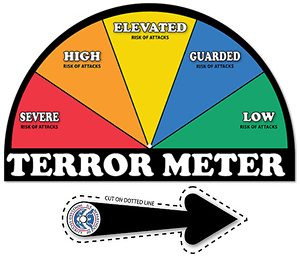
Hypervigilance is an enhanced state of sensory sensitivity accompanied by an exaggerated intensity of behaviors whose purpose is to detect threats. Hypervigilance is also accompanied by a state of increased anxiety which can cause exhaustion. Other symptoms include: abnormally increased arousal, a high responsiveness to stimuli and a constant scanning of the environment for threats. Hypervigilance can be a symptom of posttraumatic stress disorder (PTSD) and various types of anxiety disorder. It is distinguished from paranoid states, such as in schizophrenia, which can seem superficially similar, but are characteristically different.
Hypervigilance is differentiated from dysphoric hyperarousal in that the person remains cogent and aware of his or her surroundings. In dysphoric hyperarousal the PTSD victim may lose contact with reality and re-experience the traumatic event verbatim. Where there have been multiple traumas, a person may become hypervigilant and suffer severe anxiety attacks intense enough to induce a delusional state where the effect of the traumas overlap: e.g., one remembered firefight may seem too much like another for the person to maintain calm. This can result in the ‘thousand yard stare’ (a phrase originally coined to describe the limp, unfocused gaze of a battle-weary warrior).
Posted in Health, Language, War |
1 Comment »
June 29, 2011

Samizdat [sah-miz-daht] (Russian for ‘self-published’) was a key form of dissident activity across the Soviet bloc in which individuals reproduced censored publications by hand and passed the documents from reader to reader.
This grassroots practice to evade officially-imposed censorship was fraught with danger as harsh punishments were meted out to people caught possessing or copying censored materials.
read more »
Posted in Language, Politics, World |
Leave a Comment »
June 28, 2011

In typography, rivers, or rivers of white, are gaps appearing to run down a paragraph of text, due to a coincidental alignment of spaces. They can occur regardless of the spacing settings, but are most noticeable with wide inter-word spaces caused by full text justification or monospaced fonts.
Typographers try to minimize or eliminate the river effect. They can test for rivers by turning a proof sheet upside down (top to bottom) to examine the text. From this perspective, the eye is less likely to recognize words and the type can be viewed more readily as an overall pattern. Other related terms are ‘lakes’ and ‘holes,’ which refer to a cluster of adjacent or intertwined rivers that create a lighter area within a block of type.
Posted in Language, Money, Technology |
Leave a Comment »
June 27, 2011

Neophile [nee-uh-fahyl] is a term used by counterculture cult writer Robert Anton Wilson to describe a particular type of personality. A neophile or neophiliac can be defined as a personality type characterized by a strong affinity for novelty.
Neophiles/Neophiliacs have the following basic characteristics: The ability to adapt rapidly to extreme change. A distaste or downright loathing of tradition, repetition, and routine. A tendency to become bored quickly with old things. A desire, bordering on obsession in some cases, to experience novelty. A corresponding and related desire to create novelty by creating or achieving something and/or by stirring social or other forms of unrest.
read more »
Posted in Language, Philosophy, Technology |
Leave a Comment »
June 24, 2011
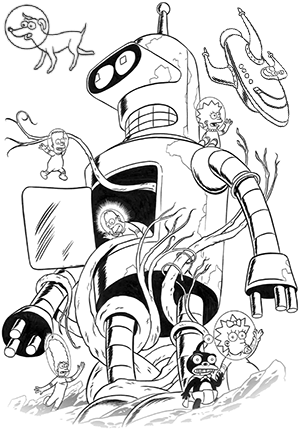
A fictional crossover is the placement of two or more otherwise discrete fictional characters, settings, or universes into the context of a single story. They can arise from legal agreements between the relevant copyright holders, or because of unauthorized efforts by fans, or even amid common corporate ownership.
Crossovers generally occur between properties owned by a single holder, but they can more rarely involve properties from different holders, provided that the inherent legal obstacles can be overcome. They may also involve using characters that have passed into the public domain with those that currently enjoy copyright protection.
read more »
Posted in Art, Language |
Leave a Comment »
June 23, 2011

The dolly zoom effect is an unsettling in-camera special effect that appears to undermine normal visual perception in film. In its classic form, the camera is pulled away from a subject while the lens zooms in, or vice-versa.
Thus, during the zoom, there is a continuous perspective distortion, the most directly noticeable feature being that the background appears to change size relative to the subject.
read more »
Posted in Art, Language, Technology |
Leave a Comment »
June 21, 2011

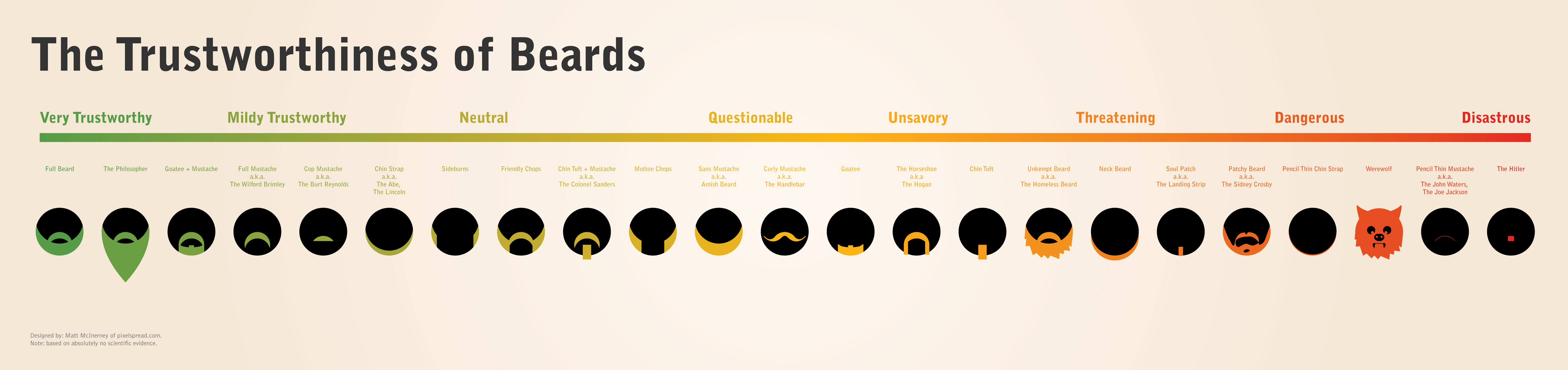
‘Barba non facit philosophum‘ is a Latin phrase meaning ‘A beard does not constitute a philosopher.’ According to the Latin author Aulus Gellius, who relates he was present at the episode, a man in a cloak, ‘with long hair and a beard that reached almost to his waist’ once came to the Athenian aristocrat, Herodes Atticus, who was renown for his ‘charm and his Grecian eloquence,’ and asked that money be given him for bread. When Herodes asked him who he was, the man, seemingly taking offense, replied that he was a philosopher, adding that he wondered why Herodes thought it necessary to ask what was obvious
‘I see,’ said Herodes, ‘a beard and a cloak; the philosopher I do not yet see.’ Some of Herodes’ companions informed him that the fellow was a actually a beggar ‘of worthless character,’ whose behavior was often abusive. Hearing which, Herodes said: ‘Let us give him some money, then, whatever his character may be, not because he is a man, but because we are men,’ and ordered that enough money be given to the man so that he could ‘buy bread for thirty days.’ The Athenian’s phrase, shortened to ‘A beard does not constitute a philosopher,’ has taken on a meaning similar to the proverb: ‘Clothes do not make the man,’ encountered in many cultures.
Posted in Humor, Language, Philosophy |
1 Comment »
June 21, 2011
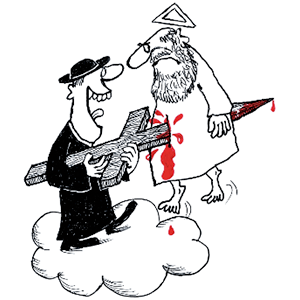
Jean Meslier (1664 – 1729) was a French Catholic priest who was discovered, upon his death, to have written a book-length philosophical essay promoting atheism. Described by the author as his ‘testament’ to his parishioners, the text denounces all religion.
He began learning Latin from a neighborhood priest in 1678 and eventually joined the seminary; he later claimed this was done to please his parents. At the end of his studies, he took Holy Orders and became priest in Champagne. One public disagreement with a local nobleman aside, Meslier was to all appearances generally unremarkable, and he performed his office without complaint or problem for 40 years. He lived like a pauper, and every penny left over was donated to the poor.
read more »
Posted in Language, Philosophy |
Leave a Comment »
June 21, 2011
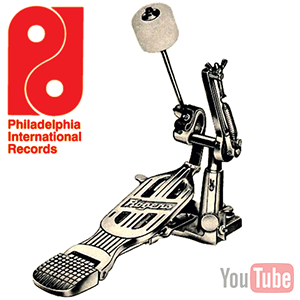
Four-on-the-floor is a rhythm pattern used in disco and electronic dance music. It is a steady, uniformly accented beat in 4/4 time in which the bass drum is hit on every beat (1, 2, 3, 4) in common time. This was popularized in the disco music of the 1970s and the term four-on-the-floor was widely used in that era: it originated with the pedal-operated drum-kit bass-drum.
Many styles of electronic dance music, particularly those that derived from house and techno, use this beat as an important part of the rhythmic structure. Sometimes the term is used to refer to a 4/4 uniform drumming pattern for any drum.
read more »
Posted in Art, Language |
Leave a Comment »
June 21, 2011

Lume is a short term for the luminous phosphorescent glowing solution applied on watch dials. There are some people who ‘relume’ watches, or replace faded lume. Formerly lume consisted mostly of radium; however, radium is radioactive and has been mostly replaced on new watches by less bright, but less toxic compounds.
Common pigments used in lume include the phosphorescent pigments zinc sulfide and strontium aluminate. Use of zinc sulfide for safety related products dates back to the 1930s. However, the development of strontium oxide aluminate, with a luminance approximately 10 times greater than zinc sulfide, has relegated most zinc sulfide based products to the novelty category. Strontium oxide aluminate based pigments are now used in exit signs, pathway marking, and other safety related signage.
Posted in Language, Technology |
Leave a Comment »
June 17, 2011
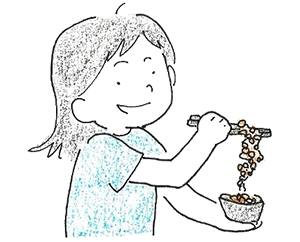
An acquired taste often refers to an appreciation for a food or beverage that is unlikely to be enjoyed by a person who has not had substantial exposure to it, usually because of some unfamiliar aspect of the food or beverage, including a strong or strange odor. For example: stinky tofu or cheese, durian fruit, kimchi, haggis, hákarl (fermented shark), sulfur infused black salt, asafoetida (a spice also called devil’s ding). Unfamiliar tastes (such as bitter teas or natto, fermented soybeans) and appearance can also be off-putting to many. Acquired taste may also refer to aesthetic tastes, such as taste in music or other forms of art.
Intentionally changing one’s preferences can be hard to accomplish. It usually requires a deliberate effort, such as acting as if one likes something in order to have the responses and feelings that will produce the desired taste. The risk in this acting is that it can lead to all sorts of excesses such as self-deception and pretentiousness. The challenge becomes one of distinguishing authentic or legitimate acquired tastes resulting from deeply considered preference changes from inauthentic ones motivated by, for example, status or conformity.
Posted in Art, Food, Language |
Leave a Comment »



 The Daily Omnivore