June 6, 2011

The Show is a 1995 documentary film about hip hop music. It was directed by Brian Robbins and featured interviews with some of hip hop’s biggest names. Def Jam founder Russell Simmons stars in and narrates the film. The documentary chronicles a diverse group of performers preparing to give a major concert at Philadelphia’s Armory.
Interspersed amongst the preparations are interviews with rappers past and present, looks at their personal lives, and commentary on their significance and upon the music. Featured acts and performers include, Slick Rick, Snoop Dogg, Dr. Dre, LL Cool J, Run-DMC, Afrika Bambaataa, Biggie Smalls, Kurtis Blow, Sean Combs, and Method Man.
Posted in Art, Money, Politics |
Leave a Comment »
June 1, 2011


The Ad Council is an American non-profit organization that distributes public service announcements on behalf of various sponsors, including non-profit organizations and agencies of the United States government. The Advertising Council generally does not produce public service advertisements itself, rather, it acts as a coordinator and distributor.
The Advertising Council accepts requests from sponsor organizations for advertising campaigns that focus on particular social issues. To qualify, an issue must be non-partisan (though not necessarily unbiased) and have national relevance. The Advertising Council then assigns each campaign to a volunteer advertising agency that produces the actual advertisements. Finally, the Advertising Council distributes the finished advertisements to media outlets.
read more »
Posted in Money, Politics, War |
Leave a Comment »
June 1, 2011
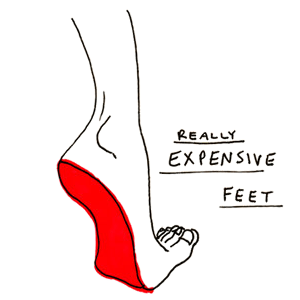
In economics, Veblen [veb-luhn] goods are a group of commodities for which people’s preference for buying them increases as a direct function of their price, as greater price confers greater status, instead of decreasing according to the law of demand. A Veblen good is often also a positional good. The Veblen effect is named after economist Thorstein Veblen, who first pointed out the concepts of conspicuous consumption and status-seeking.
Some types of high-status goods, such as high-end wines, designer handbags and luxury cars are Veblen goods, in that decreasing their prices decreases people’s preference for buying them because they are no longer perceived as exclusive or high status products. Similarly, a price increase may increase that high status and perception of exclusivity, thereby making the good even more preferable. Often such goods are no better or even worse than their lower priced counterparts.
read more »
Posted in Money, Science |
Leave a Comment »
June 1, 2011

New Belgium Brewing Company is a regional brewery located in Fort Collins, Colorado. The brewery was founded by husband-and-wife team Jeff Lebesch and Kim Jordan in 1991 and emphasizes eco-friendly practices and employee ownership in its marketing materials. Fat Tire, an amber ale, is the company’s flagship beer. Its recipe originates from a co-founder’s bicycle trip through Belgium from brewery to brewery. The company promotes its Fat Tire ale locally by the public placement of colorful vintage bicycles outside its brewery, which is located adjacent to the public bike path along the Cache La Poudre River. New Belgium beer labels are designed by Anne Fitch, a watercolorist. Kim Jordan, the President of New Belgium Brewery, credits the success of New Belgium Brewery in part on Anne’s artwork, ‘Our beers were good, our labels were interesting to people, and we pretty quickly had a fairly robust following.’ In 2006, her artwork appeared on each of the over 125 million bottles sold by New Belgium.
Tour de Fat is a bicycle parade and festival sponsored by New Belgium. The events, which take place annually in various large- and medium-sized cities around the West, include music, New Belgium beer, circus- and -vaudeville type acts, bicycle dance troupes, and the main activist spectacle, a giant group bike ride/parade wherein the participants, many of whom are in fanciful costume, ride through town. The actual activist climax of the tour, however, is the bike trade, in which a local participant transfers the keys and title of their motor vehicle to New Belgium in exchange for a new commuter bike and trailer in order to promote bike riding and sustainability. The ‘Fat Tire’ bike is so strongly associated with New Belgium Breweries that employees of the brewery are given a ‘cruiser bike’ ‘like the one pictured on its Fat Tire Amber Ale label’ on their one -year anniversary with the company.
Posted in Art, Food, Money |
Leave a Comment »
May 31, 2011

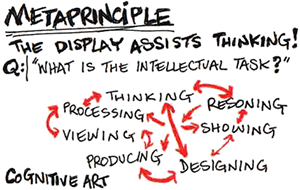
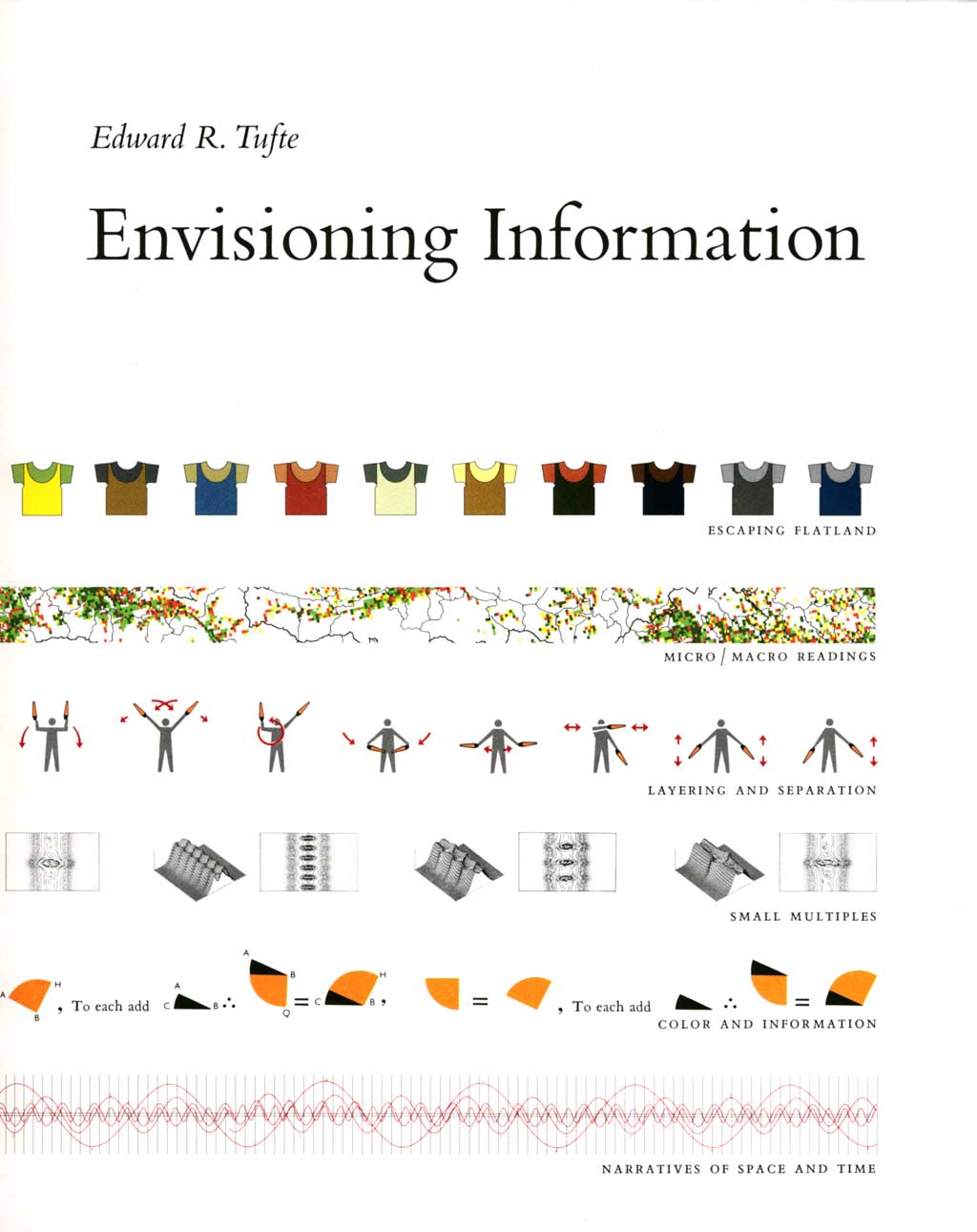
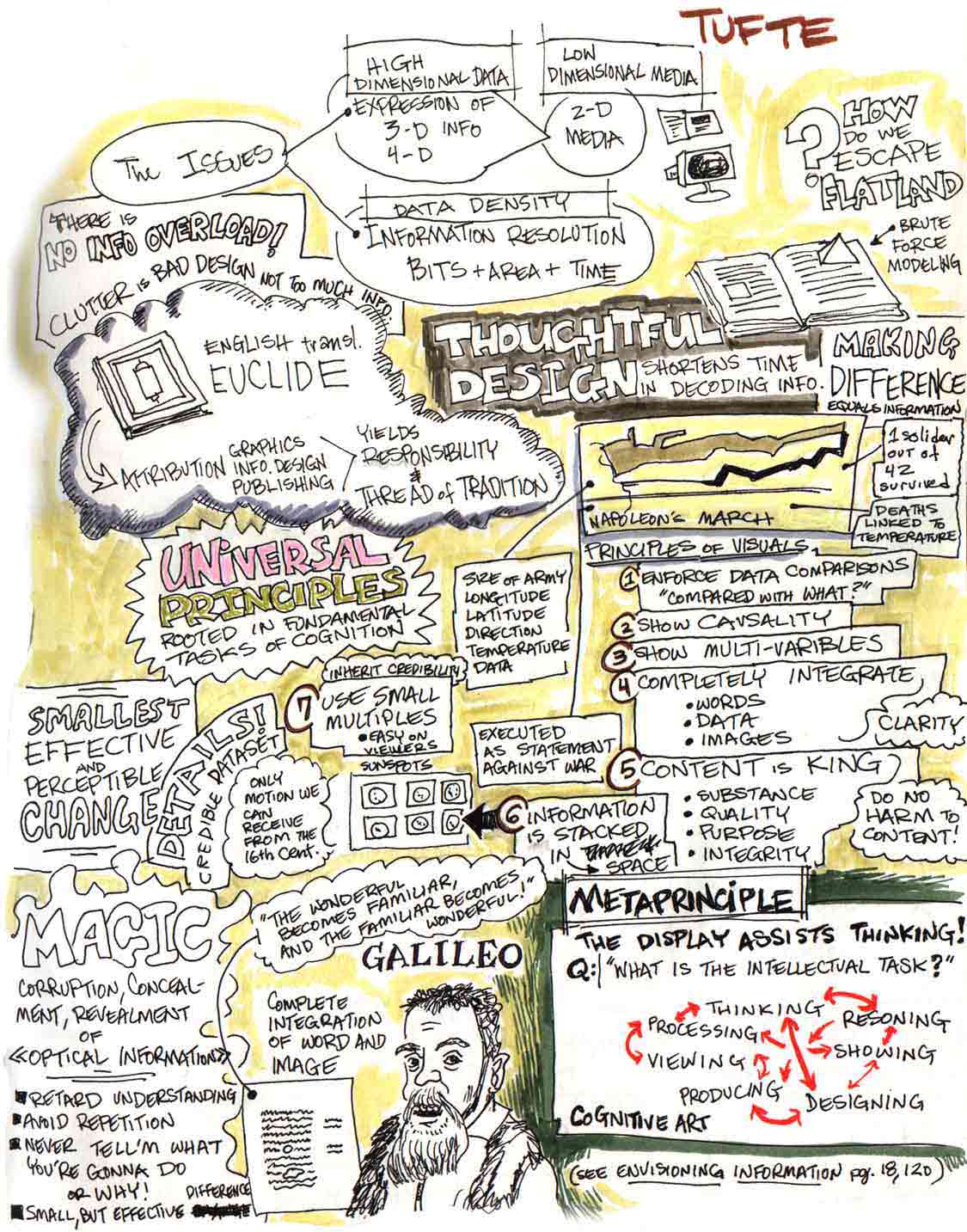
Edward Tufte (b. 1942) is an American statistician and professor emeritus of political science, statistics, and computer science at Yale University. He is noted for his writings on information design and as a pioneer in the field of data visualization.Tufte’s writing is important in such fields as information design and visual literacy, which deal with the visual communication of information. He coined the term ‘chartjunk’ to refer to useless, non-informative, or information-obscuring elements of quantitative information displays. Other key concepts of Tufte are the ‘lie factor,’ the ‘data-ink ratio,’ and the ‘data density’ of a graphic.
He uses the term ‘data-ink ratio’ to argue against using excessive decoration in visual displays of quantitative information. Tufte states, ‘Sometimes decorations can help editorialize about the substance of the graphic. But it’s wrong to distort the data measures—the ink locating values of numbers—in order to make an editorial comment or fit a decorative scheme.’
read more »
Posted in Art, Money, Science |
Leave a Comment »
May 26, 2011

Lowbrow describes an underground visual art movement that arose in Los Angeles in the late 1970s. Lowbrow is a widespread populist art movement with origins in the underground comix world, punk music, hot-rod street culture, and other subcultures. It is also often known by the name pop surrealism. Lowbrow art often has a sense of humor – sometimes the humor is gleeful, sometimes impish, and sometimes it is a sarcastic comment.
Some of the first artists to create what came to be known as lowbrow art were underground cartoonists like Robert Williams and Gary Panter. Early shows were in alternative galleries in New York and Los Angeles such as Psychedelic Solutions Gallery in Greenwich Village, La Luz de Jesus, and 01 gallery. The lowbrow magazine Juxtapoz by Robert Williams, first published in 1994, has been a mainstay of writing on lowbrow art and has helped direct and grow the movement.
read more »
Posted in Art, Money |
1 Comment »
May 26, 2011

Todd Schorr (b. 1954) is an American artist and one of the most prominent members of the ‘Lowbrow’ art movement or pop surrealism. His work combines a cartoon visual vocabulary with painting methods of the Old Masters with large canvases (+80″), and is darkly satirical.
His piece, ‘Clash of Holidays,’ aroused controversy when it was exhibited in 2002. It depicts Santa Claus and the Easter Bunny locked in mortal combat. Santa’s wielding an axe, and the rabbit has a knife. Rudolph the Red-Nosed Reindeer and Baby Jesus, who’s munching on an ear from a chocolate rabbit, stand by. Schorr was accused of blasphemy by civic leaders in South Florida. ‘It was just a joke, really, like lot of my paintings that poke fun at things,’ comments Schorr, who completed the piece in 2000, then sold it to Courteney Cox.
read more »
Posted in Art, Humor, Money |
Leave a Comment »
May 25, 2011
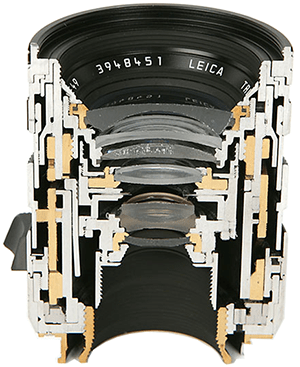
Leica is a German optics company. The first Leica prototypes were built by Oskar Barnack in Wetzlar in 1913. Intended as a compact camera for landscape photography, particularly during mountain trips, the Leica was the first practical 35 mm camera, using standard cinema 35 mm film. Leica is particularly associated with street photography, especially in the mid-to-late 20th century, being used by such noted photographers as Henri Cartier-Bresson.
Leica cameras, lenses, accessories and sales literature are collectibles. Early or rare cameras and accessories can reach very high prices on the market. Notably, Leica cameras sporting military markings carry very high premiums; this started a market for refurbished Soviet copies with fake markings.
Posted in Money, Technology |
1 Comment »
May 25, 2011

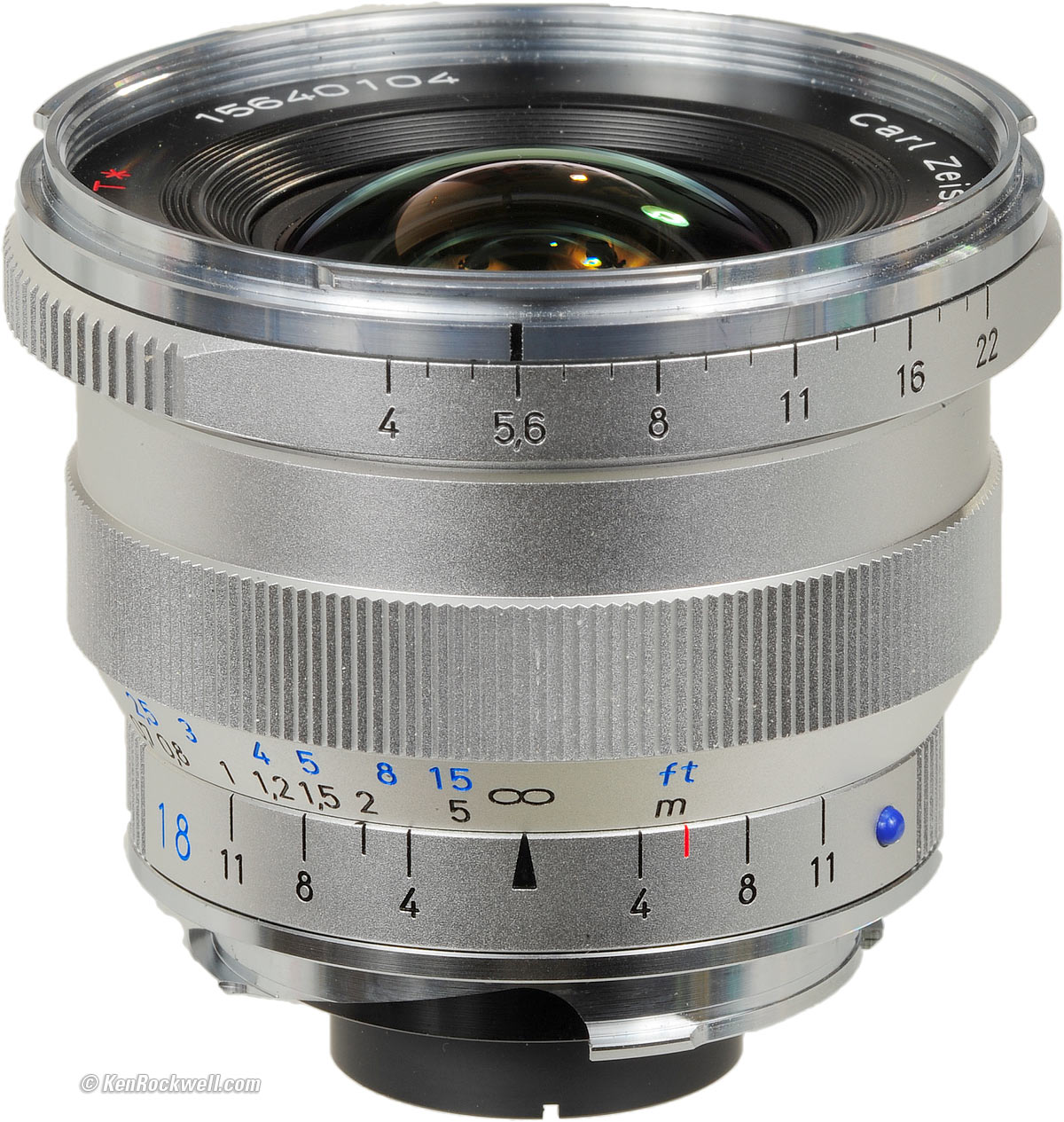
Carl Zeiss is a German manufacturer of optical systems, founded in 1846. There are currently two parts of the company, Carl Zeiss AG located in Oberkochen with important subsidiaries in Aalen, Göttingen and Munich, and Carl Zeiss GmbH located in Jena.
The organization is named after a founder, the German optician Carl Zeiss (1816–1888), and is one of the oldest existing optics manufacturers in the world. The history of the company begins in the city of Jena before World War I, then the world’s largest location of camera production. Zeiss Ikon represented a significant part of the production along with dozens of other brands and factories, and also had major works at Dresden.
read more »
Posted in Money, Technology |
Leave a Comment »
May 24, 2011

A progress trap is the condition human societies experience when, in pursuing progress through human ingenuity, they inadvertently introduce problems they do not have the resources or political will to solve, for fear of short-term losses in status, stability or quality of life. This prevents further progress and sometimes leads to collapse.
The central problem one of scale and political will. The error is often to extrapolate from what appears to work well on a small scale to a larger scale, which depletes natural resources and causes environmental degradation. Large-scale implementation also tends to be subject to diminishing returns. As overpopulation, erosion, greenhouse gas emissions or other consequences become apparent, society is destabilized.
read more »
Posted in Money, Politics, Technology |
Leave a Comment »
May 24, 2011
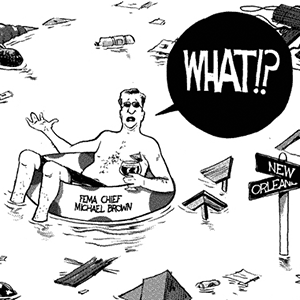
A sinecure [sahy-ni-kyoor] (Latin: sine ‘without,’ cura ‘care’) means an office that requires or involves little or no responsibility, labor, or active service. Sinecures have historically provided a potent tool for governments or monarchs to distribute patronage, while recipients are able to store up titles and easy salaries.
A sinecure is not necessarily a figurehead, which generally requires active participation in government, albeit with a lack of power. A sinecure, by contrast, has no real day-to-day responsibilities, but may have de jure power.
Posted in Language, Money, Politics |
Leave a Comment »
May 21, 2011

Marc Newson (b. 1963) born in Australia, and now based in London, is an industrial designer who works in aircraft design and product design. He incorporates a design style known as biomorphism to his various designs. This style uses smooth flowing lines, translucency, transparency and tends to have an absence of sharp edges.
He is currently adjunct professor in design at Sydney College of the Arts and is the creative director for Qantas. He co-founded and owns the Ikepod watch company. One of his three Lockheed Lounge chairs sold for $968,000 at Sotheby’s in 2006. Every year he races one of his four vintage sports cars – an Aston Martin, a Lamborghini, a Ferrari and a Cisitalia, in the Italian Mille Miglia.
Posted in Art, Money, Technology |
Leave a Comment »



 The Daily Omnivore