April 3, 2011
The Dark Side of the Moon is the eighth studio album by English progressive rock group Pink Floyd, released in 1973.
The concept album built on ideas explored by the band in their live shows and earlier recordings, but it lacks the extended instrumental excursions that characterised their work following the departure in 1968 of founding member, principal composer and lyricist Syd Barrett. ‘The Dark Side of the Moon’s’ themes include conflict, greed, the passage of time and mental illness, the latter partly inspired by Barrett’s deteriorating mental state.
read more »
Posted in Art, Money |
Leave a Comment »
April 3, 2011

Meddle is the sixth studio album by English progressive rock group Pink Floyd, released in 1971. The album was recorded at a series of locations around London, including Abbey Road Studios.
With no material to work with and no clear idea of the album’s direction, the band devised a series of novel experiments which eventually inspired the album’s signature track, ‘Echoes.’ Although many of the group’s later albums would be unified by a central theme with lyrics written mainly by Roger Waters, Meddle was a group effort with lyrical contributions from each member.
read more »
Posted in Art, Money |
Leave a Comment »
April 3, 2011

Photogravure [foh-tuh-gruh-vyoor] is a photo-mechanical process whereby a copper plate is coated with a light-sensitive gelatin tissue which had been exposed to a film positive, and then etched, resulting in a high quality intaglio print that can reproduce the detail and continuous tones of a photograph. The earliest forms of photogravure were developed in the 1830s by the original pioneers of photography itself, Henry Fox Talbot in England and Nicéphore Niépce in France.
They were seeking a means to make prints that would not fade, by creating photographic images on plates that could then be etched. The etched plates could then be printed using a traditional printing press. These early images were among the first photographs, pre-dating daguerreotypes and the later wet-collodion photographic processes. Photogravure in its mature form was developed in 1878 by Czech painter Karel Klíč, who built on Talbot’s research. This process, the one still in use today, is called the Talbot-Klič process.
Posted in Art, Money, Technology |
Leave a Comment »
April 3, 2011
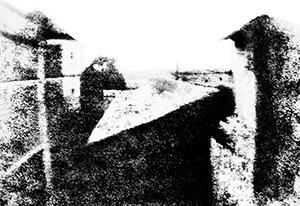
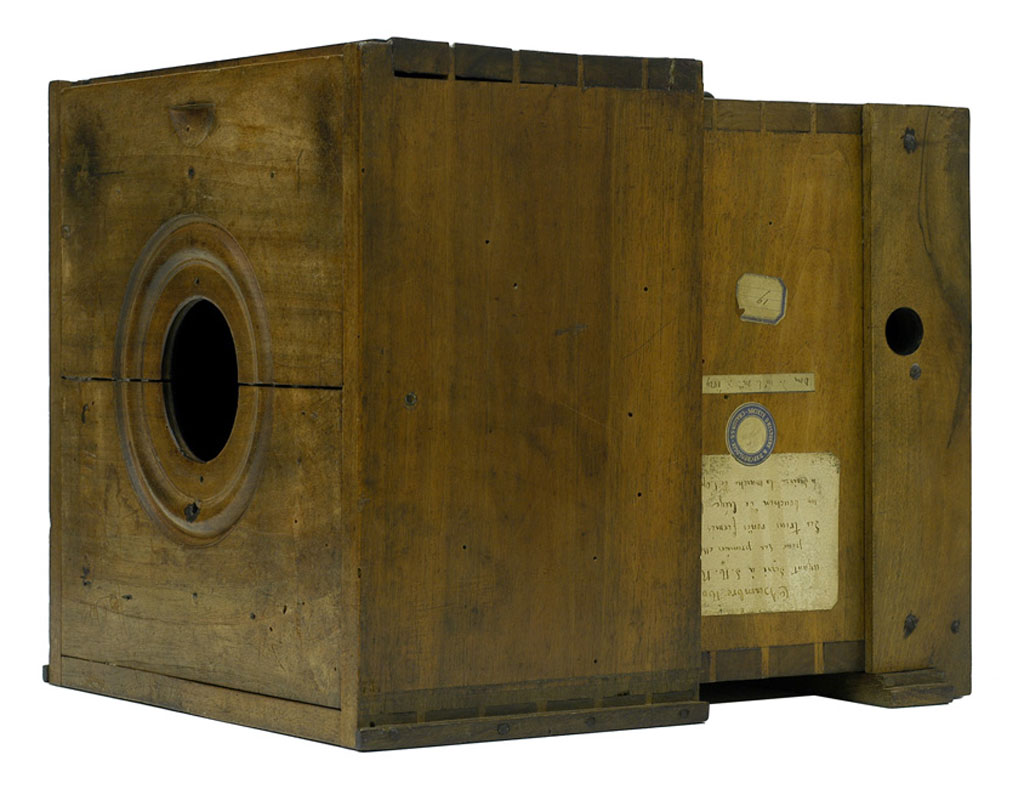
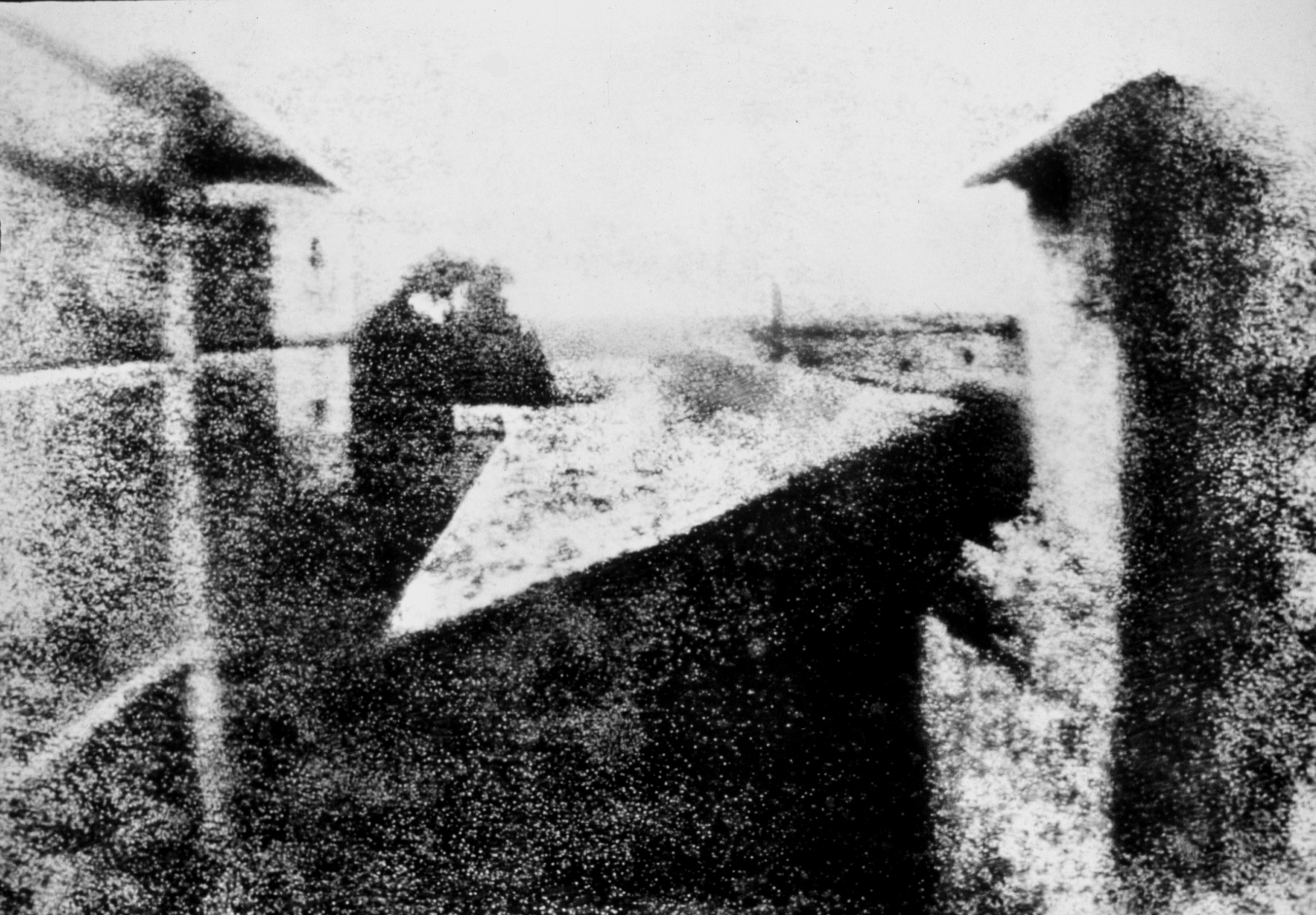
Nicéphore Niépce (1765 – 1833) was a French inventor, most noted as one of the inventors of photography and a pioneer in the field. He is credited with taking the world’s first known photograph in 1825.
Among Niépce’s other inventions was the Pyréolophore, the world’s first ‘internal combustion engine’, which he conceived, created, and developed with his older brother Claude, finally receiving a patent in 1807 from the Emperor Napoleon Bonaparte, after successfully powering a boat upstream on the river Saône.
read more »
Posted in Art, Money, Technology |
Leave a Comment »
April 3, 2011

The Devil and Daniel Johnston is a 2006 documentary film about the noted American eccentric artist Daniel Johnston. It chronicles Johnston’s life from childhood up to the present, with an emphasis on his mental illness, and how it manifested itself in demonic self-obsession. The film was directed by Jeff Feuerzeig and produced by Henry S. Rosenthal.
Posted in Art, Health, Money |
Leave a Comment »
April 3, 2011

Daniel Johnston (b. 1961) is an American singer, songwriter, musician, and artist. Johnston has been diagnosed with bipolar disorder which has been a recurring problem throughout his life. In 1990, on a two-seater plane piloted by his father Bill, Johnston had a hypomanic episode believing he was Casper The Friendly Ghost and removed the key from the planes ignition and threw it out the window. His father, a former Air Force pilot, managed to successfully crash-land the plane. Although the plane was destroyed, Johnston and his father emerged with only minor injuries. As a result of this episode, Johnston was involuntarily committed to a mental hospital.
Interest in Johnston increased when Kurt Cobain was frequently photographed wearing a t-shirt featuring the cover image of Johnston’s album ‘Hi, How Are You.’ In spite of Johnston being resident in a mental hospital at the time, a bidding war to sign him ensued. He refused to sign a multi-album deal with Elektra Records because Metallica was on the labels roster and Daniel was convinced that they were possessed by Satan and would hurt him. He also dropped his manager who brokered the deal, because Daniel believed he too was possessed by Satan. Ultimately he signed with Atlantic Records and released Fun, produced by Paul Leary of Butthole Surfers in 1994.
Posted in Art, Health, Money |
Leave a Comment »
April 3, 2011

Ron English (b. 1959) is an American contemporary artist who explores popular brand imagery and advertising. His signature style employs a mash-up of high and low cultural touchstones, including comic superhero mythology and totems of art history. He is also widely considered a seminal figure in the advancement of street art away from traditional wild-style lettering and into clever statement and masterful trompe l’oeil (the illusion of three dimensions). He has created illegal murals and billboards that blend biting political, consumerist and surrealist statements, hijacking public space worldwide for the sake of art since the 1980s.
Culture jamming is one aspect of his work, involving ‘liberating’ commercial billboards with his own messages. Frequent targets of his work include Joe Camel, McDonald’s, and Mickey Mouse. English is as well-known for his photorealist technique and inventive use of color and comic book collage as he is for his unique cast of characters, including sexualized animals, skeletal figures, Marilyn Monroe with Mickey Mouse breasts, the corpulent fast food spokesman ‘MC Supersized,’ and one of his most significant creations, ‘Abraham Obama,’ a fusion of America’s 16th and 44th Presidents. English also takes inspiration from Andy Warhol, the band KISS, and various cartoons.
Posted in Art, Money, Politics |
Leave a Comment »
April 3, 2011

The Green Wall of China is a series of human-planted forest strips in the People’s Republic of China, designed to hold back the expansion of the Gobi Desert.
The project was begun in 1978, and is planned to be completed around 2074, at which point it is planned to be 2,800 miles (4,500 km) long. 1,390 square miles of Chinese grassland are overtaken every year by the Gobi Desert.
read more »
Posted in Money, Science, World |
Leave a Comment »
April 2, 2011

General Motors EN-V (Electric Networked-Vehicle) is a 2-seat urban electric concept car developed by GM that can be driven normally or operated autonomously. Designed for urban environments and around an extrapolation of the P.U.M.A. prototype announced in 2009 by GM and Segway, which contributed the two-wheeled balancing system. Three different vehicles are showcased, Xiao (Laugh), Jiao (Pride) and Miao (Magic). The EN-V can detect and avoid obstacles–including other vehicles–park themselves and will come when called by phone. Accomplished through a combination of GPS, vehicle-based sensors and vehicle-to-vehicle communication.
This autonomous technology is an extrapolation of that found in GM’s 2007 autonomous ‘The Boss’ Chevrolet Tahoe created for the DARPA Grand Challenge (2007). The EN-Vs can communicate with each other allowing platooning, with one or more EN-Vs tagging along automatically behind a leader. Also, if an EN-V detects another in close proximity, it can check what that other is intending to do and agree on how to pass it safely. Powered by two electric motors, one on each wheel, and a lithium-ion phosphate battery, the EN-V has a top speed of 40 kilometers per hour (25 mph) and a maximum all-electric range of 40 kilometers (25 mi).
Posted in Money, Technology |
Leave a Comment »
April 2, 2011

The Google Driverless Car project is currently being led by engineer Sebastian Thrun, director of the Stanford Artificial Intelligence Laboratory and co-inventor of Google Street View, whose team at Stanford created the robotic vehicle Stanley which won the 2005 DARPA Grand Challenge (the second driverless car competition by the Defense Advanced Research Projects Agency) and its $2 million prize from the United States Department of Defense.
The system combines information gathered for Google Street View with input from video cameras inside the car, a LIDAR sensor on top of the vehicle, radar sensors on the front of the vehicle, and a position sensor attached to one of the rear wheels that helps locate the car’s position on the map.
read more »
Posted in Money, Technology |
Leave a Comment »
April 2, 2011


DFA Records is an independent record label and production team, launched in September 2001 by Mo’ Wax co-founder Tim Goldsworthy, musician James Murphy, and manager Jonathan Galkin. The label has an exclusive distribution deal with major record label EMI.
James Murphy and Tim Goldsworthy met while working in New York on the David Holmes album ‘Let’s Get Killed.’ DFA Records began on a series of 12″ single vinyl releases starting with The Rapture’s ‘House of Jealous Lovers’ and The Juan Maclean’s ‘By The Time I Get To Venus.’ Notable releases include James Murphy’s band LCD Soundsystem Black Dice, Shit Robot, Delia Gonzalez & Gavin Russom, J.O.Y., Pixeltan, Black Leotard Front, and Hot Chip.
Posted in Art, Money |
Leave a Comment »
April 2, 2011

James Murphy (b. 1970) is an American musician, producer, DJ, and co-founder of record label DFA Records. His most well-known musical project is LCD Soundsystem. Murphy was a member of Falling Man from 1988 to 1989, Pony from 1992 to 1994, and Speedking from 1995 to 1997. He was also the sound engineer for Sub Pop band Six Finger Satellite. Former Six Finger Satellite member John Maclean is now on DFA records as The Juan Maclean. In 1999 he formed DFA with Tim Goldsworthy (formerly of UNKLE).
Starting in 1993, Murphy used the name ‘Death from Above’ when DJing, a nickname that was given to his signature PA setup while he was the sound setup for Six Finger Satellite. A two-man Canadian band originally called themselves ‘Death from Above’ before there was a dispute over the name. In response to the threat, the Canadian group changed the minimum number of characters legally required of them and became ‘Death from Above 1979.’
Posted in Art, Money |
Leave a Comment »