November 14, 2016
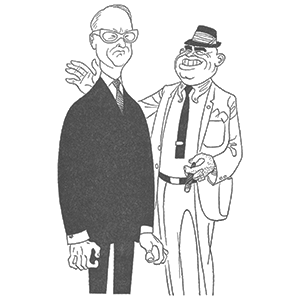
A snob is a pejorative term for a person who believes there is a correlation between social status and human worth. The term also refers to a person who judges, stigmatizes others and believes that some people are inherently inferior to others result from the perception of beliefs, values, intellect, creativity, talent, wealth, occupation, education, ancestry, ethnicity, relationship, power, religion, physical strength, class, taste, prestige, beauty, nationality, and fame. The word ‘snobbery’ came into use the first time in England during the 1820s.
English social commentator William Hazlitt observed, in a culture where deference to class was accepted as a positive and unifying principle, ‘Fashion is gentility running away from vulgarity, and afraid of being overtaken by it,’ adding subversively, ‘It is a sign the two things are not very far apart.’ The English novelist Bulwer-Lytton remarked in passing, ‘Ideas travel upwards, manners downwards.’ It was not the deeply ingrained and fundamentally accepted idea of ‘one’s betters’ that has marked snobbery in traditional European and American culture, but ‘aping one’s betters.’
read more »
Posted in Language, Money, Politics |
Leave a Comment »
November 12, 2016
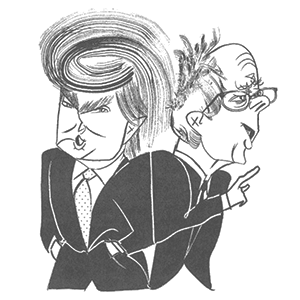
Populism is a political ideology that holds that virtuous citizens are mistreated by a small circle of elites, who can be overthrown if the people recognize the danger and work together. Populism depicts elites as trampling on the rights, values, and voice of the legitimate people.
Populist movements are found in many democratic nations. According to Cas Mudde, a Dutch political scientist who focuses on political extremism and populism in Europe: ‘Many observers have noted that populism is inherent to representative democracy; after all, do populists not juxtapose ‘the pure people’ against ‘the corrupt elite?”
read more »
Posted in Money, Politics, World |
1 Comment »
November 11, 2016
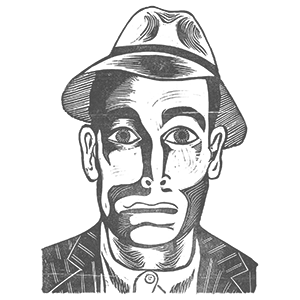
‘Don’t mourn, organize!‘ is an expression often incorrectly supposed to be the last words spoken by labor activist and songwriter Joe Hill, who was charged with murder and executed in Utah in 1915. In truth, the expression is part of a telegram sent to Bill Haywood, the founding member and leader of the Industrial Workers of the World (IWW), in which Joe wrote, ‘Goodbye, Bill, I die like a true blue rebel. Don’t waste any time mourning. Organize!’ It wasn’t Joe’s last telegram; he sent another in which he implored Haywood, ‘Could you arrange to have my body hauled to the state line to be buried? I don’t want to be found dead in Utah.’
Since the death of Hill, the phrase has been used in association with other labor leaders’ deaths. The phrase has also been used in conjunction with a severe defeat and not the death of an individual.
Posted in Death, Money, Politics |
Leave a Comment »
October 26, 2016

Birdwell, makers of Birdwell Beach Britches, is an American surf clothing company headquartered in Santa Ana, California. Founded by Carrie Birdwell Mann in 1961, the company manufactures and sells customized heavy-duty swimsuits, which are sold internationally. With four basic models, various fabrics, including Surfnyl, Tectyl, heavy nylon, sailcloth, and canvas, more than 40 colors, and various other options, the combinations that can be created are nearly endless. The company’s motto is ‘We don’t build 1000 things. We build one thing 1000 ways.’
The swimsuits themselves, which resemble board shorts, are paneled swimsuits, with waistbands resembling those of boxing trunks, always double-stitched, always with two layers of fabric. These shorts are known and favored among surfers, lifeguards, and paddleboarders, because of their quick-drying design and extreme durability; with an estimated 10 years for average use, and two to five years for more strenuous use. On all of the trunks there is a 2 square inch logo, of a stylized anthropomorphic surfboard, wearing, of course, Birdwell Beach Britches, nicknamed ‘Birdie.’
Posted in Games, Money |
Leave a Comment »
October 11, 2016

Vanity sizing, or ‘size inflation,’ is the phenomenon of ready-to-wear clothing of the same nominal size becoming bigger in physical size over time. This has been documented primarily in the United States and the United Kingdom. Vanity sizing tends to occur where clothing sizes are not standardized, such as the U.S. market. In 2003, a study that measured over 1,000 pairs of women’s pants found that pants from more expensive brands tended to be smaller than those from cheaper brands with the same nominal size.
In Sears’s 1937 catalog, a size 14 dress had a bust size of 32 inches. In 1967, that bust size was used for size 8 dresses. In 2011, it was a size 0. Some argue that vanity sizing is designed to satisfy wearers’ wishes to appear thin and feel better about themselves. Designer Nicole Miller introduced size 0 because of its strong California presence and to satisfy the request of many Asian customers. However, the increasing size of clothing with the same nominal size caused Nicole Miller to introduce size 0, 00, or subzero sizes.
read more »
Posted in Health, Money, World |
Leave a Comment »
September 27, 2016
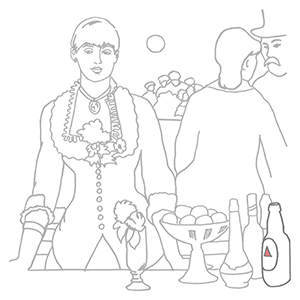
A logo is a graphic mark, emblem, or symbol commonly used by commercial enterprises, organizations and even individuals to aid and promote instant public recognition. Logos are either purely graphic (symbols/icons) or are composed of the name of the organization (a ‘logotype’ or ‘wordmark’).
In the days of hot metal typesetting, a logotype was one word cast as a single piece of type, e.g. ‘The’ (as opposed to a ‘ligature,’ which is two or more letters joined, but not forming a word). By extension, the term was also used for a uniquely set and arranged typeface or colophon (a brief description of the manuscript or book to which it is attached). At the level of mass communication and in common usage, a company’s logo is today often synonymous with its trademark or brand.
read more »
Posted in Art, Language, Money |
Leave a Comment »
September 6, 2016
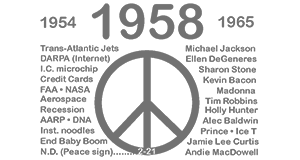

Generation Jones is a term coined by the author Jonathan Pontell to describe those born from approximately 1954 to 1965. This group is essentially the latter half of the ‘Baby Boomers’ to the first years of Generation X. The name has several connotations, including a large anonymous generation, a ‘keeping up with the Joneses’ competitiveness, and the slang word ‘jones’ or ‘jonesing,’ meaning a yearning or craving.
It is said that Jonesers were given huge expectations as children in the 1960s, and then confronted with a different reality as they came of age during a long period of mass unemployment. When de-industrialization arrived full force in the mid to late 1970s and 1980s, they were left with a certain unrequited ‘jonesing’ quality for the more prosperous days in the past.
read more »
Posted in Language, Money, Politics |
Leave a Comment »
August 21, 2016
Efraim Diveroli (b. 1985) was the founder of AEY Inc., a major weapons contractor for the U.S. Department of Defense that was prosecuted for violating an American arms embargo against China. In 2007, AEY provided 42-year-old substandard Chinese ammunition in ‘crumbling boxes’ that was re-branded and re-packaged. Documents showed that the company totaled more than $200 million in contracts to supply ammunition, assault rifles, and other weapons in 2007, despite the fact that his partner, David Packouz, and Diveroli were in their early 20s at the time.
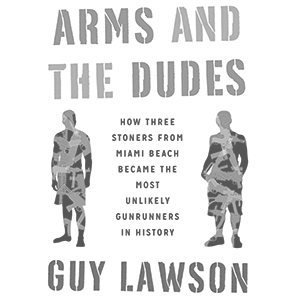
As a result of the publicity surrounding the contract and the age of the arms dealers, the United States Army began a review of its contracting procedures. He was indicted on several dozen counts of fraud, and eventually pleaded guilty to a single count of conspiracy. He was sentenced to four years in federal prison. He is a subject of a 2016 Todd Phillips drama comedy film, ‘War Dogs,’ in which he is portrayed by Jonah Hill. The film was based on a ‘Rolling Stone’ article by Guy Lawson which he later adapted into a book titled ‘Arms and the Dudes.’ The film is heavily fictionalized and dramatized, and many of its events, such as the duo driving through Iraq, never took place.
read more »
Posted in Money, Politics, War |
Leave a Comment »
August 11, 2016


A hood ornament (‘bonnet ornament’ in the UK), ‘radiator cap,’ ‘motor mascot,’ or ‘car mascot’ is a specially crafted model which symbolizes a car company like a badge, located on the front center portion of the hood. It has been used as an adornment nearly since the inception of automobiles. According to ‘A History of Cars,’ the first ‘hood ornament’ was a sun-crested falcon (to bring good luck) mounted on Egyptian pharaoh Tutankhamun’s chariot.
In the early years, automobiles had their radiator caps outside of the hood and on top of the grille which also served as an indicator of the temperature of the engine’s coolant fluid. The Boyce MotoMeter Company was issued a patent in 1912 for a radiator cap that incorporated a thermometer that was visible to the driver with a sensor that measured the heat of the water vapor, rather than the water itself. This became a useful gauge for the driver because many early engines did not have water pumps, but a circulation system based on the ‘thermo-syphon’ principle as in the Ford Model T. The ‘exposed radiator cap became a focal point for automobile personalization.’
read more »
Posted in Art, Money, Technology |
Leave a Comment »
August 10, 2016

Toyetic is a term referring to the suitability of a media property, such as a cartoon or movie, for merchandising tie-in lines of licensed toys, games and novelties. The term is attributed to Bernard Loomis, a toy development executive for Kenner Toys, in discussing the opportunities for marketing the film ‘Close Encounters of the Third Kind,’ telling its producer Steven Spielberg that the movie wasn’t ‘toyetic’ enough, leading Loomis towards acquiring the lucrative license for the upcoming ‘Star Wars’ properties.
Although George Lucas wrote the ‘Star Wars’ saga without considering the toyetic potentials of the film, he insisted that he would keep the merchandising rights before the first film was released. 20th Century-Fox underestimated the potential of the film and allowed Lucas to do so, and the film turned out to be a toyetic phenomenon. The seven films have spawned a massive merchandising empire, with everything from toys, action figures, and video games to non-toy merchandise, such as beer steins, spoons, and replicas of the lightsaber hilts.
read more »
Posted in Art, Money, Politics |
1 Comment »
August 2, 2016

Charging Bull, which is sometimes referred to as the ‘Wall Street Bull’ or the ‘Bowling Green Bull’ is a bronze sculpture, that stands in Bowling Green Park in the Financial District in Manhattan. Originally guerilla art, by Arturo Di Modica, its popularity led to it being a permanent feature.
The 7,100 lb sculpture stands 11 feet tall and measures 16 feet long. The bull’s testicles are 10 inches in diameter, weighing 107 pounds each. The oversize sculpture depicts a bull, the symbol of aggressive financial optimism and prosperity, leaning back on its haunches and with its head lowered as if ready to charge. The sculpture is both a popular tourist destination which draws thousands of people a day, as well as ‘one of the most iconic images of New York’ and a ‘Wall Street icon’ symbolizing Wall Street and the Financial District.
read more »
Posted in Art, Money |
1 Comment »
August 1, 2016
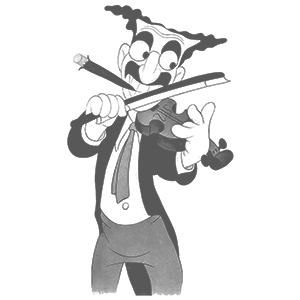
‘Will it play in Peoria?‘ is a figure of speech that is traditionally used to ask whether a given product, person, promotional theme, or event will appeal to mainstream (also called ‘Main Street’) America, or across a broad range of demographic and psychographic groups. The phrase was popularized during the vaudeville era and in movies by Groucho Marx. The belief was that if a new show was successful in Peoria, a main Midwestern stop for vaudeville acts, it would be successful anywhere.
Jack Mabley, writing in the ‘Chicago Tribune,’ concluded that ‘if it plays in Peoria it has good taste,’ but a more apt meaning is, according to James C. Ballowe, former dean of Peoria’s Bradley University graduate school, that ‘Peoria is a tough audience.’ The phrase subsequently was adopted by politicians, pollsters, and promoters to question the potential mainstream acceptance of anything new.
read more »
Posted in Art, Money, World |
Leave a Comment »


 The Daily Omnivore