September 6, 2016
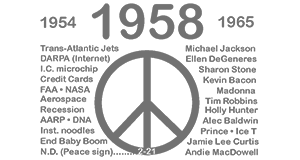

Generation Jones is a term coined by the author Jonathan Pontell to describe those born from approximately 1954 to 1965. This group is essentially the latter half of the ‘Baby Boomers’ to the first years of Generation X. The name has several connotations, including a large anonymous generation, a ‘keeping up with the Joneses’ competitiveness, and the slang word ‘jones’ or ‘jonesing,’ meaning a yearning or craving.
It is said that Jonesers were given huge expectations as children in the 1960s, and then confronted with a different reality as they came of age during a long period of mass unemployment. When de-industrialization arrived full force in the mid to late 1970s and 1980s, they were left with a certain unrequited ‘jonesing’ quality for the more prosperous days in the past.
read more »
Posted in Language, Money, Politics |
Leave a Comment »
August 21, 2016
Efraim Diveroli (b. 1985) was the founder of AEY Inc., a major weapons contractor for the U.S. Department of Defense that was prosecuted for violating an American arms embargo against China. In 2007, AEY provided 42-year-old substandard Chinese ammunition in ‘crumbling boxes’ that was re-branded and re-packaged. Documents showed that the company totaled more than $200 million in contracts to supply ammunition, assault rifles, and other weapons in 2007, despite the fact that his partner, David Packouz, and Diveroli were in their early 20s at the time.
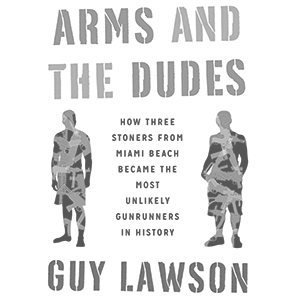
As a result of the publicity surrounding the contract and the age of the arms dealers, the United States Army began a review of its contracting procedures. He was indicted on several dozen counts of fraud, and eventually pleaded guilty to a single count of conspiracy. He was sentenced to four years in federal prison. He is a subject of a 2016 Todd Phillips drama comedy film, ‘War Dogs,’ in which he is portrayed by Jonah Hill. The film was based on a ‘Rolling Stone’ article by Guy Lawson which he later adapted into a book titled ‘Arms and the Dudes.’ The film is heavily fictionalized and dramatized, and many of its events, such as the duo driving through Iraq, never took place.
read more »
Posted in Money, Politics, War |
Leave a Comment »
August 11, 2016


A hood ornament (‘bonnet ornament’ in the UK), ‘radiator cap,’ ‘motor mascot,’ or ‘car mascot’ is a specially crafted model which symbolizes a car company like a badge, located on the front center portion of the hood. It has been used as an adornment nearly since the inception of automobiles. According to ‘A History of Cars,’ the first ‘hood ornament’ was a sun-crested falcon (to bring good luck) mounted on Egyptian pharaoh Tutankhamun’s chariot.
In the early years, automobiles had their radiator caps outside of the hood and on top of the grille which also served as an indicator of the temperature of the engine’s coolant fluid. The Boyce MotoMeter Company was issued a patent in 1912 for a radiator cap that incorporated a thermometer that was visible to the driver with a sensor that measured the heat of the water vapor, rather than the water itself. This became a useful gauge for the driver because many early engines did not have water pumps, but a circulation system based on the ‘thermo-syphon’ principle as in the Ford Model T. The ‘exposed radiator cap became a focal point for automobile personalization.’
read more »
Posted in Art, Money, Technology |
Leave a Comment »
August 10, 2016

Toyetic is a term referring to the suitability of a media property, such as a cartoon or movie, for merchandising tie-in lines of licensed toys, games and novelties. The term is attributed to Bernard Loomis, a toy development executive for Kenner Toys, in discussing the opportunities for marketing the film ‘Close Encounters of the Third Kind,’ telling its producer Steven Spielberg that the movie wasn’t ‘toyetic’ enough, leading Loomis towards acquiring the lucrative license for the upcoming ‘Star Wars’ properties.
Although George Lucas wrote the ‘Star Wars’ saga without considering the toyetic potentials of the film, he insisted that he would keep the merchandising rights before the first film was released. 20th Century-Fox underestimated the potential of the film and allowed Lucas to do so, and the film turned out to be a toyetic phenomenon. The seven films have spawned a massive merchandising empire, with everything from toys, action figures, and video games to non-toy merchandise, such as beer steins, spoons, and replicas of the lightsaber hilts.
read more »
Posted in Art, Money, Politics |
1 Comment »
August 2, 2016

Charging Bull, which is sometimes referred to as the ‘Wall Street Bull’ or the ‘Bowling Green Bull’ is a bronze sculpture, that stands in Bowling Green Park in the Financial District in Manhattan. Originally guerilla art, by Arturo Di Modica, its popularity led to it being a permanent feature.
The 7,100 lb sculpture stands 11 feet tall and measures 16 feet long. The bull’s testicles are 10 inches in diameter, weighing 107 pounds each. The oversize sculpture depicts a bull, the symbol of aggressive financial optimism and prosperity, leaning back on its haunches and with its head lowered as if ready to charge. The sculpture is both a popular tourist destination which draws thousands of people a day, as well as ‘one of the most iconic images of New York’ and a ‘Wall Street icon’ symbolizing Wall Street and the Financial District.
read more »
Posted in Art, Money |
1 Comment »
August 1, 2016
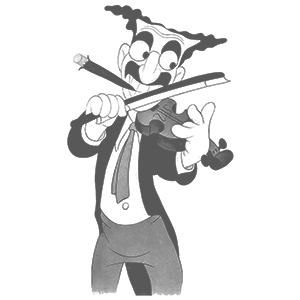
‘Will it play in Peoria?‘ is a figure of speech that is traditionally used to ask whether a given product, person, promotional theme, or event will appeal to mainstream (also called ‘Main Street’) America, or across a broad range of demographic and psychographic groups. The phrase was popularized during the vaudeville era and in movies by Groucho Marx. The belief was that if a new show was successful in Peoria, a main Midwestern stop for vaudeville acts, it would be successful anywhere.
Jack Mabley, writing in the ‘Chicago Tribune,’ concluded that ‘if it plays in Peoria it has good taste,’ but a more apt meaning is, according to James C. Ballowe, former dean of Peoria’s Bradley University graduate school, that ‘Peoria is a tough audience.’ The phrase subsequently was adopted by politicians, pollsters, and promoters to question the potential mainstream acceptance of anything new.
read more »
Posted in Art, Money, World |
Leave a Comment »
July 31, 2016

A mascot is any person, animal, or object thought to bring luck, or anything used to represent a group with a common public identity, such as a school, professional sports team, society, military unit, or brand name. Mascots are also used as fictional, representative spokespeople for consumer products, such as the rabbit used in advertising and marketing for the General Mills brand of breakfast cereal, Trix. Costumed mascots are commonplace, and are regularly used as goodwill ambassadors in the community for their team, company, or organization such as the U.S. Forest Service’s ‘Smokey Bear.’
In the world of sports, mascots are also used for merchandising. Team mascots are often confused with team nicknames. While the two can be interchangeable, they are not always the same. For example, the athletic teams of the University of Alabama are nicknamed the ‘Crimson Tide,’ while their mascot is an elephant named ‘Big Al.’ Team mascots may take the form of a logo, person, live animal, inanimate object, or a costumed character, and often appear at team matches and other related events, sports mascots are often used as marketing tools for their teams to children.
read more »
Posted in Art, Games, Money |
1 Comment »
July 28, 2016

Leo Burnett (1891 – 1971) was an American advertising executive and the founder of Leo Burnett Company, Inc. He was responsible for creating some of advertising’s most well-known characters and campaigns of the 20th century, including ‘Tony the Tiger,’ ‘Charlie the Tuna,’ the ‘Marlboro Man,’ the ‘Maytag Repairman,’ United’s ‘Fly the Friendly Skies,’ Allstate’s ‘Good Hands,’ and for garnering relationships with multinational clients such as McDonald’s, Hallmark, and Coca-Cola.
His first job out of college was as a reporter for the ‘Peoria Journal Star’ in Peoria, Illinois. In 1917, Leo moved to Detroit and was hired to edit an in-house publication for ‘Cadillac Clearing House,’ later becoming an advertising director for the same institution. At Cadillac, Leo met his advertising mentor, Theodore F. MacManus, whom Leo called ‘one of the great advertising men of all time.’
read more »
Posted in Language, Money |
Leave a Comment »
July 13, 2016


Search engine optimization (SEO) is the process of affecting the visibility of a website or a web page in a web search engine’s unpaid results — often referred to as ‘natural,’ ‘organic,’ or ‘earned’ results. In general, the earlier (or higher ranked on the search results page), and more frequently a site appears in the search results list, the more visitors it will receive from the search engine’s users, and these visitors can be converted into customers. SEO may target different kinds of searches, including for images, places, videos, scholarly articles, news stories, and industry-specific vertical search engines (specialty or topical search engines, such as Yelp for local business reviews and Zillow for real estate listings).
As an Internet marketing strategy, SEO considers how search engines work, what people search for, the actual search terms or keywords typed into search engines and which search engines are preferred by their targeted audience. Optimizing a website may involve editing its content, HTML and associated coding to both increase its relevance to specific keywords and to remove barriers to the indexing activities of search engines. Promoting a site to increase the number of backlinks (referred links), or inbound links, is another SEO tactic.
read more »
Posted in Money, Technology |
Leave a Comment »
June 26, 2016

AAirpass is a membership-based discount program offered by American Airlines to frequent flyers launched in 1981. The program is best known for a previous offering of unlimited travel on American Airlines and unlimited access to Admirals Club locations. Pass holders were offered terms of five years or lifetime. Today the program no longer offers lifetime or unlimited travel focusing instead on pre-paid fares at a discounted, fixed price for frequent travelers. A minimum commitment of $10,000 per traveler, per year is required. Existing unlimited AAirpasses remain valid.
The program initially enabled passholders unlimited first class travel on any of the airline’s flights worldwide. Lifetime membership was priced at $250,000, with the option to purchase a companion pass for an additional $150,000. A total of 66 AAirpasses are reported to have been sold under the unlimited travel conditions with businessman Michael Dell and Willie Mays among those who purchased the original offer. The program was launched at a time when the airline was struggling financially and in need of a quick infusion of cash.
read more »
Posted in Money, World |
Leave a Comment »
June 13, 2016
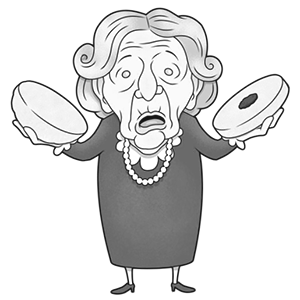
“Where’s the beef?” is a catchphrase in the United States and Canada. The phrase originated as a slogan for the fast food chain Wendy’s. Since then it has become an all-purpose phrase questioning the substance of an idea, event or product.
The phrase first came to public attention in a television commercial for the Wendy’s in 1984. In reality, the strategy behind the campaign was to distinguish competitors (McDonald’s and Burger King) big name sandwiches (Big Mac and Whopper respectively) from Wendy’s ‘modest’ Single by focusing on the large bun used by the competitors and the larger beef patty in Wendy’s sandwich. In the ad, titled ‘Fluffy Bun,’ actress Clara Peller receives a burger with a massive bun from a fictional competitor, which uses the slogan ‘Home of the Big Bun.’ The small patty prompts Peller to angrily exclaim, ‘Where’s the beef?’
read more »
Posted in Food, Humor, Money |
1 Comment »
June 7, 2016

The Diderot [dee-duh-roh] effect is a social phenomenon related to consumer goods that comprises two ideas. The first posits that goods purchased by consumers will be cohesive to their sense of identity, and as a result, will be complementary to one another. The second states that the introduction of a new possession that is deviant from the consumer’s current complementary goods can result in a process of spiraling consumption. The term was coined by anthropologist and scholar of consumption patterns Grant McCracken in 1988, and is named after the French philosopher Denis Diderot (1713–1784), who first described the effect in an essay.
The term has become common in discussions of sustainable consumption and green consumerism, in regard to the process whereby a purchase or gift creates dissatisfaction with existing possessions and environment, provoking a potentially spiraling pattern of consumption with negative environmental, psychological and social impacts.
read more »
Posted in Health, Money |
Leave a Comment »



