February 24, 2011
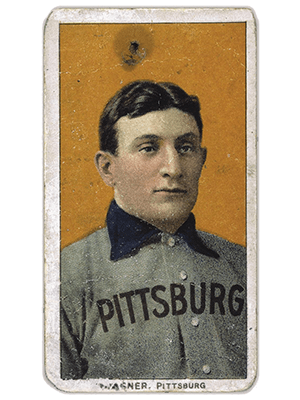
The T206 Honus Wagner baseball card depicts Pittsburgh Pirates’ Honus Wagner, a dead-ball era baseball player who is widely considered to be one of the best players of all time. The card was designed and issued by the American Tobacco Company (ATC) from 1909 to 1911 as part of its T206 series. Wagner refused to allow production of his card to continue, either because he did not want children to buy cigarette packs to get his card, or because he wanted more compensation from the ATC. Only 60 to 200 cards were ever distributed to the public.
In 1933, the card was first listed at a price value of US$50 in Jefferson Burdick’s The American Card Catalog, making it the most expensive baseball card in the world at the time. It has retained that title and is currently worth up to $2.8 million. The most famous T206 Honus Wagner is the ‘Gretzky’ card. The card has a controversial past, as some speculate that it was once altered, based on its odd texture and shape. In 1991 the card was sold to ice hockey figures Wayne Gretzky and Bruce McNall for $451,000. In 2007 they sold privately to an anonymous collector for $2.35 million.
Posted in Games, Money |
1 Comment »
February 24, 2011
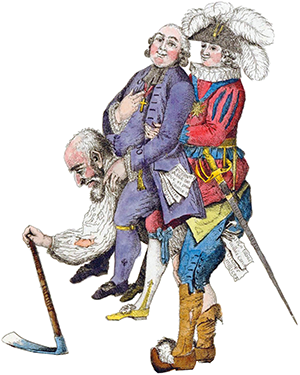
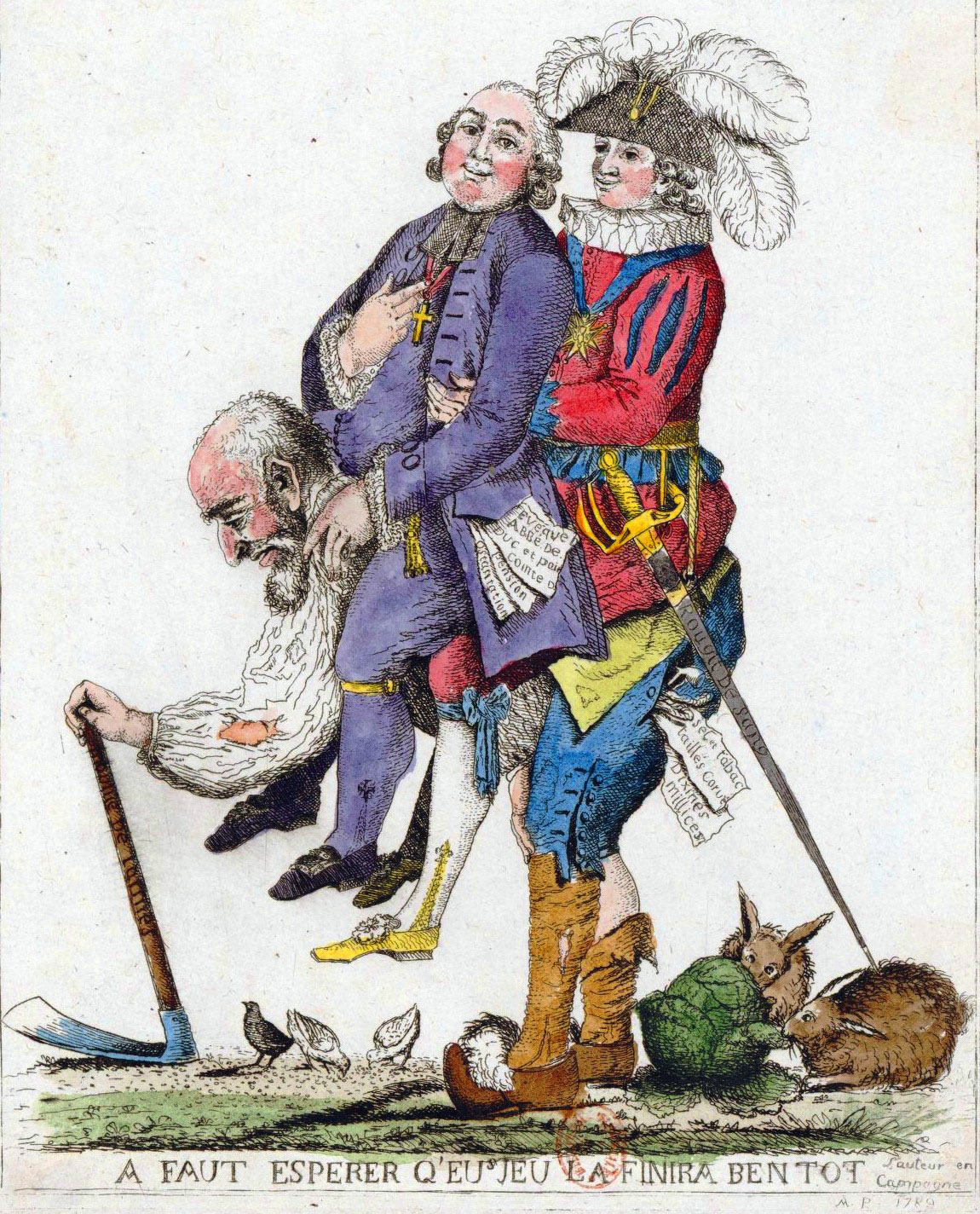
Estates of the realm were the broad divisions of a hierarchically conceived society in the Middle Ages and in Early Modern Europe. The first estate was typically the clergy, the second estate was the nobility, and the third estate was the commoners. While various realms inverted the order of the first two, commoners were universally tertiary, and often further divided into burghers (also known as bourgeoisie) and peasants; in some regions, there also was a population outside the estates.
An estate was usually inherited and based on occupation, similar to a caste. Legislative bodies or advisory bodies to a monarch were traditionally grouped along lines of these estates, with the monarch above all three estates. Meetings of the estates of the realm became early legislative and judicial parliaments. Monarchs often sought to legitimize their power by requiring oaths of fealty from the estates.
Posted in Language, Money, Politics |
Leave a Comment »
February 24, 2011
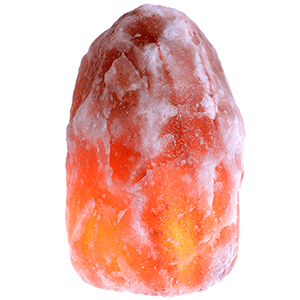
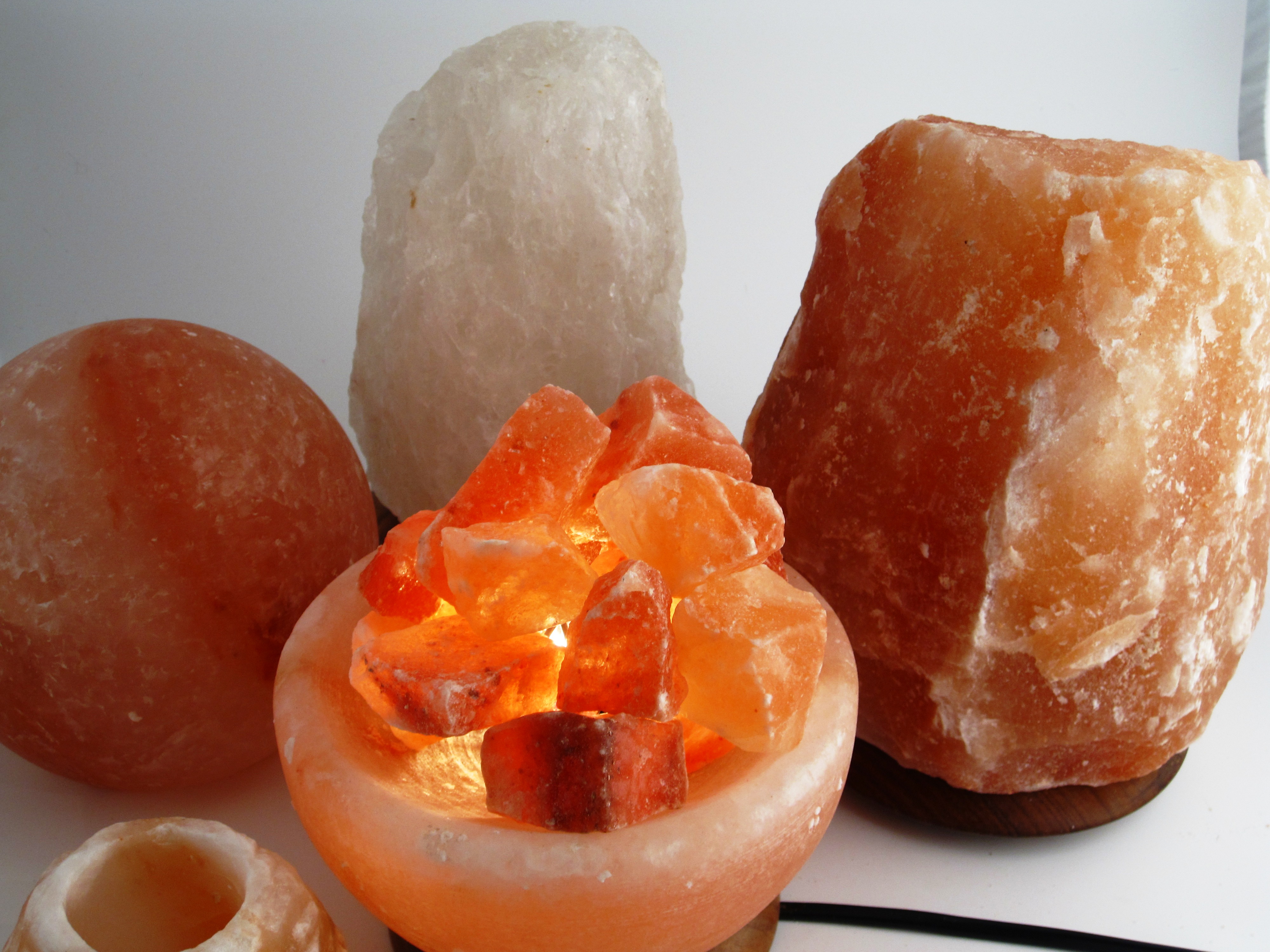
Himalayan salt is a marketing term for Halite (commonly known as rock salt) from Pakistan. It is mined in the Khewra Salt Mines, the second largest salt mine in the world, located about 300 km from the Himalayas, and about 160 kilometres from Islamabad, in the foothills of the Salt Range. The salt sometimes comes out in a reddish or pink color, with some crystals having an off-white to transparent color. It is commonly used for cooking similar to regular table salt, brine, and bath products.
Rock salts mined in several parts of the world, including Hawaii, Utah, Bolivia, the Murray-Darling basin of Australia, Peru, and Poland are marketed as Himalayan salt or pink salt. The color results from iron oxide. More recently, large crystal rocks are also used as Salt lamps. A salt lamp is a lamp carved from a larger salt crystal, often colored, with an incandescent bulb or a candle inside. The lamps give an attractive glow and are suitable for use as nightlights or for ambient mood lighting.
Posted in Food, Language, Money |
Leave a Comment »
February 23, 2011
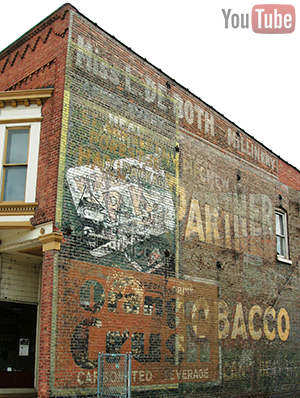
‘Ghost sign‘ is a term for old hand-painted advertising signage that has been preserved on a building for an extended period of time. The signage may be kept for its nostalgic appeal, or simply indifference by the owner. They are also called ‘fading ads’ and ‘brickads.’ In many cases these are advertisements painted on brick that remained over time. Many ghost signs still visible are from the 1890s to 1960s. Such signs were most commonly used in the decades before the Great Depression.
As signage advertising formats changed, less durable signs appeared in the later 20th century, and ghost signs from that era are less common. Kathleen Hulser of the New York Historical Society, said, ‘[The signs] evoke the exuberant period of American capitalism. Consumer cultures were really getting going and there weren’t many rules yet, no landmarks preservation commission or organized community saying: ‘Isn’t this awful? There’s a picture of a man chewing tobacco on the corner of my street.’
Posted in Art, Language, Money |
Leave a Comment »
February 22, 2011
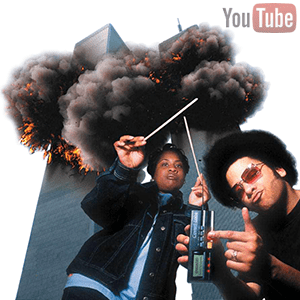
The Coup is a political hip hop group based in Oakland, California. It formed as a three-member group in 1992 with emcees Boots Riley and E-Roc along with DJ Pam the Funkstress. E-Roc left on amicable terms after the group’s second album. The duo is politically Marxist in its music and aligns itself with other radical hip-hop groups such as Dead Prez. The group’s music is characterized by electronic sounds and bass-driven backbeats overlaid by humorous, cynical and sometimes violent lyrics criticizing capitalism, American politics, patriarchal exploitation, and police brutality, among other things.
In Novemeber 2001, The Coup released ‘Party Music’ to widespread praise and condemnation. The original album cover art depicted Pam and Boots standing in front of the twin towers of the World Trade Center as they are destroyed by huge explosions, and Riley is pushing the button on a guitar tuner. The cover art was finished in June 2001. In response to the uncanny similarity of the artwork with the WTC attack of 9/11, the album release was held back until alternative cover art could be prepared.
Posted in Art, Money, Politics |
Leave a Comment »
February 21, 2011

Hi-C is a juice drink made by the Minute Maid division of The Coca-Cola Company. Hi-C was created by Niles Foster in 1946. By 1958 it had become an American supermarket staple, available nationwide. Foster’s original formula contained orange juice concentrate, peel oil and orange essences, sugar, water, citric acid and ascorbic acid (vitamin C). The name ‘Hi-C’ stressed the vitamin content. Hot-packed in enamel-lined 56-ounce cans, the product needed no refrigeration before opening.
Grape, the second flavor introduced, evolved naturally from the fact that the Geneva, Ohio, co-packer was also processing fresh grapes. Apple and cherry drinks were introduced as a result of the fresh fruit processing operations at the Paw Paw, Michigan, co-packer plant. The contract packing concept is still used today by the Coca-Cola Foods Division. In 1987, Ecto-Cooler was a product tie-in with the cartoon series ‘The Real Ghostbusters,’ based on the 1984 live-action film.
Posted in Food, Money |
Leave a Comment »
February 21, 2011

A slush or a slushie is a flavored frozen drink. Frozen carbonated beverages, typified by the Slurpee or ICEE, are made by freezing a carbonated drink. These machines are complicated and expensive, and notably require a carbon dioxide supply. They make a very fine and ‘dry’ slush. Frozen uncarbonated beverages are made by freezing a non-carbonated juice or liquid. These machines do not require a pressure chamber, and so are much cheaper and easier to maintain. They make a slightly wetter slush. They are notable in the wide variety of drinks they create, including coffee-flavored ices and alcoholic drinks like margaritas and daiquiris.
Conventional slush drinks, typified by the Slush Puppie, use a single slurry made by freezing a sweetened base, similar to apple juice. This slurry is mixed at serving time with a flavoring syrup. These drinks are notable in that the flavored syrup can be drawn out of the drink, leaving a relatively-unflavoured base ice behind. ‘Instant’ slush drinks (beverages that turn to slush upon opening) are formed via supercooling (e.g. Slush-It!, the Chill Chamber which allows businesses to store beverages at below freezing temperatures, and supercooled Sprite from Coca-Cola which required special vending machines).
Posted in Food, Language, Money |
Leave a Comment »
February 20, 2011

Small Is Beautiful: Economics As If People Mattered is a collection of essays by British economist E. F. Schumacher. It is often used to champion small, appropriate technologies that are believed to empower people more, in contrast with phrases such as ‘bigger is better.’ First published in 1973, ‘Small Is Beautiful’ brought Schumacher’s critiques of Western economics to a wider audience during the 1973 energy crisis and emergence of globalization.
Schumacher argues that the modern economy is unsustainable. Natural resources (like fossil fuels), are treated as expendable income, when in fact they should be treated as capital, since they are not renewable, and thus subject to eventual depletion. He further argues that nature’s resistance to pollution is limited as well. He concludes that government effort must be concentrated on sustainable development.
Posted in Language, Money, Politics |
Leave a Comment »
February 20, 2011

‘Wicked problem‘ is a phrase originally used in social planning to describe a problem that is difficult or impossible to solve because of incomplete, contradictory, and changing requirements that are often difficult to recognize. Moreover, because of complex interdependencies, the effort to solve one aspect of a wicked problem may reveal or create other problems.
A problem whose solution requires a great number of people to change their mindsets and behavior is likely to be a wicked problem. Therefore, many standard examples of wicked problems come from the areas of public planning and policy. These include global climate change, natural hazards, healthcare, the AIDS epidemic, pandemic influenza, international drug trafficking, homeland security, nuclear weapons, and nuclear energy and waste.
Posted in Language, Money, Politics |
Leave a Comment »
February 20, 2011

‘Bread and Circuses‘ (Latin: panem et circenses) is a metaphor for a superficial means of appeasement. In the case of politics, the phrase is used to describe the creation of public approval, not through exemplary or excellent public service or public policy, but through the mere satisfaction of the immediate, shallow requirements of a populace. The phrase also implies the erosion or ignorance of civic duty amongst the concerns of the common man (l’homme moyen sensuel).
In modern usage, the phrase has become an adjective to deride a populace that no longer values civic virtues and the public life. To many across the political spectrum, left and right, it connotes the triviality and frivolity that in popular culture is supposed to have characterized the Roman Empire prior to its decline.
Posted in Language, Money, Politics |
Leave a Comment »
February 20, 2011


Paul Verhoeven (b. 1938) is a Dutch film director, screenwriter, and producer who has made movies in both the Netherlands and the United States. Explicitly violent and/or sexual content and social satire are trademarks of both his drama and science fiction films. He is best known for directing the American feature films RoboCop (1987), Total Recall (1990), Basic Instinct (1992), Showgirls (1995), Starship Troopers (1997), and Hollow Man (2000).
Posted in Art, Money |
Leave a Comment »
February 17, 2011

The Alamo Drafthouse is an American cinema chain founded in 1997 in Austin, Texas, United States. It has screens in nine locations across Texas and one in Winchester, Virginia. The company began as a second-run movie theater, and distinguished itself by the food and drink service offered inside the theater, including cold beer. The seating is arranged with rows of cabaret style tables in front of each row of seats, with an aisle between each row to accommodate waiter service. Customers write their orders on slips of paper, which are picked up by black-clad waiters moving quietly between the rows.
Posted in Art, Food, Money |
Leave a Comment »



 The Daily Omnivore