February 13, 2011
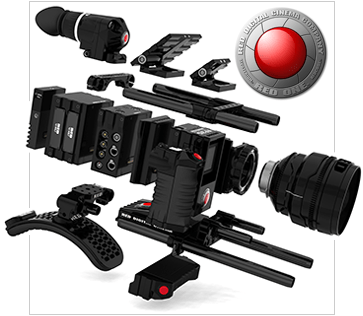
The Red Digital Cinema Camera Company manufactures digital cinematography cameras and accessories for professional and cinematic use. The company was created and financed by Oakley founder Jim Jannard with the publicly expressed intent to reinvent the camera industry. The company’s main product is the Red One, which can record at resolutions up to 4,096 horizontal by 2,304 vertical pixels, directly to flash or hard disk storage. It features a single Super 35-sized CMOS sensor and a cinematography industry standard PL mount.
Posted in Art, Money, Technology |
Leave a Comment »
February 13, 2011

A skeuomorph [skyoo-uh-mawrf] is a derivative object that retains ornamental design cues to a structure that was necessary in the original. They may be deliberately employed to make the new look comfortably old and familiar, such as copper cladding on zinc pennies or computer printed postage with circular town name and cancellation lines. Historically, high-status items, such as metal tableware, were often recreated for the mass market using ceramics, which were a cheaper material. In certain cases, efforts were made to recreate the rivets in the metal originals by adding pellets of clay to the pottery version.
In the modern era, cheaper plastic items often attempt to mimic more expensive wooden and metal products though they are only skeuomorphic if new ornamentation references original functionality, such as molded screw heads in molded plastic items. Blue jeans have authentic-looking brass rivet caps covering the functional steel rivet beneath, and a pocket watch pocket; digital cameras play a recorded audio clip of a conventional SLR camera mirror slap and shutter opening and closing. Such ornamentation is not necessarily non-functional: the watch pocket is now used for coins, and the camera shutter sound is used to indicate to subject and photographer when the taking of the picture is complete.
Posted in Language, Money, Technology |
Leave a Comment »
February 13, 2011

When In-N-Out Burger (a fast food chain in the U.S. south west) first opened in 1948, the company provided only a basic menu of burgers, fries and beverages. Instead of a broad menu like its competitors, In-N-Out has become known for its Secret Menu, unadvertised variations on its burgers that are based on customer preferences, such as the popular ‘animal style’: a mustard cooked beef patty with extra spread (thousand island dressing) and grilled onions. French fries can also be has ‘animal style.’ ‘Protein Style,’ introduced in the 1970s, replaces the bun with large leaves of lettuce; while the ‘Flying Dutchman’ is a 2×2 (two burger patties and two slices of cheese) with no bun, no vegetables, and no spread.
Posted in Food, Money |
Leave a Comment »
February 13, 2011
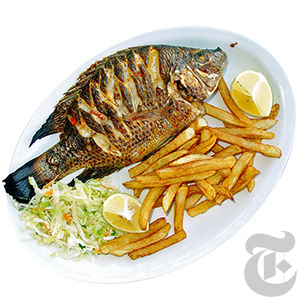
Tilapia [tuh-lah-pee-uh] is the common name for nearly a hundred species of fish. Tilapia inhabit a variety of fresh water habitats including shallow streams, ponds, rivers and lakes. Historically they have been of major importance in artisan fishing in Africa and the Middle East, and are of increasing importance in aquaculture. China is the largest Tilapia producer in the world, followed by Egypt.
read more »
Posted in Food, Health, Money |
Leave a Comment »
February 12, 2011

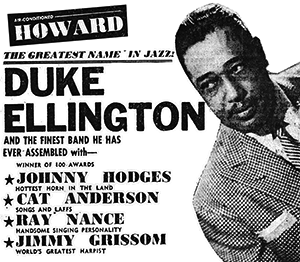
The Chitlin’ Circuit was the collective name given to the string of performance venues throughout the eastern and southern United States that were safe and acceptable for African American musicians, comedians, and other entertainers to perform during the age of racial segregation in the United States (from at least the late 19th century through the 1960s). The name derives from the soul food item chitterlings (stewed pig intestines).
Posted in Art, Money, Politics |
Leave a Comment »
February 12, 2011


Borscht Belt, or Jewish Alps, is a colloquial term for the mostly defunct summer resorts of the Catskill Mountains in upstate New York that were a popular vacation spot for New York City Jews from the 1920s through the 1960s. The name comes from borscht, a beet soup that is popular in many Central and Eastern European countries and was brought from these regions by Ashkenazi Jewish and Slavic immigrants to the United States, where it remains a popular dish in these ethnic communities as well.
read more »
Posted in Humor, Language, Money |
Leave a Comment »
February 12, 2011


The Mormon Corridor, also known as the Jell-O Belt, is a term for the areas of Western North America that were settled between 1850 and approximately 1890 by members of The Church of Jesus Christ of Latter-day Saints (LDS Church), who are commonly known as Mormons. The region’s moniker refers to the Mormon affinity for Jell-O. In support of this image, Jell-O was designated as Utah’s official state snack food in 2001 Utah has been the highest per capita consumer of Jell-O for many years.
Posted in Food, Money, Politics |
Leave a Comment »
February 12, 2011

Catastrophe bonds (also known as cat bonds) are risk-linked securities that transfer a specified set of risks from a sponsor to investors. They were created and first used in the mid-1990s in the aftermath of Hurricane Andrew and the Northridge earthquake. These bonds are inherently risky, generally BB, and are multiyear deals. If no catastrophe occurred, the insurance company would pay a coupon to the investors, who made a healthy return.
If a catastrophe did occur, then the principle would be forgiven and the insurance company would use this money to pay their claimholders. For example, if an insurer has built up a portfolio of risks by insuring properties in Florida, then it might wish to pass some of this risk on so that it can remain solvent after a large hurricane. It could simply purchase traditional catastrophe reinsurance, which would pass the risk on to reinsurers. Or it could sponsor a cat bond, which would pass the risk on to investors.
Posted in Money |
Leave a Comment »
February 11, 2011

A la carte cable television (from the French ‘from the menu’) refers to a model for cable companies to allow subscribers to select to which channels they would like to have access. This is in opposition to the large package deals currently prevalent in American cable deals, which often result in consumers paying for additional channels irrelevant to their interests. Leading companies such as Disney, and cable providers such as Time Warner prohibit operators from selling channels which stand alone.
Posted in Money, Politics, Technology |
Leave a Comment »
February 11, 2011

Chemex Coffeemaker, a famous coffee-making device, was introduced by the Chemex Corporation of Pittsfield, Mass. in the 1940s. It consists of a single hourglass-shaped vessel and is used to make coffee. It was invented by industrial chemist, Peter Schlumbohm; the New York Times in its obituary of Schlumbohm called the device ‘one of 100 best modern devices.’
Posted in Food, Money, Technology |
Leave a Comment »
February 11, 2011
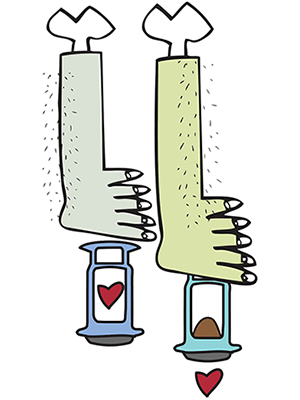
The AeroPress is a device for brewing coffee. It was invented in 2005 by Alan Adler. Coffee is steeped for about 10 seconds and then forced through a paper microfilter. The maker describes the result as an espresso strength concentration of coffee. The device consists of two copolyester cylinders. One cylinder has a rubber plunger and fits inside the larger cylinder to create an airtight seal, similar to a syringe.
The AeroPress, though sharing some similarities with a French press, is quite different. It uses a disposable paper filter which removes most of the coffee solids, resulting in a sediment-free brew, and air pressure is used to extract more coffee oils.
Posted in Food, Money, Technology |
Leave a Comment »
February 11, 2011
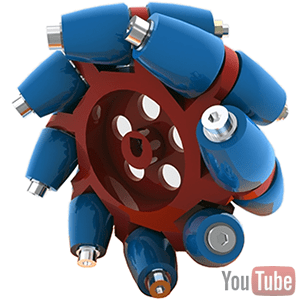
The Mecanum wheel is one design for a wheel which can move in any direction. It is sometimes called the Ilon wheel after its Swedish inventor, Bengt Ilon, who came up with the idea in 1973 when he was an engineer with the Swedish company Mecanum AB. It is a conventional wheel with a series of rollers attached to its circumference. As well as moving forward and backward like conventional wheels, they allow sideways movement by spinning wheels on the front and rear axles in opposite directions.
Posted in Money, Technology |
Leave a Comment »




 The Daily Omnivore