January 18, 2011

The YikeBike mini-farthing is a folding electric bicycle. It weighs 9.8 kilograms (22 lb) and when folded, it is small enough to fit in a backpack. The YikeBike was invented by Grant Ryan and designed by a team in New Zealand over 5 years. It is the smallest and lightest electric folding bicycle in the world and retails for $3595 US.
The vehicle has no chain pedal, gear box, mechanical brake, cables or levers. These functions are provided by a 1.2 kW electric motor and controller. The YikeBike has electronic anti-skid brakes. There are also built-in lights, indicators and brake lights for safety. Top speed is 15 miles per hour, and the bike can travel about six miles per charge.
Posted in Money, Technology, World |
Leave a Comment »
January 18, 2011

Daiwa House is Japans largest homebuilder, specializing in prefabricated houses. It was founded in 1955 in Osaka. The Emergency Disaster Vehicle o1 (EDV-01) is a Daiwa concept habitat. It is an easily transported, self-contained shelter and amenities to be deployed during a disaster.
Once in place, the top portion of the EDV expands, doubling the space. This second level is a living area with beds and a desk. The first floor is contains the necessities: a water-free toilet, functional kitchen, refrigerator, and a bathroom with shower. The unit is completely self-sufficient, using roof-mounted solar panels, ambient water-vapor condensers, and fuel cells to provide a livable space. The EDV-01 also generates its own fuel, hydrogen, through electrolysis.
Posted in Money, Technology, World |
Leave a Comment »
January 18, 2011

The Union: The Business Behind Getting High is a 2007 documentary film by Canadian filmmaker Brett Harvey. The film explores the illegal growth, sale and trafficking of marijuana. The film follows host Adam Scorgie as he examines the underground market, interviewing growers, police officers, criminologists, economists, doctors, politicians and pop culture icons, revealing how the industry can function despite being a criminal enterprise.
The history of marijuana and the reasons for its present prohibition are discussed, often comparing it to the prohibition of alcohol in the United States in the 1920s, suggesting that gang drug warfare and other negative aspects associated with marijuana are a result of prohibition, not the drug itself. The gangs that grow and traffic the drugs are likened to those that appeared in major U.S. cities during the Prohibition, with the intention of profiting from the sale of illegal alcohol.
Posted in Drugs, Money, Politics |
Leave a Comment »
January 18, 2011

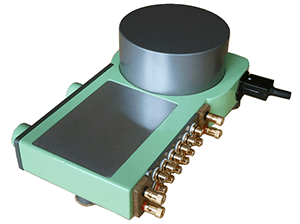
Gainclone or chipamp is a term commonly used to describe a type of audio amplifier made by do-it-yourselfers. The Gainclone is probably the most commonly built and well-known amplifier project amongst hobbyists. It is simple to build and involves only a few readily accessible, inexpensive parts.
In 1999, 47 Labs introduced the Gaincard amplifier, which had fewer parts, less capacitance and simpler construction than anything preceding it. The DIY community started building replicas or ‘clones’ of the Gaincard using integrated circuits from National Semiconductor and other manufacturers. Most designs are very effective and produce high quality sound, even though some audiophiles consider chip-based amplifiers to be inferior to their discrete counterparts.
Posted in Art, Money, Technology |
Leave a Comment »
January 18, 2011

Slab City is a camp in the Colorado Desert in southeastern California, used by RV owners and squatters. It takes its name from the concrete slabs and pylons that remain from abandoned World War II Marine barracks (Camp Dunlap). A group of servicemen remained after the base closed, and the place has been inhabited ever since (although the number of residents has declined since the mid 1980s). Several thousand campers, many of them retired, use the site during the winter months. These ‘snowbirds’ stay only for the winter, before migrating north in the spring to cooler climates. The temperatures during the summer are unforgiving; nonetheless, there is a group of around 150 permanent residents.
Most ‘Slabbers’ subsist on welfare and have been driven to the Slabs through poverty. The site is both decommissioned and uncontrolled, and there is no charge for parking. The camp has no electricity, no running water or other services. Many campers use generators or solar panels. Supplies can be purchased in nearby Niland, California, located about three miles away. Located just east of State Route 111, the entrance to Slab City is easily recognized by the colorful Salvation Mountain, a small hill approximately three stories high which is entirely covered in acrylic paint, concrete and adobe and festooned with Bible verses. It is an ongoing project of over two decades by permanent resident Leonard Knight.
Posted in Money, Politics |
Leave a Comment »
January 17, 2011

Dead cat bounce is a Wall Street term that refers to a small, brief recovery in the price of a declining stock. The term is derived from the expression: ‘Even a dead cat will bounce if it falls from a great height.’ The earliest record of the phrase dates from a 1985 Financial Times article describing the Singaporean and Malaysian stock markets bounce after a hard fall during the recession of that year. A similar expression has an older history in Cantonese and this may be the origin of the term.
Posted in Humor, Language, Money |
Leave a Comment »
January 17, 2011

Friendly Floatees are plastic bath toys marketed by The First Years, Inc. and made famous by the work of Curtis Ebbesmeyer, an oceanographer who models ocean currents on the basis of flotsam movements including those of a consignment of Friendly Floatees washed into the Pacific Ocean in 1992. The toys themselves have become collector’s items, fetching prices as high as $1,000.
Posted in Money, Science |
Leave a Comment »
January 17, 2011

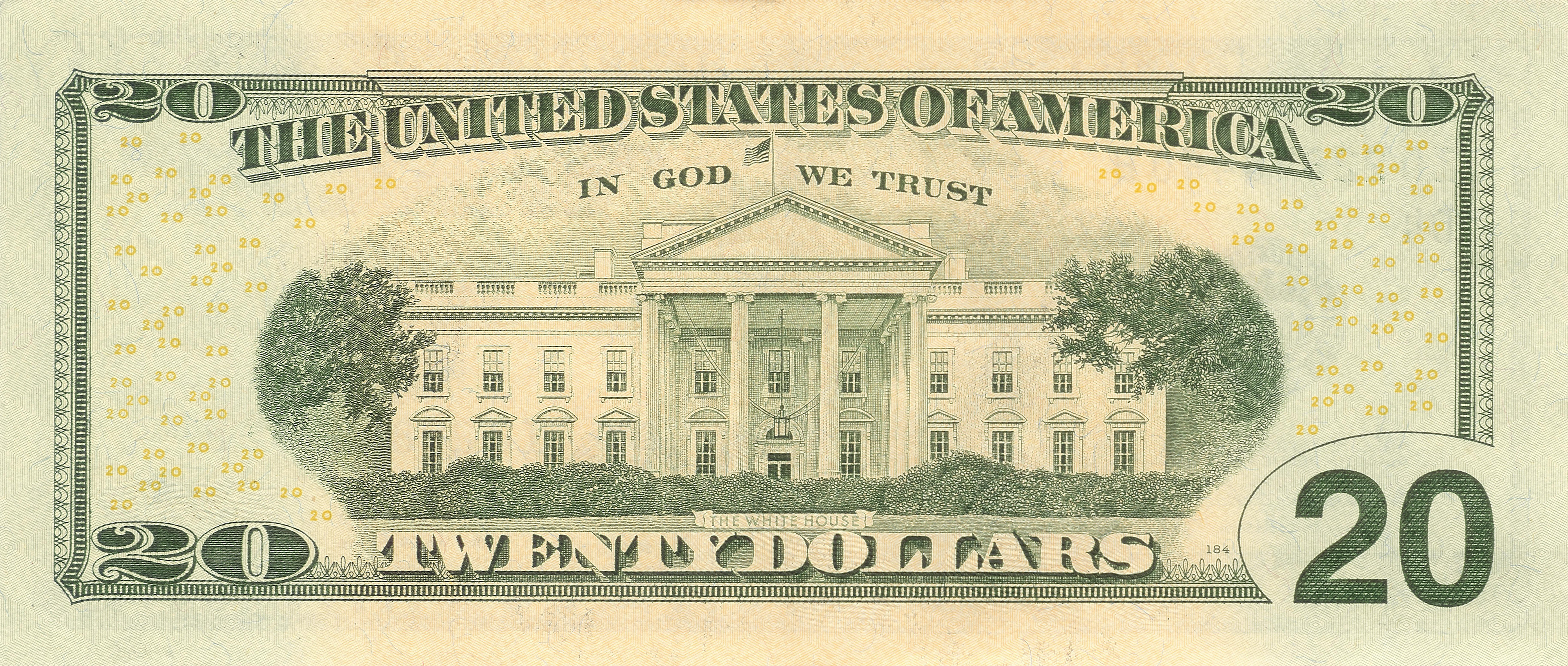
The EURion constellation is a pattern of symbols found on a number of banknote designs worldwide since about 1996. It is added to help software detect the presence of a banknote in a digital image. Such software can then block the user from reproducing banknotes to prevent counterfeiting using color photocopiers. The system is employed on Euros, U.S., dollars, Japanese Yen, and British pounds sterling.
The name ‘EURion constellation’ was coined by German computer scientist, Markus Kuhn, who uncovered the pattern in early 2002 while experimenting with a Xerox photocopier that refused to reproduce banknotes. Technical details regarding the EURion constellation are kept secret by its inventors and users. A patent application suggests that the pattern and detection algorithm were designed at OMRON Corporation, a Japanese electronics company.
Posted in Money, Technology, World |
Leave a Comment »
January 17, 2011

Parkinson’s Law of Triviality (also known by the expression ‘color of the bike shed’) is British author, C. Northcote Parkinson’s 1957 argument that organizations give disproportionate weight to trivial issues. Parkinson compares a committee’s deliberations on a nuclear power plant to deliberation on a bicycle shed:
A nuclear reactor is so vastly expensive and complicated that an average person cannot understand it, so they assume that those working on it understand it; even those with strong opinions often withhold them for fear of being shown to be insufficiently informed. On the other hand, everyone understands a bicycle shed (or thinks he or she does), so building one can result in endless discussions because everyone involved wants to add his or her touch and show that they have contributed.
Posted in Humor, Language, Money |
Leave a Comment »
January 17, 2011
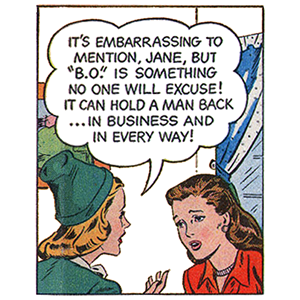
Two Cunts in a Kitchen, or sometimes, less graphically Two Cs in a K, is slang used within the advertising industry for a type of television commercial. Generally, the commercial shows two women in a domestic scene, discussing, using, or otherwise portraying the advertiser’s product in a positive manner.
Posted in Language, Money |
Leave a Comment »
January 13, 2011

Watson, named after IBM’s founder, Thomas J. Watson, is an artificial intelligence program developed to answer questions posed in natural language. Watson competed on the TV game show ‘Jeopardy!’ in 2011, defeating past champions Ken Jennings and Brad Rutter. During the game, Watson had access to 200 million pages of content, including the full text of Wikipedia. Watson consistently outperformed its human opponents on the game’s signaling device, but had trouble responding to a few categories, notably those having short clues containing only a few words.
The original Watson was made up of a cluster of 2880 POWER7 processor cores and 16 Terabytes of RAM. IBM’s master inventor and senior consultant Tony Pearson estimated Watson’s hardware cost about $3 million and with 80 TeraFLOPs would be placed 94th on the Top 500 Supercomputers list in 2011. In 2013, IBM announced that Watson software system’s first commercial application would be for utilization management decisions in lung cancer treatment at Sloan–Kettering in conjunction with health insurance company WellPoint. Watson’s business chief Manoj Saxena says that 90% of nurses in the field who use Watson now follow its guidance.
Posted in Language, Money, Technology |
Leave a Comment »
January 13, 2011
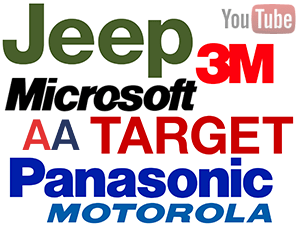

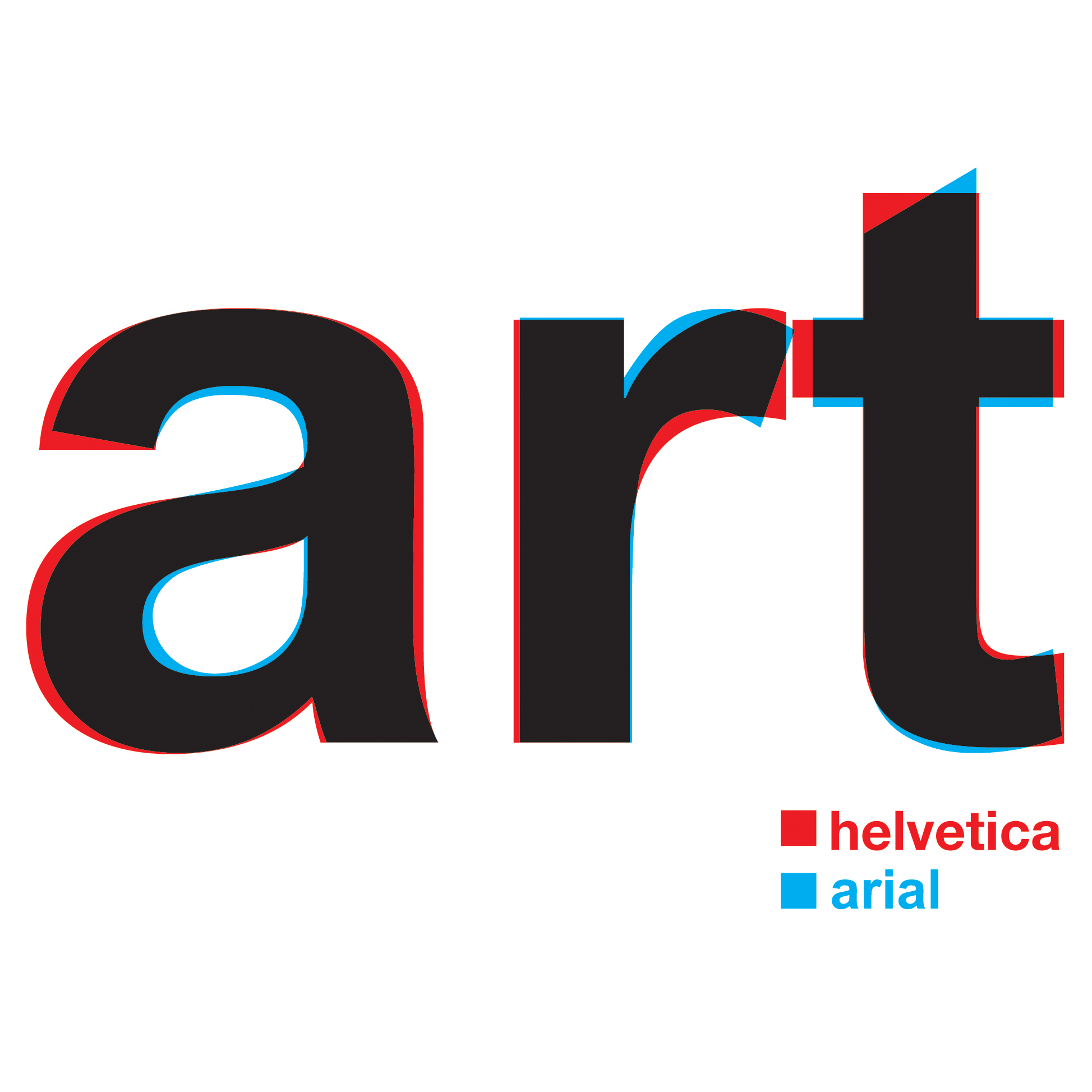
Helvetica is a widely used sans-serif typeface developed in 1957 by Swiss typeface designer Max Miedinger with Eduard Hoffmann to create a neutral typeface that had great clarity, no intrinsic meaning in its form, and could be used on a wide variety of signage. It’s original name was ‘Neue Haas Grotesk’; it was changed to ‘Helvetica’ (the Latin name for Switzerland) in 1960 in order to make it more marketable internationally. Generic versions of Helvetica have been made by various vendors; Monotype’s Arial, designed in 1982 has identical character widths and is indistinguishable by most non-specialists.
Helvetica is a popular choice for commercial wordmarks, including: 3M, American Airlines, American Apparel, BMW, Jeep, JCPenney, Lufthansa, Microsoft, Target, RE/MAX, Toyota, Panasonic, Motorola, Kawasaki, and Verizon Wireless. Apple Inc. has used Helvetica widely in its software. Helvetica is also widely used by the U.S. government; for example, federal income tax forms are set in Helvetica, and NASA uses the type on the Space Shuttle orbiter. New York City has been using Helvetica since 1989 for many of its subway signs. In 2007, director Gary Hustwit released a documentary, ‘Helvetica,’ to coincide with the fiftieth anniversary of the typeface.
Posted in Art, Language, Money |
Leave a Comment »




 The Daily Omnivore