October 28, 2010

Plunderphonics is a term coined by composer John Oswald in 1985 in his essay ‘Plunderphonics, or Audio Piracy as a Compositional Prerogative.’ It has since been applied to any music made by taking one or more existing audio recordings and altering them in some way to make a new composition. Plunderphonic music is known for heavy sampling of educational films of the 1950s, news reports, radio shows, or anything with trained vocal announcers.
The process of sampling other sources is found in various genres (notably hip-hop), but in plunderphonic works the sampled material is often the only sound used. These samples are usually uncleared, and sometimes result in legal action being taken due to copyright infringement. Some plunderphonic artists use their work to protest what they consider to be overly-restrictive copyright laws. Many plunderphonic artists claim their use of other artists’ materials falls under the fair use doctrine.
Posted in Art, Money, Technology |
Leave a Comment »
October 26, 2010
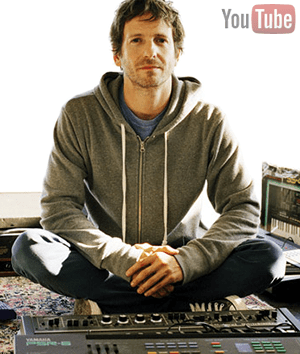
Lukasz Gottwald, better known as Dr. Luke, is an American songwriter, record producer, and remixer. Luke performed with the Saturday Night Live Band band for ten seasons until 2007. He has co-written and co-produced a string of commercially successful songs including Taio Cruz’s ‘Dynamite,’ Kelly Clarkson’s ‘Since U Been Gone,’ Pink’s ‘U + Ur Hand,’ Avril Lavigne’s ‘Girlfriend,’ Katy Perry’s ‘I Kissed a Girl,’ Britney Spears’ ‘Circus,’ Miley Cyrus’s ‘Party in the U.S.A.,’ and Ke$ha’s ‘Tik Tok.’
He was named one of the top ten producers of the decade by Billboard in 2009 and the Songwriter of the Year at the 2010 ASCAP Pop Music Awards. He is a frequent collaborator with Swedish music producer and songwriter Martin Karl Sandberg, aka Max Martin.
Posted in Art, Money |
Leave a Comment »
October 26, 2010

Zojirushi is a Japanese multinational manufacturer and marketer of high-quality vacuum flasks, bread machines and consumer electronics including electric water boilers, refrigerators and rice cookers. It has a branch in South Korea and subsidiary companies in China, Taiwan, Hong Kong, and the United States. Zojirushi is listed on Osaka Securities Exchange.
The company was founded in 1918 as the Ichikawa Brothers Trading Company in Osaka and in 1948 was changed to Kyowa Manufacturing Co., Ltd. In 1961, its name was changed again to the Zojirushi Corporation and its corporate logo, including an elephant (Zōjirushi means ‘elephant mark’) was adopted.
Posted in Money, Technology, World |
Leave a Comment »
October 20, 2010

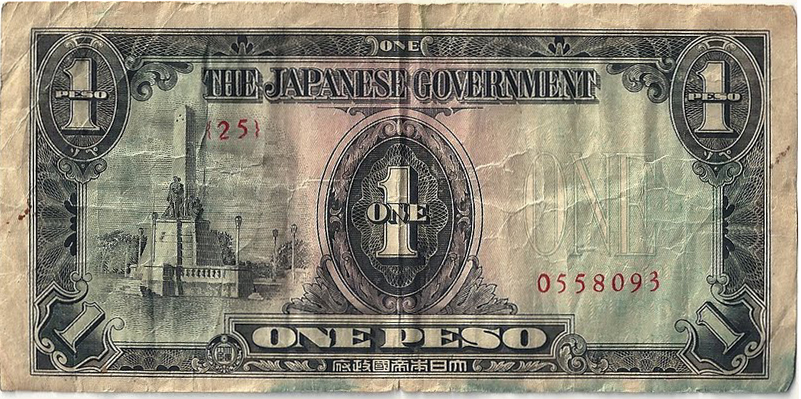
During World War II in the Philippines, the occupying Japanese government issued fiat currency in several denominations; this is known as the Japanese government-issued Philippine fiat peso, or simply the Japanese peso. The Japanese-sponsored Second Philippine Republic under Jose P. Laurel outlawed possession of guerilla currency, and declared a monopoly on the issuance of money, so that anyone found to possess guerrilla notes could be arrested.
The Filipinos called the fiat peso ‘Mickey Mouse money,’ because it was similar to play money and next to worthless. Many survivors of the war tell stories of going to the market laden with suitcases or ‘bayong’ (native bags made of woven coconut or buri leaf strips) overflowing with the Japanese-issued bills. In 1944, a box of matches cost more than 100 Mickey Mouse pesos.
Posted in Money, Politics, War |
Leave a Comment »
October 18, 2010


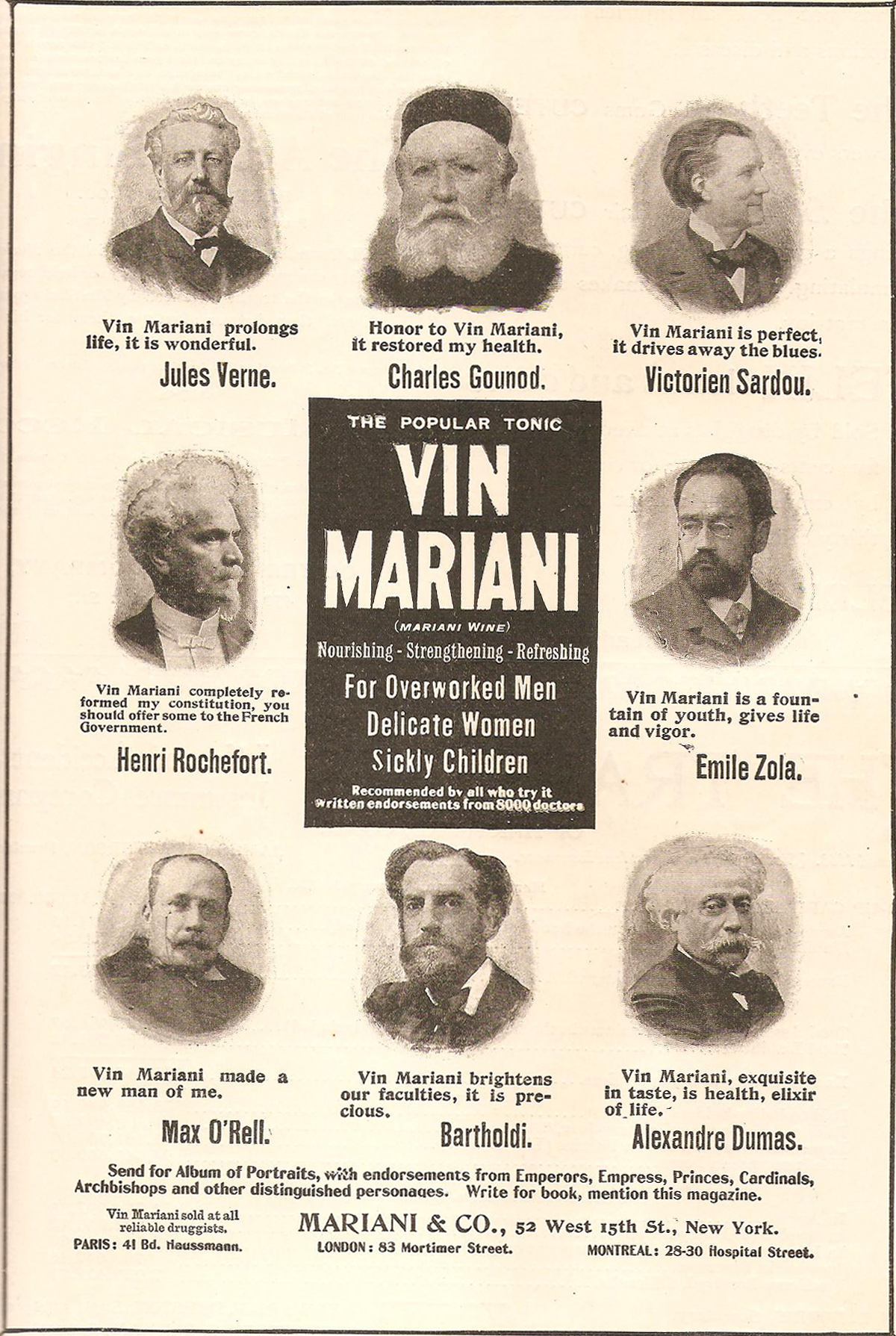
Vin Mariani (French: Mariani’s wine) was a tonic and patent medicine created circa 1863 by Angelo Mariani, a chemist who became intrigued with coca and its economic potential after reading Paolo Mantegazza’s paper on coca’s effects. Mariani started marketing a wine called Vin Tonique Mariani (à la Coca du Pérou) which was made from Bordeaux wine treated with coca leaves.
The ethanol in the wine acted as a solvent and extracted the cocaine from the coca leaves, altering the drink’s effect. It originally contained 6 mg of cocaine per fluid ounce of wine, but Vin Mariani which was to be exported contained 7.2 mg per ounce in order to compete with the higher cocaine content of similar drinks in the United States. Ads for Vin Mariani claimed that it would restore health, strength, energy, and vitality.
read more »
Posted in Drugs, Food, Money |
Leave a Comment »
October 18, 2010

Freeganism is the practice of reclaiming and eating food that has been discarded. Freegans and Freeganism are often seen as part of a wider ‘anti-consumerist’ ideology, and freegans often employ a range of alternative living strategies based on limited participation in the conventional economy and minimal consumption of resources. Freegans ’embrace community, generosity, social concern, freedom, cooperation, and sharing in opposition to a society based on materialism, moral apathy, competition, conformity, and greed.’
The word ‘freegan’ is a portmanteau of ‘free’ and ‘vegan’; not all dumpster divers are vegan, but the ideology of veganism is inherent in freeganism. Freeganism started in the mid 1990s, out of the antiglobalization and environmentalist movements. The movement also has elements of Diggers, an anarchist street theater group based in Haight-Ashbury in San Francisco in the 1960s, that gave away rescued food.
read more »
Posted in Food, Money, Philosophy |
Leave a Comment »
October 18, 2010
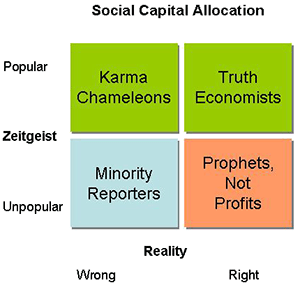
Whuffie is the ephemeral, reputation-based currency of Cory Doctorow’s science fiction novel, ‘Down and Out in the Magic Kingdom.’ This book describes a post-scarcity economy: All the necessities (and most of the luxuries) of life are free for the taking. A person’s current Whuffie is instantly viewable to anyone, as everybody has a brain-implant giving them an interface with the Net. The term has since seen some adoption as a synonym for social capital.
In the novel usual economic incentives have disappeared: Whuffie has replaced money, providing a motivation for people to do useful and creative things. A person’s Whuffie is a general measurement of his or her overall reputation and is gained (or lost) according to a person’s favorable (or unfavorable) actions. Public opinion determines which actions are favorable or unfavorable. Rudely pushing past someone on the sidewalk will cause a loss of points from the person pushed (and possibly from bystanders who witness the incident), while composing a much-loved symphony will earn the composer Whuffie from everyone who enjoyed it.
Posted in Money, Philosophy, Technology |
Leave a Comment »
October 18, 2010
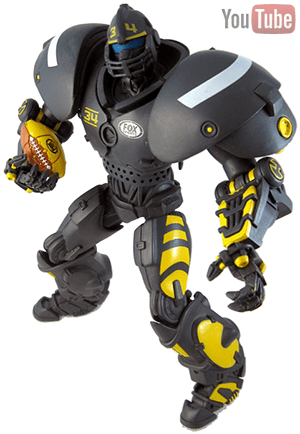
‘Cleatus the Robot,’ is the official mascot of Fox NFL Sunday, named by a viewer during a contest in the winter of 2007 in which fans were able to submit entries as to what they thought the robot’s name should be. Cleatus made his first appearance during the 2005-2006 NFL season, but was not used regularly until the following season. Cleatus mainly appears during the intro sequence of the show as well as brief commercials for movies and TV shows.
In commercials he commonly gets attacked by a CGI character from whatever the advertisement is about. He has thus far been attacked by Iron Man, a dragon, and a Terminator robot. Cleatus is also known to hop on two feet, play the electric guitar, shake out his limbs, and do dance moves such as the swim and the electric slide. In response to Cleatus, NASCAR on Fox created ‘Digger,’ an animated gopher mascot.
Posted in Games, Humor, Money |
Leave a Comment »
October 14, 2010


Zorbing is the recreation of rolling downhill in an orb, generally made of transparent plastic. Zorbing is generally performed on a gentle slope, but can also be done on a level surface, permitting more rider control. There are two types of orbs, harnessed and non-harnessed. Non-harness orbs carry up to three riders, while the harness orbs are constructed for one to two riders. The longer runs are approximately half a mile. The first zorbing site was established in Rotorua, New Zealand, by David Akers and Andrew Akers in 1994.
The zorb is double-sectioned, with one ball inside the other with an air layer between. This acts as a shock absorber for the rider, damping bumps while traveling. A typical orb is about 3 metres (9.8 ft) in diameter, with an inner orb size of about 2 metres (6 ft 6.7 in). The inner and outer orb are connected by numerous (often hundreds) small ropes. Orbs have one or two tunnel-like entrances.
Posted in Games, Money |
Leave a Comment »
October 13, 2010

A sizable number of Indian immigrants to the United States came in the 1960s and 1970s, when the motel and hotel industry was booming. Many of them bought up undervalued and dilapidated properties and turned them into businesses, including motels and hotels. It was estimated in 2007 that 60% of the mid-sized motels and hotels in the United States were owned by Indians. Nearly one-third of those Indians were called Patel (and came from Gujarat), with the result that, apparently, many people believe Patel is an Indian word meaning ‘hotel.’
Patel, originally meaning ‘headman’ or ‘village chief” derives from Patlikh, the record keeper named by princely rulers in Gujarat to keep track of the crops, pat being a parcel of land. Traditionally, the Patels or Patils assist the Talati or Kulkarni in collection or revenue in rural areas. Patels in northern Gujarat were very prominent farmers as well. Within the United Kingdom, it is the twenty-fourth most common surname nationally, and the third most common in the Greater London region. In the US, the surname ‘Patel’ ranks 174 among the top 500 list of most common last names.
Posted in Language, Money, World |
Leave a Comment »
October 12, 2010


The Amazon Mechanical Turk (MTurk) is a crowdsourcing Internet marketplace that enables computer programmers (known as Requesters) who are located in the United States to co-ordinate the use of human intelligence to perform tasks which computers are unable to do. The Requesters are able to pose tasks known as HITs (Human Intelligence Tasks), such as choosing the best among several photographs of a store-front, writing product descriptions, or identifying performers on music CDs. Workers (called Providers) can then browse among existing tasks and complete them for a monetary payment set by the Requester.
Requesters can ask that Workers fulfill Qualifications before engaging a task, and they can set up a test in order to verify the Qualification. They can also accept or reject the result sent by the Worker, which reflects on the Worker’s reputation. Currently, a Requester has to have a U.S. address, but Workers can be anywhere in the world. Requesters, which are typically corporations, pay at least 10 percent over the price of successfully completed HITs to Amazon.
Posted in Money, Technology |
Leave a Comment »
October 12, 2010

Choco Taco is a brand of dessert food resembling a taco, consisting of a taco shell-like waffle cone, reduced-fat vanilla ice cream, artificially flavored fudge, peanuts, and a milk chocolate coating. The product was invented in Philadelphia in the 1980s by the Jack and Jill Ice Cream Company, but was introduced nationwide by Good Humor-Breyers in 1996 as ‘America’s coolest taco,’ at the Supermarket Industry Convention in Chicago, Illinois.
The ‘Choco Taco’ is marketed under both the Good Humor and Klondike brands. Both brands are owned by the same ice cream conglomerate, Good Humor-Breyers, a unit of Unilever, based in Green Bay, Wisconsin. In 1998, Unilever introduced the Choco Taco to Italy with the name Taco Algida.
Posted in Food, Money |
Leave a Comment »





 The Daily Omnivore