September 14, 2010

Silly Bandz are a brand of silicone rubber bands formed into shapes including animals, objects, and letters. They are distributed by BCP Imports and are normally worn as bracelets. The original shaped silicone rubber bands were created in 2002 by a Japanese design team who wanted to introduce a more environmentally-sustainable rubber band as an office product.
Robert Croak, owner of Toledo, Ohio-based BCP Imports (known for distributing the Livestrong wristbands), encountered the bands on a business trip and decided to re-purpose them as a toy by making them larger and thicker, and marketing them as a kids’ fashion accessory. The first Silly Bandz sets were sold online in November 2008, and by April of 2010 they were most popular toys sold on Amazon.com.
Posted in Money |
Leave a Comment »
September 13, 2010

An announcer’s test is a test sometimes given to those wanting to be a radio or television announcer. The tests usually involve retention, memory, repetition, enunciation, diction, and using every letter in the alphabet a variety of times. One of the more well known announcer’s tests originated at Radio Central New York in the early 1940s as a cold reading test given to prospective radio talent to demonstrate their speaking ability.
There are many variants, but most begin thusly: One hen. One hen, two ducks. One hen, two ducks, three squawking geese. One hen, two ducks, three squawking geese, four limerick oysters… and so on.
Posted in Humor, Money |
1 Comment »
September 13, 2010

A stalking horse is a person who acts on the behalf of an anonymous third party. The expression is generally used in politics and business. The term originally derived from the practice of hunting wildfowl, which flee immediately on the approach of humans, but tolerate the close presence of animals such as horses and cattle. Hunters slowly approach their quarry by walking alongside their horses, keeping out of sight until the flock is within firing range. Animals or devices used for this purpose are called stalking horses.
The phenomenon occurs particularly in politics, where a junior politician acts as the stalking horse to promote the interests of a senior politician who remains unseen in case the actions would damage him or her but nevertheless wants to provoke a debate or challenge to a party colleague. In some cases stalking horses are not working for a particular individual but may wish to provoke a response that leads others to join in. In politics, the truth about the relationship between an individual stalking horse and a candidate may never be known, as both sides may claim that the (alleged) stalking horse acted without the agreement of anyone else.
Posted in Language, Money, Politics |
Leave a Comment »
September 13, 2010

Y Combinator is an American seed-stage startup funding firm, started in 2005 by Paul Graham, Robert Morris, Trevor Blackwell, and Jessica Livingston. Y Combinator provides seed money, advice, and connections at two 3-month programs per year. In exchange, they take an average of about 6% of the company’s equity. Compared to other startup funds, Y Combinator provides very little money ($17,000 for startups with 2 founders and $20,000 for those with 3 or more). This reflects Graham’s theory that between free software, dynamic languages, the web, and Moore’s Law, the cost of founding a startup has greatly decreased. The firm is named after a construct in the theory of functional programming.
Y Combinator was started after Graham gave a talk at his alma mater, Harvard (where he earned a PhD in Computer Science). He suggested founders seek seed funding from angel investors preferably those who had made money in technology. He soon after organized Y Combinator to offer seed funding to startups. As of June 2009, Y Combinator had funded over 118 startups. The number of startups funded in each cycle has been gradually increasing. The first cycle in summer 2005 had eight startups. In the summer 2010 cycle, there were 38. Some of the better-known funded companies include Reddit and Dropbox.
Posted in Money, Technology |
Leave a Comment »
September 12, 2010
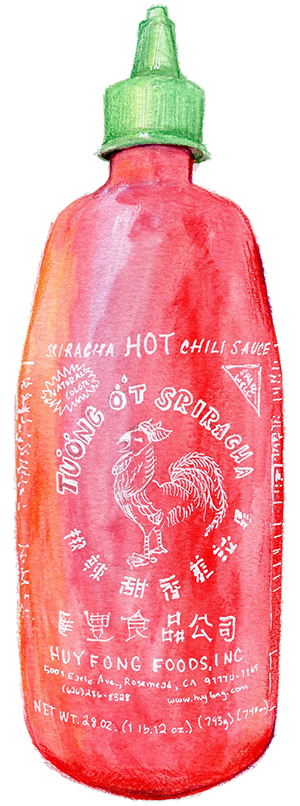
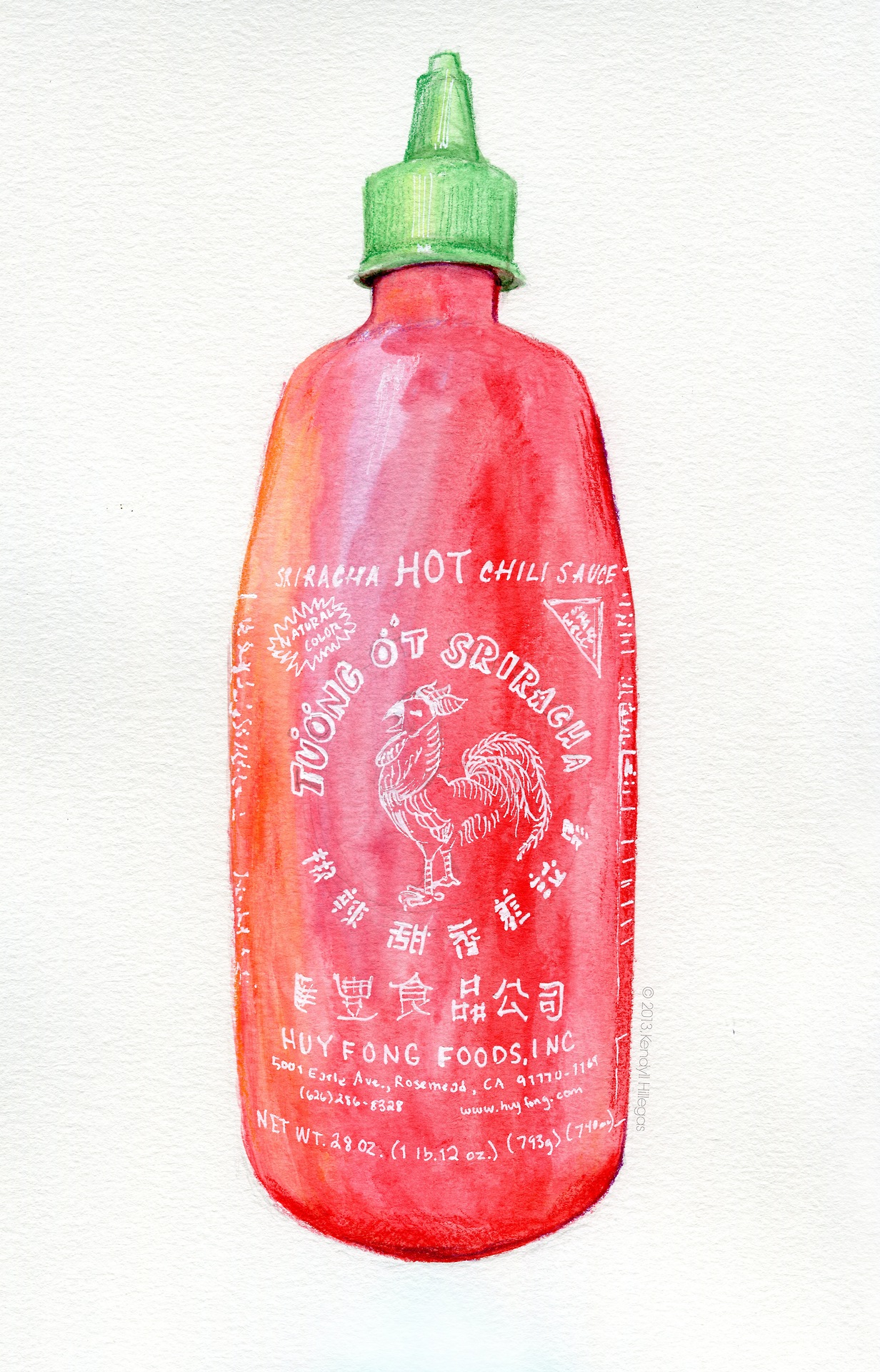
Sriracha [sir-rotch-ah] is a Thai hot sauce named after the seaside city of Si Racha, in the Chonburi Province of central Thailand, where it was first produced for dishes served at local seafood restaurants. It is a paste of chili peppers, vinegar, garlic, sugar and salt. Sriracha was popularized in America by Huy Fong Foods, and is known as rooster sauce or cock sauce, due to the rooster featured on its label.
Posted in Food, Money, World |
Leave a Comment »
September 11, 2010

The Phantom Works division is the main research and development arm of The Boeing Company. Founded by McDonnell Douglas before the merger with Boeing, its primary focus had been development of advanced military products and technologies. After the merger, research and development expanded to cover commercial and space applications as well. Phantom Works has been a driving factor behind nearly all of the company’s large contracts, including the upcoming X-45 UCAV (unmanned combat air vehicle).
Posted in Money, Technology, War |
Leave a Comment »
September 11, 2010
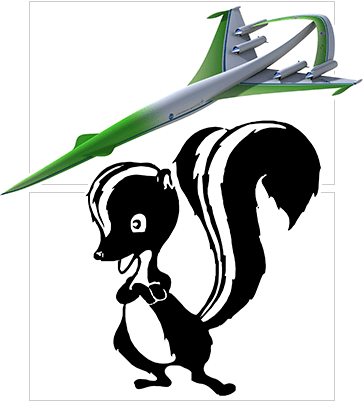
Skunk Works is an official alias for Lockheed Martin’s Advanced Development Programs. Skunk Works is responsible for a number of famous aircraft designs, including the U-2, the SR-71 Blackbird, the F-117 Nighthawk, and the F-22 Raptor. Its largest current project is the F-35 Lightning II, which will be used in the air forces of several countries around the world. Production is expected to last for up to four decades. The designation ‘skunk works’ is widely used in business, engineering, and technical fields to describe a group within an organization given a high degree of autonomy and unhampered by bureaucracy, tasked with working on advanced or secret projects.
The term came from Al Capp’s satirical, hillbilly comic strip Li’l Abner, which was immensely popular in the 1940s and ’50s. The ‘Skonk Works’ was a dilapidated factory in the backwoods of Kentucky. According to the strip, scores of people were done in yearly by the toxic fumes of the concentrated ‘skonk oil,’ which was brewed and barreled daily for some mysterious, never specified purpose. The original Lockheed facility was located adjacent to a malodorous plastics factory. Engineer, Irving Culver, first referred to the facility as ‘Skonk Works.’ The name stuck, and at the request of the comic strip copyright holders, Lockheed changed the name of the advanced development company to ‘Skunk Works’ in the 1960s.
Posted in Money, Technology, War |
Leave a Comment »
September 11, 2010

In shopping mall design, the Gruen transfer refers to the moment when consumers respond to ‘scripted disorientation’ cues in the environment. It is named for Austrian architect Victor Gruen (who disavowed such manipulative techniques). Shopping mall entrances have intentionally confusing layouts, intended to cause shoppers to lose track of their original intentions. Spatial awareness of their surroundings plays a key role, as does the surrounding sound and music. The effect of the transfer is marked by a slower walking pace and glazed eyes.
Posted in Money, Science |
Leave a Comment »
September 10, 2010
The Electronic Frontier Foundation (EFF) is an international non-profit digital rights advocacy and legal organization based in the United States.
EFF provides funds for legal defense in court, defends individuals and new technologies from what it considers baseless or misdirected legal threats, works to expose government malfeasance, provides guidance to the government and courts, organizes political action and mass mailings, supports some new technologies which it believes preserve personal freedoms, maintains a database and web sites of related news and information, monitors and challenges potential legislation that it believes would infringe on personal liberties and fair use, and solicits a list of what it considers patent abuses with intentions to defeat those that it considers without merit.
Posted in Money, Politics, Technology |
Leave a Comment »
September 10, 2010
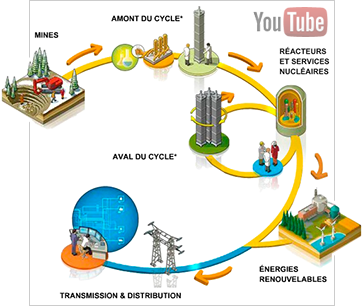
Areva is a French public multinational industrial conglomerate formed in September of 2001, and is the world’s largest supplier of nuclear energy. It is the only company with a presence in each industrial activity linked to nuclear energy: mining, chemistry, enrichment, combustibles, services, engineering, nuclear propulsion and reactors, treatment, recycling, stabilization, and dismantling. The corporate name Areva is inspired by the Trappist Santa Maria de la Real monastery in Arevalo in Spain.
Posted in Money, Technology, World |
Leave a Comment »
September 3, 2010

A hype cycle is a graphic representation of the maturity, adoption and social application of specific technologies. The term was coined by information technology research and advisory firm Gartner.
Posted in Money, Technology |
Leave a Comment »
September 2, 2010


A hackerspace or hackspace (also referred to as a hacklab, makerspace or creative space) is a location where people with common interests, usually in computers, technology, or digital or electronic art can meet, socialise and/or collaborate. A hackerspace can be viewed as an open community labs incorporating elements of machine shops, workshops and/or studios where hackers can come together to share resources and knowledge to build and make things. Some hackspaces are freely available, and others charge dues for access to equipment and networks.
One notable hackerspace is the Hacker Dojo, a non-profit community center and hackerspace in Mountain View, California, inspired by nearby facilities like Noisebridge, TechShop, The Crucible, and Coworking locations like Citizen Space, Sandbox Suites, and The Hat Factory. The Dojo is a membership organization – nearly all funds come from $100/month membership subscriptions, though the organization has been sponsored by Google and Microsoft. Membership provides access to the 8180 square foot facility, equipped with computers, electronics, and a high speed network.
Posted in Money, Technology |
Leave a Comment »





 The Daily Omnivore