September 11, 2010

The Phantom Works division is the main research and development arm of The Boeing Company. Founded by McDonnell Douglas before the merger with Boeing, its primary focus had been development of advanced military products and technologies. After the merger, research and development expanded to cover commercial and space applications as well. Phantom Works has been a driving factor behind nearly all of the company’s large contracts, including the upcoming X-45 UCAV (unmanned combat air vehicle).
Posted in Money, Technology, War |
Leave a Comment »
September 11, 2010

Skunk Works is an official alias for Lockheed Martin’s Advanced Development Programs. Skunk Works is responsible for a number of famous aircraft designs, including the U-2, the SR-71 Blackbird, the F-117 Nighthawk, and the F-22 Raptor. Its largest current project is the F-35 Lightning II, which will be used in the air forces of several countries around the world. Production is expected to last for up to four decades. The designation ‘skunk works’ is widely used in business, engineering, and technical fields to describe a group within an organization given a high degree of autonomy and unhampered by bureaucracy, tasked with working on advanced or secret projects.
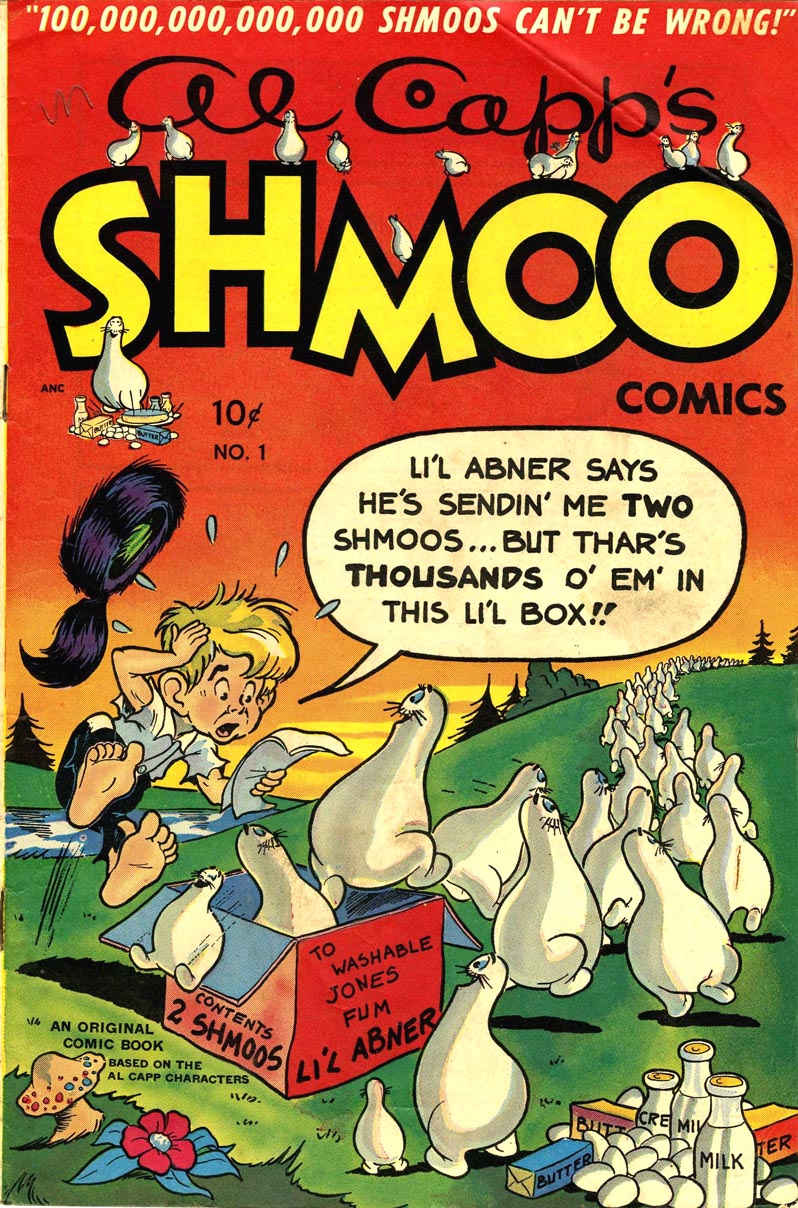
The term came from Al Capp’s satirical, hillbilly comic strip Li’l Abner, which was immensely popular in the 1940s and ’50s. The ‘Skonk Works’ was a dilapidated factory in the backwoods of Kentucky. According to the strip, scores of people were done in yearly by the toxic fumes of the concentrated ‘skonk oil,’ which was brewed and barreled daily for some mysterious, never specified purpose. The original Lockheed facility was located adjacent to a malodorous plastics factory. Engineer, Irving Culver, first referred to the facility as ‘Skonk Works.’ The name stuck, and at the request of the comic strip copyright holders, Lockheed changed the name of the advanced development company to ‘Skunk Works’ in the 1960s.
Posted in Money, Technology, War |
Leave a Comment »
September 11, 2010

In shopping mall design, the Gruen transfer refers to the moment when consumers respond to ‘scripted disorientation’ cues in the environment. It is named for Austrian architect Victor Gruen (who disavowed such manipulative techniques). Shopping mall entrances have intentionally confusing layouts, intended to cause shoppers to lose track of their original intentions. Spatial awareness of their surroundings plays a key role, as does the surrounding sound and music. The effect of the transfer is marked by a slower walking pace and glazed eyes.
Posted in Money, Science |
Leave a Comment »
September 10, 2010
The Electronic Frontier Foundation (EFF) is an international non-profit digital rights advocacy and legal organization based in the United States.
EFF provides funds for legal defense in court, defends individuals and new technologies from what it considers baseless or misdirected legal threats, works to expose government malfeasance, provides guidance to the government and courts, organizes political action and mass mailings, supports some new technologies which it believes preserve personal freedoms, maintains a database and web sites of related news and information, monitors and challenges potential legislation that it believes would infringe on personal liberties and fair use, and solicits a list of what it considers patent abuses with intentions to defeat those that it considers without merit.
Posted in Money, Politics, Technology |
Leave a Comment »
September 10, 2010
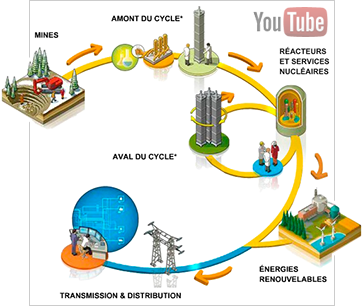
Areva is a French public multinational industrial conglomerate formed in September of 2001, and is the world’s largest supplier of nuclear energy. It is the only company with a presence in each industrial activity linked to nuclear energy: mining, chemistry, enrichment, combustibles, services, engineering, nuclear propulsion and reactors, treatment, recycling, stabilization, and dismantling. The corporate name Areva is inspired by the Trappist Santa Maria de la Real monastery in Arevalo in Spain.
Posted in Money, Technology, World |
Leave a Comment »
September 3, 2010

A hype cycle is a graphic representation of the maturity, adoption and social application of specific technologies. The term was coined by information technology research and advisory firm Gartner.
Posted in Money, Technology |
Leave a Comment »
September 2, 2010


A hackerspace or hackspace (also referred to as a hacklab, makerspace or creative space) is a location where people with common interests, usually in computers, technology, or digital or electronic art can meet, socialise and/or collaborate. A hackerspace can be viewed as an open community labs incorporating elements of machine shops, workshops and/or studios where hackers can come together to share resources and knowledge to build and make things. Some hackspaces are freely available, and others charge dues for access to equipment and networks.
One notable hackerspace is the Hacker Dojo, a non-profit community center and hackerspace in Mountain View, California, inspired by nearby facilities like Noisebridge, TechShop, The Crucible, and Coworking locations like Citizen Space, Sandbox Suites, and The Hat Factory. The Dojo is a membership organization – nearly all funds come from $100/month membership subscriptions, though the organization has been sponsored by Google and Microsoft. Membership provides access to the 8180 square foot facility, equipped with computers, electronics, and a high speed network.
Posted in Money, Technology |
Leave a Comment »
August 29, 2010
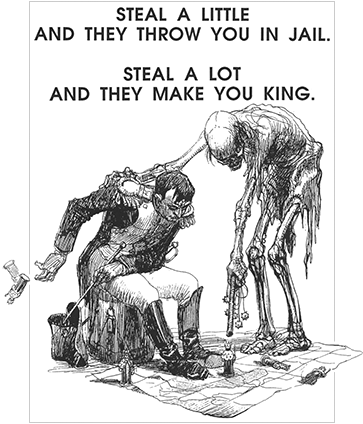
Mammon [mam-uhn] is a term, derived from the Christian Bible, used to describe material wealth or greed, most often personified as a deity.
Posted in Language, Money, Philosophy |
Leave a Comment »
August 24, 2010
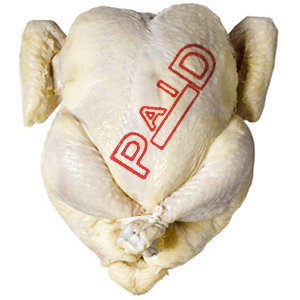
The so-called Chicken tax was a 25% tax on potato starch, dextrin, brandy, and light trucks imposed in 1963 by the United States under President Lyndon B. Johnson as a response to tariffs placed by France and West Germany on importation of U.S. chicken. The period from 1961–1964 of tensions and negotiations surrounding the issue, which took place at the height of Cold War politics, was known as the ‘Chicken War.’
Eventually, the tariffs on potato starch, dextrin, and brandy were lifted, but the light truck tax is still in place. As an unintended consequence, several importers of light trucks have circumvented the tariff via loopholes, including Ford, which currently imports light trucks as ‘passenger vehicles’ to the U.S. from Turkey and immediately shreds portions of their interiors.
Posted in Food, Money, Politics |
Leave a Comment »
August 24, 2010

A shmoo is a fictional cartoon creature created by Al Capp. They first appeared in his comic strip ‘Li’l Abner’ on August 31, 1948, and quickly became a postwar national craze in the USA. Shmoon reproduce asexually, require no sustenance other than air, make good pets, are delicious to eat, and are eager to be eaten. Their pelts make perfect boot leather or house timber, depending on how thick you slice it. They have no bones, their eyes make the best suspender buttons, and their whiskers make perfect toothpicks. In short, they are the ideal herd animal.
In the comic strip the frolicking of shmoon is so entertaining that people no longer feel the need to watch television or go to the movies. It’s been used in discussions of socioeconomics, for instance, a widget is any material good which is produced through labor from a finite resource. In contrast, a shmoo is a material good that reproduces itself and is captured or bred as an economic activity.
Posted in Art, Humor, Money |
Leave a Comment »
August 17, 2010
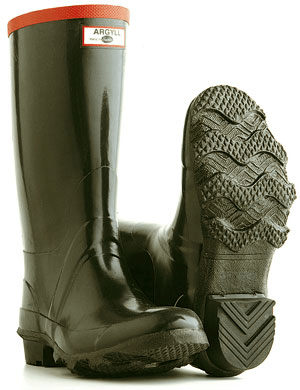
The Wellington boot, also known as wellys, gumboots, or muckboots are a type of boot based upon leather Hessian boots. It was worn and popularised by Arthur Wellesley, 1st Duke of Wellington. The boot then became a fashionable style emulated by the British aristocracy in the early 19th century. Wellington boots are waterproof and are most often made from rubber or polyvinyl chloride (PVC). They are generally just below knee-high. Wellington boots are used in many commercial and industrial settings including chemical plants, food processing plants, hospital operating rooms, and dust-free clean rooms for electronics manufacture.
Hunter Boot is a major rubber wellington boot and footwear designer. The company manufactured vulcanized rubber products in Scotland for over 150 years but now sources product exclusively in China. Besides rubber boots, the company also produces other products such as bags, socks and other related accessories, and historically has been involved in the manufacture of tires, conveyor belts, combs, golf balls, hot water bottles and rubber flooring. The Hunter Boot company was the oldest manufacturer of rubber boots in the UK, and the ubiquitous Green Welly is its best known product, but the French Argyll welly pre-dates it.
Posted in Money, Technology |
Leave a Comment »
August 17, 2010
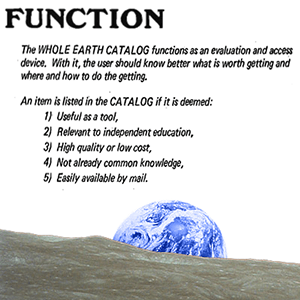
The Whole Earth Catalog was an American counterculture catalog published by Stewart Brand between 1968 and 1972, and occasionally thereafter, until 1998. Although the WECs listed all sorts of products for sale (clothing, books, tools, machines, seeds — anything for a self-sustainable ‘hippie’ lifestyle) the Whole Earth Catalogs themselves did not sell any of the products.
Instead the vendors and their prices were listed right alongside with the items. This led to a need for the Catalogs to be frequently updated. Apple Inc. founder and entrepreneur Steve Jobs has described the Catalog as the conceptual forerunner of the World Wide Web, stating that it was, ‘sort of like Google in paperback form, 35 years before Google came along.’
Posted in Money |
1 Comment »