September 24, 2010

Minecraft is a ‘sandbox game’ where players mine and build in a randomly generated 3D world. Hostile monsters roam the environment at night, forcing players to build fortifications. Mining uncovers ores in the ground, which can be crafted into useful items such as chests, minecarts and tracks, and buckets. There are also plants and animals, which can be farmed and hunted for other resources. The game features a free classic mode where players have unlimited resources, and is available as an alpha release for €9.95. As of September 23rd 2010, it has surpassed 760,000 registered users and 208,000 purchases.
It is currently in development by Markus Persson, aka ‘Notch.’ The gameplay is inspired by Dwarf Fortress, RollerCoaster Tycoon, Dungeon Keeper, and especially Infiniminer. Players must devise methods of building functional and navigable structures that can withstand the nightly assault from various monsters. The player’s short reach and short jumping ability forces players to plan structures carefully, lest they trap themselves or fall to their death during construction. More advanced players can create complex traps and mechanisms using the game physics as well as primitive electrical circuits and logic gates.
Posted in Games, Money |
Leave a Comment »
September 21, 2010
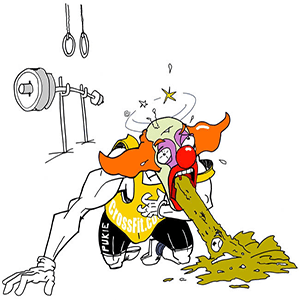

CrossFit is a strength and conditioning brand. CrossFit combines weightlifting, sprinting, and gymnastics. Athletes run, row, jump rope, climb rope and carry odd objects. CrossFit is used in nearly 1,700 gyms worldwide and by many fire departments, law enforcement agencies and military organizations including the Canadian Forces, and the Royal Danish Life Guards. The program even names workout moves to honor deceased troops, like a grueling forward-and-backward sprint combo dubbed ‘Griff’ for U.S. Air Force Staff Sgt. Travis L. Griffin. Its mascot is ‘Pukey the Clown.’
Posted in Health, Money |
Leave a Comment »
September 21, 2010
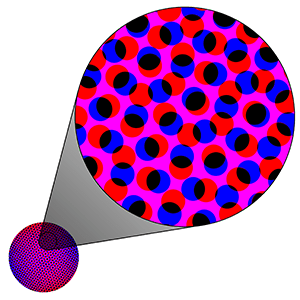

The Ben-Day Dots printing process, named after illustrator and printer Benjamin Day, is similar to Pointillism. Depending on the effect, color and optical illusion needed, small colored dots are closely-spaced, widely-spaced or overlapping. Magenta dots, for example, are widely-spaced to create pink. 1950s and 1960s pulp comic books used Ben-Day dots in the four process colors (cyan, magenta, yellow and black) to inexpensively create shading and secondary colors such as green, purple, orange and flesh tones.
Ben-Day dots differ from halftone dots in that the Ben-Day dots are always of equal size and distribution in a specific area. To apply the dots to a drawing the artist would purchase transparent overlay sheets from a stationery supplier. The sheets were available in a wide variety of dot size and distribution, which gave the artist a range of tones to use in the work. The overlay material was cut in the shapes of the tonal areas desired—i.e. shadow or background or surface treatment and rubbed onto the specific areas of the drawing with a burnisher. When photographically reproduced as a line cut for letterpress printing, the areas of Ben-Day overlay provided tonal shading to the printing plate.
Posted in Art, Money, Technology |
Leave a Comment »
September 20, 2010


A Munny doll is a designer toy from the American company Kidrobot. It is a blank figure the owner can decorate using pens, pencils, markers, paint, and other supplies. A Munny doll is made out of vinyl and has movable joints. The first doll was white, and has since been available in other colors such as black, pink, blue, and phosphorescent green. The figure is housed in a box which includes 4 random accessories such as a carrot or a hat.
Posted in Art, Money |
Leave a Comment »
September 20, 2010

Fabric is a nightclub in London by Keith Reilly and Cameron Leslie that opened on 29 October 1999. Fabric has three separate rooms (two of which feature stages for live acts) with independent sound systems. A feature of the club is its vibrating floor in Room One: known as a ‘bodysonic’ dancefloor, sections of the floors are attached to 400 bass transducers emitting bass frequencies of the music being played.
The musical genres played there vary. FabricLive is a Friday-night ‘soundclash,’ (music competition) including tempos from hip hop to breakbeat to drum and bass to electro. Fabric’s Saturday nights showcase house and techno. The club has been releasing monthly compilation albums mixed by popular DJs since November 2001. There are two series that alternate months, entitled fabric and FabricLive.
Posted in Art, Money, World |
Leave a Comment »
September 17, 2010

Mars Blackmon was a fictional character from the 1986 film ‘She’s Gotta Have It.’ He is also the alter-ego of filmmaker Spike Lee. In the film, he was a ‘Brooklyn-loving,’ die-hard New York Knicks fan. During the late 1980s and early 1990s, Blackmon became the primary pitchman in Nike commercials for Air Jordans, the basketball shoes worn by Michael Jordan. In these commercials, Mars Blackmon popularized the phrases ‘Is it the Shoes? Is it the Shoes? Is it the Shoes? … Money, it’s gotta be the shoes.’
Posted in Games, Humor, Money |
Leave a Comment »
September 14, 2010

For the Love of God is a sculpture by English artist Damien Hirst produced in 2007. It consists of a platinum cast of a human skull encrusted with 8,601 flawless diamonds, which weigh over 1,106.18 carats in total, including a pear-shaped pink diamond located in the forehead. Costing £14 million to produce, the work went on display at the White Cube gallery in London in an exhibition called ‘Beyond Belief’ with an asking price of £50 million. The work’s title was supposedly inspired by Hirst’s mother, who once asked, ‘For the love of God, what are you going to do next?’
Hirst said that the work was sold on August, 30 2007, for £50 million, to an anonymous consortium. Christina Ruiz, editor of The Art Newspaper, claims that Hirst had failed to find a buyer and had been trying to offload the skull for £38 million. Immediately after these allegations were made, Hirst claimed he had sold it for the full asking price, in cash, leaving no paper trail. The consortium that bought the piece included Hirst himself. Art critic David Lee commented, ‘Everyone in the art world knows Hirst hasn’t sold the skull. It’s clearly just an elaborate ruse to drum up publicity and rewrite the book value of all his other work.’
Posted in Art, Money |
Leave a Comment »
September 14, 2010

Silly Bandz are a brand of silicone rubber bands formed into shapes including animals, objects, and letters. They are distributed by BCP Imports and are normally worn as bracelets. The original shaped silicone rubber bands were created in 2002 by a Japanese design team who wanted to introduce a more environmentally-sustainable rubber band as an office product.
Robert Croak, owner of Toledo, Ohio-based BCP Imports (known for distributing the Livestrong wristbands), encountered the bands on a business trip and decided to re-purpose them as a toy by making them larger and thicker, and marketing them as a kids’ fashion accessory. The first Silly Bandz sets were sold online in November 2008, and by April of 2010 they were most popular toys sold on Amazon.com.
Posted in Money |
Leave a Comment »
September 13, 2010

An announcer’s test is a test sometimes given to those wanting to be a radio or television announcer. The tests usually involve retention, memory, repetition, enunciation, diction, and using every letter in the alphabet a variety of times. One of the more well known announcer’s tests originated at Radio Central New York in the early 1940s as a cold reading test given to prospective radio talent to demonstrate their speaking ability.
There are many variants, but most begin thusly: One hen. One hen, two ducks. One hen, two ducks, three squawking geese. One hen, two ducks, three squawking geese, four limerick oysters… and so on.
Posted in Humor, Money |
1 Comment »
September 13, 2010

A stalking horse is a person who acts on the behalf of an anonymous third party. The expression is generally used in politics and business. The term originally derived from the practice of hunting wildfowl, which flee immediately on the approach of humans, but tolerate the close presence of animals such as horses and cattle. Hunters slowly approach their quarry by walking alongside their horses, keeping out of sight until the flock is within firing range. Animals or devices used for this purpose are called stalking horses.
The phenomenon occurs particularly in politics, where a junior politician acts as the stalking horse to promote the interests of a senior politician who remains unseen in case the actions would damage him or her but nevertheless wants to provoke a debate or challenge to a party colleague. In some cases stalking horses are not working for a particular individual but may wish to provoke a response that leads others to join in. In politics, the truth about the relationship between an individual stalking horse and a candidate may never be known, as both sides may claim that the (alleged) stalking horse acted without the agreement of anyone else.
Posted in Language, Money, Politics |
Leave a Comment »
September 13, 2010

Y Combinator is an American seed-stage startup funding firm, started in 2005 by Paul Graham, Robert Morris, Trevor Blackwell, and Jessica Livingston. Y Combinator provides seed money, advice, and connections at two 3-month programs per year. In exchange, they take an average of about 6% of the company’s equity. Compared to other startup funds, Y Combinator provides very little money ($17,000 for startups with 2 founders and $20,000 for those with 3 or more). This reflects Graham’s theory that between free software, dynamic languages, the web, and Moore’s Law, the cost of founding a startup has greatly decreased. The firm is named after a construct in the theory of functional programming.
Y Combinator was started after Graham gave a talk at his alma mater, Harvard (where he earned a PhD in Computer Science). He suggested founders seek seed funding from angel investors preferably those who had made money in technology. He soon after organized Y Combinator to offer seed funding to startups. As of June 2009, Y Combinator had funded over 118 startups. The number of startups funded in each cycle has been gradually increasing. The first cycle in summer 2005 had eight startups. In the summer 2010 cycle, there were 38. Some of the better-known funded companies include Reddit and Dropbox.
Posted in Money, Technology |
Leave a Comment »
September 12, 2010
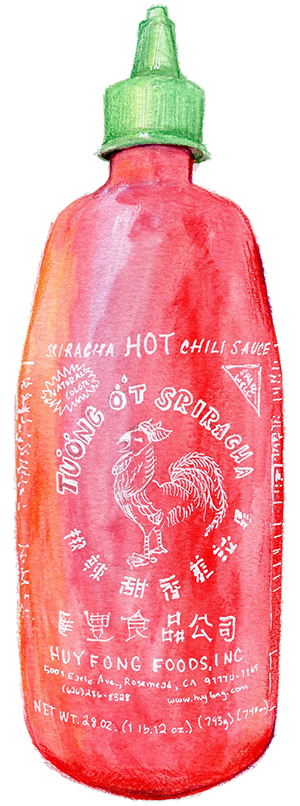
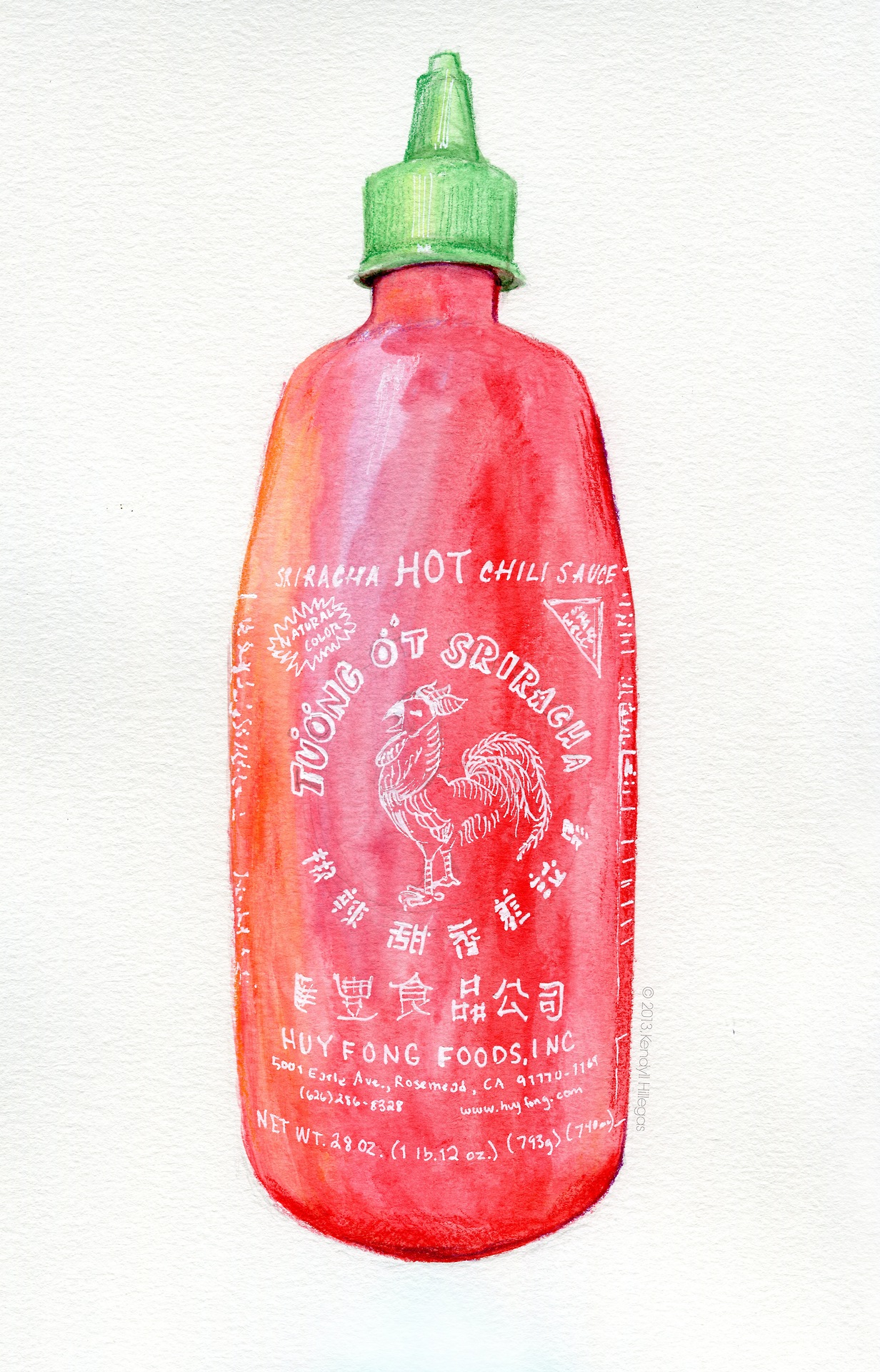
Sriracha [sir-rotch-ah] is a Thai hot sauce named after the seaside city of Si Racha, in the Chonburi Province of central Thailand, where it was first produced for dishes served at local seafood restaurants. It is a paste of chili peppers, vinegar, garlic, sugar and salt. Sriracha was popularized in America by Huy Fong Foods, and is known as rooster sauce or cock sauce, due to the rooster featured on its label.
Posted in Food, Money, World |
Leave a Comment »