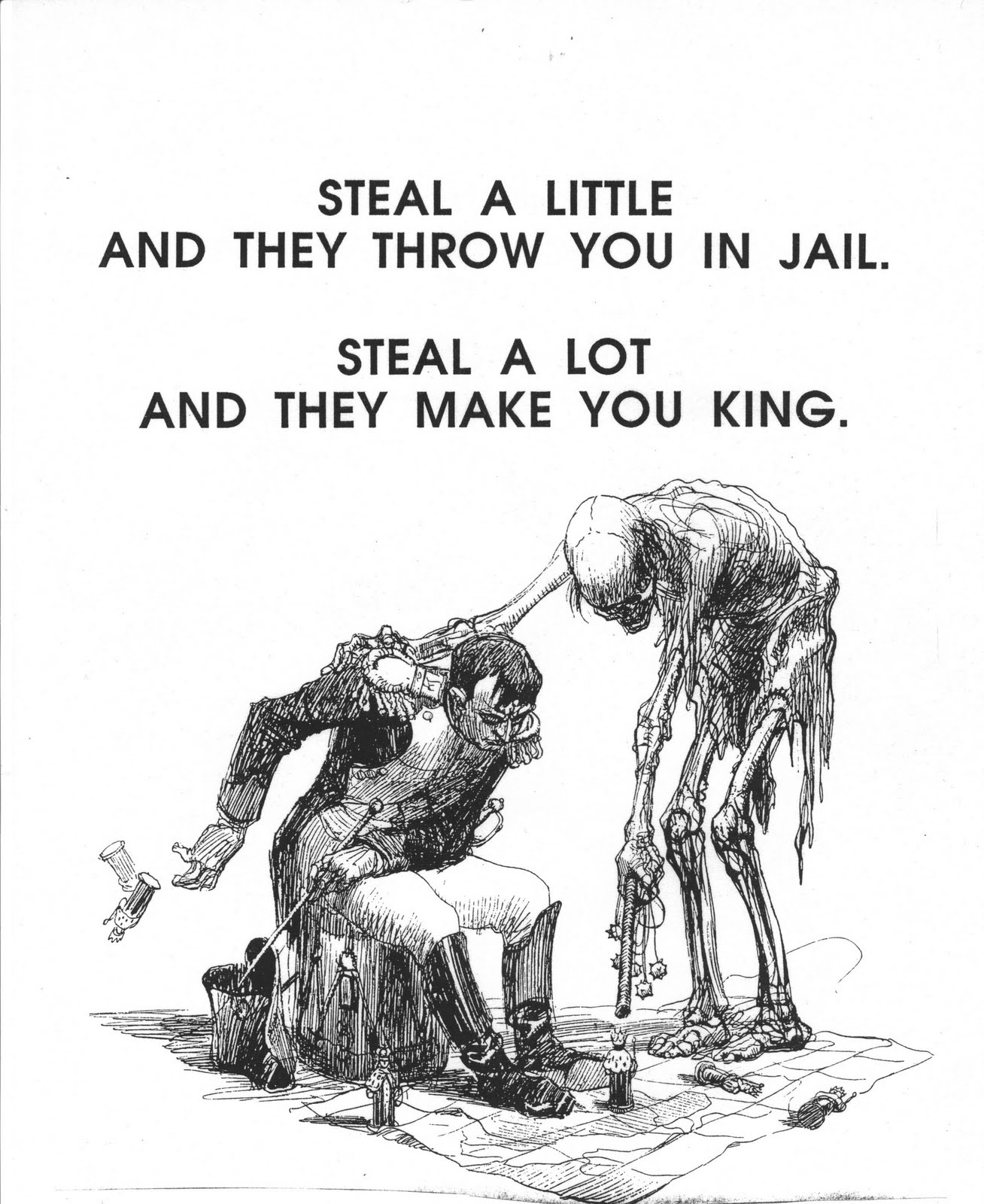
Mammon [mam-uhn] is a term, derived from the Christian Bible, used to describe material wealth or greed, most often personified as a deity.
Everything is Interesting
Mammon [mam-uhn] is a term, derived from the Christian Bible, used to describe material wealth or greed, most often personified as a deity.
The so-called Chicken tax was a 25% tax on potato starch, dextrin, brandy, and light trucks imposed in 1963 by the United States under President Lyndon B. Johnson as a response to tariffs placed by France and West Germany on importation of U.S. chicken. The period from 1961–1964 of tensions and negotiations surrounding the issue, which took place at the height of Cold War politics, was known as the ‘Chicken War.’
Eventually, the tariffs on potato starch, dextrin, and brandy were lifted, but the light truck tax is still in place. As an unintended consequence, several importers of light trucks have circumvented the tariff via loopholes, including Ford, which currently imports light trucks as ‘passenger vehicles’ to the U.S. from Turkey and immediately shreds portions of their interiors.
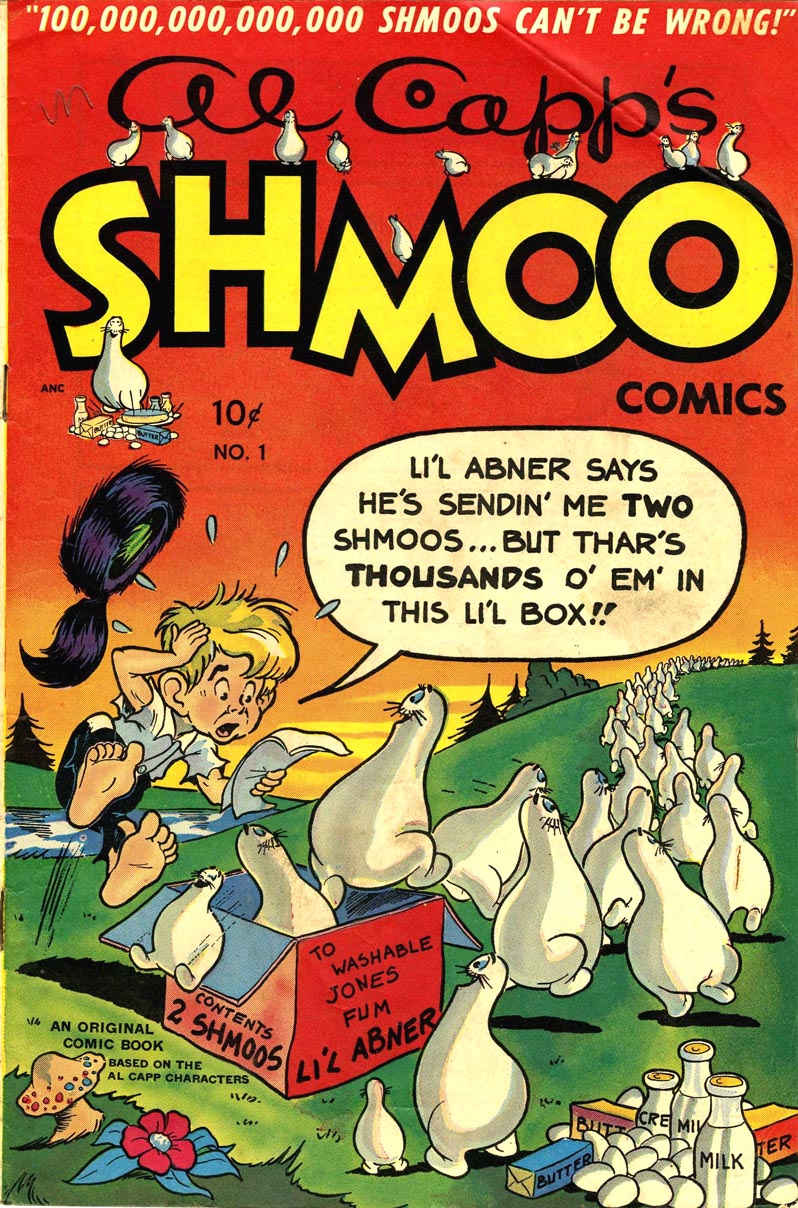
A shmoo is a fictional cartoon creature created by Al Capp. They first appeared in his comic strip ‘Li’l Abner’ on August 31, 1948, and quickly became a postwar national craze in the USA. Shmoon reproduce asexually, require no sustenance other than air, make good pets, are delicious to eat, and are eager to be eaten. Their pelts make perfect boot leather or house timber, depending on how thick you slice it. They have no bones, their eyes make the best suspender buttons, and their whiskers make perfect toothpicks. In short, they are the ideal herd animal.
In the comic strip the frolicking of shmoon is so entertaining that people no longer feel the need to watch television or go to the movies. It’s been used in discussions of socioeconomics, for instance, a widget is any material good which is produced through labor from a finite resource. In contrast, a shmoo is a material good that reproduces itself and is captured or bred as an economic activity.
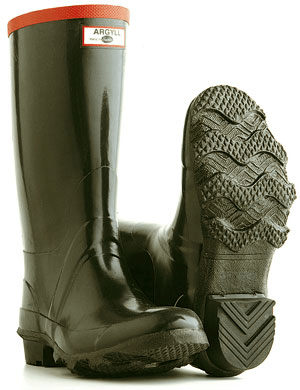
The Wellington boot, also known as wellys, gumboots, or muckboots are a type of boot based upon leather Hessian boots. It was worn and popularised by Arthur Wellesley, 1st Duke of Wellington. The boot then became a fashionable style emulated by the British aristocracy in the early 19th century. Wellington boots are waterproof and are most often made from rubber or polyvinyl chloride (PVC). They are generally just below knee-high. Wellington boots are used in many commercial and industrial settings including chemical plants, food processing plants, hospital operating rooms, and dust-free clean rooms for electronics manufacture.
Hunter Boot is a major rubber wellington boot and footwear designer. The company manufactured vulcanized rubber products in Scotland for over 150 years but now sources product exclusively in China. Besides rubber boots, the company also produces other products such as bags, socks and other related accessories, and historically has been involved in the manufacture of tires, conveyor belts, combs, golf balls, hot water bottles and rubber flooring. The Hunter Boot company was the oldest manufacturer of rubber boots in the UK, and the ubiquitous Green Welly is its best known product, but the French Argyll welly pre-dates it.
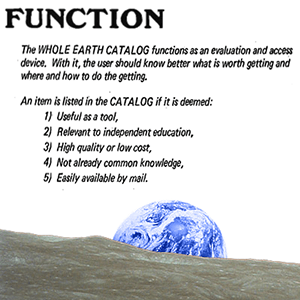
The Whole Earth Catalog was an American counterculture catalog published by Stewart Brand between 1968 and 1972, and occasionally thereafter, until 1998. Although the WECs listed all sorts of products for sale (clothing, books, tools, machines, seeds — anything for a self-sustainable ‘hippie’ lifestyle) the Whole Earth Catalogs themselves did not sell any of the products.
Instead the vendors and their prices were listed right alongside with the items. This led to a need for the Catalogs to be frequently updated. Apple Inc. founder and entrepreneur Steve Jobs has described the Catalog as the conceptual forerunner of the World Wide Web, stating that it was, ‘sort of like Google in paperback form, 35 years before Google came along.’

Bohemian Grove is a 2,700-acre campground located at 20601 Bohemian Avenue, in Monte Rio, California, belonging to a private San Francisco-based men’s art club known as the Bohemian Club. In mid-July each year, Bohemian Grove hosts a three-week encampment of some of the most powerful men in the world. The Club motto is ‘Weaving Spiders Come Not Here,’ which implies that outside concerns and business deals are to be left outside.
The Grove is particularly famous for a Manhattan Project planning meeting that took place there in September 1942, which subsequently led to the atomic bomb. Those attending this meeting, apart from Ernest Lawrence and military officials, included the president of Harvard and representatives of Standard Oil and General Electric. Grove members take particular pride in this event and often relate the story to new attendees.

Svalbard Global Seed Vault is a secure seedbank located on the Norwegian island of Spitsbergen in the remote Arctic Svalbard archipelago, about 1,300 kilometres from the North Pole. The facility preserves a wide variety of plant seeds in an underground cavern. The seed vault will provide insurance against the loss of seeds in genebanks, as well as a refuge for seeds in the case of large scale regional or global crises. The seed vault is managed under terms spelled out in a tripartite agreement between the Norwegian government, the Global Crop Diversity Trust (GCDT) and the Nordic Genetic Resource Center.
Construction of the seed vault, which cost approximately $9 million, was funded entirely by the Government of Norway. Storage of seeds in the vault is free of charge. Operational costs are paid by Norway and the Global Crop Diversity Trust. The primary funding of the Trust came from the Bill & Melinda Gates Foundation, United Kingdom, Norway, Australia, Switzerland, and Sweden, though funding has been received from a wide variety of sources including four developing countries: Brazil, Colombia, Ethiopia, and India.
Baidu is a Chinese search engine established in 2000 by co-founders, Robin Li and Eric Xu. Both of the co-founders are Chinese nationals who have studied and worked overseas before returning to China. Baidu.com Inc. is registered in the Cayman Islands. In April 2010, Baidu ranked 7th overall in Alexa’s internet rankings.
In December 2007, Baidu became the first Chinese company to be included in the NASDAQ-100 index. Baidu proactively censors its content in line with government regulations. The name Baidu, whose literal meaning is ‘hundreds of times,’ is taken from the last line of Xin Qiji’s classical poem ‘Green Jade Table in The Lantern Festival.’

Yandex is a Russian IT company which operates the largest search engine in Russia (with 64% market share, ranked eighth-largest in the world) and develops a number of Internet-based services and products. Yandex was launched in 1997 and began earning a profit in 2002. Its name stands for ‘Yet Another iNDEXer.’
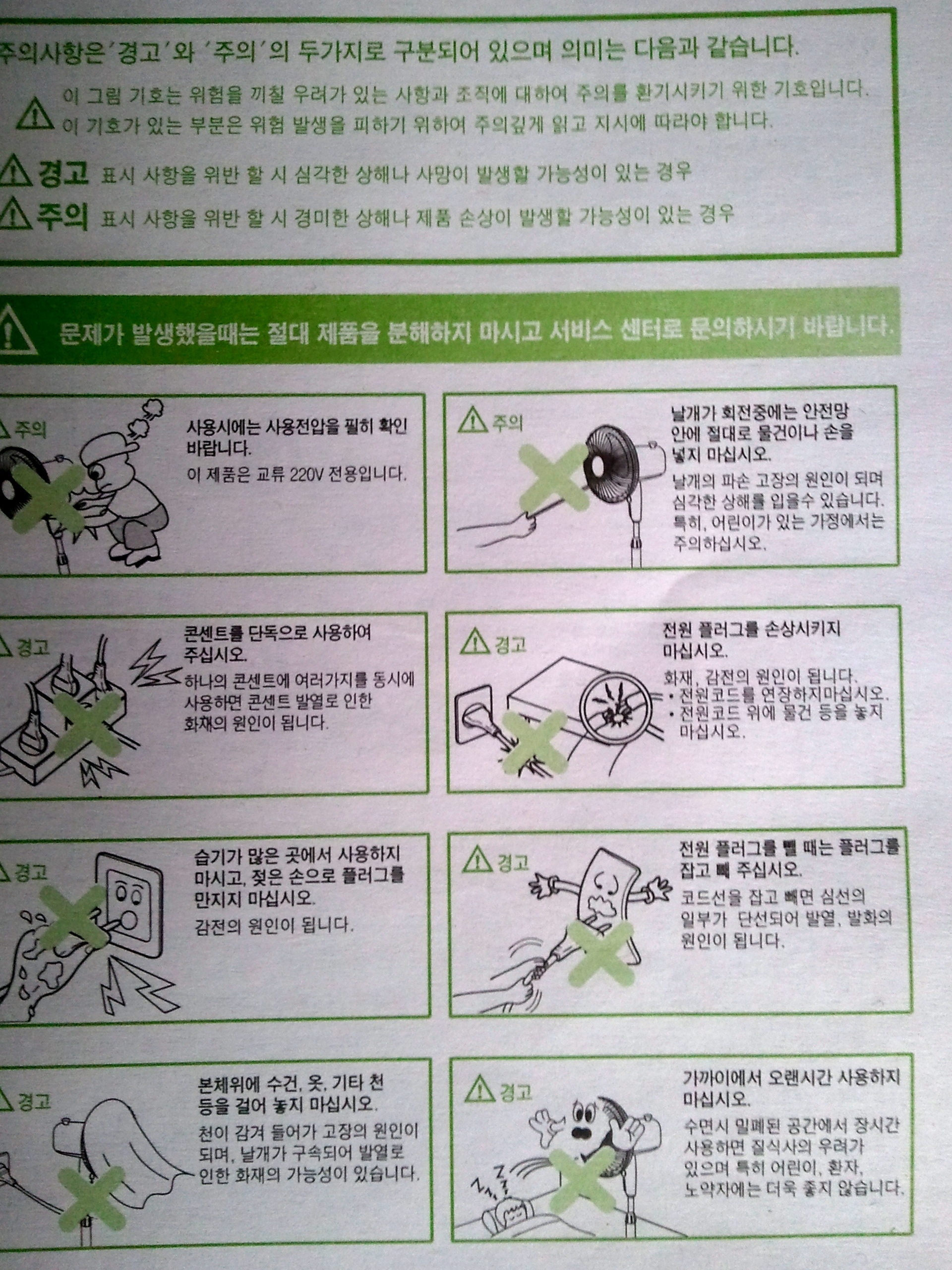
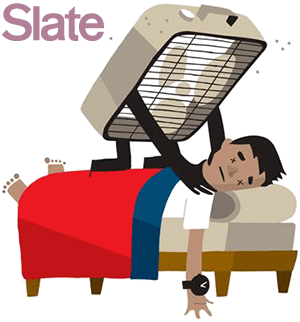
Fan death is a putative phenomenon, generally accepted only in South Korea, in which an electric fan left running overnight in a closed room can cause the death of those inside. Fans sold in Korea are equipped with a timer switch that turns them off after a set number of minutes, which users are frequently urged to set when going to sleep with a fan on.
The genesis of this misconception is unclear. Some have speculated that the South Korean government created the idea of fan death as propaganda in order to curb the energy consumption of Korean households. This theory is based on the fact that reports of fan death first appeared in the 1970s. This coincided with the 1970s energy crisis, which led to a short supply and high prices of oil; it also coincided with the rule of President Park Chung-hee, who listed attaining a self-reliant economy and modernization as his top goals, as announced in his Five Year Economic development Plan.
read more »
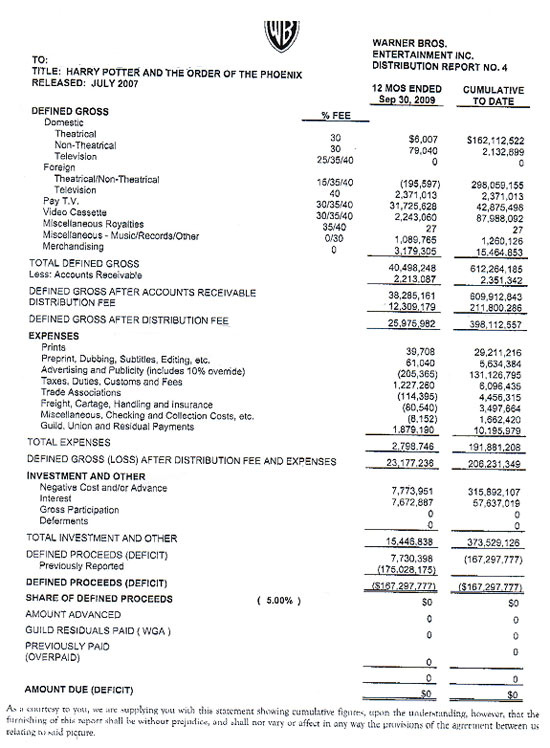
Hollywood accounting refers to the notoriously opaque accounting methods used by Hollywood to budget and record profits for film projects. Expenditures can be inflated to reduce or eliminate the profit of the project thereby reducing the amount which the corporation must pay in royalties or other profit-sharing agreements based on the net profit.
For example, Winston Groom’s price for the screenplay rights to his novel Forrest Gump included a share of the profits; however, due to Hollywood accounting, the film’s commercial success was converted into a net loss, and Groom received nothing. That being so, he has refused to sell the screenplay rights to the novel’s sequel, stating that he, ‘cannot in good conscience allow money to be wasted on a failure.’

In economics, a monopsony [muh-nop-suh-nee] is a market form in which only one buyer faces many sellers. It is an example of imperfect competition, similar to a monopoly, in which only one seller faces many buyers. As the only purchaser of a good or service, the ‘monopsonist’ may dictate terms to its suppliers in the same manner that a monopolist controls the market for its buyers.
The term was first introduced by Joan Robinson in her influential book, ‘The Economics of Imperfect Competition.’ Robinson credits classics scholar Bertrand Hallward of Peterhouse College, Cambridge with coining the term. A single-payer universal health care system, in which the government is the only ‘buyer’ of health care services, is an example of a monopsony. It has also been argued that Wal-Mart, in the United States, functions as a monopsony in certain market segments, as its buying power for a given item may dwarf the remaining market. The Canadian Wheat Board, established by the Parliament of Canada in 1935 as a producer marketing system, is a monopsonistic buyer of wheat and barley.


 The Daily Omnivore