August 10, 2010

In economics, a monopsony [muh-nop-suh-nee] is a market form in which only one buyer faces many sellers. It is an example of imperfect competition, similar to a monopoly, in which only one seller faces many buyers. As the only purchaser of a good or service, the ‘monopsonist’ may dictate terms to its suppliers in the same manner that a monopolist controls the market for its buyers.
The term was first introduced by Joan Robinson in her influential book, ‘The Economics of Imperfect Competition.’ Robinson credits classics scholar Bertrand Hallward of Peterhouse College, Cambridge with coining the term. A single-payer universal health care system, in which the government is the only ‘buyer’ of health care services, is an example of a monopsony. It has also been argued that Wal-Mart, in the United States, functions as a monopsony in certain market segments, as its buying power for a given item may dwarf the remaining market. The Canadian Wheat Board, established by the Parliament of Canada in 1935 as a producer marketing system, is a monopsonistic buyer of wheat and barley.
Posted in Language, Money, Politics |
Leave a Comment »
August 10, 2010

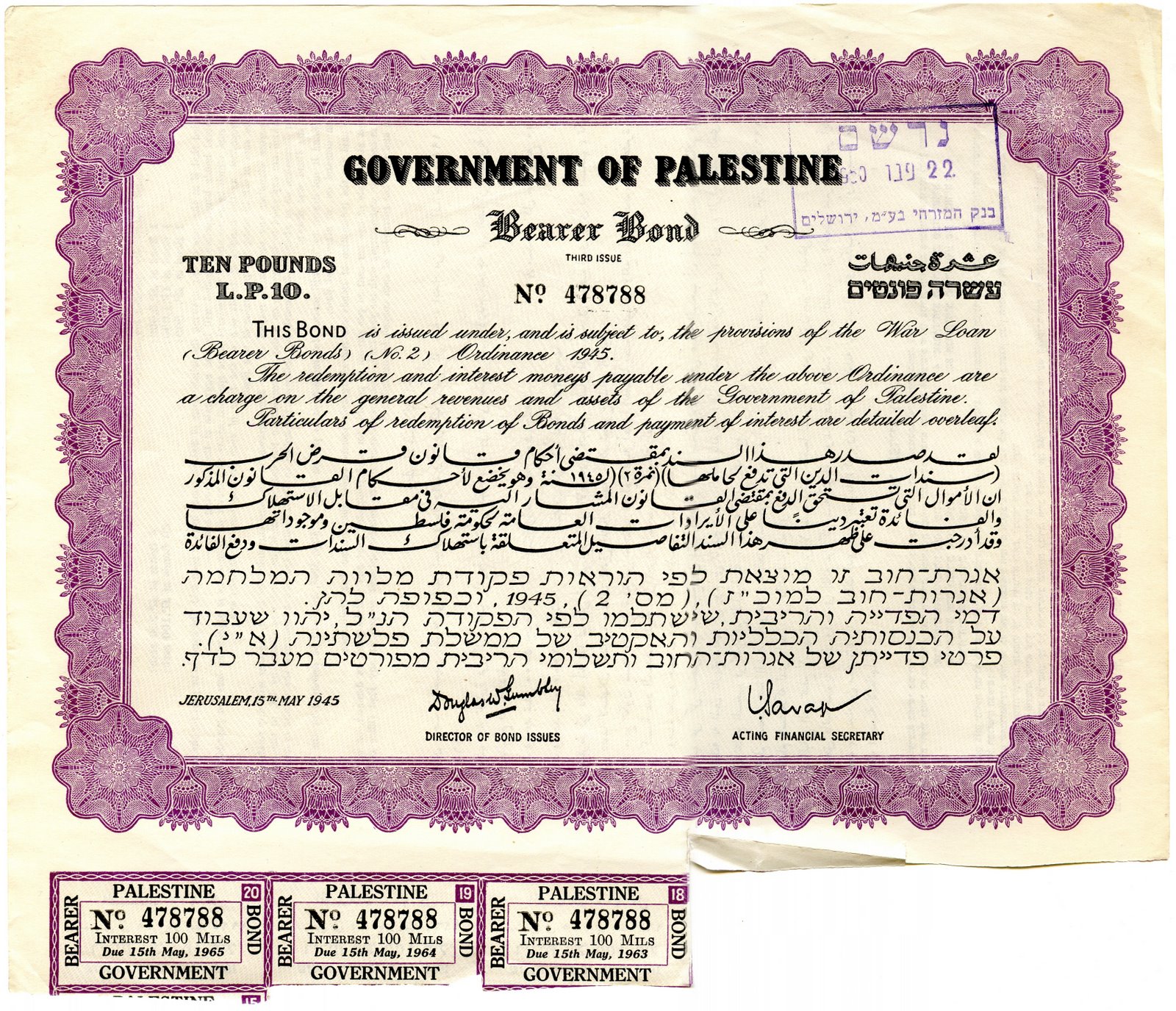
A bearer bond is a debt security issued by a business entity, such as a corporation, or by a government. It differs from the more common types of investment securities in that it is unregistered – no records are kept of the owner, or the transactions involving ownership. Whoever physically holds the paper on which the bond is issued owns the instrument. This is useful for investors who wish to retain anonymity. Recovery of the value of a bearer bond in the event of its loss, theft, or destruction is usually impossible.
Bearer bonds have historically been the financial instrument of choice for money launderers, tax evaders, and those just generally trying to conceal business transactions. In response, new issuances of bearer bonds were banned in the United States in 1982. All the bearer bonds issued by the U.S. Treasury have matured. They no longer pay interest to the holders. As of May 2009, the approximate amount outstanding is $100 million. Bearer bonds are still used in some parts of the world, notably in Central America.
Posted in Money, Politics |
Leave a Comment »
August 10, 2010
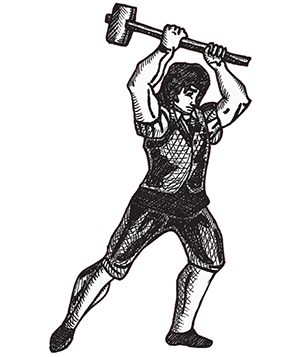
The Luddites [luhd-ahyts] were a social movement of British textile artisans in the nineteenth century who protested – often by destroying mechanized looms – against the changes produced by the Industrial Revolution. It took its name from Ned Ludd, a proletariat folk hero, who was credited with being the first to fight back against mechanization. The principal objection of the Luddites was to the introduction of automated looms that could be operated by cheap, relatively unskilled labour, resulting in the loss of jobs for many skilled textile workers. The movement began in 1811 when mills and pieces of factory machinery were burned by handloom weavers, and for a short time was so strong that Luddites clashed in battles with the British Army. Measures taken by the British government to suppress the movement included a mass trial at York in 1812 that resulted in many executions and penal transportations.
The action of destroying new machines had a long tradition before the Luddites, especially within the textile industry. Many inventors of the 18th century were attacked by vested interests who were threatened by new and more efficient ways of making yarn and cloth. Samuel Crompton, for example, had to hide his new spinning mule in the roof of his house at Hall i’ th’ Wood in 1779 to prevent it being destroyed by the mob. In modern usage, ‘Luddite’ is a term describing those opposed to industrialization, automation, computerization or new technologies in general.
Posted in Money, Politics, Technology |
Leave a Comment »
August 9, 2010
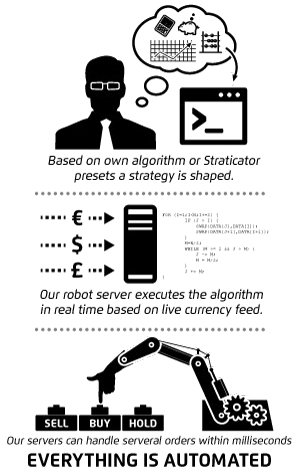
In electronic financial markets, algorithmic trading or automated trading, also known as algo trading, black-box trading or robo trading, is the use of computer programs for entering trading orders with the computer algorithm deciding on aspects of the order such as the timing, price, or quantity of the order, or in many cases initiating the order without human intervention. Investment decisions and implementation may be augmented at any stage with algorithmic support or may operate completely automatically (‘on auto-pilot’).
Algorithmic Trading is widely used by pension funds, mutual funds, and other buy side (investor driven) institutional traders, to divide large trades into several smaller trades in order to manage market impact, and risk. Sell side traders, such as market makers and some hedge funds, provide liquidity to the market, generating and executing orders automatically. A special class of algorithmic trading is ‘high-frequency trading’ (HFT), in which computers make elaborate decisions to initiate orders based on information that is received electronically, before human traders are capable of processing the information.
Posted in Money, Technology |
1 Comment »
August 2, 2010

A morganatic [mor-ga-nat-ic] marriage is a type of marriage which can be contracted in certain countries, usually between people of unequal social rank, which prevents the passage of the husband’s titles and privileges to the wife and any children born of the marriage. It is also known as a left-handed marriage because in the wedding ceremony the groom holds his bride’s right hand with his left hand instead of his right.
Generally, this is a marriage between a male of high birth (such as from a royal or reigning house), and a woman of lesser status (such as from a non-royal or non-reigning house, or with a profession that is traditionally considered lower-status). Neither the bride nor any children of the marriage has any claim on the groom’s titles, rights, or entailed property. The children are considered legitimate on other counts and the prohibition of bigamy applies.
Posted in Money, Politics, World |
Leave a Comment »
August 1, 2010

The Macondo Prospect (Mississippi Canyon Block 252, abbreviated MC252) is an oil and gas prospect in the United States Exclusive Economic Zone of the Gulf of Mexico, off the coast of Louisiana. The prospect was the site of the Deepwater Horizon drilling rig explosion in April 2010 that led to a major oil spill in the region.
The name Macondo is the same name as the fictitious cursed town in the novel ‘One Hundred Years of Solitude’ by Colombian nobel-prize winning writer Gabriel Garcia Marquez. Oil companies routinely assign code names to offshore prospects early in the exploration effort. This practice helps ensure secrecy during the confidential pre-sale phase, and later provides convenient names for casual reference rather than the often similar-sounding official lease names. Names in a given year or area might follow a theme such as beverages (e.g., Cognac), heavenly bodies (e.g., Mars), or even cartoon characters (e.g., Bullwinkle), but usually have no geological or geographical significance to the prospect itself.
Posted in Money, Technology |
Leave a Comment »
July 22, 2010

Roundup is the brand name of a herbicide produced by Monsanto that contains the active ingredient glyphosate. Glyphosate is the most used herbicide in the USA, and Roundup has been the number one selling herbicide worldwide since at least 1980. Several weed species, known as superweeds, have developed Roundup resistance largely because of repeated exposure.
Monsanto also produces seeds which grow into plants genetically engineered to be tolerant to glyphosate, which are known as Roundup Ready crops. The genes contained in these seeds are patented. Soy was the first Roundup Ready crop, and was produced at Monsanto’s Agracetus Campus located in Middleton, Wisconsin in 1996. As of 2005, 87% of U.S. soybean fields were planted with glyphosate resistant varieties. The Roundup Ready line of seeds has grown to include corn, canola, cotton, and other crops. The latest iteration is Roundup Ready Corn 2.
Posted in Food, Money, Science |
Leave a Comment »
July 20, 2010
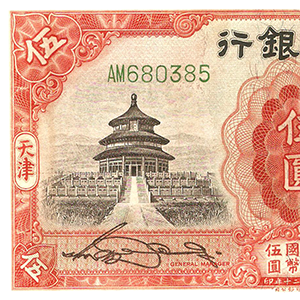
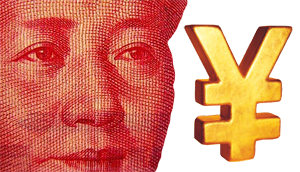
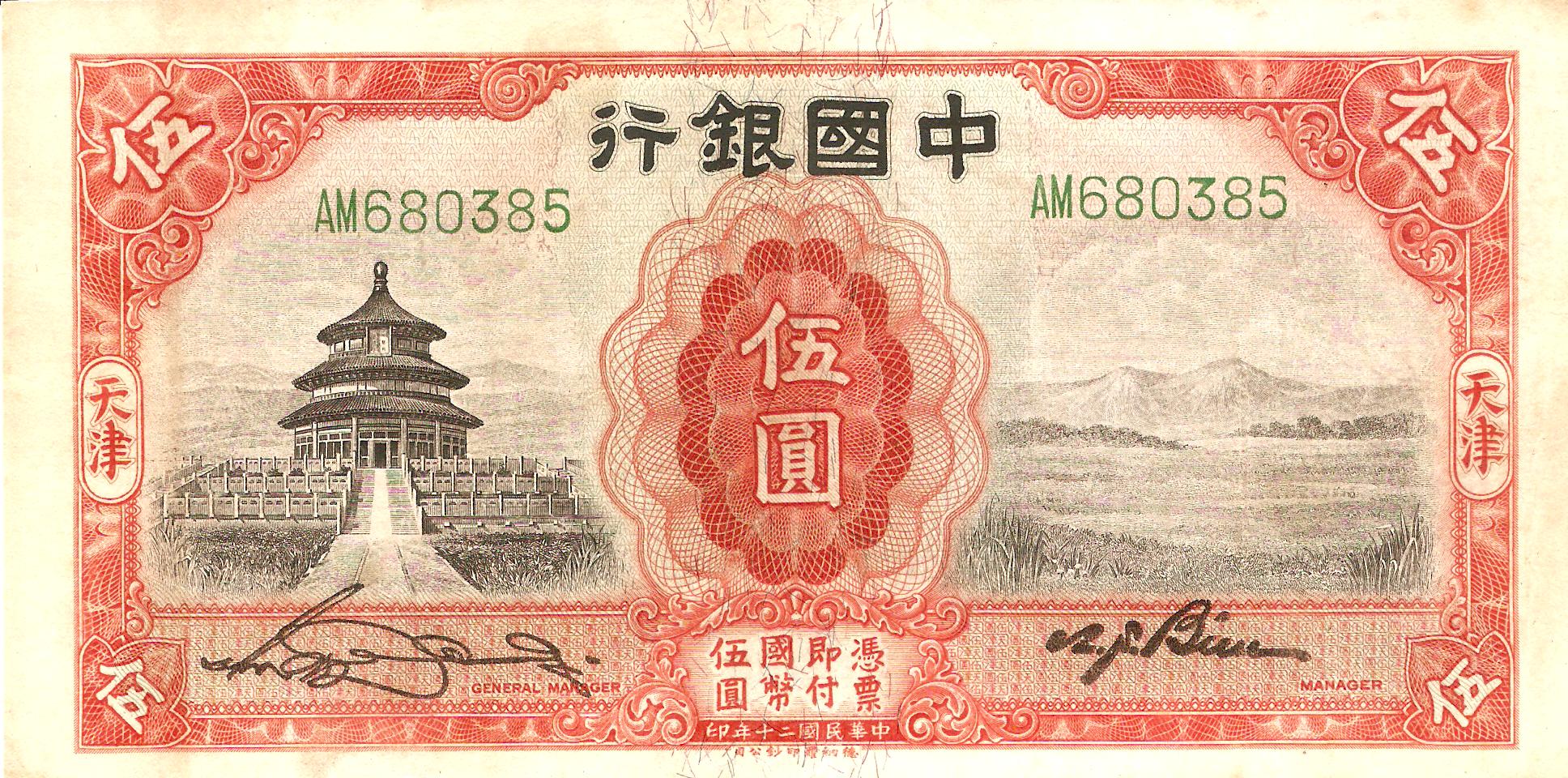
The Renminbi [ren-min-bee] is the official currency of China whose principal unit is the Yuan. The currency is legal tender in mainland China, but not in Hong Kong and Macau. Renminbi translates as people’s currency. A yuán is also known colloquially as a kuài. One yuán is divided into 10 jiao. One jiao is divided into 10 fēn.
Posted in Money, World |
Leave a Comment »
July 20, 2010
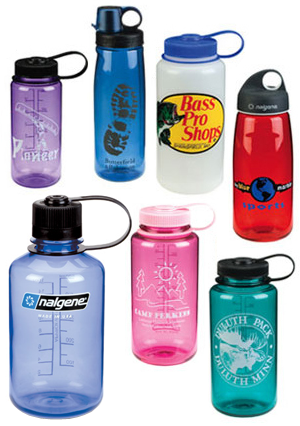
Nalgene is the main product line of Nalge Nunc International, a distributor and manufacturer of plastic laboratory containers that has diversified into the field of containers for outdoor sports. In recent years, studies have suggested that polycarbonate plastics such as the ones Nalgene used may leach endocrine disruptors like Bisphenol A (BPA). Nalgene denies that the quantity leached from their products posed a significant threat to health, but as of April 2008 they began phasing out production of any BPA containing products. All current Nalgene water bottles are made from copolyester.
Posted in Health, Money |
1 Comment »
July 20, 2010

SIGG is a Swiss manufacturing company that sells aluminum and stainless steel water bottles. The disadvantage of thin aluminum is that it does not offer much insulation, which means that condensation can build on the outside of the bottle when cold drinks are transported, and hot drinks will result in a bottle which can not be comfortably touched. SIGG sells insulating sleeves that protect the bottle from dents, help insulate the beverages inside them and eliminate the condensation issue. The interior of the bottles is coated with a food-compatible stove enamel. The bottle is part of the permanent design collection of the NY Museum of Modern Art.
Posted in Money, Technology |
Leave a Comment »
July 14, 2010
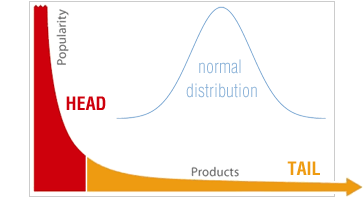

A long tail refers to the statistical property where a larger share of the population rests within the tail of a probability distribution than observed under a normal distribution. This has gained popularity in recent times as a retailing concept describing the niche strategy of selling a large number of unique items in relatively small quantities – usually in addition to selling fewer popular items in large quantities. The concept was popularized by Chris Anderson in an October 2004 Wired magazine article, in which he mentioned Amazon.com and Netflix as examples of businesses applying this strategy.
However, a 2008 study by Anita Elberse, professor of business administration at Harvard Business School, calls the Long Tail theory into question, citing sales data which shows that the Web magnifies the importance of blockbuster hits. Also in 2008, a sales analysis of an unnamed UK digital music service by economist Will Page and high-tech entrepreneur Andrew Bud found that sales exhibited a normal distribution; they reported that 80 percent of the music tracks available sold no copies at all over a one-year period.
Posted in Money |
Leave a Comment »
July 11, 2010

In some stock markets, the Mark Twain effect is the phenomenon of stock returns in October being lower than in other months. The name comes from the following quotation in Mark Twain’s Pudd’nhead Wilson: ‘October. This is one of the peculiarly dangerous months to speculate in stocks. The others are July, January, September, April, November, May, March, June, December, August, and February.’
The 1929, 1987 and 2008 stock market crashes roughly occurred in October.
Posted in Money |
Leave a Comment »


 The Daily Omnivore