December 7, 2014

Behavioral economics is a smaller part of economics that combines what we know about psychology with what we know about economics. Normally, economics does not consider the way humans actually think, but instead, abstracts complex decision-making into comparatively simple mathematical models.
Normally, economists assume people are rational, meaning they make good decisions at the right times using all information. In reality, people are subject to problems with self-control, limitations of time and physical resources, and make different choices depending on how decisions are presented to them.
read more »
Posted in Money, Science |
Leave a Comment »
December 7, 2014


Naïve diversification is a ‘choice heuristic,’ a mental shortcut used to simplify decisions, first demonstrated by professor of marketing Itamar Simonson in the context of consumption decisions by individuals. It was subsequently shown in the context of economic and financial decisions.
Simonson showed that when people have to make a simultaneous choice (e.g. choose now which of six snacks to consume in the next three weeks), they tend to seek more variety (e.g., pick more kinds of snacks) than when they make sequential choices (e.g., choose once a week which of six snacks to consume that week for three weeks).
read more »
Posted in Money, Science |
Leave a Comment »
December 6, 2014

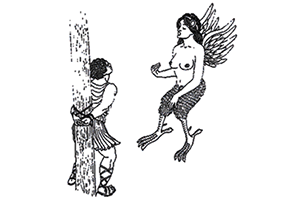
In economics, dynamic inconsistency, or time inconsistency, describes the situation: A decision-maker’s preferences change over time, in such a way that a preference, at one point in time, is inconsistent with a preference at another point in time. It is often easiest to think about preferences over time in this context by thinking of decision-makers as being made up of many different ‘selves,’ with each self representing the decision-maker at a different point in time. So, for example, there is my today self, my tomorrow self, my next Tuesday self, my year from now self, etc. The inconsistency will occur when somehow the preferences of some of the selves are not aligned with each other.
In the context of behavioral economics, time inconsistency is related to how each different self of a decision-maker may have different preferences over current and future choices. One common way in which selves may differ in their preferences is they may be modeled as all holding the view that now has especially high value compared to any future time. This is sometimes called the ‘immediacy effect’ or ‘temporal discounting.’ As a result the present self will care too much about herself and not enough about her future selves. Self control literature relies heavily on this type of time inconsistency, and it relates to a variety of topics including procrastination, addiction, efforts at weight loss, and saving for retirement.
read more »
Posted in Games, Money, Politics |
Leave a Comment »
December 5, 2014

Regression toward the mean simply says that, following an extreme random event, the next random event is likely to be less extreme. In no sense does the future event ‘compensate for’ or ‘even out’ the previous event, though this is assumed in the gambler’s fallacy. Regression toward the mean was first described by Victorian polymath Francis Galton. He found that offspring of tall parents tended to be shorter. Also, offspring of shorter parents tended to be taller. Galton stated that processes that did not follow regression towards the mean would quickly go out of control. In finance, the term ‘mean reversion’ has a different meaning. Jeremy Siegel at Wharton uses it to describe a financial time series in which ‘returns can be very unstable in the short run but very stable in the long run,’ in seasonal businesses for example.
The effect can be exploited for general inference and estimation: the hottest place in the country today is more likely to be cooler tomorrow than hotter, as compared to today; the best performing mutual fund over the last three years is more likely to see relative performance decline than improve over the next three years; the most successful Hollywood actor of this year is likely to have less gross than more gross for his or her next movie; the baseball player with the greatest batting average by the All-Star break is more likely to have a lower average than a higher average over the second half of the season, etc.
read more »
Posted in Games, Money, Science |
Leave a Comment »
November 23, 2014
To have ‘skin in the game’ is to have incurred monetary risk by being invested in achieving a goal. In the phrase, ‘skin’ is a synecdoche (a part that represents the whole) for the person involved, and ‘game’ is the metaphor for the actions on whatever field of play is at reference. The aphorism is common in finance, gambling, and politics. The origin of the phrase is unknown. It has been attributed to Warren Buffett since in Buffett’s first fund he raised $105,000 from 11 doctors, himself placing a token sum of $100.00 as his ‘skin in the game’ (though New York Times columnist William Safire dispelled the Buffett origin). Another possible explanation is that the phrase is derived from William Shakespeare’s ‘The Merchant of Venice’; in which a money lender demands a pound of actual flesh from a borrower should they default.
The term is used to ask or convey a principals undefined but significant equity stake in an investment vehicle where outside investors are solicited to invest. The theory is that principal’s equity contribution is directly related to the stability of the investment and confidence that management has in the venture and is also (falsely) strongly correlated to the expected yield of the investment. Research has shown that there tends to be a negative correlation between excess ‘skin’ and negative returns. The main issues is the principal–agent problem whereby transparency and fiduciary obligations are disregarded by principals who have capital or excess capital (skin) tied into an entity. Many banks and other financial institutions bar employees from having any ‘skin’ where client capital is managed, principally to address the issue of commingled funds. Hedge funds, private equity, Trusts, and Mutual funds are legally limited to a minority investment positions.
Posted in Language, Money |
Leave a Comment »
November 14, 2014


The curse of knowledge is a cognitive bias that leads better-informed parties to find it extremely difficult to think about problems from the perspective of lesser-informed parties. It is related to public policy engineer Baruch Fischhoff’s work on the hindsight bias (the knew-it-all-along effect). In economics the bias is studied to understand why the assumption that better informed agents can accurately anticipate the judgments of lesser informed agents is not inherently true, as well as to support the finding that sales agents who are better informed about their products may, in fact, be at a disadvantage against other, less-informed agents. It is believed that better informed agents fail to ignore the privileged knowledge that they possess, thus ‘cursed’ and unable to sell their products at a value that more naïve agents would deem acceptable.
In one experiment, one group of subjects ‘tapped’ a well-known song on a table while another listened and tried to identify the song. Some ‘tappers’ described a rich sensory experience in their minds as they tapped out the melody. Tappers on average estimated that 50% of listeners would identify the specific tune; in reality only 2.5% of listeners could. Related to this finding is the phenomenon experienced by players of charades: The actor may find it frustratingly hard to believe that his or her teammates keep failing to guess the secret phrase, known only to the actor, conveyed by pantomime.
Posted in Education, Language, Money |
Leave a Comment »
November 7, 2014
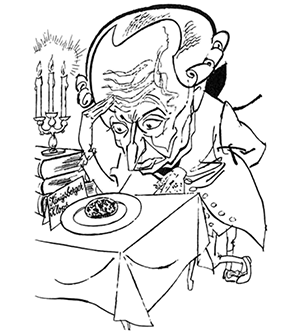
In sociology, taste is an individual’s personal and cultural patterns of choice and preference. It is drawing qualitative distinctions between things such as styles, manners, consumer goods, and works of art. Aesthetic preferences and attendance to various cultural events are associated with education and social origin. Different socioeconomic groups are likely to have different tastes, and social class is one of the most prominent factors structuring taste. The concept of aesthetics has been the interest of philosophers such as Plato, Hume and Kant, who understood it as something pure and searched for the ‘essence of beauty,’ the ontology of taste. But it was not until the beginning the early 19th century that the question was problematized in its social context.
In his aesthetic philosophy, Kant denies any standard of a good taste, which would be the taste of the majority or any social group. For Kant, beauty is not a property of an object, but a judgement based on a subjective feeling. He claims that even if a universal, non-relativistic ‘good taste’ does exist, it can not be empirically identified, or found in any standards or generalizations, and the validity of a judgement is not the general view of the majority or some specific social group. Taste is both personal and beyond reasoning, and therefore disputes over matters of taste never reach a finite conclusion. Kant stresses that our preferences, even on generally liked things, do not justify our judgements.
read more »
Posted in Art, Money, Politics |
Leave a Comment »
November 6, 2014
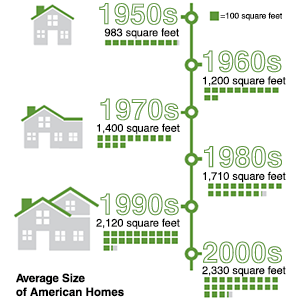
In American suburban communities, McMansion is a pejorative for a type of large, new luxury house which is judged to be oversized for the parcel or incongruous and out-of-place for its neighborhood. Alternatively, a McMansion can be a large, new house in a subdivision of similarly large houses, which all seem mass-produced and lacking in distinguishing characteristics, as well as appearing at odds with the traditional local architecture.
The neologism seems to have been coined sometime in the early 1980s. It first appeared in print the ‘Los Angeles Times’ in 1990. Related terms include ‘Persian palace,’ ‘garage Mahal,’ ‘starter castle,’ and ‘Hummer house.’ Marketing parlance often uses the term ‘tract mansion’ or ‘executive home.’ An example of a McWord, ‘McMansion’ associates the generic quality of these luxury homes with that of mass-produced fast food by evoking the McDonald’s restaurant chain.
read more »
Posted in Language, Money |
Leave a Comment »
October 30, 2014
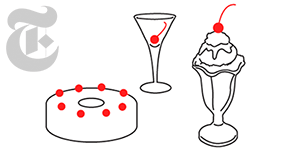

In the US, a maraschino [mar-uh-skee-noh] cherry is a preserved, sweetened cherry, typically made from light-colored sweet cherries such as the Royal Ann, Rainier, or Gold varieties. In their modern form, the cherries are first preserved in a brine solution usually containing sulfur dioxide and calcium chloride to bleach the fruit, then soaked in a suspension of food coloring (usually Red 40), sugar syrup, and other components.
Maraschino cherries are an ingredient in many cocktails, giving them the nickname: ‘Cocktail cherries.’ As a garnish, they often are used to decorate frozen yogurt, baked ham, cakes, pastry, parfaits, milkshakes, ice cream sundaes, and ice cream sodas. They are frequently included in canned fruit cocktail. They are also used as an accompaniment to sweet paan (an Indian preparation of herbs for chewing), and sometimes, along with some of the maraschino “‘juice,’ put into a glass of Coca-Cola to make an old-fashioned or homemade ‘Cherry Coke.’
read more »
Posted in Food, Money, Science |
Leave a Comment »
October 24, 2014
Freebie marketing, also known as the ‘razor and blades’ business model, is a business model wherein one item is sold at a low price (or given away for free) in order to increase sales of a complementary good, such as supplies. For example, inkjet printers require ink cartridges, ‘Swiffers’ require cloths and cleaning fluid, mobile phones require service contracts, and game consoles require accessories and software. It is distinct from a loss leader (an inexpensive product sold at a loss to stimulate sales of more profitable ones) and free sample marketing, which do not depend on complementarity of products or services.
Although the concept and its proverbial example ‘Give ’em the razor; sell ’em the blades’ are widely credited to King Camp Gillette, the inventor of the disposable safety razor, he did not originate this model. The usual story about Gillette is that he realized that a disposable blade would not only be convenient, but also generate a continuous revenue stream. To foster that stream, he sold razors at an artificially low price to create the market for the blades. However, Gillette razors were expensive when they were first introduced, and the price only went down after his 1901 patent expired: it was his competitors who invented the razors-and-blades model.
read more »
Posted in Money |
1 Comment »
October 23, 2014
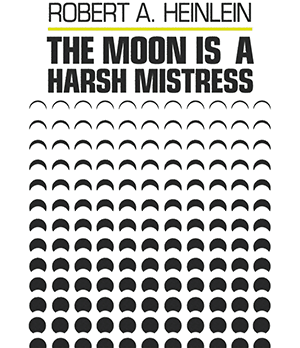
‘There ain’t no such thing as a free lunch’ (TANSTAAFL) is a popular adage communicating the idea that it is impossible to get something for nothing. The phrase dates to the 1930s and 1940s, but its first appearance is unknown. The ‘free lunch’ in the saying refers to the nineteenth-century practice in American bars of offering a ‘free lunch’ in order to entice drinking customers.
The phrase and the acronym are central to Robert Heinlein’s 1966 science-fiction novel ‘The Moon Is a Harsh Mistress,’ about the revolt of a lunar colony and the installation of a libertarian regime. Free-market economist Milton Friedman used it as the title of a 1975 book, and it is often mentioned in economics literature to describe opportunity cost (the value of the next best thing you give up whenever you make a decision). Macroeconomist Campbell McConnell writes that the idea is ‘at the core of economics.’
read more »
Posted in Language, Money, Science |
Leave a Comment »
October 22, 2014


Slacktivism (‘slacker activism’) is a sometimes pejorative term that describes ‘feel-good’ measures, in support of an issue or social cause, that have little or no practical effect other than to make the person doing it take satisfaction from having contributed. The underlying assumption being promoted by the term is that these low cost efforts substitute for more substantive actions rather than supplementing them, although this assumption has not been borne out by research.
Proponents argue that slacktivism plays a significant role in repressive and authoritarian regimes. Journalist Courtney C. Radsch argues that low level engagement was an important form of activism for Arab youth during the Arab Spring because it was an outlet for free speech and sparked mainstream media coverage. She contends that when a hashtag becomes ‘a trending topic [it] helps generate media attention, even as it helps organize information. The power of social media to help shape the international news agenda is one of the ways in which they subvert state authority and power.’
read more »
Posted in Money, Politics |
1 Comment »



