May 29, 2013
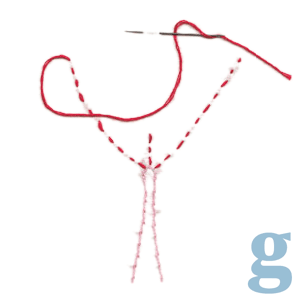
Cosmetic surgery of female genitalia, known as elective genitoplasty, has become pejoratively known as ‘designer vagina.’ Labiaplasty [ley-bee-uh-plas-tee] is a plastic surgery procedure for altering the labia minora (inner labia) and the labia majora (outer labia), the folds of skin surrounding the human vulva (external female genitals).
There are two main categories of women seeking cosmetic genital surgery: those with congenital conditions such as intersex, and those with no underlying condition. The size, color, and shape of labia vary significantly, and may change as a result of childbirth, aging, and other events. In a male-to-female sexual reassignment vaginoplasty is used for the creation of a neovagina, and labiaplasty creates labia where once there were none.
read more »
Posted in Health, Money, Sex |
Leave a Comment »
May 25, 2013

Toy2R (‘Toy to Raymond’) is a designer toy company based in Hong Kong that was founded by Raymond Choy in 1995. Choy spent 10 years as an employee of an American footwear company. After much research and planning, he opened a toy store in 1995. Four years later, Choy observed a trend in collectible toys, now known as designer toys, specifically the ‘urban vinyl’ movement of toy design. He decided to put all his funds into the development of a vinyl figure, intended more as art than as a plaything.
He called this figure the ‘Toyer’; the design, which resembles a simplified human form with a head that resembles a cartoon skull, became his first trademark. The commercial response to this figure led to support from artists and designers all over the world, and enabled his next endeavor, the ‘Qee’ figure.
read more »
Posted in Art, Money |
Leave a Comment »
May 24, 2013
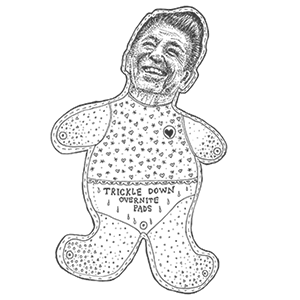
Reaganomics or ‘voodoo economics’ is a negative term which critics use to criticize supply-side economics. The term originated from George H.W. Bush, who criticized Ronald Reagan’s plan for the economy during the Republican presidential primaries in 1980. Reagan’s attitude towards the Federal Government Budget was to drastically reduce taxes – primarily for the wealthy – while greatly increasing spending – primarily for the military. Bush Sr. and others recognized that this could not possibly produce a balanced budget, and would result in great national debt.
The four pillars of Reagan’s economic policy were to reduce the growth of government spending, reduce the federal income tax and capital gains tax, reduce government regulation, and control the money supply in order to reduce inflation.
read more »
Posted in Language, Money, Politics |
2 Comments »
May 24, 2013

Abenomics [ah-bey-nom-iks] refers to the economic policies advocated by Shinzō Abe, the current Prime Minister of Japan. It consists of monetary policy, fiscal policy, and economic growth strategies to encourage private investment.
The detailed policies includes inflation targeting at a 2% annual rate, correction of the excessive yen appreciation, setting negative interest rates, radical quantitative easing (printing money), expansion of public investment, buying operations of construction bonds by Bank of Japan (BOJ), and revision of the Bank of Japan Act.
read more »
Posted in Money, Politics, World |
Leave a Comment »
May 22, 2013

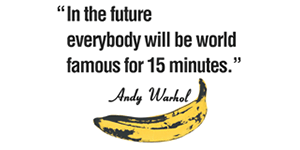
Celebrity worship syndrome is an obsessive-addictive disorder in which a person becomes overly involved with the details of a celebrity’s personal life. Psychologists have indicated that though many people obsess over glamorous film, television, sport and pop stars, the only common factor between them is that they are all figures in the public eye. The term Celebrity Worship Syndrome (CWS) is in fact a misnomer. The supposed condition first appeared in an article ‘Do you worship the celebs?’ by James Chapman in a British tabloid newspaper in 2003.
Chapman was basing his article on the journal paper, Maltby et al. (2003). Chapman refers to CWS, but in fact this is a misunderstanding of a term used in the academic article (CWS which stood for Celebrity Worship Scale). Nonetheless Chapman may be generally correct. A syndrome refers to a set of abnormal or unusual set of symptoms indicating the existence of an undesirable condition or quality. Indeed many attitudes and behaviors covered in this research indicate such states.
read more »
Posted in Health, Money |
Leave a Comment »
May 22, 2013
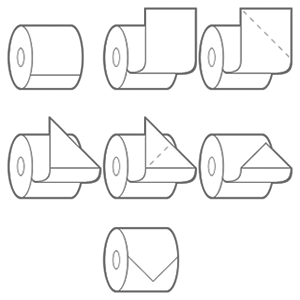
Hotel toilet paper folding is a common practice performed by hotels worldwide as a way of assuring guests that the bathroom has been cleaned. Elaborate folding is sometimes used to impress or delight guests with the management’s creativity and attention to detail.
The common fold normally involves creating a triangle or ‘V’ shape out of the first sheet or square on a toilet paper roll. Commonly, the two corners of the final sheet are tucked behind the paper symmetrically, forming a point at the end of the roll. More elaborate folding results in shapes like fans, sailboats, and even flowers.
read more »
Posted in Humor, Money |
Leave a Comment »
May 22, 2013

Transcreation is a term used chiefly by advertising and marketing professionals to refer to the process of adapting a message from one language to another, while maintaining its intent, style, tone and context. A successfully transcreated message evokes the same emotions and carries the same implications in the target language as it does in the source language.
Increasingly, transcreation is used in global marketing and advertising campaigns as advertisers seek to transcend the boundaries of culture and language. It also takes account of images which are used within a creative message, ensuring that they are suitable for the target local market.
read more »
Posted in Language, Money, World |
Leave a Comment »
May 21, 2013

From 1955 through 1962, the TWA Moonliner was part of the first futuristic exhibit located in Disneyland’s ‘Tomorrowland.’ It was also an early example of modern product placement advertising by TWA’s Howard Hughes teaming up with Walt Disney.
At 76 feet (23 m) tall, it was the tallest structure in the theme park, 8 feet (2.4 m) taller than the Sleeping Beauty Castle. Adjoining the rocket was the ‘Flight to the Moon’ attraction, which later became ‘Mission To Mars’ in 1975.
read more »
Posted in Money, Technology |
Leave a Comment »
May 20, 2013
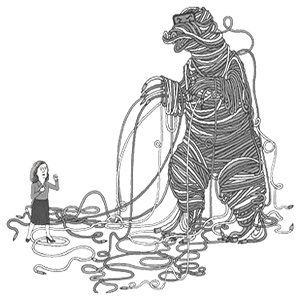
‘Captive Audience: the Telecom Industry and Monopoly Power in the New Gilded Age’ is an American non-fiction book by legal expert Susan P. Crawford. It describes high-speed internet access in the United States as essential (like electricity) but currently too slow and too expensive. To ensure national competitiveness ‘most Americans should have access to reasonably priced 1-Gb symmetric fiber-to-the-home networks.’
Crawford explains why the United States should revise national policy to increase competition in a market currently dominated by Comcast, Verizon Wireless, AT&T, and Time Warner Cable. Meanwhile towns and cities should consider setting up local networks after the example of pioneers such as Lafayette, Louisiana’s LUSFiber and Chattanooga, Tennessee’s EPB.
Posted in Language, Money, Technology |
2 Comments »
May 20, 2013

Michael Moss was awarded the Pulitzer Prize for explanatory reporting in 2010, and was a finalist for the prize in 2006 and 1999. He is also the recipient of a Loeb Award and an Overseas Press Club citation.
Before coming to ‘The New Times,’ he was a reporter for ‘The Wall Street Journal,’ ‘New York Newsday,’ and ‘The Atlanta Journal-Constitution.’ He has been an adjunct professor at the Columbia School of Journalism and currently lives in Brooklyn with his wife and two sons.
Posted in Food, Health, Money |
1 Comment »
May 17, 2013

When a person receives unfair treatment or alienation due to a social stigma, the effects can be detrimental. Social stigmas are defined as any aspect of an individual’s identity that is devalued in a social context. These stigmas can be categorized as visible or invisible, depending on whether the stigma is readily apparent to others. Visible stigmas refer to characteristics such as race, age, gender, physical disabilities, or deformities; whereas invisible stigmas refer to characteristics such sexual orientation, gender identity, religious affiliation, early pregnancy, certain diseases, or mental illnesses.
When individuals possess invisible stigmas, they must decide whether or not to reveal their association with a devalued group to others. This decision can be an incredibly difficult one, as revealing one’s invisible stigma can have both positive and negative consequences depending on several situational factors. In contrast, a visible stigma requires immediate action to diminish communication tension and acknowledge a deviation from the norm. People possessing visible stigmas often use compensatory strategies to reduce potential interpersonal discrimination that they may face.
read more »
Posted in Health, Money, Politics |
Leave a Comment »
May 13, 2013
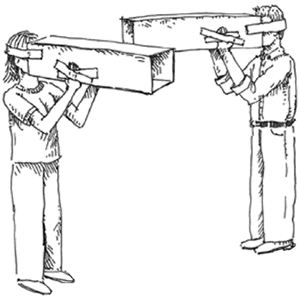
The selective exposure theory is a concept in media and communication research that refers to individuals’ tendency to favor information that reinforces pre-existing views while avoiding contradictory information. In this theory people tend to select specific aspects of exposed information based on their perspective, beliefs, attitudes and decisions.
People can determine the information exposed to them and select favorable evidence, while ignoring the unfavorable. This theory has been explored using the cognitive dissonance theory, which suggests information consumers strive for results of cognitive equilibrium (consistent rather than conflicting thoughts). In order to attain this equilibrium, individuals may either reinterpret the information they are exposed to or select information that are consonant with their view.
read more »
Posted in Language, Money, Science |
1 Comment »


 The Daily Omnivore