March 15, 2013

Solve for X is a think tank project launched by Google to incite collaboration to solve global issues, ‘X’ representing a remedy. The project kicked off in 2012 at a three-day convention at CordeValle Resort in San Martin, California. ‘Solve for X’ talks were presented to 50 people, hosted by Google executives Eric Schmidt, Astro Teller, and Megan Smith.
Solve for X was initially believed to be linked to the Google X Lab working on new technology such as web-connected appliances, driverless cars, and space elevators, but ‘eWeek’ reported that Google X is wed to more realistic undertakings, not the ‘moonshot’ solutions ‘Solve for X’ was created to pursue.
Posted in Money, Technology |
Leave a Comment »
March 14, 2013

Living Machine is a trademark and brand name for a patented form of ecological wastewater treatment designed to mimic the cleansing functions of wetlands. Also known as Solar Aquatics Systems, the latest generation of the technology is based on fixed-film ecology and the ecological processes of a natural tidal wetland, one of nature’s most productive ecosystems.
The Living Machine is an intensive bioremediation system that can also produce beneficial byproducts, such as reuse-quality water, ornamental plants and plant products—for building material, energy biomass, animal feed.
read more »
Posted in Money, Science, Technology |
1 Comment »
March 11, 2013

The Kiss Kasket is an item of merchandise licensed by the rock band Kiss. It is an actual casket, decorated with a Kiss logo and pictures of the band members. In introducing the Kiss Kasket, Simmons quipped, ‘I love livin’, but this makes the alternative look pretty damn good.’ The Kiss Kasket went on sale in 2001. Pantera guitarist Dimebag Darrell was buried in a Kiss Kasket.
In 2010, Kissonline.com announced a new licensing agreement between Kiss and Eternal Image Inc. (a public company engaged in the design, manufacturing, and marketing of officially licensed memorial products) to design, manufacture, and market a limited edition line of official KISS branded memorial products. The line will reportedly include caskets, cremation urns, bronze memorials, memorial prayer cards, registry books, memorial candles, and pet cremation urns—all designed after the famous rock band’s iconic images.
Posted in Death, Humor, Money |
Leave a Comment »
March 9, 2013

An ideas bank is a website where people post, exchange, discuss, and polish new ideas. Some ideas banks are used for the purpose of developing new inventions or technologies. Many corporations have installed internal ideas banks to gather the input from their employees and improve their ideation process. Some ideas banks employ a voting system to estimate an idea’s value. In some cases, ideas banks can be more humor-oriented than their serious counterparts.
The underlying theory of an ideas bank is that if a large group of people collaborate on a project or the development of an idea that eventually said project or idea will reach perfection in the eyes of those who worked on it. Many ideas banks are provided as free of charge, or set around certain companies in general to work out new inventions. Although ideas are provided by a community of people, problems can arise when people take the ideas of the site and begin developing them. There is no possible way to prove that the idea on the ideas bank was original and not taken from something else.
read more »
Posted in Money, Technology |
Leave a Comment »
March 9, 2013
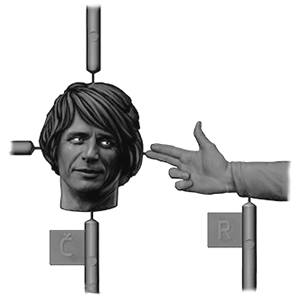
David Černý [chair-nee] (b. 1967) is a controversial Czech sculptor. He gained notoriety in 1991 by painting a Soviet tank pink, to serve as a war memorial in central Prague.
As the Monument to Soviet tank crews was still a national cultural monument at that time, his act of civil disobedience was considered ‘hooliganism’ and he was briefly arrested. Another of his conspicuous contributions to Prague is ‘Tower Babies,’ a series of cast figures of crawling infants attached to Žižkov Television Tower. For the 2012 Summer Olympics Černý created ‘London Booster’ – a double decker bus with mechanical arms for doing push-ups.
read more »
Posted in Art, Humor, Money |
Leave a Comment »
March 9, 2013
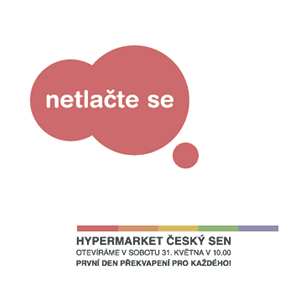
‘Czech Dream‘ is a 2004 documentary film directed by Vít Klusák and Filip Remunda, which recorded a large-scale hoax perpetrated by the filmmakers on the Czech public, culminating in the ‘opening event’ of a fake hypermarket (a supermarket and a department store in one).
The film was their final project for film school. Remunda and Klusák invented the ‘Český sen’ (‘Czech Dream’) hypermarket and created a massive advertising campaign around it.
read more »
Posted in Art, Money, World |
Leave a Comment »
March 7, 2013

WFMU is a listener-supported, independent community radio station headquartered in Jersey City, New Jersey, broadcasting at FM 91.1 (at 90.1 as WMFU, and at 91.9 as W219DQ), presenting a freeform radio format (in which the disc jockey is given total control over what music to play, regardless of music genre or commercial interests). It is the longest-running freeform radio station in the US, commencing broadcasting in 1958, licensed to Upsala College in East Orange.
Although originally a student-staffed and faculty-administered college radio operation, by the 1980s most of the station’s staff had no affiliation with the college, and management, though hired by the college, had little involvement with the academic community. Shortly before Upsala’s bankruptcy filing and closure in 1995, a group of station executives, personnel, and supporters formed Auricle Communications and bought the license from the college, making it a fully independent radio station. In 1998 the station’s studios and offices were relocated to a Jersey City facility purchased with listener donations.
read more »
Posted in Art, Money |
Leave a Comment »
March 7, 2013
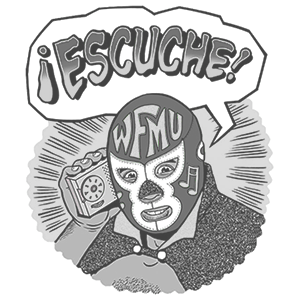
Freeform radio, is a radio station programming format in which the disc jockey is given total control over what music to play, regardless of music genre or commercial interests. Freeform radio stands in contrast to most commercial radio stations, in which DJs have little or no influence over programming structure or playlists. In the United States, freeform DJs are still bound by Federal Communications Commission regulations.
Many shows lay claim to be the first freeform radio program; the earliest is ‘Nightsounds’ on KPFA-FM in Berkeley, California, D.J.’d by John Leonard. Probably the best-remembered in the Midwest is ‘Beaker Street,’ which ran for almost 10 years on KAAY ‘The Mighty 1090’ in Little Rock, Arkansas, beginning in 1966, making it also probably the best-known such show on an AM station; its signal reached from Canada to Mexico and Cuba, blanketing the Midwest and Midsouth of the U.S.
read more »
Posted in Art, Money |
Leave a Comment »
March 7, 2013
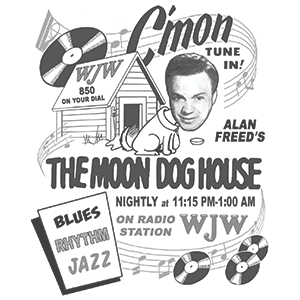
Payola [pey-oh-luh], in the American music industry, is the illegal practice of payment or other inducement by record companies for the broadcast of recordings on music radio in which the song is presented as being part of the normal day’s broadcast.
A radio station can play a specific song in exchange for money, but this must be disclosed on the air as being sponsored airtime, and that play of the song should not be counted as a ‘regular airplay.’ The term has come to refer to any secret payment made to cast a product in a favorable light (such as obtaining positive reviews). Some radio stations report spins of the newest and most popular songs to industry publications. The number of times the songs are played can influence the perceived popularity of a song.
read more »
Posted in Money, Politics |
Leave a Comment »
March 6, 2013

Thomas Frank (b. 1965) is an American political analyst, historian, and journalist. He co-founded and edited ‘The Baffler magazine.’ He is a former columnist for the ‘Wall Street Journal,’ authoring ‘The Tilting Yard’ from 2008 to 2010. Frank is a historian of culture and ideas and analyzes trends in American electoral politics and propaganda, advertising, popular culture, mainstream journalism and economics.
With his writing, he explores the rhetoric and impact of the ‘Culture Wars’ in American political life, and the relationship between politics and culture in the United States. Frank started his political journey as a College Republican, but has come to be highly critical of conservatism, especially the presidency of George W. Bush. Frank summarized the thesis of his book ‘The Wrecking Crew: How Conservatives Rule’ as ‘Bad government is the natural product of rule by those who believe government is bad.’
Posted in Language, Money, Politics |
Leave a Comment »
March 6, 2013

The impact of Native American Gaming varies by tribe and location. In the 1970s, various tribes took unprecedented action to initiate gaming enterprises. In doing so, they created not only a series of legal struggles between the federal, state, and tribal governments but also a groundbreaking way to revitalize the Native American economy.
Native American gaming has grown from bingo parlors to high stakes gaming and is surrounded by controversy on many different levels. There are disputes concerning tribal sovereignty, negative effects of gaming, and a loss of Native American culture. In the US the ‘Indian Gaming Regulatory Act’ (IGRA) was passed in 1988 in order to secure collaboration between the states and tribes and also in order for the federal government to oversee gaming operations.
read more »
Posted in Games, Money, Politics |
Leave a Comment »
March 4, 2013
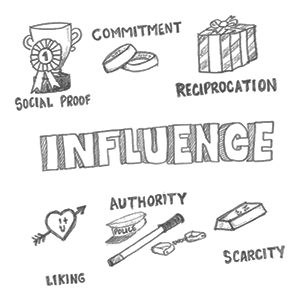
Robert Cialdini is Regents’ Professor Emeritus of Psychology and Marketing at Arizona State University. He is best known for his book on persuasion and marketing, ‘Influence: The Psychology of Persuasion.’ The book has been translated into 26 languages has also been published as a textbook under the title ‘Influence: Science and Practice.’
In writing the book, he spent three years going ‘undercover’ applying for jobs and training at used car dealerships, fund-raising organizations, and telemarketing firms to observe real-life situations of persuasion. The book also reviews many of the most important theories and experiments in social psychology. Cialdini distills his theory down to six key principles: Reciprocity, Commitment and Consistency, Social Proof, Authority, Liking, and Scarcity.
read more »
Posted in Health, Money |
1 Comment »


 The Daily Omnivore