March 7, 2013

WFMU is a listener-supported, independent community radio station headquartered in Jersey City, New Jersey, broadcasting at FM 91.1 (at 90.1 as WMFU, and at 91.9 as W219DQ), presenting a freeform radio format (in which the disc jockey is given total control over what music to play, regardless of music genre or commercial interests). It is the longest-running freeform radio station in the US, commencing broadcasting in 1958, licensed to Upsala College in East Orange.
Although originally a student-staffed and faculty-administered college radio operation, by the 1980s most of the station’s staff had no affiliation with the college, and management, though hired by the college, had little involvement with the academic community. Shortly before Upsala’s bankruptcy filing and closure in 1995, a group of station executives, personnel, and supporters formed Auricle Communications and bought the license from the college, making it a fully independent radio station. In 1998 the station’s studios and offices were relocated to a Jersey City facility purchased with listener donations.
read more »
Posted in Art, Money |
Leave a Comment »
March 7, 2013
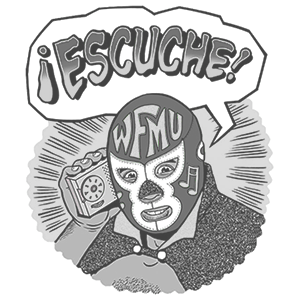
Freeform radio, is a radio station programming format in which the disc jockey is given total control over what music to play, regardless of music genre or commercial interests. Freeform radio stands in contrast to most commercial radio stations, in which DJs have little or no influence over programming structure or playlists. In the United States, freeform DJs are still bound by Federal Communications Commission regulations.
Many shows lay claim to be the first freeform radio program; the earliest is ‘Nightsounds’ on KPFA-FM in Berkeley, California, D.J.’d by John Leonard. Probably the best-remembered in the Midwest is ‘Beaker Street,’ which ran for almost 10 years on KAAY ‘The Mighty 1090’ in Little Rock, Arkansas, beginning in 1966, making it also probably the best-known such show on an AM station; its signal reached from Canada to Mexico and Cuba, blanketing the Midwest and Midsouth of the U.S.
read more »
Posted in Art, Money |
Leave a Comment »
March 7, 2013
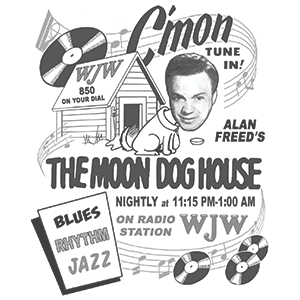
Payola [pey-oh-luh], in the American music industry, is the illegal practice of payment or other inducement by record companies for the broadcast of recordings on music radio in which the song is presented as being part of the normal day’s broadcast.
A radio station can play a specific song in exchange for money, but this must be disclosed on the air as being sponsored airtime, and that play of the song should not be counted as a ‘regular airplay.’ The term has come to refer to any secret payment made to cast a product in a favorable light (such as obtaining positive reviews). Some radio stations report spins of the newest and most popular songs to industry publications. The number of times the songs are played can influence the perceived popularity of a song.
read more »
Posted in Money, Politics |
Leave a Comment »
March 6, 2013

Thomas Frank (b. 1965) is an American political analyst, historian, and journalist. He co-founded and edited ‘The Baffler magazine.’ He is a former columnist for the ‘Wall Street Journal,’ authoring ‘The Tilting Yard’ from 2008 to 2010. Frank is a historian of culture and ideas and analyzes trends in American electoral politics and propaganda, advertising, popular culture, mainstream journalism and economics.
With his writing, he explores the rhetoric and impact of the ‘Culture Wars’ in American political life, and the relationship between politics and culture in the United States. Frank started his political journey as a College Republican, but has come to be highly critical of conservatism, especially the presidency of George W. Bush. Frank summarized the thesis of his book ‘The Wrecking Crew: How Conservatives Rule’ as ‘Bad government is the natural product of rule by those who believe government is bad.’
Posted in Language, Money, Politics |
Leave a Comment »
March 6, 2013

The impact of Native American Gaming varies by tribe and location. In the 1970s, various tribes took unprecedented action to initiate gaming enterprises. In doing so, they created not only a series of legal struggles between the federal, state, and tribal governments but also a groundbreaking way to revitalize the Native American economy.
Native American gaming has grown from bingo parlors to high stakes gaming and is surrounded by controversy on many different levels. There are disputes concerning tribal sovereignty, negative effects of gaming, and a loss of Native American culture. In the US the ‘Indian Gaming Regulatory Act’ (IGRA) was passed in 1988 in order to secure collaboration between the states and tribes and also in order for the federal government to oversee gaming operations.
read more »
Posted in Games, Money, Politics |
Leave a Comment »
March 4, 2013
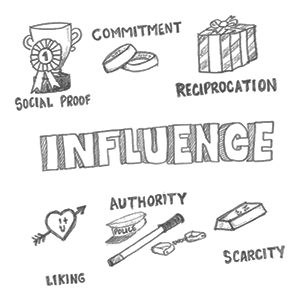
Robert Cialdini is Regents’ Professor Emeritus of Psychology and Marketing at Arizona State University. He is best known for his book on persuasion and marketing, ‘Influence: The Psychology of Persuasion.’ The book has been translated into 26 languages has also been published as a textbook under the title ‘Influence: Science and Practice.’
In writing the book, he spent three years going ‘undercover’ applying for jobs and training at used car dealerships, fund-raising organizations, and telemarketing firms to observe real-life situations of persuasion. The book also reviews many of the most important theories and experiments in social psychology. Cialdini distills his theory down to six key principles: Reciprocity, Commitment and Consistency, Social Proof, Authority, Liking, and Scarcity.
read more »
Posted in Health, Money |
1 Comment »
March 4, 2013
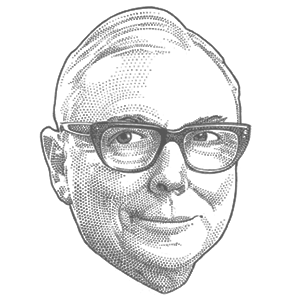
Charlie Munger (b. 1924) is an American business magnate, lawyer, investor, and philanthropist. He is Vice-Chairman of Berkshire Hathaway Corporation, the diversified investment corporation chaired by Warren Buffett; in that capacity, Buffett describes Munger as ‘my partner.’
Munger served as chairman of Wesco Financial Corporation from 1984 through 2011 (Wesco was approximately 80%-owned by Berkshire-Hathaway during that time). He is also the chairman of the Daily Journal Corporation, based in Los Angeles, and a director of Costco Wholesale Corporation.
read more »
Posted in Language, Money |
1 Comment »
March 4, 2013

Berkshire Hathaway Inc. is an American multinational conglomerate holding company headquartered in Omaha, Nebraska that oversees and manages a number of partially and wholly owned subsidiary companies. The company owns Geico, Dairy Queen, Fruit of the Loom, Helzberg Diamonds, NetJets, and Heinz and has significant minority holdings in American Express, M&T Bank, Coca-Cola, Kraft Foods, Proctor & Gamble, and IBM. Berkshire Hathaway averaged an annual growth in book value of 20.3% to its shareholders for the last 44 years, while employing large amounts of capital, and minimal debt.
Berkshire Hathaway stock produced a total return of 76% from 2000–2010 versus a negative 11.3% return for the S&P 500. Warren Buffett owns 32.4% aggregate voting power of Berkshire’s shares outstanding, and vice-chairman Charlie Munger holds a stake big enough to make him a billionaire (early investments in Berkshire by David Gottesman and Franklin Otis Booth, Jr. resulted in their becoming billionaires as well). Bill Gates’ Cascade Investments LLC is the second largest shareholder of Berkshire and owns more than 5% of class B shares.
read more »
Posted in Money |
Leave a Comment »
March 2, 2013
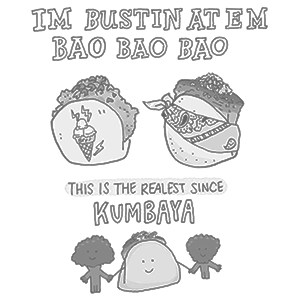
Eddie Huang (b. 1982) is an Asian American restaurateur, food personality and former lawyer. He is the owner of Baohaus. Huang was born in Washington, D.C., to immigrant parents from Taiwan. He was raised in Orlando, where his father managed a successful group of steak and seafood restaurants. Huang identified with African-American culture, especially hip-hop, at a young age. He received a B.A. from the University of Pittsburgh, Rollins College and a J.D. from Cardozo School of Law.
Not long after graduating from law school, Huang decided for a career change. After being laid off from a New York law firm, he worked as a stand-up comic and as a marijuana dealer. He was interested in food as he had grown up watching his mother cook at home and had learned many skills in the kitchen. He learned management from his father.
read more »
Posted in Food, Money |
1 Comment »
February 27, 2013

Many Japanese women are embarrassed at the thought of being heard by others during urination. To cover the sound of bodily functions, many women used to flush public toilets continuously while using them, wasting a large amount of water in the process.
As education campaigns did not stop this practice, a device was introduced in the 1980s that, after activation, produces the sound of flushing water without the need for actual flushing. A Toto brand name commonly found is the ‘Otohime’ (literally ‘Sound Princess‘ also homophone with a legendary goddess Otohime). This device is now routinely placed in most new public women’s rooms, and many older public women’s rooms have been upgraded.
Posted in Money, Technology |
Leave a Comment »
February 25, 2013
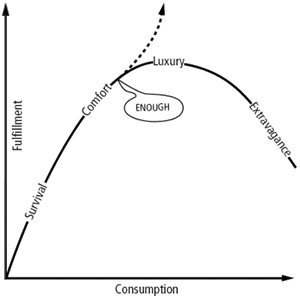
Growth Fetish is a 2003 book about economics and politics by the Australian liberal political theorist Clive Hamilton. The book argues that the policies of unfettered capitalism pursued by the west for the last 50 years has largely failed, since the underlying purpose of the creation of wealth is happiness, and Hamilton contends that people in general are no happier now than 50 years ago, despite the huge increase in personal wealth. In fact, he suggests that the reverse is true. He states that the pursuit of growth has become a fetish, in that it is seen as a universal magic cure for all of society’s ills.
Hamilton also proposes that the pursuit of growth has been at a tremendous cost in terms of the environment, erosion of democracy, and the values of society as a whole. One result is that we, as a society, have become obsessed with materialism and consumerism. Hamilton’s catchphrase ‘People buy things they don’t need, with money they don’t have, to impress people they don’t like’ neatly sums up his philosophy on consumerism.
read more »
Posted in Language, Money |
Leave a Comment »
February 25, 2013
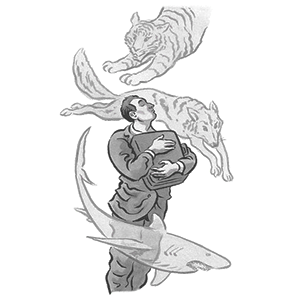
‘Animal spirits‘ is the term economist John Maynard Keynes used in his 1936 book ‘The General Theory of Employment, Interest and Money’ to describe emotions which influence human behavior and can be measured in terms of consumer confidence. It has since been argued that trust is also included or produced by ‘animal spirits.’ Several articles and at least two books with a focus on “animal spirits” were published in 2008 and 2009 as a part of the Keynesian resurgence.
According to Keynes: ‘Even apart from the instability due to speculation, there is the instability due to the characteristic of human nature that a large proportion of our positive activities depend on spontaneous optimism rather than mathematical expectations, whether moral or hedonistic or economic. Most, probably, of our decisions to do something positive, the full consequences of which will be drawn out over many days to come, can only be taken as the result of animal spirits – a spontaneous urge to action rather than inaction, and not as the outcome of a weighted average of quantitative benefits multiplied by quantitative probabilities.’
read more »
Posted in Language, Money |
Leave a Comment »



