March 4, 2013
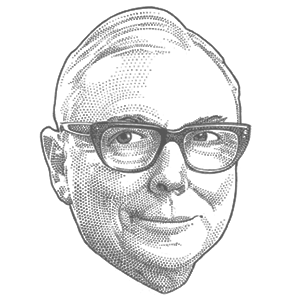
Charlie Munger (b. 1924) is an American business magnate, lawyer, investor, and philanthropist. He is Vice-Chairman of Berkshire Hathaway Corporation, the diversified investment corporation chaired by Warren Buffett; in that capacity, Buffett describes Munger as ‘my partner.’
Munger served as chairman of Wesco Financial Corporation from 1984 through 2011 (Wesco was approximately 80%-owned by Berkshire-Hathaway during that time). He is also the chairman of the Daily Journal Corporation, based in Los Angeles, and a director of Costco Wholesale Corporation.
read more »
Posted in Language, Money |
1 Comment »
March 4, 2013

Berkshire Hathaway Inc. is an American multinational conglomerate holding company headquartered in Omaha, Nebraska that oversees and manages a number of partially and wholly owned subsidiary companies. The company owns Geico, Dairy Queen, Fruit of the Loom, Helzberg Diamonds, NetJets, and Heinz and has significant minority holdings in American Express, M&T Bank, Coca-Cola, Kraft Foods, Proctor & Gamble, and IBM. Berkshire Hathaway averaged an annual growth in book value of 20.3% to its shareholders for the last 44 years, while employing large amounts of capital, and minimal debt.
Berkshire Hathaway stock produced a total return of 76% from 2000–2010 versus a negative 11.3% return for the S&P 500. Warren Buffett owns 32.4% aggregate voting power of Berkshire’s shares outstanding, and vice-chairman Charlie Munger holds a stake big enough to make him a billionaire (early investments in Berkshire by David Gottesman and Franklin Otis Booth, Jr. resulted in their becoming billionaires as well). Bill Gates’ Cascade Investments LLC is the second largest shareholder of Berkshire and owns more than 5% of class B shares.
read more »
Posted in Money |
Leave a Comment »
March 2, 2013
Eddie Huang (b. 1982) is an Asian American restaurateur, food personality and former lawyer. He is the owner of Baohaus. Huang was born in Washington, D.C., to immigrant parents from Taiwan. He was raised in Orlando, where his father managed a successful group of steak and seafood restaurants. Huang identified with African-American culture, especially hip-hop, at a young age. He received a B.A. from the University of Pittsburgh, Rollins College and a J.D. from Cardozo School of Law.
Not long after graduating from law school, Huang decided for a career change. After being laid off from a New York law firm, he worked as a stand-up comic and as a marijuana dealer. He was interested in food as he had grown up watching his mother cook at home and had learned many skills in the kitchen. He learned management from his father.
read more »
Posted in Food, Money |
1 Comment »
February 27, 2013

Many Japanese women are embarrassed at the thought of being heard by others during urination. To cover the sound of bodily functions, many women used to flush public toilets continuously while using them, wasting a large amount of water in the process.
As education campaigns did not stop this practice, a device was introduced in the 1980s that, after activation, produces the sound of flushing water without the need for actual flushing. A Toto brand name commonly found is the ‘Otohime’ (literally ‘Sound Princess‘ also homophone with a legendary goddess Otohime). This device is now routinely placed in most new public women’s rooms, and many older public women’s rooms have been upgraded.
Posted in Money, Technology |
Leave a Comment »
February 25, 2013
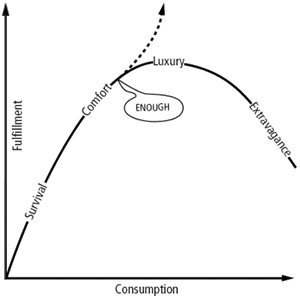
Growth Fetish is a 2003 book about economics and politics by the Australian liberal political theorist Clive Hamilton. The book argues that the policies of unfettered capitalism pursued by the west for the last 50 years has largely failed, since the underlying purpose of the creation of wealth is happiness, and Hamilton contends that people in general are no happier now than 50 years ago, despite the huge increase in personal wealth. In fact, he suggests that the reverse is true. He states that the pursuit of growth has become a fetish, in that it is seen as a universal magic cure for all of society’s ills.
Hamilton also proposes that the pursuit of growth has been at a tremendous cost in terms of the environment, erosion of democracy, and the values of society as a whole. One result is that we, as a society, have become obsessed with materialism and consumerism. Hamilton’s catchphrase ‘People buy things they don’t need, with money they don’t have, to impress people they don’t like’ neatly sums up his philosophy on consumerism.
read more »
Posted in Language, Money |
Leave a Comment »
February 25, 2013
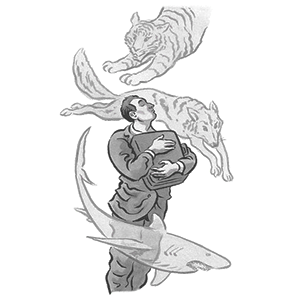
‘Animal spirits‘ is the term economist John Maynard Keynes used in his 1936 book ‘The General Theory of Employment, Interest and Money’ to describe emotions which influence human behavior and can be measured in terms of consumer confidence. It has since been argued that trust is also included or produced by ‘animal spirits.’ Several articles and at least two books with a focus on “animal spirits” were published in 2008 and 2009 as a part of the Keynesian resurgence.
According to Keynes: ‘Even apart from the instability due to speculation, there is the instability due to the characteristic of human nature that a large proportion of our positive activities depend on spontaneous optimism rather than mathematical expectations, whether moral or hedonistic or economic. Most, probably, of our decisions to do something positive, the full consequences of which will be drawn out over many days to come, can only be taken as the result of animal spirits – a spontaneous urge to action rather than inaction, and not as the outcome of a weighted average of quantitative benefits multiplied by quantitative probabilities.’
read more »
Posted in Language, Money |
Leave a Comment »
February 25, 2013

Felix the Cat is a cartoon character created in the silent film era. His black body, white eyes, and giant grin, coupled with the surrealism of the situations in which his cartoons place him, combine to make Felix one of the most recognized cartoon characters in film history. Felix was the first character from animation to attain a level of popularity sufficient to draw movie audiences. Felix’s origins remain disputed. Australian cartoonist/film entrepreneur Pat Sullivan, owner of the Felix character, claimed during his lifetime to be its creator.
However, American animator Otto Messmer, Sullivan’s lead animator, has also been credited as such. What is certain is that Felix emerged from Sullivan’s studio in NYC, and cartoons featuring the character enjoyed success and popularity in 1920s popular culture. Aside from the animated shorts, Felix starred in a comic strip (drawn by Messmer) beginning in 1923, and his image soon adorned merchandise such as ceramics, toys and postcards. Several manufacturers made stuffed Felix toys. Jazz bands such as Paul Whiteman’s played songs about him (1923’s ‘Felix Kept On Walking’ and others).
read more »
Posted in Art, Humor, Money |
Leave a Comment »
February 20, 2013
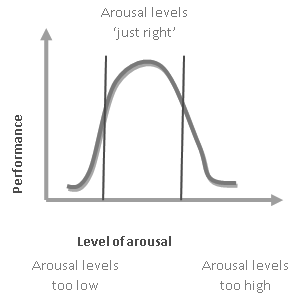
In economics, a bliss point is a quantity of consumption where any further increase would make the consumer less satisfied. It is a quantity of consumption which maximizes utility in the absence budget constraint.
In other words, it refers to the amount of consumption that would be chosen by a person so rich that money imposed no constraint on his or her decisions.
Posted in Food, Money, Science |
Leave a Comment »
February 19, 2013

Live insect jewelry refers to jewelry, made from living creatures- usually bejeweled, large insects- which is worn as a fashion accessory. The use of insects as live jewelry has existed for many centuries, with the Egyptians believed to have been the first to have worn insects as jewelry. Ancient Egyptian soldiers commonly wore scarab beetles into battle as the beetles were considered to have supernatural powers of protection against enemies.
Although live jewelry has featured in Mayan cultural traditions for many centuries, it was not until the 1980s that the Mexican Maquech Beetle, a sub-species of the Zopherus beetle, achieved mainstream popularity as live jewelry. The Maquech Beetle is a large, docile, wingless insect which is decorated with gold and semi-precious gemstones and is attached to a decorative safety pin by a chain leash.
read more »
Posted in Money, Politics, World |
Leave a Comment »
February 19, 2013


Phishing is the act of attempting to acquire information such as usernames, passwords, and credit card details by masquerading as a trustworthy entity in an electronic communication. Communications purporting to be from popular social web sites, auction sites, online payment processors, or IT administrators are commonly used to lure the unsuspecting public. Phishing emails may contain links to websites that are infected with malware.
Phishing is typically carried out by e-mail spoofing (altering the sender address) or instant messaging, and it often directs users to enter details at a fake website whose look and feel are almost identical to the legitimate one. Phishing is an example of social engineering (manipulating people into performing actions or divulging confidential information), and exploits the poor usability of current web security technologies. Attempts to deal with the growing number of reported phishing incidents include legislation, user training, public awareness, and technical security measures.
read more »
Posted in Money, Politics, Technology |
Leave a Comment »
February 19, 2013
PLA Unit 61398, referred to by the US as the ‘Comment Crew’ (owing to the collective’s past pattern of embedding HTML commands in the comments section of popular websites) is an alleged cyber-warfare unit of the Chinese military. As a hacker group the entity has been known to US intelligence agencies since 2002; they gave it the codename ‘Byzantine Candor.’
The unit is reported to operate out of a 12-story building in Shanghai and the surrounding neighborhood. The story was first broken by the ‘New York Times,’ based on information from a report by the computer security firm Mandiant, who were retained by the New York Times after a compromise of their own computer systems. Mandiant’s report states that PLA Unit 61398 is believed to be under the 2nd Bureau of the People’s Liberation Army General Staff’s Department (GSD) 3rd Department and that there is evidence that it contains an entity Mandiant calls APT1, part of the Advanced Persistent Threat attacking American corporations and government entities.
Posted in Money, Technology, War |
Leave a Comment »
February 18, 2013
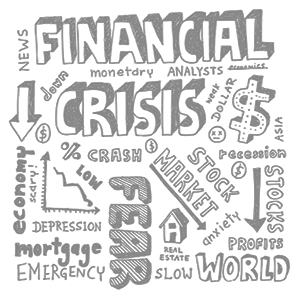
The Great Recession is a marked global economic decline that began in December 2007 and took a particularly sharp downward turn in September 2008. The active phase of the crisis, which manifested as a liquidity crisis, can be dated from August 7, 2007 when BNP Paribas (one of the world’s largest global banking groups) terminated withdrawals from three hedge funds citing ‘a complete evaporation of liquidity.’
The bursting of the U.S. housing bubble, which peaked in 2006, caused the values of securities tied to U.S. real estate pricing to plummet, damaging financial institutions globally. The global recession affected the entire world economy, with higher detriment in some countries than others. As of December 2012, the economic side effects of the European sovereign debt crisis and limited prospects for global growth in 2013 and 2014 continue to provide obstacles to full recovery.
read more »
Posted in Money, World |
Leave a Comment »


 The Daily Omnivore