February 25, 2013

Felix the Cat is a cartoon character created in the silent film era. His black body, white eyes, and giant grin, coupled with the surrealism of the situations in which his cartoons place him, combine to make Felix one of the most recognized cartoon characters in film history. Felix was the first character from animation to attain a level of popularity sufficient to draw movie audiences. Felix’s origins remain disputed. Australian cartoonist/film entrepreneur Pat Sullivan, owner of the Felix character, claimed during his lifetime to be its creator.
However, American animator Otto Messmer, Sullivan’s lead animator, has also been credited as such. What is certain is that Felix emerged from Sullivan’s studio in NYC, and cartoons featuring the character enjoyed success and popularity in 1920s popular culture. Aside from the animated shorts, Felix starred in a comic strip (drawn by Messmer) beginning in 1923, and his image soon adorned merchandise such as ceramics, toys and postcards. Several manufacturers made stuffed Felix toys. Jazz bands such as Paul Whiteman’s played songs about him (1923’s ‘Felix Kept On Walking’ and others).
read more »
Posted in Art, Humor, Money |
Leave a Comment »
February 20, 2013
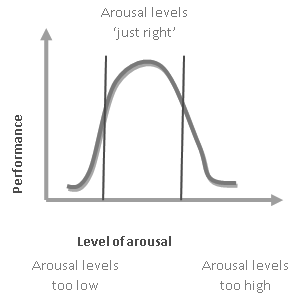
In economics, a bliss point is a quantity of consumption where any further increase would make the consumer less satisfied. It is a quantity of consumption which maximizes utility in the absence budget constraint.
In other words, it refers to the amount of consumption that would be chosen by a person so rich that money imposed no constraint on his or her decisions.
Posted in Food, Money, Science |
Leave a Comment »
February 19, 2013

Live insect jewelry refers to jewelry, made from living creatures- usually bejeweled, large insects- which is worn as a fashion accessory. The use of insects as live jewelry has existed for many centuries, with the Egyptians believed to have been the first to have worn insects as jewelry. Ancient Egyptian soldiers commonly wore scarab beetles into battle as the beetles were considered to have supernatural powers of protection against enemies.
Although live jewelry has featured in Mayan cultural traditions for many centuries, it was not until the 1980s that the Mexican Maquech Beetle, a sub-species of the Zopherus beetle, achieved mainstream popularity as live jewelry. The Maquech Beetle is a large, docile, wingless insect which is decorated with gold and semi-precious gemstones and is attached to a decorative safety pin by a chain leash.
read more »
Posted in Money, Politics, World |
Leave a Comment »
February 19, 2013


Phishing is the act of attempting to acquire information such as usernames, passwords, and credit card details by masquerading as a trustworthy entity in an electronic communication. Communications purporting to be from popular social web sites, auction sites, online payment processors, or IT administrators are commonly used to lure the unsuspecting public. Phishing emails may contain links to websites that are infected with malware.
Phishing is typically carried out by e-mail spoofing (altering the sender address) or instant messaging, and it often directs users to enter details at a fake website whose look and feel are almost identical to the legitimate one. Phishing is an example of social engineering (manipulating people into performing actions or divulging confidential information), and exploits the poor usability of current web security technologies. Attempts to deal with the growing number of reported phishing incidents include legislation, user training, public awareness, and technical security measures.
read more »
Posted in Money, Politics, Technology |
Leave a Comment »
February 19, 2013
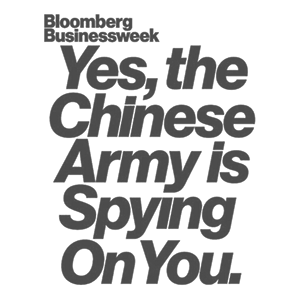
PLA Unit 61398, referred to by the US as the ‘Comment Crew’ (owing to the collective’s past pattern of embedding HTML commands in the comments section of popular websites) is an alleged cyber-warfare unit of the Chinese military. As a hacker group the entity has been known to US intelligence agencies since 2002; they gave it the codename ‘Byzantine Candor.’
The unit is reported to operate out of a 12-story building in Shanghai and the surrounding neighborhood. The story was first broken by the ‘New York Times,’ based on information from a report by the computer security firm Mandiant, who were retained by the New York Times after a compromise of their own computer systems. Mandiant’s report states that PLA Unit 61398 is believed to be under the 2nd Bureau of the People’s Liberation Army General Staff’s Department (GSD) 3rd Department and that there is evidence that it contains an entity Mandiant calls APT1, part of the Advanced Persistent Threat attacking American corporations and government entities.
Posted in Money, Technology, War |
Leave a Comment »
February 18, 2013
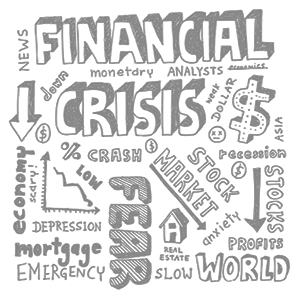
The Great Recession is a marked global economic decline that began in December 2007 and took a particularly sharp downward turn in September 2008. The active phase of the crisis, which manifested as a liquidity crisis, can be dated from August 7, 2007 when BNP Paribas (one of the world’s largest global banking groups) terminated withdrawals from three hedge funds citing ‘a complete evaporation of liquidity.’
The bursting of the U.S. housing bubble, which peaked in 2006, caused the values of securities tied to U.S. real estate pricing to plummet, damaging financial institutions globally. The global recession affected the entire world economy, with higher detriment in some countries than others. As of December 2012, the economic side effects of the European sovereign debt crisis and limited prospects for global growth in 2013 and 2014 continue to provide obstacles to full recovery.
read more »
Posted in Money, World |
Leave a Comment »
February 17, 2013
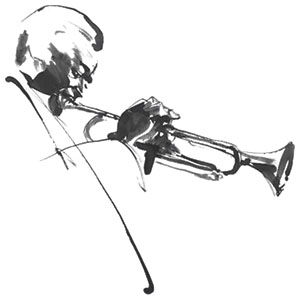
Coolness is an admired aesthetic of attitude, behavior, comportment, appearance and style, influenced by and a product of the Zeitgeist (‘spirit of the age’). Because of the varied and changing connotations of cool, as well its subjective nature, the word has no single meaning.
It has associations of composure and self-control and often is used as an expression of approval. Although commonly regarded as slang, it is widely used among disparate social groups, and has endured in usage for generations. Because there is no single concept of cool, one of its essential characteristics is mutability—what is considered cool changes over time and varies among cultures and generations.
read more »
Posted in Language, Money, Philosophy |
Leave a Comment »
February 14, 2013
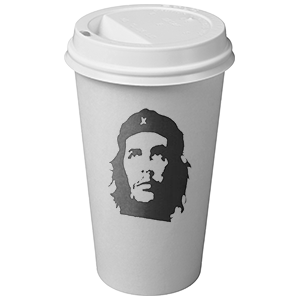
‘The Rebel Sell: Why the culture can’t be jammed’ (published in the US as ‘Nation of Rebels: Why Counterculture Became Consumer Culture’) is a non-fiction book written by University of Toronto philosopher Joseph Heath and Canadian journalist Andrew Potter in 2004. Their central claim is that counter-cultural movements have failed, and that they all share a common fatal error in the way they understand society; thus counter-culture is not a threat to ‘the system.’
Following their claim that conformity isn’t something perpetuated by mainstream media, Potter and Heath identify other sources of conformity using work from Hobbes, Rousseau, and Freud. They describe conformity as often the byproduct of simple market preferences or, alternatively, as an attempt to resolve a collective action problem. For instance, they claim that school uniforms curb the fashion ‘arms race’ created between students when no restrictions are in place, and that they are not intended merely to stamp out individualism, as many counter-cultural figures have suggested.
read more »
Posted in Language, Money, Politics |
Leave a Comment »
February 13, 2013

Chet Helms (1942 – 2005), often called the father of San Francisco’s 1967 ‘Summer of Love,’ was a music promoter and a cultural figure in San Francisco during its hippie period in the late Sixties. Helms was the founder and manager of Big Brother and the Holding Company and recruited Janis Joplin as its lead singer.
He was a producer and organizer, helping to stage free concerts and other cultural events at Golden Gate Park, the backdrop of San Francisco’s Summer of Love in 1967, as well as at other venues, including the Avalon Ballroom. He was the first producer of psychedelic light-show concerts at the Fillmore and the Avalon Ballroom and was instrumental in helping to develop bands that had the distinctive San Francisco Sound.
read more »
Posted in Art, Money |
Leave a Comment »
February 13, 2013
A head shop is a retail outlet specializing in drug paraphernalia, as well as counterculture art, magazines, music, clothing, and home decor.
Products available in these outlets typically include pipes; pipe screens; bongs (often called water pipes in countries with drug paraphernalia laws); roach clips; vaporizers; rolling papers; rolling machines; scales or balances; blacklight-responsive posters; incense; cigarette lighters; legal drugs such as whipped-cream chargers (which contain nitrous oxide) and Salvia divinorum (illegal in some countries and US states); and products such as the Whizzinator claiming to give false negative results for drug urinalysis tests.
read more »
Posted in Drugs, Money |
Leave a Comment »
February 13, 2013

A breastaurant is a restaurant that has sexual undertones, most commonly in the form of large-breasted, skimpily dressed waitresses and barmaids. The term dates from at least the early 1990s and has since been applied to other restaurants that offer similar services, such as Tilted Kilt (dubbed ‘Hooters goes to Scotland’), Mugs N Jugs, Twin Peaks, Bikinis Sports Bar and Grill, Heart Attack Grill, and the much older Hooters.
The restaurants often offer specific themes, both in decoration and menu, and the operators of the restaurants hope that customers will come just for the food, or that for the customer the sexual nature is secondary to the good food. The restaurants offer numerous perks for customers, including alcohol and flirty servers.
Posted in Food, Money, Sex |
Leave a Comment »
February 11, 2013


The term Experience Economy was first described in an article published in 1998 by B. Joseph Pine II and James H. Gilmore. In it they described the experience economy as the next economy following the agrarian economy, the industrial economy, and the most recent service economy. This concept had been previously researched by many other authors.
Pine and Gilmore argue that businesses must orchestrate memorable events for their customers, and that memory itself becomes the product – the ‘experience.’ More advanced experience businesses can begin charging for the value of the ‘transformation’ that an experience offers, e.g., as education offerings might do if they were able to participate in the value that is created by the educated individual. This, they argue, is a natural progression in the value added by the business over and above its inputs.
read more »
Posted in Money, Technology |
Leave a Comment »



