February 6, 2013

‘Help at Any Cost: How the Troubled-Teen Industry Cons Parents and Hurts Kids’ is a 2006 non-fiction book by science journalist Maia Szalavitz analyzing the controversy surrounding the tough love behavior modification industry. Szalavitz focuses on four programs: Straight, Incorporated, a copy of the Straight Inc. program called KIDS, North Star wilderness boot camp, and the World Wide Association of Specialty Programs and Schools.
She discusses the background, history and methodology of the troubled teen industry, including techniques drawn from attack therapy, Erhard Seminars Training (est), and Synanon, all of which are highly controversial. She uses first-person accounts and court testimony in her research, and states that no evidence exists proving that these programs are effective. The book also includes advice for parents and an appendix with additional resources on how to get responsible help for teenagers.
read more »
Posted in Health, Money, Politics |
Leave a Comment »
February 5, 2013
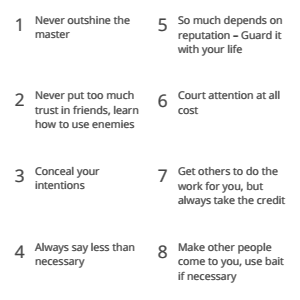
‘The 48 Laws of Power‘ (2000) is the first book by American author Robert Greene. The book, an international bestseller, is a practical guide for anyone who wants power, observes power, or wants to arm himself against power, and is popular with famous rappers, entrepreneurs, celebrities, athletes and actors including 50 Cent, Jay-Z, Kanye West, Dov Charney, Brian Grazer, Chris Bosh, and Will Smith. ‘The 48 Laws of Power’ is taught in business management classes and is one of the most requested books in American prison libraries.
The 48 Laws of Power are a distillation of 3,000 years of the history of power, drawing on the lives of strategists and historical figures like Niccolò Machiavelli, Sun Tzu, Carl von Clausewitz, Queen Elizabeth I, Henry Kissinger, and P.T. Barnum. The book is intended to show people how to gain power, preserve it, and defend themselves against power manipulators.
read more »
Posted in Language, Money, Politics |
Leave a Comment »
February 2, 2013

A jukebox is a partially automated music-playing device, usually a coin-operated machine, that will play a patron’s selection from self-contained media. The classic jukebox has buttons with letters and numbers on them that, when entered in combination, are used to play a specific selection. Coin-operated music boxes and player pianos were the first forms of automated coin-operated musical devices.
These instruments used paper rolls, metal disks, or metal cylinders to play a musical selection on the instrument, or instruments, enclosed within the device. In the 1890s these devices were joined by machines which used actual recordings instead of physical instruments. In 1890, Louis Glass and William S. Arnold invented the nickel-in-the-slot phonograph, the first of which was an Edison Class M Electric Phonograph retrofitted with a device patented under the name of Coin Actuated Attachment for Phonograph. The music was heard via one of four listening tubes.
read more »
Posted in Money, Technology |
Leave a Comment »
February 1, 2013

James Randi (b. 1928) is a Canadian-American stage magician and scientific skeptic best known as a challenger of paranormal claims and pseudoscience. Randi is the founder of the James Randi Educational Foundation (JREF). Randi began his career as a magician, as The Amazing Randi, but after retiring at age 60, he began investigating paranormal, occult, and supernatural claims, which he collectively calls ‘woo-woo.’ He has written about the paranormal, skepticism, and the history of magic.
JREF sponsors The One Million Dollar Paranormal Challenge offering a prize of US$1,000,000 to anyone who can demonstrate evidence of any paranormal, supernatural or occult power or event under test conditions agreed to by both parties. Although often referred to as a ‘debunker,’ Randi dislikes the term’s connotations and prefers to describe himself as an ‘investigator.’ He has written about the paranormal, skepticism, and the history of magic. He was a frequent guest on ‘The Tonight Show Starring Johnny Carson’ and was occasionally featured on the television program ‘Penn & Teller: Bullshit!’
read more »
Posted in Money, Science |
Leave a Comment »
January 31, 2013

Adolf Hitler was a painter and was deeply interested in art. He produced hundreds of works and sold his paintings and postcards to earn a living during his Vienna years (1908–1913). However, he was not successful. A number of his paintings were recovered after World War II and have sold at auction for tens of thousands of dollars. Others were seized by the U.S. Army and are still held by the U.S. government.
In his autobiography Hitler described how, in his youth, he wanted to become a painter, but his aspirations were ruined because he failed the entrance exam of the Academy of Fine Arts Vienna. Hitler was rejected twice by the institute, once in 1907 and again in 1908; the institute considered that he had more talent in architecture than in painting. One of the instructors, sympathetic to his situation and believing he had some talent, suggested that he apply to Academies School of Architecture, but that would have required returning to secondary school, from which he’d dropped out of, which he was unwilling to do.
read more »
Posted in Art, Money, War |
Leave a Comment »
January 30, 2013
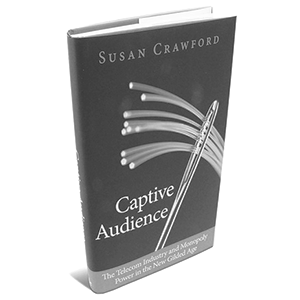
Susan P. Crawford (b. 1963) is a professor at the Benjamin N. Cardozo School of Law. She has served as President Barack Obama’s Special Assistant for Science, Technology, and Innovation Policy (2009) and is a columnist for ‘Bloomberg View.’
She is a former Board Member of ICANN (which regulates the Internet), the founder of OneWebDay (an annual day of Internet celebration and awareness held on September 22), and a legal scholar. Her research focuses on telecommunications and information law.
read more »
Posted in Money, Politics, Technology |
Leave a Comment »
January 28, 2013
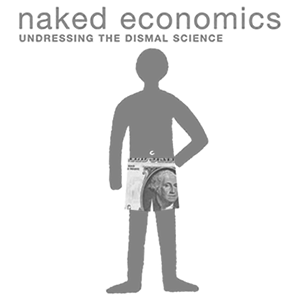
Charles Wheelan is the author of ‘Naked Economics: Undressing the Dismal Science,’ a 2002 book that attempts to translate basic economic issues into a format that can be easily read by people with little or no previous knowledge of economics. In 2013, he published a follow-up called ‘Naked Statistics: Stripping the Dread from the Data.’
In 2009, he was an unsuccessful Democratic candidate in the special election for Illinois’s 5th congressional district, the seat vacated by Rahm Emanuel. Wheelan graduated from Dartmouth College, where he was a member of Alpha Delta fraternity. From 1997 to 2002, he was the Midwest correspondent for ‘The Economist.’ Wheelan is a regular contributor to the ‘Motley Fool Radio Show’ on National Public Radio and to the ‘Eight Forty-Eight’ program on WBEZ, Chicago Public Radio.
Posted in Education, Language, Money |
Leave a Comment »
January 21, 2013


Guerrilla filmmaking refers to a form of independent filmmaking characterized by low budgets, skeleton crews, and simple props using whatever is available. Often scenes are shot quickly in real locations without any warning, and without obtaining permission from the owners of the locations.
Guerrilla filmmaking is usually done by independent filmmakers because they don’t have the budget to get permits, rent out locations, or build expensive sets. Larger and more ‘mainstream’ film studios tend to avoid guerrilla filmmaking tactics because of the risk of being sued, fined or having their reputation damaged due to negative PR exposure.
read more »
Posted in Art, Money |
Leave a Comment »
January 21, 2013

Escape From Tomorrow is a 2013 American fantasy-horror film. It is the debut film of writer-director Randy Moore, and stars Roy Abramsohn as a man having increasingly disturbing experiences and visions during the last day of a family vacation to the Walt Disney World theme park. After its premiere at the 2013 Sundance Film Festival, it became one of the most popular films there.
The film gained national media attention because Moore and his cast and crew made most of it on location at both Disney World and Disneyland without the consent or apparently even the awareness of The Walt Disney Company, which owns and operates both parks and has a reputation for being fiercely protective of its intellectual property. They used guerilla filmmaking techniques such as keeping their scripts on their iPhones to avoid attracting attention, and shooting on handheld video cameras similar to those used by the park’s many visitors. After principal photography was complete, Moore was so determined to keep the project a secret from Disney that he edited it in South Korea, and Sundance similarly declined to discuss the film in detail before it was shown.
Posted in Art, Money |
Leave a Comment »
January 21, 2013

The concept known as rational irrationality was popularized by economist Bryan Caplan in 2001 to reconcile the widespread existence of irrational behavior (particularly in the realms of religion and politics) with the assumption of rationality made by mainstream economics and game theory. The theory, along with its implications for democracy, was expanded upon by Caplan in his book ‘The Myth of the Rational Voter.’
The original purpose of the concept was to explain how (allegedly) detrimental policies could be implemented in a democracy, and unlike conventional public choice theory, Caplan posited that bad policies were selected by voters themselves. The theory has also been embraced by the ethical intuitionist philosopher Michael Huemer as an explanation for irrationality in politics. The theory has also been applied to explain religious belief.
read more »
Posted in Money, Philosophy, Politics |
Leave a Comment »
January 18, 2013

The Antagonist Movement is a cultural movement formed in New York City in 2000. The group grew out of desperation and in reaction to the New York art market. The movement primarily involves visual arts, literature, film, art manifestos and graphic design. It articulates its anti-commercial politics through a rejection of the prevailing standards in the art market and focuses its efforts on creating non-commercial cultural works and venues.
Its purpose is to ridicule the meaninglessness, superficiality and artificiality of the commercial art world. Antagonist activities have included public gatherings, demonstrations, the publication of art/literary journals, the production of documentary films, a clothing line, weekly art shows, writers nights, and a public access television show.
read more »
Posted in Art, Money, Politics |
Leave a Comment »
January 16, 2013

The utility monster is a thought experiment in the study of ethics. It was created by philosopher Robert Nozick in 1974 as a criticism of utilitarianism (which argues that the morally best action is the one that makes the most overall happiness or ‘utility’). In the thought experiment, a hypothetical being is proposed who receives as much or more utility from each additional unit of a resource he consumes as the first unit he consumes. In other words, the utility monster is not subject to diminishing marginal returns with regard to utility, but instead experiences constant marginal returns, or even increasing marginal returns.
Since ordinary people receive less utility with each additional unit consumed, if the utility monster existed, the doctrine of utilitarianism would justify the mistreatment and perhaps annihilation of everyone else, according to Nozick’s argument. In his words: ‘Utilitarian theory is embarrassed by the possibility of utility monsters who get enormously greater sums of utility from any sacrifice of others than these others lose . . . the theory seems to require that we all be sacrificed in the monster’s maw, in order to increase total utility.’ This thought experiment attempts to show that utilitarianism is not actually egalitarian, even though it appears to be at first glance.
read more »
Posted in Money, Philosophy |
Leave a Comment »


 The Daily Omnivore