January 28, 2013
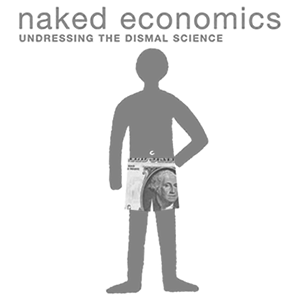
Charles Wheelan is the author of ‘Naked Economics: Undressing the Dismal Science,’ a 2002 book that attempts to translate basic economic issues into a format that can be easily read by people with little or no previous knowledge of economics. In 2013, he published a follow-up called ‘Naked Statistics: Stripping the Dread from the Data.’
In 2009, he was an unsuccessful Democratic candidate in the special election for Illinois’s 5th congressional district, the seat vacated by Rahm Emanuel. Wheelan graduated from Dartmouth College, where he was a member of Alpha Delta fraternity. From 1997 to 2002, he was the Midwest correspondent for ‘The Economist.’ Wheelan is a regular contributor to the ‘Motley Fool Radio Show’ on National Public Radio and to the ‘Eight Forty-Eight’ program on WBEZ, Chicago Public Radio.
Posted in Education, Language, Money |
Leave a Comment »
January 21, 2013


Guerrilla filmmaking refers to a form of independent filmmaking characterized by low budgets, skeleton crews, and simple props using whatever is available. Often scenes are shot quickly in real locations without any warning, and without obtaining permission from the owners of the locations.
Guerrilla filmmaking is usually done by independent filmmakers because they don’t have the budget to get permits, rent out locations, or build expensive sets. Larger and more ‘mainstream’ film studios tend to avoid guerrilla filmmaking tactics because of the risk of being sued, fined or having their reputation damaged due to negative PR exposure.
read more »
Posted in Art, Money |
Leave a Comment »
January 21, 2013

Escape From Tomorrow is a 2013 American fantasy-horror film. It is the debut film of writer-director Randy Moore, and stars Roy Abramsohn as a man having increasingly disturbing experiences and visions during the last day of a family vacation to the Walt Disney World theme park. After its premiere at the 2013 Sundance Film Festival, it became one of the most popular films there.
The film gained national media attention because Moore and his cast and crew made most of it on location at both Disney World and Disneyland without the consent or apparently even the awareness of The Walt Disney Company, which owns and operates both parks and has a reputation for being fiercely protective of its intellectual property. They used guerilla filmmaking techniques such as keeping their scripts on their iPhones to avoid attracting attention, and shooting on handheld video cameras similar to those used by the park’s many visitors. After principal photography was complete, Moore was so determined to keep the project a secret from Disney that he edited it in South Korea, and Sundance similarly declined to discuss the film in detail before it was shown.
Posted in Art, Money |
Leave a Comment »
January 21, 2013

The concept known as rational irrationality was popularized by economist Bryan Caplan in 2001 to reconcile the widespread existence of irrational behavior (particularly in the realms of religion and politics) with the assumption of rationality made by mainstream economics and game theory. The theory, along with its implications for democracy, was expanded upon by Caplan in his book ‘The Myth of the Rational Voter.’
The original purpose of the concept was to explain how (allegedly) detrimental policies could be implemented in a democracy, and unlike conventional public choice theory, Caplan posited that bad policies were selected by voters themselves. The theory has also been embraced by the ethical intuitionist philosopher Michael Huemer as an explanation for irrationality in politics. The theory has also been applied to explain religious belief.
read more »
Posted in Money, Philosophy, Politics |
Leave a Comment »
January 18, 2013

The Antagonist Movement is a cultural movement formed in New York City in 2000. The group grew out of desperation and in reaction to the New York art market. The movement primarily involves visual arts, literature, film, art manifestos and graphic design. It articulates its anti-commercial politics through a rejection of the prevailing standards in the art market and focuses its efforts on creating non-commercial cultural works and venues.
Its purpose is to ridicule the meaninglessness, superficiality and artificiality of the commercial art world. Antagonist activities have included public gatherings, demonstrations, the publication of art/literary journals, the production of documentary films, a clothing line, weekly art shows, writers nights, and a public access television show.
read more »
Posted in Art, Money, Politics |
Leave a Comment »
January 16, 2013

The utility monster is a thought experiment in the study of ethics. It was created by philosopher Robert Nozick in 1974 as a criticism of utilitarianism (which argues that the morally best action is the one that makes the most overall happiness or ‘utility’). In the thought experiment, a hypothetical being is proposed who receives as much or more utility from each additional unit of a resource he consumes as the first unit he consumes. In other words, the utility monster is not subject to diminishing marginal returns with regard to utility, but instead experiences constant marginal returns, or even increasing marginal returns.
Since ordinary people receive less utility with each additional unit consumed, if the utility monster existed, the doctrine of utilitarianism would justify the mistreatment and perhaps annihilation of everyone else, according to Nozick’s argument. In his words: ‘Utilitarian theory is embarrassed by the possibility of utility monsters who get enormously greater sums of utility from any sacrifice of others than these others lose . . . the theory seems to require that we all be sacrificed in the monster’s maw, in order to increase total utility.’ This thought experiment attempts to show that utilitarianism is not actually egalitarian, even though it appears to be at first glance.
read more »
Posted in Money, Philosophy |
Leave a Comment »
January 10, 2013

‘Don’t be evil‘ was the formal corporate motto (or slogan) of Google. It was first suggested either by Google employee Paul Buchheit at a meeting about corporate values that took place in early 2000, or by Google Engineer Amit Patel in 1999. Buchheit, the creator of Gmail, said he ‘wanted something that, once you put it in there, would be hard to take out,’ adding that the slogan was ‘also a bit of a jab at a lot of the other companies, especially our competitors, who at the time, in our opinion, were kind of exploiting the users to some extent.’
While the official corporate philosophy of Google does not contain the words ‘Don’t be evil,’ they were included in the prospectus of Google’s 2004 IPO (a letter from Google’s founders, later called the ”Don’t Be Evil’ manifesto’): ‘Don’t be evil. We believe strongly that in the long term, we will be better served — as shareholders and in all other ways — by a company that does good things for the world even if we forgo some short term gains.’
read more »
Posted in Money, Politics, Technology |
Leave a Comment »
January 8, 2013

Mottainai is a Japanese term meaning ‘a sense of regret concerning waste when the intrinsic value of an object or resource is not properly utilized.’
The expression can be uttered alone as an exclamation when something useful, such as food or time, is wasted, meaning roughly ‘Oh, what a waste!’ In addition to its primary sense of ‘wasteful,’ the word is also used to mean ‘impious; irreverent’ or ‘more than one deserves.’
read more »
Posted in Language, Money, World |
1 Comment »
January 8, 2013

The Story of Stuff is a 2007 short polemical animated documentary about the lifecycle of material goods. The documentary is critical of excessive consumerism and promotes sustainability. Filmmaker Annie Leonard wrote and narrated the film, which was funded by Tides Foundation, Funders Workgroup for Sustainable Production and Consumption, Free Range Studios and other foundations.
The video divides up the materials economy into a system composed of extraction, production, distribution, consumption, and disposal. To articulate the problems in the system, Leonard adds people, the government, and corporations. Leonard’s thesis, ‘you cannot run a linear system on a finite planet indefinitely’ is supported throughout the video by statistical data.
read more »
Posted in Money, Politics, Technology |
Leave a Comment »
January 8, 2013

Philosophy of futility is a phrase coined by Columbia University marketing professor Paul Nystrom to describe the disposition caused by the monotony of the new industrial age.
Nystrom observed the natural effect of this malaise was seeking gratification found in frivolous things, such as fashionable apparel and goods. This tendency, he theorized, could be used to increase consumption of fashionable goods and services, resulting in a vicious circle of dissatisfaction and the desire for new consumer goods.
read more »
Posted in Health, Money, Philosophy |
1 Comment »
January 8, 2013

Conspicuous consumption refers to monies spent and goods and services acquired to publicly display economic power—either the buyer’s income or the buyer’s accumulated wealth.
Sociologically, to the conspicuous consumer, such a public display of discretionary economic power is a means either of attaining or of maintaining a given social status. Moreover, ‘invidious consumption,’ a more specialized sociological term, denotes the deliberate conspicuous consumption of goods and services intended to provoke the envy of other people, as a means of displaying the buyer’s superior socio-economic status.
read more »
Posted in Money, Politics, Science |
Leave a Comment »
January 8, 2013
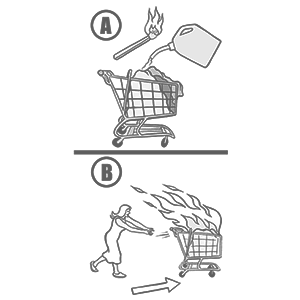
Packard Jennings (b. 1970) is an American artist who appropriates pop culture symbols and references to create new meaning using a variety of media including printmaking, sculpture, animation, video, and pamphleteering.
In his early career he modified billboards, a common practice of culture jammers. Jennings’s work often deals with the philosophy of anarchism, how it’s represented in the media, and the representation of a naive utopia primarily through primitivism, not to be confused with anarchism or anarchy.
read more »
Posted in Art, Money, Politics |
Leave a Comment »



