December 23, 2012

The Adbusters Media Foundation is a Canadian-based not-for-profit, anti-consumerist, pro-environment organization founded in 1989 by Kalle Lasn and Bill Schmalz in Vancouver. Adbusters describes itself as ‘a global network of artists, activists, writers, pranksters, students, educators and entrepreneurs who want to advance the new social activist movement of the information age.’
Characterized by some as anti-capitalist or opposed to capitalism, it publishes the reader-supported, advertising-free ‘Adbusters,’ an activist magazine with an international circulation of 120,000 devoted to challenging consumerism. Adbusters has launched numerous international campaigns, including ‘Buy Nothing Day,’ ‘TV Turnoff Week,’ and ‘Occupy Wall Street,’ and is known for their ‘subvertisements’ that spoof popular advertisements.
read more »
Posted in Language, Money, Politics |
Leave a Comment »
December 23, 2012

Culture jamming is a tactic used by many anti-consumerist social movements to disrupt or subvert media culture and its mainstream cultural institutions, including corporate advertising. It purports to ‘expose the methods of domination’ of mass society to foster progressive change.
Culture jamming is a form of subvertising (subversive advertising. Many culture jams are intended to expose apparently questionable political assumptions behind commercial culture. Common tactics include re-figuring logos, fashion statements, and product images as a means to challenge the idea of ‘what’s cool’ along with assumptions about the personal freedoms of consumption.
read more »
Posted in Humor, Money, Politics |
Leave a Comment »
December 22, 2012

A bandwidth cap, also known as a bit cap, limits the transfer of a specified amount of data over a period of time. Internet service providers commonly apply a cap when a channel intended to be shared by many users becomes overloaded, or may be overloaded, by a few users. Implementation of a bandwidth cap is sometimes termed a Fair Access Policy or Usage-based billing. In many situations, each user of a network is expected to use high speed transmission for only a short time, for example to download a megabyte web page in less than a second.
When use is continuous, as it might be in the case of file sharing, Internet radio or streaming video, a few users who use the connection at high rates for hours at a time may seriously impair the service of others. The concept is more relevant in cable internet where both the core network and the access network are shared, than in DSL where the core network is shared but the access network is not. It is most relevant in wireless internet, particularly satellite internet, where both the core network and the access network are shared and total network bandwidth is relatively narrow.
read more »
Posted in Money, Technology, World |
Leave a Comment »
December 21, 2012
Copyright Criminals is a 2010 documentary film directed and produced by Benjamin Franzen examining the creative and the commercial value of sampling including the related debates over artistic expression, copyright law, and money. Copyright Criminals was funded by the Ford Foundation, University of Iowa, and John D. and Catherine T. MacArthur Foundation. It premiered in 2010 at the Toronto Film Festival. Sampling is when musicians make an audio montage taking a portion, or sample, of a sound recording and reusing, remixing or reworking it as a separate instrumental layer or loop into another song.
The documentary contains interviews with several sampling artist pioneers, including hip-hop groups. A longtime area of contention from a legal perspective, early sampling used portions of other artists’ recordings without permission. Once hip-hop, rap and other music incorporating sampling began generating a noticeably substantial income, the original artists began to take legal action, claiming copyright infringement and demanding high-sum royalties. Sampling artists fought back, claiming fair use (an exception in copyright law).
Posted in Art, Money, Politics |
Leave a Comment »
December 21, 2012

Eclectic Method is the name of an audio-visual remix act, originally formed in London in 2001 by Geoff Gamlen, Ian Edgar, Johnny Wilson.
They quickly developed Eclectic Method’s audio-visual style into a live performance featuring video turntables (Pioneer DVJ-1000) – mixing the visuals and audio in real time. As a live act, they have traveled around the world playing hundreds of gigs in Asia, North America, South America, Europe and the Middle East.
read more »
Posted in Art, Money, Technology |
Leave a Comment »
December 19, 2012

Autism friendly means awareness of social engagement and environmental factors affecting people on the autism spectrum, with modifications to communication methods and physical space to better suit individual’s unique and special needs. Individuals on the autism spectrum take in information from their five senses as do neurotypical people, but they are not able to process it as quickly and can become overwhelmed by the amount of information that they are receiving and withdraw as a coping mechanism.
They may experience difficulty in public settings due to inhibited communication, social interaction or flexibility of thought development. Knowing about these differences and how to react effectively helps to create a more inclusive society. It also better suits the needs of the growing number of individuals with autism, Asperger syndrome (high functioning autism), or other disorders on the autism spectrum.
read more »
Posted in Health, Money |
Leave a Comment »
December 12, 2012
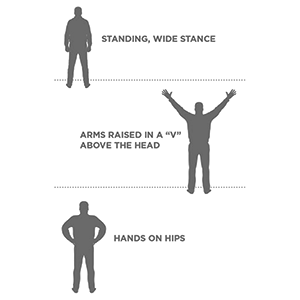
Amy Cuddy is an American social psychologist known for her studies of the relations between stereotyping and behavior. She is Associate Professor in the Negotiation, Organizations & Markets Unit at Harvard Business School. Cuddy studies the origins and outcomes of how people judge and influence each other.
She has conducted experimental and correlational research on stereotyping and discrimination against various groups (e.g., Asian Americans, elderly people, Latinos, working mothers), the causes and consequences of feeling ambivalent emotions (e.g., envy and pity), nonverbal behavior and communication, and hormonal responses to social stimuli. She is a sought-after speaker on the psychology of power, influence, nonverbal communication, and prejudice.
read more »
Posted in Education, Money, Science |
Leave a Comment »
December 11, 2012
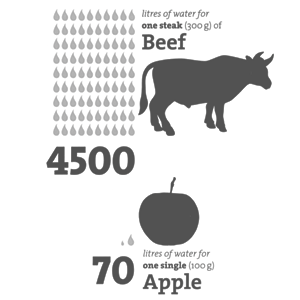
Virtual water (also known as embedded or embodied water) refers to the hidden flow of water if food or other commodities are traded from one place to another. For instance, it takes 1,600 cubic meters of water on average to produce one metric ton of wheat.
The precise volume can be more or less depending on climatic conditions and agricultural practice. Hoekstra and Chapagain have defined the virtual-water content of a product (a commodity, good or service) as ‘the volume of freshwater used to produce the product, measured at the place where the product was actually produced.’
read more »
Posted in Food, Money, Politics |
Leave a Comment »
December 11, 2012
‘How to Rob‘ is a 1999 song by American hip hop recording artist 50 Cent. The song serves as his debut single and the lead single from his album ‘Power of the Dollar’ (officially unreleased but heavily bootlegged).
The album, which was originally set for a 2000 release, was supposed to be his debut with Columbia Records, but was cancelled after 50 Cent was dropped from the label when Columbia discovered that he had been shot. ‘How to Rob’ was produced by Tone & Poke of Trackmasters and features D-Dot, also known as The Madd Rapper. The song was also included on the soundtrack to the 1999 film ‘In Too Deep,’ staring LL Cool J and Omar Epps.
read more »
Posted in Art, Humor, Money |
Leave a Comment »
December 11, 2012

Jane Elliott (b. 1933) is an American anti-racism activist and educator (she is also a feminist and LGBT activist).
She created the famous ‘blue-eyed/brown-eyed’ exercise, first done with grade school children in the 1960s, and which later became the basis for her career in diversity training.
read more »
Posted in Education, Money, Politics |
Leave a Comment »
December 10, 2012
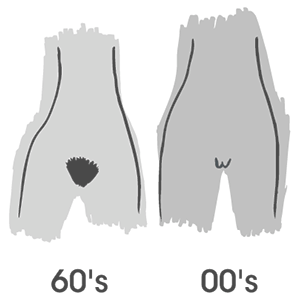
Pubic Wars, a pun on the Punic Wars, is the name given to the rivalry between the pornographic magazines Playboy and Penthouse during the 1960s and 1970s. Each magazine strove to show just a little bit more than the other, without getting too crude. The term was coined by ‘Playboy’ owner Hugh Hefner. In 1950s and 60s America it was generally agreed that nude photographs were not pornographic unless they showed pubic hair or, even worse, genitals.
‘Respectable’ photography was careful to come close to, but not cross over, this line. Consequently the depiction of pubic hair was de facto forbidden in U.S. pornographic magazines. ‘Penthouse’ originated in 1965 in Britain and was initially distributed in Europe. In 1969 it was launched in the U.S., bringing new competition to ‘Playboy.’ Due to more liberal European attitudes to nudity ‘Penthouse’ was already displaying pubic hair at the time of its U.S. launch. According to the magazine’s owner Bob Guccione, ‘We began to show pubic hair, which was a big breakthrough.’
read more »
Posted in Money, Politics, Sex |
1 Comment »
December 6, 2012

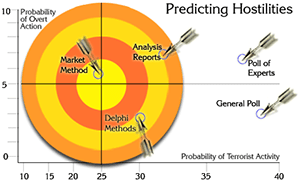
The Policy Analysis Market (PAM), part of the FutureMAP project, was a proposed futures exchange developed by the United States’ Defense Advanced Research Projects Agency (DARPA) and based on an idea first proposed by Net Exchange, a San Diego research firm specializing in the development of online prediction markets. PAM was to be ‘a market in the future of the Middle East,’ and would have allowed trading of futures contracts based on possible political developments in several Middle Eastern countries.
The theory behind such a market is that the monetary value of a futures contract on an event reflects the probability that that event will actually occur, since a market’s actors rationally bid a contract either up or down based on reliable information. One of the models for PAM was a political futures market run by the University of Iowa, which had predicted U.S. election outcomes more accurately than either opinion polls or political pundits. PAM was also inspired by the work of George Mason University economist Robin Hanson.
read more »
Posted in Death, Money, War |
1 Comment »


 The Daily Omnivore