November 5, 2012

Hot or Not was a rating site that allowed users to rate the attractiveness of photos submitted voluntarily by others. The site offers a matchmaking engine called ‘Meet Me’ and an extended profile feature called ‘Hotlists.’ It is owned by Badoo Trading Limited (a dating-focused social discovery website, founded in 2006 by Russian entrepreneur Andrey Andreev), and was previously owned by Avid Life Media (who owns a dating web site named ‘Ashley Madison’ that is geared toward married individuals looking for an additional relationship).
‘Hot or Not’ was a significant influence on the people who went on to create the social media sites Facebook and YouTube. The site was founded in 2000 by James Hong and Jim Young, two friends and Silicon Valley-based engineers. Both graduated from the University of California, Berkeley in electrical engineering, with Young pursuing a Ph.D at the time.
read more »
Posted in Money, Sex, Technology |
Leave a Comment »
November 5, 2012

An appeal to nature is a logical fallacy used in arguments or rhetorical tactics in which a phenomenon is described as desirable merely because it is natural, or undesirable merely because it is unnatural, it is related but not identical to the naturalistic fallacy, as the latter considers defining ‘good’ in ethics in terms of any natural properties (even if not merely for being natural) as a fallacy.
The Fallacy of appeal to nature depends on a positive view about the nature, e.g. good, desirable..etc. as a foundation of the reasoning of the argument. To appeal to nature in an argument is to argue from a premise or premises claimed to be implied by the concept of nature.
read more »
Posted in Money, Philosophy |
Leave a Comment »
October 29, 2012

Gamification is the use of game mechanics and game design techniques in non-game contexts. Typically gamification applies to non-game applications and processes, in order to encourage people to adopt them, or to influence how they are used.
Gamification’s proponents argue that it works by making technology more engaging, by encouraging users to engage in desired behaviors, by showing a path to mastery and autonomy, by helping to solve problems and being more engaging, and by taking advantage of humans’ psychological predisposition to engage in gaming. Available data from gamified websites, applications, and processes indicate potential improvements in areas such as user engagement, ROI, data quality, timeliness, and learning.
read more »
Posted in Education, Games, Money |
Leave a Comment »
October 27, 2012

Lunchables is a line of lunch combinations manufactured by Kraft Foods, Inc, beginning in 1988. They are marketed under the Oscar Mayer brand in the United States and Dairylea in the United Kingdom. Many Lunchables products are produced at Kraft Foods, Inc.’s Fullerton factory in Fullerton, California, and are then distributed across the nation.
A typical Lunchables meal combination includes crackers, small slices of meat, and an equal number of slices of cheese. Other varieties include pizza, small hot dogs, small burgers, nachos, subs, and wraps. Overall there are 25 different kinds of Lunchables meals. ‘Deluxe’ versions, which were originally developed for adults, included two types of meats and two types of cheeses. Deluxe versions usually also contained a sauce and a mint.
read more »
Posted in Food, Health, Money |
Leave a Comment »
October 22, 2012

The Spice trade refers to the trade between historic civilizations in Asia, Northeast Africa, and Europe; spices such as cinnamon, cassia, cardamom, ginger, and turmeric were known, and used for commerce, in the Eastern World well into antiquity.
These spices found their way into the Middle East before the beginning of the Christian Era, where the true sources of these spices was withheld by the traders, and associated with fantastic tales.
read more »
Posted in Food, Money, World |
Leave a Comment »
October 22, 2012

A spice is a dried seed, fruit, root, bark, or vegetative substance primarily used for flavoring coloring or preserving food. Sometimes a spice is used to hide other flavors. Spices are distinguished from herbs, which are parts of leafy green plants also used for flavoring or as garnish.
Many spices have antimicrobial properties. This may explain why spices are more commonly used in warmer climates, which have more infectious disease, and why use of spices is especially prominent in meat, which is particularly susceptible to spoiling. A spice may have an extra use, usually medicinal, religious ritual, cosmetics or perfume production, or as a vegetable. For example, turmeric roots are consumed as a vegetable and garlic as an antibiotic.
read more »
Posted in Food, Money, World |
Leave a Comment »
October 22, 2012

The Gin Craze was a period in the first half of the 18th century when the consumption of gin increased rapidly in Great Britain, especially in London. Many people overconsumed and the city had a virtual epidemic of extreme drunkenness; this provoked moral outrage and a legislative backlash that some compare to the modern drug wars.
Parliament passed five major Acts, in 1729, 1736, 1743, 1747 and 1751, designed to control the consumption of gin. Though many similar drinks were available, and alcohol consumption was considerable at all levels of society, it was gin (otherwise known as ‘Mother’s Ruin’ or ‘Madam Geneva,’ a misspelling of the original drink called ‘jenever’) which caused the greatest public concern.
read more »
Posted in Drugs, Money, Politics |
Leave a Comment »
October 21, 2012
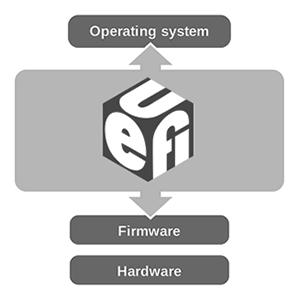
The Unified Extensible Firmware Interface (UEFI) is a specification that defines a software interface between an operating system and platform firmware. UEFI is meant as a replacement for the Basic Input/Output System (BIOS) firmware interface, present in all IBM PC-compatible personal computers. In practice, most UEFI images have legacy support for BIOS services.
It can be used to allow remote diagnostics and repair of computers, even without another operating system. The original EFI (Extensible Firmware Interface) specification was developed by Intel. Some of its practices and data formats mirror ones from Windows. The BIOS is limited to a 16-bit processor mode and 1 MB of addressable space due to the design being based on the IBM 5150 which used the 16-bit Intel 8088. In comparison, the UEFI processor mode can be either 32-bit (x86-32, ARM) or 64-bit (x86-64 and Itanium).
read more »
Posted in Money, Politics, Technology |
Leave a Comment »
October 21, 2012

‘Cognitive Surplus: Creativity and Generosity in a Connected Age’ is a 2010 non-fiction book by Clay Shirky. The book is an indirect sequel to Shirky’s ‘Here Comes Everybody,’ which covered the impact of social media. The book’s central theme is that people are now learning how to use more constructively the free time afforded to them since the 1940s for creative acts rather than consumptive ones, particularly with the advent of online tools that allow new forms of collaboration.
It goes on to catalog the means and motives behind these new forms of cultural production, as well as key examples. While Shirky acknowledges that the activities that we use our cognitive surplus for may be frivolous (such as creating ‘LOLcats’), the trend as a whole is leading to valuable and influential new forms of human expression. He also asserts that even the most inane forms of creation and sharing are preferable to the hundreds of billions of hours spent consuming television.
read more »
Posted in Language, Money, Technology |
Leave a Comment »
October 21, 2012

Compared to other diseases or other cancers, breast cancer receives a disproportionate share of resources and attention. In 2001 MP Ian Gibson, chairman of the House of Commons of the United Kingdom all party group on cancer stated ‘The treatment has been skewed by the lobbying, there is no doubt about that. Breast cancer sufferers get better treatment in terms of bed spaces, facilities and doctors and nurses.’
Breast cancer also receives significantly more media coverage than other, equally prevalent cancers, with a study by Prostate Coalition showing 2.6 breast cancer stories for each one covering cancer of the prostate. Ultimately there is a concern that favoring sufferers of breast cancer with disproportionate funding and research on their behalf may well be costing lives elsewhere. Partly because of its relatively high prevalence and long-term survival rates, research is biased towards breast cancer. Some subjects, such as cancer-related fatigue, have been studied in little except women with breast cancer.
read more »
Posted in Health, Money, Politics |
Leave a Comment »
October 18, 2012

Metagaming is a broad term usually used to define any strategy, action or method used in a game which transcends a prescribed ruleset, uses external factors to affect the game, or goes beyond the supposed limits or environment set by the game. Another definition refers to the game universe outside of the game itself. In simple terms, it is the use of out-of-game information or resources to affect one’s in-game decisions.
The term metagame arose in mathematics, passed to military use, and then to politics to describe actions or events that may have been originally thought of as outside the bounds of the situation in question, but that in fact play an important role in its outcome. For example, a specific military operation could be thought of as a game, with the political ramifications of that operation on the war in general as the metagame.
read more »
Posted in Games, Money, Politics |
Leave a Comment »
October 18, 2012
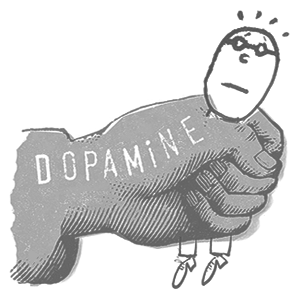
A reward is a appetitive stimulus given to a human or some other animal to alter its behavior. Rewards typically serve as a reinforcers, something that, when presented after a behavior, causes the probability of that behavior’s occurrence to increase.
Note that just because something is labelled a reward does not necessitate it as a reinforcer. A reward can only be said to be a reinforcer if its delivery has increased the probability of a behavior. Certain neural structures, called the reward system, are critically involved mediating the effects of reinforcement.
read more »
Posted in Drugs, Health, Money |
1 Comment »


 The Daily Omnivore