October 5, 2012
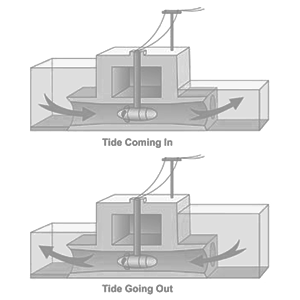
Tidal power, also called tidal energy, is a form of hydropower that converts the energy of tides into useful forms of power – mainly electricity. Although not yet widely used, tidal power has potential for future electricity generation. Tides are more predictable than wind energy and solar power. Among sources of renewable energy, tidal power has traditionally suffered from relatively high cost and limited availability of sites with sufficiently high tidal ranges or flow velocities, thus constricting its total availability.
However, many recent technological developments and improvements, both in design (e.g. dynamic tidal power, tidal lagoons) and turbine technology (e.g. new axial turbines, cross flow turbines), indicate that the total availability of tidal power may be much higher than previously assumed, and that economic and environmental costs may be brought down to competitive levels.
read more »
Posted in Money, Technology |
Leave a Comment »
October 4, 2012

In the United States, clean coal is any technology that may reduce emissions of carbon dioxide and other greenhouse gasses that arise from the burning of coal for electrical power. Typically, the term clean coal is used by coal companies in reference to carbon capture and storage (CCS), which pumps and stores emissions underground, and to plants using an Integrated gasification combined cycle (IGCC), which is technology that turns coal and other carbon based fuels into synthesis gas (‘syngas,’ which can be used to produce diesel, or converted into methane or other fuels).
Historically, the term has been used to refer to technologies for reducing emissions of ash, sulfur, and heavy metals from coal combustion. Carbon capture and storage technologies are being developed primarily in response to regulations by the EPA—most notably the ‘Clean Air Act’—and in anticipation of legislation that seeks to mitigate climate change. Currently, the electricity sector of the United States is responsible for about 41% of the nation’s carbon dioxide emissions, and half of the sector’s production comes from coal-fired power plants.
read more »
Posted in Money, Politics, Technology |
Leave a Comment »
October 4, 2012

Leather is a durable and flexible material created by tanning animal rawhide and skin, often cattle hide. Traditionally, tanning used tannin, an acidic chemical compound from which the process draws its name (tannin is in turn named for an old German word for oak or fir trees, which supplied it).
Rawhide is made by removing the flesh and fat and then the hair (leather with the hair still attached is called ‘hair-on’) by use of an aqueous solution (this process is called ‘liming’ when using lime or ‘bucking’ when using lye), then scraping over a beam with a somewhat dull knife, and then drying (often while stretched). Liming or bucking also cleans the fiber network of the skin to encourage penetration of the tanning agent.
read more »
Posted in Art, Money, Technology |
Leave a Comment »
October 3, 2012


In Broadcast programming, counterprogramming is the practice of offering television programs to attract an audience from another television station airing a major event. The Super Bowl is among the most-viewed programs on American television. Thus, counterprogramming focuses on the pre-game period and the halftime show.
However, it is a common gentlemen’s agreement that the broadcast networks who carry the league’s game coverage (and in turn, other cable networks owned by the broadcasters) never counterprogram the Super Bowl, yielding to the game and airing either low profile reruns of their series or a middling film in the timeslot instead.
read more »
Posted in Games, Money |
Leave a Comment »
October 3, 2012

The term box office bomb or flop generally refers to a film that is viewed as highly unsuccessful or unprofitable during its theatrical run, sometimes preceding hype regarding its production, cost, or marketing efforts.
Not all films that fail to earn back their estimated costs during their theatrical runs are bombs, and the label is generally applied to films that miss earnings projections by a wide margin, particularly when they are very expensive to produce, and sometimes in conjunction with middling or poor reviews (though critical reception has nothing to do with box office performance). A film can be box office bomb, even though international distribution, sales to television syndication, and home video releases often mean some films that are considered flops in North America eventually make a profit for their studios.
read more »
Posted in Art, Money |
Leave a Comment »
October 2, 2012

‘The End of Work: The Decline of the Global Labor Force and the Dawn of the Post-Market Era’ is a non-fiction book by American economist Jeremy Rifkin, published in 1995.
Rifkin contended that worldwide unemployment would increase as information technology eliminated tens of millions of jobs in the manufacturing, agricultural, and service sectors. He predicted devastating impact of automation on blue-collar, retail and wholesale employees.
read more »
Posted in Language, Money, Technology |
Leave a Comment »
October 2, 2012
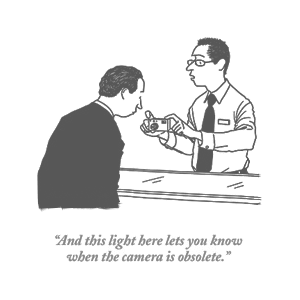
Obsolescence [ob-suh-les-uhns] is the state of being which occurs when an object, service or practice is no longer wanted even though it may still be in good working order. Obsolescence frequently occurs because a replacement has become available that has advantages which outweigh the inconveniences related to purchasing the replacement. Obsolete refers to something that is already disused or discarded, or antiquated. Typically, obsolescence is preceded by a gradual decline in popularity.
Driven by rapid technological changes, new components are developed and launched on the market with increasing speed. The result is a dramatic change in production methods of all components and their market availability. A growing industry sector is facing issues where life cycles of products no longer fit together with life cycles of required components.
read more »
Posted in Money, Technology |
1 Comment »
October 1, 2012

A technology evangelist is a person who attempts to build a critical mass of support for a given technology in order to establish it as a technical standard in a market that is subject to network effects (when such effects are present, the value of a product or service is dependent on the number of others using it).
Professional technology evangelists are often employed by firms which seek to establish their proprietary technologies as de facto standards or to participate in setting non-proprietary open standards. Non-professional technology evangelists may act out of altruism or self-interest (e.g., to gain the benefits of early adoption or the network effect).
read more »
Posted in Language, Money, Technology |
2 Comments »
October 1, 2012

The Cult of Mac is a book by technology writer Leander Kahney about fanaticism for the Apple product line. Professor of marketing Russell Belk argues that, like a religion, the Cult of Mac is a belief system that helps its followers understand technology and the world.
The attitude of Apple sympathizers and fans is viewed by many as being ‘cult-like.’ According to neurological research cited by the BBC on their ‘Secrets of the Superbrands’ documentary, the response from the brain of an Apple enthusiast when viewing the brand-related symbols and imagery is similar to the one of a religious devotee when exposed to religious symbols and images. Apple founder Steve Jobs is compared to a god figure and savior, and his life story is said to resemble Joseph Campbell’s heroic adventure myths. Jobs was often viewed as a saintly figure to Mac users.
read more »
Posted in Money, Philosophy, Technology |
1 Comment »
October 1, 2012

‘The Ascent of Money: A Financial History of the World’ is a 2008 book by Harvard historian Niall Ferguson’s, which was adapted into a series of documentary feature for public television in the US and UK. It examines the long history of money, credit, and banking. From Shylock’s pound of flesh to the loan sharks of Glasgow, from the ‘promises to pay’ on Babylonian clay tablets to the Medici banking system.
Professor Ferguson explains the origins of credit and debt and why credit networks are indispensable to any civilization. He also investigates human bondage. Studying the question: How did finance become the realm of the masters of the universe? Through the rise of the bond market in Renaissance Italy. With the advent of bonds, war finance was transformed and spread to north-west Europe and across the Atlantic. It was the bond market that made the Rothschilds the richest and most powerful family of the 19th century. The book also explores why stock markets produce bubbles and busts.
read more »
Posted in Money |
1 Comment »
October 1, 2012

Chimerica is a neologism and portmanteau coined in 2006 by historian Niall Ferguson and economist Moritz Schularick describing the symbiotic relationship between China and the United States, with incidental reference to the legendary chimera. In 2010, anticipating the risk of tensions between the two nations escalating into a currency war, Ferguson published a paper forecasting that Chimerica would soon unravel.
They argue that saving by the Chinese and overspending by Americans led to an incredible period of wealth creation that contributed to the global financial crisis of 2008–2009. For years, China accumulated large currency reserves and channeled them into U.S. government securities, which kept nominal and real long-term interest rates artificially low in the United States.
read more »
Posted in Money, Politics, World |
1 Comment »
October 1, 2012

George Lucas’ six-film Star Wars saga has had a significant impact on modern American popular culture. ‘Star Wars’ references are deeply embedded in popular culture; references to the main characters and themes of Star Wars are casually made in many English-speaking countries with the assumption that others will understand the reference. Darth Vader has become an iconic villain. Phrases like ‘evil empire’ and ‘May the Force be with you’ have become part of the popular lexicon. The first ‘Star Wars film’ in 1977 was a cultural unifier, enjoyed by a wide spectrum of people.
Science fiction since the original 1977 ‘Star Wars,’ particularly in film, has often been influenced by and compared to ‘Star Wars.’ Sounds, visuals, and even the music from the films have become part of the tapestry of American society. The film also helped launch the science fiction boom of the late 1970s and early 1980s, and made science fiction films a blockbuster genre. It has also been parodied in films and short videos, such as ‘Spaceballs.’
read more »
Posted in Art, Money, Philosophy |
Leave a Comment »


 The Daily Omnivore