October 2, 2012
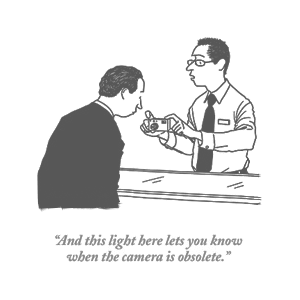
Obsolescence [ob-suh-les-uhns] is the state of being which occurs when an object, service or practice is no longer wanted even though it may still be in good working order. Obsolescence frequently occurs because a replacement has become available that has advantages which outweigh the inconveniences related to purchasing the replacement. Obsolete refers to something that is already disused or discarded, or antiquated. Typically, obsolescence is preceded by a gradual decline in popularity.
Driven by rapid technological changes, new components are developed and launched on the market with increasing speed. The result is a dramatic change in production methods of all components and their market availability. A growing industry sector is facing issues where life cycles of products no longer fit together with life cycles of required components.
read more »
Posted in Money, Technology |
1 Comment »
October 1, 2012

A technology evangelist is a person who attempts to build a critical mass of support for a given technology in order to establish it as a technical standard in a market that is subject to network effects (when such effects are present, the value of a product or service is dependent on the number of others using it).
Professional technology evangelists are often employed by firms which seek to establish their proprietary technologies as de facto standards or to participate in setting non-proprietary open standards. Non-professional technology evangelists may act out of altruism or self-interest (e.g., to gain the benefits of early adoption or the network effect).
read more »
Posted in Language, Money, Technology |
2 Comments »
October 1, 2012

The Cult of Mac is a book by technology writer Leander Kahney about fanaticism for the Apple product line. Professor of marketing Russell Belk argues that, like a religion, the Cult of Mac is a belief system that helps its followers understand technology and the world.
The attitude of Apple sympathizers and fans is viewed by many as being ‘cult-like.’ According to neurological research cited by the BBC on their ‘Secrets of the Superbrands’ documentary, the response from the brain of an Apple enthusiast when viewing the brand-related symbols and imagery is similar to the one of a religious devotee when exposed to religious symbols and images. Apple founder Steve Jobs is compared to a god figure and savior, and his life story is said to resemble Joseph Campbell’s heroic adventure myths. Jobs was often viewed as a saintly figure to Mac users.
read more »
Posted in Money, Philosophy, Technology |
1 Comment »
October 1, 2012

‘The Ascent of Money: A Financial History of the World’ is a 2008 book by Harvard historian Niall Ferguson’s, which was adapted into a series of documentary feature for public television in the US and UK. It examines the long history of money, credit, and banking. From Shylock’s pound of flesh to the loan sharks of Glasgow, from the ‘promises to pay’ on Babylonian clay tablets to the Medici banking system.
Professor Ferguson explains the origins of credit and debt and why credit networks are indispensable to any civilization. He also investigates human bondage. Studying the question: How did finance become the realm of the masters of the universe? Through the rise of the bond market in Renaissance Italy. With the advent of bonds, war finance was transformed and spread to north-west Europe and across the Atlantic. It was the bond market that made the Rothschilds the richest and most powerful family of the 19th century. The book also explores why stock markets produce bubbles and busts.
read more »
Posted in Money |
1 Comment »
October 1, 2012

Chimerica is a neologism and portmanteau coined in 2006 by historian Niall Ferguson and economist Moritz Schularick describing the symbiotic relationship between China and the United States, with incidental reference to the legendary chimera. In 2010, anticipating the risk of tensions between the two nations escalating into a currency war, Ferguson published a paper forecasting that Chimerica would soon unravel.
They argue that saving by the Chinese and overspending by Americans led to an incredible period of wealth creation that contributed to the global financial crisis of 2008–2009. For years, China accumulated large currency reserves and channeled them into U.S. government securities, which kept nominal and real long-term interest rates artificially low in the United States.
read more »
Posted in Money, Politics, World |
1 Comment »
October 1, 2012

George Lucas’ six-film Star Wars saga has had a significant impact on modern American popular culture. ‘Star Wars’ references are deeply embedded in popular culture; references to the main characters and themes of Star Wars are casually made in many English-speaking countries with the assumption that others will understand the reference. Darth Vader has become an iconic villain. Phrases like ‘evil empire’ and ‘May the Force be with you’ have become part of the popular lexicon. The first ‘Star Wars film’ in 1977 was a cultural unifier, enjoyed by a wide spectrum of people.
Science fiction since the original 1977 ‘Star Wars,’ particularly in film, has often been influenced by and compared to ‘Star Wars.’ Sounds, visuals, and even the music from the films have become part of the tapestry of American society. The film also helped launch the science fiction boom of the late 1970s and early 1980s, and made science fiction films a blockbuster genre. It has also been parodied in films and short videos, such as ‘Spaceballs.’
read more »
Posted in Art, Money, Philosophy |
Leave a Comment »
September 29, 2012

Subliminal stimuli (literally ‘below threshold’), contrary to ‘supraliminal stimuli’ or ‘above threshold,’ are any sensory stimuli below an individual’s threshold for conscious perception. Some research has found that subliminal messages do not produce strong or lasting changes in behavior. However, a recent review of functional magnetic resonance imaging (fMRI) studies shows that subliminal stimuli activate specific regions of the brain despite participants being unaware.
Visual stimuli may be quickly flashed before an individual can process them, or flashed and then masked, thereby interrupting the processing. Audio stimuli may be played below audible volumes, masked by other stimuli, or recorded backwards in a process called ‘backmasking.’
read more »
Posted in Money, Science |
1 Comment »
September 29, 2012

The mere-exposure effect is a psychological phenomenon by which people tend to develop a preference for things merely because they are familiar with them. In social psychology, this effect is sometimes called the familiarity principle. The effect has been demonstrated with many kinds of things, including words, Chinese characters, paintings, pictures of faces, geometric figures, and sounds. In studies of interpersonal attraction, the more often a person is seen by someone, the more pleasing and likeable that person appears to be.
The earliest known research on the effect was conducted by Gustav Fechner in 1876. Edward B. Titchener also documented the effect and described the ‘glow of warmth’ felt in the presence of something that is familiar. However, Titchener’s hypothesis was thrown out once tested and results showed that the enhancement of preferences for objects did not depend on the individual’s subjective impressions of how familiar the objects were. The rejection of Titchener’s hypothesis spurred further research and the development of current theory.
read more »
Posted in Health, Money, Science |
Leave a Comment »
September 29, 2012
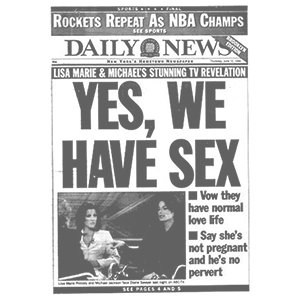
A marriage of convenience (plural marriages of convenience) is a marriage contracted for reasons other than the reasons of relationship, family, or love. Instead, such a marriage is orchestrated for personal gain or some other sort of strategic purpose, such as political marriage.
In the cases when it represents a fraud, it is called ‘sham marriage.’ Marriages of convenience are often contracted to exploit legal loopholes of various sorts. A couple may wed for reasons of citizenship or right of abode, for example, as many countries around the world will grant such rights to any wedded resident.
read more »
Posted in Money, Politics, Sex |
Leave a Comment »
September 29, 2012

Hypergamy [hahy-pur-guh-mee] (colloquially referred to as ‘marrying up’) is the act or practice of seeking a spouse of higher looks, socioeconomic, caste or status than oneself. The term is often used more specifically in reference to a perceived tendency among human cultures for females to seek or be encouraged to pursue male suitors that are higher status than themselves, which often manifests itself as being attracted to men who are comparatively older, wealthier, or otherwise more privileged than themselves.
According to evolutionary psychologists, females have evolved a preference for higher status males because they offer their prospective children both ‘better’ genes and greater resources, e.g. food and security. Men, who invest less in their children, have less reason to prefer mates with high social status. Some have even argued that men ‘marry-down’ to ensure that their mates have a higher incentive to remain faithful.
read more »
Posted in Language, Money, Sex |
Leave a Comment »
September 29, 2012

‘Going Dutch‘ is a term that indicates that each person participating in a group activity pays for himself, rather than any person paying for anyone else, particularly in a restaurant bill. There are two possible senses—each person paying his own expenses, or the entire bill being split (divided evenly) between all participants. In strict usage, ‘Going Dutch’ refers to the former, paying one’s own expenses, and the latter is referred to as ‘splitting the bill,’ but in casual usage these may both be referred to as ‘going Dutch.’ Splitting the bill is generally easier to compute, as it does not require checking what each individual ordered, but has the downside that people who ordered more expensive items are subsidized by others.
One suggestion is that the phrase ‘going Dutch’ originates from the concept of a Dutch door. Previously on farmhouses this consisted of two equal parts. Another school of thought is that it may be related to Dutch etiquette. In the Netherlands, it was not unusual to pay separately when going out as a group. When dating in a one-on-one situation, however, the man will most commonly pay for meals and drinks. The ‘Oxford English Dictionary’ connects ‘go Dutch’ with ‘Dutch treat’ and other phrases many of which have ‘an opprobrious or derisive application, largely due to the rivalry and enmity between the English and Dutch in the 17th c[entury],’ the period of the Anglo-Dutch Wars. Another example is ‘Dutch courage.’
read more »
Posted in Money, Sex, World |
Leave a Comment »
September 27, 2012

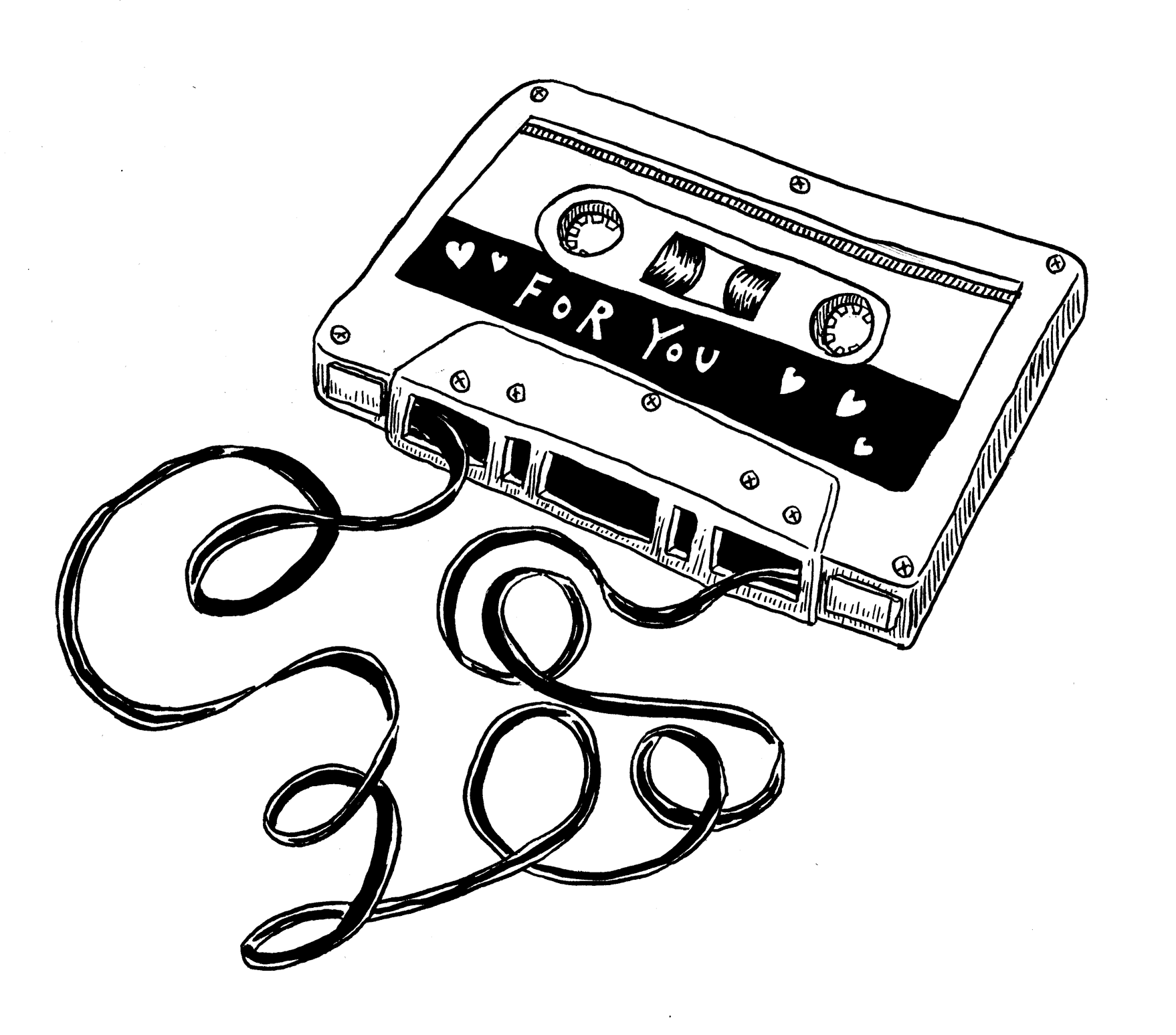
A mixtape is the generic name given to any compilation of songs recorded onto a Compact Cassette, Compact Disc, music file, or any other audio format. A mixtape, which usually reflects the musical tastes of its compiler, can range from a casually selected list of favorite songs, to a conceptual mix of songs linked by a theme or mood, to a highly personal statement tailored to the tape’s intended recipient.
Essayist Geoffrey O’Brien has called the personal mix tape ‘the most widely practiced American art form.’ Mixtape enthusiasts believe that by carefully selecting and ordering the tracks in a mix, an artistic statement can be created that is greater than the sum of its individual songs. With the advent of affordable, consumer-level digital audio, creating and distributing mixes in the form of compact disc or MP3 playlists has become the contemporary method of choice, but the term mix tape is still commonly used, even for mixes in different media.Video mixtapes have emerged as well.
read more »
Posted in Art, Money |
2 Comments »