September 29, 2012

Subliminal stimuli (literally ‘below threshold’), contrary to ‘supraliminal stimuli’ or ‘above threshold,’ are any sensory stimuli below an individual’s threshold for conscious perception. Some research has found that subliminal messages do not produce strong or lasting changes in behavior. However, a recent review of functional magnetic resonance imaging (fMRI) studies shows that subliminal stimuli activate specific regions of the brain despite participants being unaware.
Visual stimuli may be quickly flashed before an individual can process them, or flashed and then masked, thereby interrupting the processing. Audio stimuli may be played below audible volumes, masked by other stimuli, or recorded backwards in a process called ‘backmasking.’
read more »
Posted in Money, Science |
1 Comment »
September 29, 2012
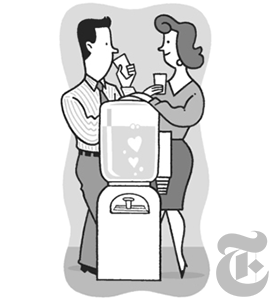
The mere-exposure effect is a psychological phenomenon by which people tend to develop a preference for things merely because they are familiar with them. In social psychology, this effect is sometimes called the familiarity principle. The effect has been demonstrated with many kinds of things, including words, Chinese characters, paintings, pictures of faces, geometric figures, and sounds. In studies of interpersonal attraction, the more often a person is seen by someone, the more pleasing and likeable that person appears to be.
The earliest known research on the effect was conducted by Gustav Fechner in 1876. Edward B. Titchener also documented the effect and described the ‘glow of warmth’ felt in the presence of something that is familiar. However, Titchener’s hypothesis was thrown out once tested and results showed that the enhancement of preferences for objects did not depend on the individual’s subjective impressions of how familiar the objects were. The rejection of Titchener’s hypothesis spurred further research and the development of current theory.
read more »
Posted in Health, Money, Science |
Leave a Comment »
September 29, 2012
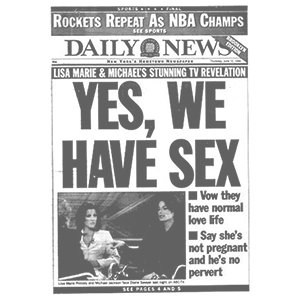
A marriage of convenience (plural marriages of convenience) is a marriage contracted for reasons other than the reasons of relationship, family, or love. Instead, such a marriage is orchestrated for personal gain or some other sort of strategic purpose, such as political marriage.
In the cases when it represents a fraud, it is called ‘sham marriage.’ Marriages of convenience are often contracted to exploit legal loopholes of various sorts. A couple may wed for reasons of citizenship or right of abode, for example, as many countries around the world will grant such rights to any wedded resident.
read more »
Posted in Money, Politics, Sex |
Leave a Comment »
September 29, 2012

Hypergamy [hahy-pur-guh-mee] (colloquially referred to as ‘marrying up’) is the act or practice of seeking a spouse of higher looks, socioeconomic, caste or status than oneself. The term is often used more specifically in reference to a perceived tendency among human cultures for females to seek or be encouraged to pursue male suitors that are higher status than themselves, which often manifests itself as being attracted to men who are comparatively older, wealthier, or otherwise more privileged than themselves.
According to evolutionary psychologists, females have evolved a preference for higher status males because they offer their prospective children both ‘better’ genes and greater resources, e.g. food and security. Men, who invest less in their children, have less reason to prefer mates with high social status. Some have even argued that men ‘marry-down’ to ensure that their mates have a higher incentive to remain faithful.
read more »
Posted in Language, Money, Sex |
Leave a Comment »
September 29, 2012

‘Going Dutch‘ is a term that indicates that each person participating in a group activity pays for himself, rather than any person paying for anyone else, particularly in a restaurant bill. There are two possible senses—each person paying his own expenses, or the entire bill being split (divided evenly) between all participants. In strict usage, ‘Going Dutch’ refers to the former, paying one’s own expenses, and the latter is referred to as ‘splitting the bill,’ but in casual usage these may both be referred to as ‘going Dutch.’ Splitting the bill is generally easier to compute, as it does not require checking what each individual ordered, but has the downside that people who ordered more expensive items are subsidized by others.
One suggestion is that the phrase ‘going Dutch’ originates from the concept of a Dutch door. Previously on farmhouses this consisted of two equal parts. Another school of thought is that it may be related to Dutch etiquette. In the Netherlands, it was not unusual to pay separately when going out as a group. When dating in a one-on-one situation, however, the man will most commonly pay for meals and drinks. The ‘Oxford English Dictionary’ connects ‘go Dutch’ with ‘Dutch treat’ and other phrases many of which have ‘an opprobrious or derisive application, largely due to the rivalry and enmity between the English and Dutch in the 17th c[entury],’ the period of the Anglo-Dutch Wars. Another example is ‘Dutch courage.’
read more »
Posted in Money, Sex, World |
Leave a Comment »
September 27, 2012

A mixtape is the generic name given to any compilation of songs recorded onto a Compact Cassette, Compact Disc, music file, or any other audio format. A mixtape, which usually reflects the musical tastes of its compiler, can range from a casually selected list of favorite songs, to a conceptual mix of songs linked by a theme or mood, to a highly personal statement tailored to the tape’s intended recipient.
Essayist Geoffrey O’Brien has called the personal mix tape ‘the most widely practiced American art form.’ Mixtape enthusiasts believe that by carefully selecting and ordering the tracks in a mix, an artistic statement can be created that is greater than the sum of its individual songs. With the advent of affordable, consumer-level digital audio, creating and distributing mixes in the form of compact disc or MP3 playlists has become the contemporary method of choice, but the term mix tape is still commonly used, even for mixes in different media.Video mixtapes have emerged as well.
read more »
Posted in Art, Money |
2 Comments »
September 27, 2012

Most heated clothing is designed for cold-weather sports and activities, such as motorcycle riding, downhill skiing, winter biking, and snowmobiling, trekking and for outdoor workers such as construction workers and carpenters. Normal insulation works by trapping body heat, so if it gets wet from sweat or rain, or if a person stops exercising, the insulation may not keep them warm.
With heated garments, a person can keep warm even if they are resting and not producing heat, or if their coat is damp from sweat. The most widely-available types of heated clothing are products for the extremities- the hands and feet. These body parts are the most likely to suffer frostbite or frostnip in severe cold. As such, many manufacturers make heated gloves, mittens, socks, and boot liners, and they can be purchased at workers’ supply stores (serving construction workers) and motor sports stores. Heated torso coverings (vests or jackets) or leggings are available from specialty retailers that cater to motorcyclists and downhill skiers.
read more »
Posted in Games, Money, Technology |
Leave a Comment »
September 27, 2012

Home automation (also called domotics) is the residential extension of ‘building automation’ (electronic which monitor and control the mechanical, electronics, and lighting systems in a building). ‘Building Automation Systems’ (BAS) keep the building climate within a specified range, provides lighting based on an occupancy schedule, and monitors system performance and device failures and provides email and/or text notifications to building staff.
Home automation may include centralized control of lighting, HVAC (heating, ventilation and air conditioning), appliances, and other systems, to provide improved convenience, comfort, energy efficiency, and security. Home automation for the elderly and disabled can provide increased quality of life for persons who might otherwise require caregivers or institutional care.
read more »
Posted in Money, Technology |
Leave a Comment »
September 24, 2012


The Atheist Bus Campaign aims to place ‘peaceful and upbeat’ messages about atheism on transport media in Britain, in response to evangelical Christian advertising. It was created by comedy writer Ariane Sherine and launched in 2008, with official support from the British Humanist Association and Richard Dawkins. The campaign’s original goal was to raise £5,500 to run 30 buses across London for four weeks early in 2009 with the slogan: ‘There’s probably no God. Now stop worrying and enjoy your life.’
Richard Dawkins, author of ‘The God Delusion,’ agreed to match all donations up to a maximum of £5,500, providing a total of £11,000 if the full amount were to be raised. The campaign closed in April 2009, having raised a total of £153,516.51. The first buses started running on in January 2009 – 800 are running around the whole of the UK and it is also planned to place 1,000 adverts on the London Underground featuring quotations from famous atheists. Subsequently, two large LCD screens were placed on Oxford Street, central London.
read more »
Posted in Money, Philosophy, World |
Leave a Comment »
September 24, 2012

Frugal innovation is the process of reducing the complexity and cost of a good and its production. Usually this refers to removing nonessential features from a durable good, such as a car or phone, in order to sell it in developing countries. Designing products for such countries may also call for an increase in durability, and unconventional distributions channels. Sold to so-called ‘overlooked consumers,’ firms hope volume will offset razor-thin profit margins.
Rising incomes in developing countries may also drive frugal innovation. Many terms are used to refer to the concept. ‘Frugal engineering’ was coined by Carlos Ghosn, the joint chief of Renault and Nissan, who stated, ‘frugal engineering is achieving more with fewer resources.’ Frugal innovation isn’t solely the domain of large multinational corporations. While General Electric may win plaudits for its $800 EKG machines, cheap cell phones made by local, no-name companies and no-frills wire frame eyeglasses are equally good examples of frugal innovation.
read more »
Posted in Money, Technology, World |
Leave a Comment »
September 20, 2012

Happiness economics is the quantitative study of happiness, positive and negative affect, well-being, quality of life, life satisfaction, and related concepts, typically combining economics with other fields such as psychology and sociology. It typically treats such happiness-related measures, rather than wealth, income or profit, as something to be maximized.
The field has grown substantially since the late 20th century, for example by the development of methods, surveys and indices to measure happiness and related concepts. Given its very nature, reported happiness is subjective. It is difficult to compare one person’s happiness with another. It can be especially difficult to compare happiness across cultures. However, many happiness economists believe they have solved this comparison problem. Cross-sections of large data samples across nations and time demonstrate consistent patterns in the determinants of happiness.
read more »
Posted in Health, Money, World |
Leave a Comment »
September 18, 2012

A groupie is a person who seeks emotional and sexual intimacy with a musician or other celebrity or public figure. ‘Groupie’ is derived from group in reference to a musical group, but the word is also used in a more general sense, especially in casual conversation. The word ‘groupie’ is commonplace, a derisive term used to describe a particular kind of female fan assumed to be more interested in sex with rock stars than in their music.
Groupies became prominent in the music scene in the 1960s and 1970s. This was prior to the murder of John Lennon in 1980, and before security levels for bands increased significantly. Female groupies in particular have a long-standing reputation of being available to celebrities, pop stars, rock stars, and other public figures. Led Zeppelin singer Robert Plant is quoted as distinguishing between fans who wanted brief sexual encounters, and ‘groupies’ who traveled with musicians for extended periods of time, acting as a surrogate girlfriend or mother, often taking care of the musician’s valuables, drugs, wardrobe, and social life.
read more »
Posted in Games, Money, Sex |
1 Comment »


 The Daily Omnivore