September 18, 2012

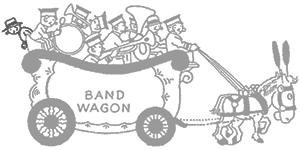
Basking in reflected glory (BIRGing) is a self-serving cognition whereby an individual associates themself with successful others such that another’s success becomes their own. What is interesting about BIRGing is that the simple affiliation of another’s success is enough to stimulate self glory. The person engaging in BIRGing does not even need to have been personally involved in the successful action with which they are affiliating themselves.
Examples of BIRGing include anything from sharing a home state with a past or present famous person, to religious affiliations, to sports teams. For example, a parent with a bumper sticker reading ‘My child is an honor student’ is basking in the reflected glory of their child. Within social psychology, BIRGing is thought to enhance self-esteem and to be a component of self-management.
read more »
Posted in Health, Language, Money |
Leave a Comment »
September 17, 2012
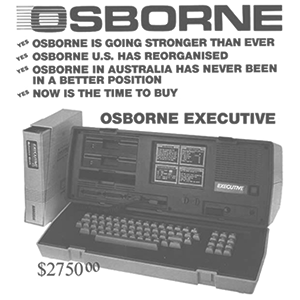
The Osborne effect is a term referring to the unintended consequence of the announcement of a future product ahead of its availability and its impact upon the sales of the current product.
Pre-announcement is done for several reasons: to reassure current customers that there is improvement or lower cost coming, to increase the interest of the media and investors in the company’s future prospects, and to intimidate or confuse competitors. When done correctly, the sales or cash flow impact to the company is minimal, as the revenue drop for the current product is replaced by orders or completed sales of the new product as it becomes available.
read more »
Posted in Money, Technology |
Leave a Comment »
September 17, 2012
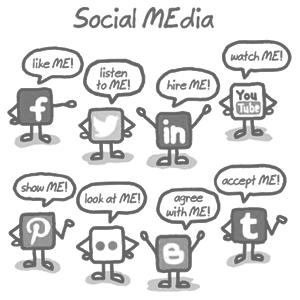
The Culture of Narcissism: American Life in an Age of Diminishing Expectations is a book by the cultural historian Christopher Lasch, first published in 1979. It explores the roots and ramifications of the normalizing of pathological narcissism in 20th century American culture using psychological, cultural, artistic, and historical synthesis.
The book proposes that post-war, late-capitalist America, through the effects of ‘organized kindness’ on the traditional family structure, has produced a personality-type consistent with clinical definitions of ‘pathological narcissism.’ This pathology is not akin to everyday narcissism — a hedonistic egoism — but rather a very weak sense of self requiring constant external validation. For Lasch, ‘pathology represents a heightened version of normality.’
read more »
Posted in Health, Language, Money |
1 Comment »
September 17, 2012

In psychology, compensation is a strategy whereby one covers up, consciously or unconsciously, weaknesses, frustrations, desires, feelings of inadequacy or incompetence in one life area through the gratification or (drive towards) excellence in another area.
Compensation can cover up either real or imagined deficiencies and personal or physical inferiority. The compensation strategy, however does not truly address the source of this inferiority. Positive compensations may help one to overcome one’s difficulties. On the other hand, negative compensations do not, which results in a reinforced feeling of inferiority.
read more »
Posted in Health, Humor, Money |
1 Comment »
September 17, 2012
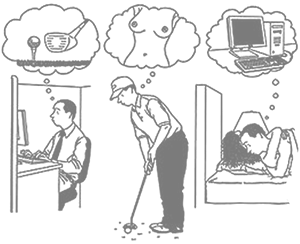

Opportunity cost is the value of the next best thing after making a decision; the utility of the decision has to outweigh the opportunity cost for it to be a good choice.
For example, opportunity cost describes leisure time given up to work, because leisure and income are both valued. Going to work implies more income but less leisure.
read more »
Posted in Money, Politics |
Leave a Comment »
September 16, 2012

To have one’s cake and eat it too is a popular English idiomatic proverb or figure of speech most often used negatively, to connote the idea of consuming a thing whilst managing to preserve it. This may also indicate having or wanting more than one can handle or deserve, or trying to have two incompatible things. The proverb’s meaning is similar to the phrases, ‘you can’t have it both ways’ and ‘you can’t have the best of both worlds.’
Conversely, in the positive sense, it would refer to ‘having it both ways’ or ‘having the best of both worlds.’ This concept, known as opportunity cost, is one of the most important economic concepts. The phrase’s earliest recording is from 1546 as ‘wolde you bothe eate your cake, and have your cake?’ (John Heywood’s ‘A dialogue Conteinyng the Nomber in Effect of All the Prouerbes in the Englishe Tongue’). This phrase alludes to the impossibility of eating your cake and still having it afterwards.
read more »
Posted in Food, Language, Money |
Leave a Comment »
September 16, 2012
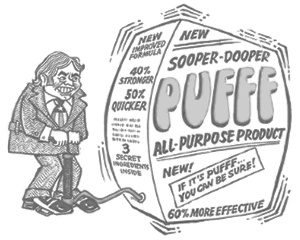

Puffery [puhf-uh-ree] as a legal term refers to promotional statements and claims that express subjective rather than objective views, which no ‘reasonable person’ would take literally. Puffery serves to ‘puff up’ an exaggerated image of what is being described and is especially featured in testimonials. In a legal context, the term originated in the English Court of Appeal case, which centered on whether a monetary reimbursement should be paid when an influenza preventive device failed to work.
The manufacturers had paid for advertising stating that £100 would be paid in such circumstances then failed to follow through. Part of their defense was that such a statement was ‘mere puff’ and not meant to be taken seriously. While the defense ultimately lost the case the principle was confirmed that certain statements made by advertisers, that were obviously not made in a serious manner, could be exempt from usual rules relating to promises in open contracts.
read more »
Posted in Language, Money, Politics |
Leave a Comment »
September 15, 2012


A knowledge market is a mechanism for distributing knowledge resources. There are two views on knowledge and how knowledge markets can function. One view uses a legal construct of intellectual property to make knowledge a typical scarce resource, so the traditional commodity market mechanism can be applied directly to distribute it.
An alternative model is based on treating knowledge as a public good and hence encouraging free sharing of knowledge. This is often referred to as attention economy. Currently there is no consensus among researchers on relative merits of these two approaches.
read more »
Posted in Money, Politics, Technology |
Leave a Comment »
September 14, 2012
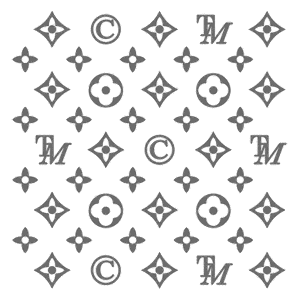
Trademark dilution is a legal concept giving the owner of a famous trademark standing to forbid others from using that mark in a way that would lessen its uniqueness.
In most cases, trademark dilution involves an unauthorized use of another’s trademark on products that do not compete with, and have little connection with, those of the trademark owner. For example, a famous trademark used by one company to refer to hair care products might be diluted if another company began using a similar mark to refer to breakfast cereals.
read more »
Posted in Money, Politics |
Leave a Comment »
September 13, 2012

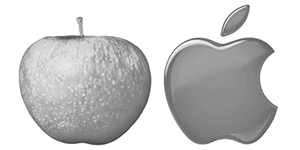
‘A moron in a hurry‘ is a hypothetical person against whom a claimant’s concern might be judged in an English law civil action for passing off or trademark infringement.
The expression is used to reject a claim that two items could reasonably be confused by a passer-by (i.e. that even a moron in a hurry would notice the difference), on the grounds that the items are so different that the goodwill and brand of the claimant’s item cannot genuinely be affected by the existence of the other.
read more »
Posted in Language, Money, Politics |
Leave a Comment »
September 13, 2012

In computing a 10-foot user interface is a software GUI (graphical user interface) designed for display on a large television (or similar sized screen) with interaction using a regular television-style remote control. ’10-foot’ refers to the fact that the GUI’s elements—i.e. menus, buttons, text fonts, and so on—are theoretically ergonomically large enough to read easily at a distance of 10 feet (3 m) from the display. To avoid distractions and to be more clear, 10 foot UIs also tend to be very simple and usually only have the minimum core buttons.
Typical examples of popular 10-foot user interfaces are HTPC (Home theater PC) media center software applications such as Google TV, MediaPortal, XBMC, Windows Media Center, and Front Row / Apple TV interfaces, but most other Smart TV and set-top boxes devices and software with interactive television interfaces also belong in this category. In 2010, Hillcrest Labs released the Kylo browser, which is a web browser optimized for television use, which features a 10-foot user interface. Hillcrest also invented the first motion-controlled remote for television.
read more »
Posted in Money, Technology |
Leave a Comment »
September 13, 2012

70mm film is a wide high-resolution film gauge, with higher resolution than standard 35mm motion picture film format. As used in camera, the film is 65 mm wide. The additional 5mm are for magnetic strips holding four of the six tracks of sound.
Although more recent 70 mm prints use digital sound encoding, the vast majority of 70 mm prints predate this technology. Each frame is five perforations tall, with an aspect ratio of 2.20:1. The vast majority of film theaters are unable to handle 70mm film, and so original 70mm films are shown with 35mm prints at these venues.
read more »
Posted in Art, Money, Technology |
1 Comment »


 The Daily Omnivore