September 10, 2012

The Korean wave refers to the significant increase in the popularity of South Korean entertainment and culture starting in the 1990s, in Asia, and more recently in other parts of the world. It represents a surge in the international visibility of Korean culture.
The term was coined in mid 1999 by Beijing journalists surprised at the fast growing popularity of Korean entertainment and culture in China. The wave has had considerable impact on the South Korean economy, as well as on the political and cultural influence of South Korea. For example, in 2011 based on international activity the Korean wave added approximately USD$3.8 billion dollars of revenue to the South Korean economy.
read more »
Posted in Money, Politics, World |
1 Comment »
September 10, 2012

‘I would rather cry in a BMW‘ is a quotation that became an online sensation in China in 2010. It originated from Ma Nuo, a 20-year-old female contestant on the television show ‘Fei Cheng Wu Rao’ (also known in English as ‘If you are the One’).
The line was in response to a question by an unemployed suitor who asked if Ma would ‘ride a bicycle with him’ on a date. The series of events have been summed up in the media with the quip ‘I would rather cry in a BMW than laugh on a bicycle.’
read more »
Posted in Games, Money, World |
1 Comment »
September 10, 2012
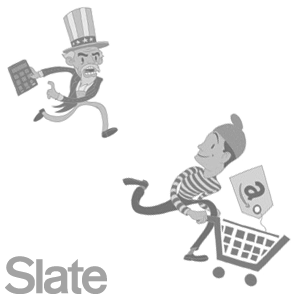
Amazon.com has been criticized for collecting sales taxes from customers in only the five states it has a major presence in. Several states have passed or are considering ‘Amazon tax‘ laws designed to compel Amazon to collect local sales and use taxes from customers. The U.S. has no federal sales tax. In most countries where Amazon operates, a sales tax or value added (consumption) tax is uniform throughout the country, and Amazon is obliged to collect it from all customers.
Proponents argue that Amazon has a comparative advantage over brick-and-mortar retailers, and the online company is under increasing legal and political pressure from state governments, traditional retailers and other groups because of its refusal to collect sales tax in 40 of the 45 states with a statewide sales tax. Those 40 states include at least 12 where Amazon has a clear physical presence via distribution centers and wholly owned subsidiaries.
read more »
Posted in Money, Politics, Technology |
Leave a Comment »
September 10, 2012

LifeLock Inc., founded in 2005, is an American identity theft protection company based in Arizona. The company charges $10 a month for the LifeLock identity theft protection system intended to detect fraudulent applications for some forms of credit and non-credit related services.
LifeLock’s CEO Todd Davis was the victim of identity theft 13 times during 2007 and 2008, after he publicly posted his Social Security number on billboards and in TV commercials as part of a campaign to promote the company’s identity theft protection services.
read more »
Posted in Money, Politics, Technology |
Leave a Comment »
September 9, 2012

Uber (formerly UberCab) is a venture-funded startup company based in San Francisco that makes a mobile application that connects passengers with drivers of luxury vehicles (e.g. Lincoln, Cadillac, BMW) for hire.
The company arranges pickups in the San Francisco Bay Area, New York City, Los Angeles, Seattle, Chicago, Boston, Washington, D.C., Vancouver, Toronto, Paris, and Philadelphia. Cars are reserved by sending a text message or by using a mobile app. Using the apps, customers can track their reserved car’s location.
read more »
Posted in Money, Politics, Technology |
Leave a Comment »
September 8, 2012
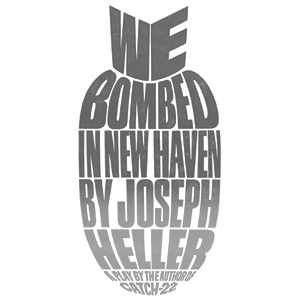
Paul Bacon (b. 1923), is an American book and album cover designer and jazz musician. He is known for introducing the ‘Big Book Look’ in book jacket design, and has designed about 6,500 jackets and more than 200 jazz record covers. His first big hit came in 1956 with ‘Compulsion,’ a novel by Meyer Levin.
This cover also marked the inception of the ‘Big Book Look’ that Bacon became known for. This look features a large, bold title, a prominent author’s name, and a small conceptual image. Instances of this ‘look’ include ‘Catch-22’ by Joseph Heller, ‘Visions of Cody’ by Jack Kerouac, and ‘Bullet Park’ by John Cheever, along with countless others.
read more »
Posted in Art, Language, Money |
Leave a Comment »
September 8, 2012

George Dantzig (1914 – 2005) was an American mathematical scientist who solved two unsolved problems in statistical theory, which he had mistaken for homework after arriving late to a lecture of UC Berkeley statistician Jerzy Neyman. Dantzig was the Professor Emeritus of Transportation Sciences and Professor of Operations Research and of Computer Science at Stanford.
Born in Portland, Oregon, George Bernard Dantzig was named after George Bernard Shaw, the Irish writer. His father, Tobias Dantzig, was a Baltic German mathematician and linguist, and his mother, Anja Dantzig (née Ourisson), was a French linguist. Dantzig’s parents met during their study at the Sorbonne, where Tobias studied mathematics under Henri Poincaré.
read more »
Posted in Education, Money, Science |
Leave a Comment »
September 8, 2012

Poka-yoke is a Japanese term that means ‘fail-safing’ or ‘mistake-proofing.’ A poka-yoke is any mechanism in a lean manufacturing process that helps an equipment operator avoid (‘yokeru’) mistakes (‘poka’).
Its purpose is to eliminate product defects by preventing, correcting, or drawing attention to human errors as they occur. The concept was formalized, and the term adopted, by Shigeo Shingo as part of the Toyota Production System. It was originally described as ‘baka-yoke,’ but as this means ‘fool-proofing’ (or ‘idiot-proofing’) the name was changed to the milder poka-yoke. More broadly, the term can refer to any behavior-shaping constraint designed into a process to prevent incorrect operation by the user.
read more »
Posted in Money, Technology, World |
Leave a Comment »
September 8, 2012

Jody Christian (b. 1985), best known by his stage name RiFF RaFF, is an American rapper and performance artist from Houston. He is signed to the Mad Decent record label. He is best known for his initial associations with Soulja Boy, and being a member of the comedy super group Three Loco with Andy Milonakis and Simon Rex.
Riff Raff started his social media involvement as a rapper on Myspace, using the name ‘Kokayne Dawkinz.’ His first public appearance was not as a rapper, but as a contestant on the 2009 MTV reality show From ‘G’s to Gents’ (season 2). Though he was eliminated from series on the second episode, he used this exposure to publicize his career as a rapper. Two years later, he was said to be signed to the Soulja Boy’s Stacks on Deck Entertainment label in 2011, and added ‘SODMG’ to his name for a period. This was later said to be false in an interview by Soulja Boy.
Posted in Art, Humor, Money |
1 Comment »
September 7, 2012

The Thin Ideal is the concept of the idyllically slim female body. The common perception of this ideal is that of a slender, feminine physique with a small waist and little body fat. The size of the thin ideal is decreasing while the rate of female obesity is simultaneously increasing, making this iconic body difficult for women to maintain. This creates a gap between the actual appearance of an average woman’s body and its expected appearance which, depending on the extent to which the ideal is internalized, may have serious psychological effects.
The degree to which women are psychologically affected by the thin ideal depends to what extent the ideal is internalized. An article from the ‘Eating Disorders Journal’ states that ‘thin ideal internalization is the extent to which an individual ‘buys into’ socially defined ideals of attractiveness and engages in behaviors designed to approximate these ideals.’ Women generally relate the ideally thin body to positive life outcomes such as happiness, confidence, and romantic success, and consequently a majority of women value the thin ideal to some extent.
read more »
Posted in Health, Money, Politics |
1 Comment »
September 5, 2012

Emotional contagion is the tendency to catch and feel emotions that are similar to and associated with those of others. One view developed by Elaine Hatfield, John Cacioppo, and Richard Rapson of the underlying mechanism is that it represents a tendency to mimic and synchronize facial expressions, vocalizations, postures, and movements with those of another person automatically and, consequently, to converge emotionally.
A broader definition of the phenomenon was suggested by Schoenewolf—’a process in which a person or group influences the emotions or behavior of another person or group through the conscious or unconscious induction of emotion states and behavioral attitudes.’
read more »
Posted in Health, Money, Science |
Leave a Comment »
August 31, 2012

Make It Right, or Make It Right Foundation New Orleans, is a foundation dedicated to rebuilding New Orleans in the aftermath of 2005’s Hurricane Katrina, which flooded the city. In late 2006, Brad Pitt founded Make It Right to rebuild 150 safe, energy-efficient and affordable homes for families from New Orleans Lower 9th Ward who lost everything to Hurricane Katrina.
By 2011, Make It Right completed 75 homes. The homes are inspired by Cradle to Cradle Design (models human industry on nature’s processes in which materials are viewed as nutrients circulating in healthy, safe metabolisms), with an emphasis on high-quality design, while preserving the spirit of the community’s culture.
Posted in Money, Politics |
Leave a Comment »



