August 25, 2012

The Livestrong wristband (stylized as LIVESTRONG) is a yellow silicone gel bracelet launched in 2004 as a fund-raising item for the Lance Armstrong Foundation, founded by cyclist and cancer survivor Lance Armstrong. The bracelet itself was developed by Nike and their ad agency Wieden+Kennedy. The bracelet is part of the ‘Wear Yellow Live Strong’ educational program. The program is intended to raise money for cancer research, raise cancer awareness, and encourage people to live life to the fullest.
The bracelet sells individually, as well as in packs of 10, 100, and 1,200 as part of an effort to raise $25.1 million for the Lance Armstrong Foundation in cooperation with Nike who manufactures the bracelets in manufacturing plants both domestic and foreign and sells the bracelets through their Nike outlets worldwide. This target was achieved within 6 months, and there have now been 80 million Livestrong bracelets sold to date. Yellow was chosen for its importance in professional cycling, as it is the color of the yellow jersey worn by the leader of the Tour de France, which Armstrong won seven consecutive times.
Posted in Games, Health, Money |
1 Comment »
August 24, 2012
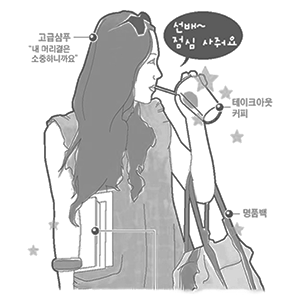
Doenjang girl is a satirical Korean expression for girls and young women who are addicted to luxury and vanity. Doenjang is a fermented soybean paste used to make sour of bean soup.
Instead of visiting an expensive foreign restaurant they will eat a three dollar bowl of soup and then go to Starbucks to purchase a six dollar latte, because carrying a Starbucks cup is considered posh. Likewise, doejang girls carry around shopping bags from Chanel and other high end stores to look as if they were shopping there.
Posted in Money, World |
Leave a Comment »
August 23, 2012

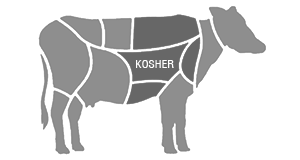
Hebrew National is a brand of kosher hot dogs and sausages made by ConAgra Foods, Inc. The Hebrew National Kosher Sausage Factory, Inc. was founded on East Broadway, on the Lower East Side of Manhattan in 1905. The company was founded by Theodore Krainin, who emigrated from Russia in the 1880s. In a 1921 article, Alfred W. McCann writing in ‘The Globe and Commercial Advertiser’ citied Hebrew National as having ‘higher standards than the law requires.’
McCann wrote the article during a crusade for commercial food decency standards, in which ‘The Globe’ was prominent. He wrote ‘More power to Krainin and the decency he represents! Such evidence of the kind of citizenship which America should covet is not to be passed by lightly.’ Hebrew National ‘served the Jewish neighborhoods of immigrants from Eastern Europe and Germany and soon developed a favorable reputation among the other Jewish residents of New York City.’
read more »
Posted in Food, Money, Philosophy |
Leave a Comment »
August 22, 2012

The Sinclair C5 is a battery electric vehicle invented by British entrepreneur Sir Clive Sinclair in the United Kingdom in 1985. The vehicle is a battery-assisted tricycle steered by a handlebar beneath the driver’s knees. Powered operation is possible making it unnecessary for the driver to pedal.
Its top speed of 15 miles per hour (24 km/h), is the fastest allowed in the UK without a driving licence. It is powered by a 200w or 250W motor. It sold for £399 plus £29 for delivery. It became an object of media and popular ridicule during 1980s Britain and was a commercial disaster, selling only around 17,000 units, although according to Sinclair, it was ‘the best selling electric vehicle’ until 2011 when the Nissan Leaf had sold over 20,000 units.
read more »
Posted in Money, Technology, World |
Leave a Comment »
August 22, 2012
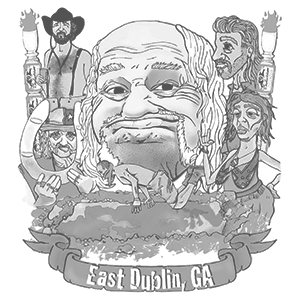
The Redneck Games are held in East Dublin, Georgia annually. The games were started by the general manager of WQZY, Mac Davis, in response to a comment made by the media; that when the 1996 Olympic Games went to Atlanta, it would be held by a group of rednecks. Taking offense to this, Davis and some locals set up the annual Redneck Games to reinforce the stereotype the media held. In 2001, Drew Scott of Wild Country 96.5 ‘borrowed’ the games to set up a fundraising event for the Franklin County NY Make-A-Wish Foundation.
Some events that are held during the Redneck Games include: The cigarette flip; Bobbing for pig’s trotters; Seed spitting; Toilet seat throwing; Mud pit belly flop; Big-hair contest; Wet T-shirt contest; Armpit serenade; Bug zapping by spitball; Dumpster diving; and Hubcap hurling. For each of the events, a trophy is awarded: a half crushed, empty mounted beer can. The Minto Canadian Redneck Games in Minto, Ontario started in 2006. Events include: Mud Pit Slip & Slide; Bobbin’ for Pig’s Feet; Mud Pit Tug-of-War; Mud Pit Belly Flop Contest; Redneck Horseshoes; Hubcap Hurl; and Mud Pit Volleyball.
Posted in Games, Humor, Money |
Leave a Comment »
August 22, 2012
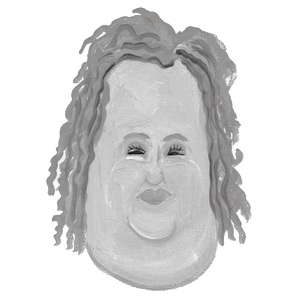
Here Comes Honey Boo Boo is an American reality series that debuted on TLC in 2012. It is a spinoff of ‘Toddlers & Tiaras,’ based around T&T contestant Alana ‘Honey Boo Boo’ Thompson and her family, who reside in rural McIntyre, Georgia. The series follows the Thompsons, focusing on the daily interactions between the family members and mother June’s attempts to enter Alana into beauty pageants. Other focal points in the series are the teen pregnancy of eldest daughter Anna, Jessica’s attempts to lose weight, as well as visits to the Redneck Games and auctions.
The ‘A.V. Club’ called the first episodes a ‘horror story posing as a reality television program,’ with others worrying about potential child exploitation. A reviewer for ‘Forbes’ criticized TLC as trying to ‘portray Alana’s family as a horde of lice-picking, lard-eating, nose-thumbing hooligans south of the Mason-Dixon line,’ stating that ‘it falls flat, because there’s no true dysfunction here, save for the beauty pageant stuff.’ ‘The Guardian’ also criticized the attempt to portray the Thompsons as something to ‘point and snicker at,’ saying, ‘none of the women or girls who participate in the show seems to hate themselves for their poverty, their weight, their less-than-urbane lifestyle, or the ways in which they diverge from the socially-acceptable beauty standard.’
Posted in Games, Humor, Money |
Leave a Comment »
August 22, 2012

Self-handicapping is the process by which people avoid effort in the hopes of keeping potential failure from hurting self-esteem. It was first theorized by Edward E. Jones and Steven Berglas, according to whom self-handicaps are obstacles created, or claimed, by the individual in anticipation of failing performance. Self-handicapping can be seen as a method of preserving self-esteem but it can also be used for self-enhancement and to manage the impressions of others.
This conservation or augmentation of self-esteem is due to changes in causal attributions or the attributions for success and failure that self-handicapping affords. There are two methods that people use to self-handicap: behavioral and claimed self-handicaps. People withdraw effort or create obstacles to successes so they can maintain public and private self-images of competence.
read more »
Posted in Education, Health, Money |
Leave a Comment »
August 17, 2012

Motivation is the psychological feature that arouses an organism to action toward a desired goal and elicits, controls, and sustains certain goal directed behaviors. For instance: an individual has not eaten, he or she feels hungry, and as a response he or she eats and diminishes feelings of hunger. There are many approaches to motivation: physiological, behavioral, cognitive, and social. It is the crucial element in setting and attaining goals—and research shows that subjects can influence their own levels of motivation and self-control.
A 2007 paper, ‘Where the Motivation Resides and Self-Deception Hides: How Motivated Cognition Accomplishes Self-Deception,’ examined how people remain blind to the motives underlying their flattering self-construals, attitudes, and social judgments. Motivated cognition accomplishes the goal of self-deception. Self-serving conclusions are produced and the influence of such distortions remains hidden from conscious awareness because of the ubiquitous presence and specialized nature of motivated cognition.
read more »
Posted in Education, Health, Money |
Leave a Comment »
August 13, 2012
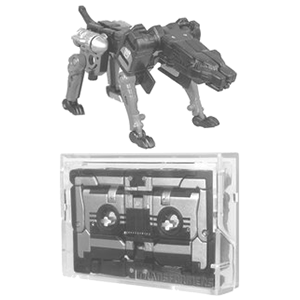
Cassette culture refers to the practices surrounding amateur production and distribution of recorded music that emerged in the late 1970s via home-made audio cassettes. It is characterized by the adoption of home-recording by independent artists, and involvement in ad-hoc self-distribution and promotion networks – primarily conducted through mail (though there were a few retail outlets, such as Rough Trade and Falling A in the UK) and fanzines.
The culture was in part an offshoot of the mail art movement of the 1970s and 1980s, and participants engaged in tape trading in addition to traditional sales. The culture is related to the DIY ethic of punk, and encouraged musical eclecticism and diversity.
read more »
Posted in Art, Money, Technology |
Leave a Comment »
August 13, 2012
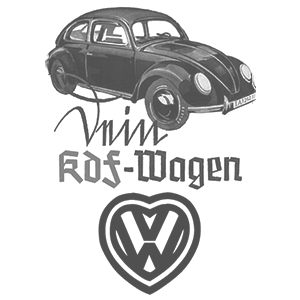
‘Strength through Joy‘ (‘Kraft durch Freude,’ KdF) was a large state-controlled leisure organization in Nazi Germany. It was a part of the German Labor Front (‘Deutsche Arbeitsfront,’ DAF), the national German labor organization at that time. Set up as a tool to promote the advantages of National Socialism to the people, it soon became the world’s largest tourism operator of the 1930s.
KdF was supposed to bridge the class divide by making middle-class leisure activities available to the masses. This was underscored by having cruises with passengers of mixed classes and having them, regardless of social status, draw lots for allocation of cabins. Another less ideological goal was to boost the German economy by stimulating the tourist industry out of its slump from the 1920s.
read more »
Posted in Money, War, World |
Leave a Comment »
August 13, 2012
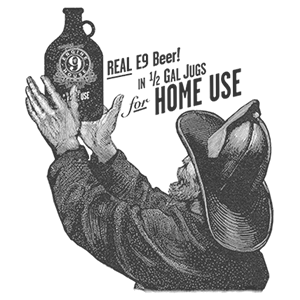
A growler [grou-ler] is a glass or ceramic jug with a capacity of 64 oz (1,900 ml) used to transport draught beer in Australia, the United States, and Canada. They are commonly sold at breweries and brewpubs as a means to sell take-out beer. The exploding growth of craft breweries and the growing popularity of home brewing has also led to an emerging market for the sale of collectible growlers.
Growlers are generally made of glass and have either a screw-on cap or a hinged porcelain gasket cap, which can provide freshness for a week or more. A properly sealed growler will hold carbonation indefinitely and will store beer like any other sanitized bottle. Some growler caps are equipped with valves to allow replacement of CO2 lost while racking. The modern glass growler was first introduced by Charlie and Ernie Otto of Otto Brother’s Brewing Company in 1989.
read more »
Posted in Drugs, Food, Money |
Leave a Comment »
August 10, 2012

Yoyodyne is a fictitious defense contractor introduced in Thomas Pynchon’s ‘V.’ (1963) and featured prominently in his novel ‘The Crying of Lot 49’ (1966). Described in the latter book as ‘a giant of the aerospace industry,’ Yoyodyne was founded by World War II veteran Clayton ‘Bloody’ Chiclitz. The company has a large manufacturing plant in the fictional town of San Narciso, California.
The name is reminiscent of several real high-tech companies, including Teledyne, Teradyne, which was founded a few years before Pynchon wrote ‘The Crying of Lot 49,’ and Rocketdyne, an aerospace company that manufactured, among other things, propulsion systems. The ‘dyne’ is the standard unit of force in the centimeter-gram-second system of units (largely obsolete but still widely recognized), derived from the Greek word dynamis meaning ‘power’ or ‘force.’
read more »
Posted in Humor, Money, War |
Leave a Comment »



