July 3, 2012

The Basement Tapes is a 1975 studio album by Bob Dylan and The Band. The songs featuring Dylan’s vocals were recorded in 1967, eight years before the album’s release, at houses in and around Woodstock, NY, where Dylan and the Band lived. Although most of the Dylan songs had appeared on bootleg records, ‘The Basement Tapes’ marked their first official release.
When Columbia Records prepared the album, eight songs recorded solely by the Band were added to sixteen songs taped by Dylan and the Band. Subsequently, the format of the 1975 album has led critics to question the omission of some of Dylan’s best-known 1967 compositions and the inclusion of material by the Band that was not recorded in Woodstock.
read more »
Posted in Art, Money |
Leave a Comment »
July 3, 2012

Kim Dotcom, real name Kim Schmitz (b. 1974) is a German-Finnish businessman who rose to prominence during the dot-com bubble and was convicted of insider trading and embezzlement in its aftermath. He is the founder of Megaupload and its associated websites. He legally changed his surname to Dotcom in 2005. in 2012, the New Zealand Police placed him in custody in response to US charges of criminal copyright infringement in relation to his Megaupload Web site.
Dotcom has spoken out against his negative portrayal in the media, claiming to be a reformed character and a legitimate businessman who has been unfairly demonized by United States authorities and industry trade groups such as the RIAA and MPAA. He contends that the services offered by his Megaupload site were not significantly different from those of comparable services such as Rapidshare or YouTube, and he has just been used as a scapegoat because of his hacker past.
read more »
Posted in Money, Politics, Technology |
Leave a Comment »
June 28, 2012

OSx86 is a collaborative hacking project to run the Mac OS X computer operating system on non-Apple personal computers with x86 architecture and x86-64 compatible processors. The effort started soon after the 2005 Worldwide Developers Conference announcement that Apple would be transitioning its personal computers from PowerPC to Intel microprocessors. Apple uses a Trusted Platform Module, or TPM, to tie Mac OS to the systems it distributed to developers after announcing its switch to Intel’s chips. A computer built to run this type of Mac OS X is also known as a Hackintosh.
Hackintoshed notebook computers are also referred to as ‘Hackbooks.’ The Apple software license does not allow Mac OS X to be used on a computer that is not ‘Apple-branded.’ The legality of this form of tying is disputed. While the methods Apple uses to prevent Mac OS X from being installed on non-Apple hardware are protected from commercial circumvention in the United States by the DMCA, specific changes to the law regarding the concept of jailbreaking has thrown such and similar circumvention methods when carried out by end-users for personal use into a legal grey area.
Posted in Money, Politics, Technology |
Leave a Comment »
June 27, 2012

The M1911 is a .45 caliber pistol originally made by Colt, and is now the most copied pistol design in the world. It was made in the early 1900s and was used in World War I, World War II, The Korean War, and in the Vietnam War. It is semi-automatic and can fire a bullet each time the trigger is pulled. It can hold seven rounds inside its magazine and one more in the chamber. It was standard-issue side arm for the United States armed forces from 1911 to 1985 when it was replaced by the 9mm Beretta M9 (though the M1911 is still carried by some U.S. forces).
The M1911 is a common pistol design for police special teams because it is reliable in function, easy to modify by a gunsmith, and effective. The ‘1911’ in the name is because the pistol was adopted by the United States Army in the year 1911. M1911A1 pistols have an ‘A1’ added because they were changed from the original design in the 1920s in military service.
read more »
Posted in Money, Technology, War |
Leave a Comment »
June 26, 2012

Boombox is a colloquial expression for a portable music player with two or more loudspeakers. It is a device capable of receiving radio stations and playing recorded music (usually cassettes or CDs), usually at relatively high volume. Many models are also capable of recording (onto cassette) from radio and (sometimes) other sources. Designed for portability, most boomboxes can be powered by batteries, as well as by line current.
The first Boombox was developed by the inventor of the C-Cassette, Philips of the Netherlands. Their first ‘Radiorecorder’ was released in 1969. The Philips innovation was the first time that radio broadcasts could be recorded onto C-Cassette tapes without cables or microphones. Early sound quality of tape recordings was poor but as the C-Cassette technology evolved, with stereo recording, Chromium tapes and noise reduction, soon HiFi quality devices become possible. Several European electronics brands such as Grundig also introduced similar devices.
read more »
Posted in Art, Money, Technology |
Leave a Comment »
June 26, 2012


The mudflap girl is an iconic silhouette of a woman with an hourglass body shape, sitting, leaning back on her hands, with her hair being blown in the wind. The icon is typically found on mudflaps, clothing, and other items associated with trucking in the United States. The image is sometimes also known as trucker girl, trucker lady or seated lady. This famous design was created in the 1970s by Bill Zinda of Wiz Enterprises in Long Beach, California, to promote his line of truck and auto accessories. It is variously claimed to be modeled on Leta Laroe, a famous exotic dancer at the time, or on Rachel Ann Allen, a friend’s wife, and mother of Ed Allen, the trademark’s owner.
As a parody, Wyoming Libraries use a mudflap girl holding a book, in an effort to attract readers. In another parody the feminist blog Feministing uses a version depicting the mudflap girl holding up her middle finger as an ironic logo. Optimus Prime has been portrayed as having a mudflap with the silhouette of Elita One (leader of the female autobots). At McMurdo Station, Antarctica, the mudflap girl is depicted on a utility vehicle, but wearing more appropriate attire for Antarctic environment.
Posted in Humor, Money, Sex |
Leave a Comment »
June 26, 2012

Kappa is an Italian manufacturer of sports clothes and accessories, that started as a sock and underwear manufacturer in 1916 in Turin. Its logo, known as ‘Omini,’ is a silhouette of a man (left) and woman (right) sitting back to back in the nude. It was created in 1969 by mere accident.
After a photo shoot for a bathing suit advertisement, a man and a woman were sitting back-to-back, naked, with the outlines of their bodies traced by the back lighting. The photographers knew they had something, and the idea grew into what is now the logo, which symbolizes the mutual support between man and woman, and their completion.
Posted in Games, Money, World |
Leave a Comment »
June 26, 2012

Umbro is an English sportswear and football equipment supplier, and a subsidiary of Nike since 2008. Umbro designs, sources, and markets sport-related apparel, footwear, and equipment. Its products are sold in over 90 countries. The company was founded in 1924 by Harold Humphreys, along with his brother Wallace in a small workshop, inspired by the growing interest in football witnessed nationwide.
The word ‘Umbro’ is an acronym derived from Humphreys Brothers Clothing. Umbro’s major debut was in the 1934 FA Cup final, when both teams Manchester City and Portsmouth wore uniforms designed and manufactured by the company. Other teams supplied by Umbro during the 1930s and 1940s were Sheffield United and Preston North End, Manchester United, and Blackpool. In 1952, the British team at the Summer Olympics wore Umbro, tailored for the needs of their individual sports. Umbro would be a major supplier to the British Olympics team for the next 20 years.
read more »
Posted in Games, Money, World |
Leave a Comment »
June 26, 2012

Brine, Corp. is a US sporting goods manufacturer (lacrosse, soccer, volleyball, and field hockey equipment). It markets its products under its own brand as well as ‘In The Crease’ for goals and goal accessories. The company was founded by W.H. Brine in 1922 as the W.H. Brine Company. It was privately owned by the Brine family and named Brine, Inc. before it was acquired by New Balance in 2006.
It started as a small sports equipment and uniform company. They sold to private schools and regional camps, quickly growing to a major manufacturer of lacrosse and soccer equipment.
read more »
Posted in Games, Money, Technology |
1 Comment »
June 25, 2012
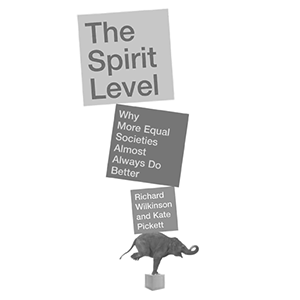
Equality of outcome is a controversial political concept which describes a state in which people have approximately the same material wealth or, more generally, in which the general conditions of their lives are similar. Achieving this requires reducing or eliminating material inequalities between individuals or households in a society. This could involve a transfer of income and/or wealth from wealthier to poorer individuals, or adopting other institutions designed to promote equality of condition from the start.
The concept is central to some political ideologies and is used regularly in political discourse, often in contrast to the term equality of opportunity. A related way of defining equality of outcome is to think of it as ‘equality in the central and valuable things in life.’ After the Russian Revolution of 1917, the political structure of the Soviet Union tried to emphasize equality of outcome as a primary goal.
read more »
Posted in Money, Philosophy, Politics |
Leave a Comment »
June 21, 2012

Hyperreality, according to French sociologist Jean Baudrillard is, ‘A real without origin or reality.’ Italian philosopher called it, ‘The authentic fake.’ More recently, Hungarian filmmaker Pater Sparrow forwarded the term ‘virtual irreality.’ The term is used in semiotics (the study of symbols) and postmodern philosophy to describe an inability of consciousness to distinguish reality from a simulation of reality, especially in technologically advanced post-modern societies. Hyperreality is a way of characterizing what our consciousness defines as ‘real’ in a world where a multitude of media can radically shape and filter an original event or experience. Most aspects of the concept can be thought of as ‘reality by proxy.’
Baudrillard in particular suggests that the world we live in has been replaced by a copy world, where we seek simulated stimuli and nothing more. He borrows, from Jorge Luis Borges’ ‘On Exactitude in Science’ (which borrowed from Lewis Carroll), the example of a society whose cartographers create a map so detailed that it covers the very things it was designed to represent. When the empire declines, the map fades into the landscape and there is neither the representation nor the real remaining – just the hyperreal. Baudrillard’s idea of hyperreality was heavily influenced by phenomenology, semiotics, and Marshall McLuhan.
read more »
Posted in Money, Philosophy, Science |
Leave a Comment »
June 21, 2012
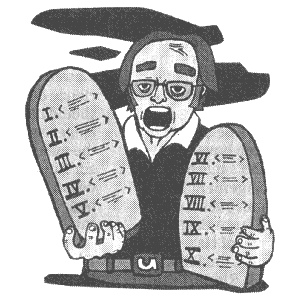
Information pollution is the contamination of information supply with irrelevant, redundant, unsolicited and low-value information. The spread of useless and undesirable information can have a detrimental effect on human activities. It is considered one of the adverse effects of the information revolution. Pollution is a large problem and is growing rapidly in e-mail, instant messaging (IM), and RSS feeds.
The term acquired particular relevance in 2003 when Jakob Nielsen, a leading web usability expert, published a number of articles discussing the topic. However, as early as 1971 researchers were expressing doubts about the negative effects of having to recover ‘valuable nodules from a slurry of garbage in which it is a randomly dispersed minor component.’
read more »
Posted in Money, Politics, Technology |
1 Comment »


 The Daily Omnivore