March 24, 2012
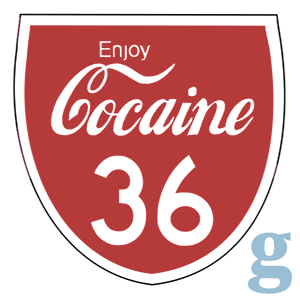
Route 36 is an illegal after-hours lounge in La Paz, Bolivia, and, according to ‘The Guardian,’ the world’s first cocaine bar. Although cocaine, an addictive stimulant derived from the coca plant, is illegal in Bolivia, political corruption and affordability of locally produced cocaine have resulted in Route 36 becoming a popular destination for thousands of drug tourists each year.
Many customers learn about the bar’s existence through travel websites and by word of mouth promotion. To avoid complaints from nearby business owners or residents, Route 36 does not operate in the same location for more than a few weeks at a time. Its location can only be found by word of mouth information.
Posted in Drugs, Money, World |
Leave a Comment »
March 23, 2012
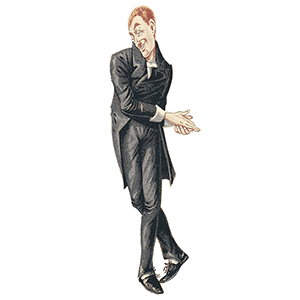
Confirmation bias is a tendency of people to favor information that confirms their beliefs or hypotheses. People display this bias when they gather or remember information selectively, or when they interpret it in a biased way. The effect is stronger for emotionally charged issues and for deeply entrenched beliefs. For example, in reading about gun control, people usually prefer sources that affirm their existing attitudes. They also tend to interpret ambiguous evidence as supporting their existing position.
Biased search, interpretation and memory have been invoked to explain attitude polarization (when a disagreement becomes more extreme even though the different parties are exposed to the same evidence), belief perseverance (when beliefs persist after the evidence for them is shown to be false), the irrational primacy effect (a greater reliance on information encountered early in a series), and illusory correlation (when people falsely perceive an association between two events or situations).
read more »
Posted in Money, Politics, Science |
1 Comment »
March 23, 2012


Tilt is a poker term for a state of mental or emotional confusion or frustration in which a player adopts a less than optimal strategy, usually resulting in the player becoming over-aggressive. This term is closely associated with ‘steam’ and some consider the terms equivalent, but ‘steam’ typically indicates more anger and intensity. Placing an opponent on tilt or dealing with being on tilt oneself is an important aspect of poker. It is a relatively frequent occurrence due to frustration, animosity against other players, or simply bad luck. Experienced players recommend learning to recognize that one is experiencing tilt and avoid allowing it to influence one’s play.
The most likely origin of the word ’tilt’ is as a reference to tilting a pinball machine. The frustration from seeing the ball follow a path towards the gap between the flippers can lead to the player physically tilting the machine (in an attempt to guide the ball towards the flippers). However, in doing so, some games will flash the word ‘TILT’ and freeze the flippers, causing the ball to be lost. The metaphor here being over-aggression due to frustration leads to severely detrimental gameplay.
read more »
Posted in Games, Language, Money |
Leave a Comment »
March 23, 2012
The hostile media effect refers to the finding that people with strong biases toward an issue (partisans) perceive media coverage as biased against their opinions, regardless of the reality.
Proponents of the hostile media effect argue that this finding cannot be attributed to the presence of bias in the news reports, since partisans from opposing sides of an issue rate the same coverage as biased against their side and biased in favor of the opposing side. The phenomenon was first proposed and studied experimentally by Robert Vallone, Lee Ross and Mark Lepper.
read more »
Posted in Language, Money, Politics |
Leave a Comment »
March 22, 2012

David Choe [chwae] (b. 1976) is a Korean American muralist, graffiti artist, and graphic novelist from Los Angeles. He achieved art world success with his ‘dirty style’ figure paintings—raw, frenetic works which combine themes of desire, degradation, and exaltation. Outside of galleries, he is closely identified with the bucktoothed whale he has been spray-painting on the streets since he was in his teens.
Choe’s work appears in a wide variety of urban culture and entertainment contexts. For example, he provided the cover art for Jay-Z and Linkin Park’s multi-platinum album ‘Collision Course,’ and created artwork to decorate the sets of ‘Juno’ and ‘The Glass House.’ During the 2008 presidential race, Choe painted a portrait of then-Senator Barack Obama for use in a grassroots street art campaign. The original was later displayed in the White House.
read more »
Posted in Art, Money, Politics |
Leave a Comment »
March 21, 2012

Pirate radio is illegal or unregulated radio transmission. The term is most commonly used to describe illegal broadcasting for entertainment or political purposes, but is also sometimes used for illegal two-way radio operation.
Its etymology can be traced to the unlicensed nature of the transmission, but historically there has been occasional but notable use of sea vessels – fitting the most common perception of a pirate – as broadcasting bases.
read more »
Posted in Money, Politics, Technology |
Leave a Comment »
March 21, 2012

The Principality of Sealand is an unrecognized micronation, located on HM Fort Roughs, a former World War II Maunsell Sea Fort in the North Sea 10 km (six miles) off the coast of Suffolk, England. Since 1967, the facility has been occupied by the former British Major Paddy Roy Bates; his associates and family claim that it is an independent sovereign state.
While it has been described as the world’s smallest nation, or a micronation, Sealand is not currently officially recognized by any established sovereign state. Although Roy Bates claims it is de facto recognized by Germany as they have sent a diplomat to the micronation, and by the UK after an English court ruled it did not have jurisdiction over Sealand, neither action constitutes de jure recognition as far as the respective countries are concerned.
read more »
Posted in Money, Politics, World |
1 Comment »
March 20, 2012
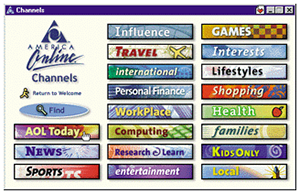

A walled garden is an analogy used in various senses in information technology. In the telecommunications and media industries, a ‘walled garden’ refers to a carrier or service provider’s control over applications, content, and media on platforms (such as mobile devices) and restriction of convenient access to non-approved applications or content. For example, in telecommunications, the services and applications accessible on any device on a given wireless network were historically tightly controlled by the mobile operators. The mobile operators determined which applications from which developers were available on a device’s home portal or home page. This has long been a central issue constraining the telecommunications sector, as developers face huge hurdles in getting their applications onto devices and into the hands of end-users.
More generally, a ‘walled garden’ refers to a closed or exclusive set of information services provided for users. This is in contrast to giving consumers unrestricted access to applications and content. Similar to a ‘real’ walled garden, a user in a walled garden is unable to escape this area unless it is through the designated entry/exit points or the walled garden is removed. Removing the walled garden is typically done by complying with the terms of removal, such as updating firmware, registering an account, or cleaning machine from infected files.
Posted in Money, Technology |
Leave a Comment »
March 20, 2012

The SynthAxe is a fretted, guitar-like MIDI controller, created by Bill Aitken, Mike Dixon, and Tony Sedivy and manufactured in England in the 1980s. It uses electronic synthesizers to produce sound and is controlled through the use of an arm resembling the neck of a guitar in form and in use.
The neck of the instrument is angled upwards from the body, and there are two independent sets of strings. The fretboard is continuously scanned and sends signals to synthesizers which produce the sound. The left set determine the pitch played, through contact with the frets on the neck and by sensing the side-to-side bending of the string. The right set of strings are velocity sensitive; these strings can be plucked, strummed or damped in the same manner as a guitar’s. A keyboard made up of nine keys can also be used to trigger notes instead of the strings. An electronic tremolo bar can be used for standard whammy bar effects, or can be redefined to produce different MIDI output (e.g., filter cutoffs, volume, etc).
Posted in Art, Money, Technology |
Leave a Comment »
March 20, 2012
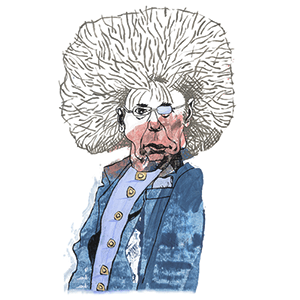
The Wrecking Crew was a nickname coined by the drummer Hal Blaine for a group of elite session musicians in Los Angeles, who earned wide acclaim in the 1960s. They backed dozens of popular singers, and were one of the most successful groups of studio musicians in music history. The Wrecking Crew’s members typically had backgrounds in jazz or classical music, but were highly versatile.
The talents of this group of ‘first call’ players were used on almost every style of recording, including television theme songs, film scores, advertising jingles, and almost every genre of American popular music, from The Monkees to Bing Crosby. Notable artists employing the Wrecking Crew’s talents included Nancy Sinatra, The Partridge Family, The Mamas & the Papas, The Carpenters, John Denver, The Beach Boys, Simon & Garfunkel, and Nat King Cole.
Posted in Art, Money |
1 Comment »
March 20, 2012

Phil Spector (b. 1939) is an American musician (piano, guitar), songwriter and record producer. He was co-owner of Philles Records (with then-business partner Lester Sill), and later owner of Phil Spector Records. In 2009 he was found guilty of second degree murder. Spector’s signature style was called the Wall of Sound. He used large amounts of echo, doubling and multiplying of musical instruments and the parts to be played, and overdubbing of recorded parts. The built-up effect gave his records an operatic, theatrical quality. The music sounded ‘bigger than life.’
The effect carried over especially well on AM radio, which was how most music was broadcast in the 1950s and 1960s. Spector said the Wall of Sound made ‘…little symphonies for kids…’ The recording artists who worked with Spector over the years included The Crystals (‘Then He Kissed Me’), The Ronettes (‘Be My Baby’), The Righteous Brothers (‘You’ve Lost That Lovin’ Feelin’,’ Gene Pitney (‘Every Breath I Take’), Darlene Love (‘(Today I Met) The Boy I’m Gonna Marry’), and Tina Turner (‘River Deep, Mountain High’). Sonny Bono and Cher were among his backup singers. He married Veronica (Ronnie) Bennett of the Ronettes, who took the name Ronnie Spector.
read more »
Posted in Art, Death, Money |
Leave a Comment »
March 20, 2012
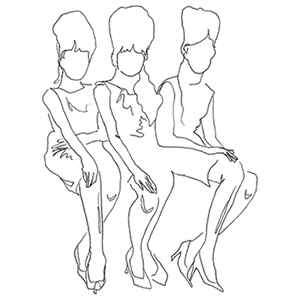
The Wall of Sound is a music production technique for pop and rock music recordings developed by record producer Phil Spector at Gold Star Studios in Los Angeles during the early 1960s. Working with such audio engineers as Larry Levine and the session musicians who became known as The Wrecking Crew, Spector created a dense, layered, reverberant sound that came across well on AM radio and jukeboxes popular in the era. He created this sound by having a number of electric and acoustic guitarists perform the same parts in unison, adding musical arrangements for large groups of musicians up to the size of orchestras, then recording the sound using an echo chamber.
To attain Spector’s signature sound, his arrangements called for large ensembles (including some instruments not generally used for ensemble playing, such as electric and acoustic guitars), with multiple instruments doubling many of the parts to create a fuller, richer sound. Spector also included orchestral instruments – strings, woodwind, brass and percussion – not previously associated with youth-oriented pop music. Spector himself called his technique ‘a Wagnerian approach to rock & roll: little symphonies for the kids.’
read more »
Posted in Art, Money, Technology |
Leave a Comment »



 The Daily Omnivore