January 27, 2012

The Bonnaroo Music and Arts Festival is an annual four day music festival created and produced by Superfly Productions and AC Entertainment, held at Great Stage Park on a 700-acre farm in Manchester, Tennessee. It hosted its tenth annual event in 2011. The main attractions of the festival are the multiple stages of live music, featuring a diverse array of musical styles including indie rock, world music, hip hop, jazz, bluegrass, country music, folk, gospel, reggae, electronica, and other alternative music. The festival began with a primary focus on jam bands, but has diversified greatly in recent years. The festival features craftsmen and artisans selling unique products, food and drink vendors, a comedy tent, a silent disco, and a cinema tent, and a Ferris wheel.
The word Bonnaroo, popularized by New Orleans R&B singer Dr. John with his 1974 album ‘Desitively Bonnaroo,’ means ‘a really good time.’ It is a Ninth Ward slang construction taken from the French ‘bon’ meaning ‘good,’ and ‘rue’ from the French ‘street,’ translating to ‘the best on the streets.’ The name was chosen both for its literal meaning and to honor the rich Louisiana music tradition. The first Bonnaroo took place in 2002 and took inspiration from music festivals like Coachella in California and Glastonbury in England.
Posted in Art, Money |
1 Comment »
January 26, 2012
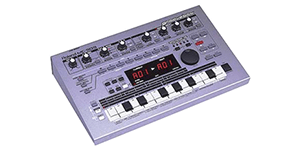
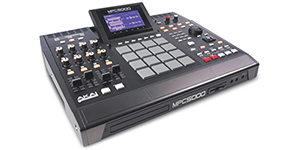
The term Groovebox was originally used by Roland corporation to refer to its MC-303 mobile music synthesizer, but the term has since entered into general use. It refers to a self-contained instrument for the production of live, loop-based electronic music with a high degree of user control facilitating improvisation.
A groovebox consists of three integrated elements: one or more sound sources, such as a drum machine, a synthesizer or a sampler, a music sequencer (recorder), and a control surface, i.e. a combination of knobs (potentiometer or rotary encoder), sliders and buttons, and display elements (LED and/or LCD).
read more »
Posted in Art, Money, Technology |
Leave a Comment »
January 26, 2012
The Cavern Club is a rock and roll club in Liverpool, England. Opened in 1957, the club had their first performance by The Beatles in 1961. Alan Sytner opened the club having been inspired by the Jazz district in Paris, where there were a number of clubs in cellars.
Sytner returned to Liverpool and wanted to open a club similar to Le Caveau in Paris. He eventually found a perfect cellar for his club — which had been used as an air raid shelter during the war. The first act to open the club was the Merseysippi Jazz Band.
read more »
Posted in Art, Money, World |
Leave a Comment »
January 26, 2012
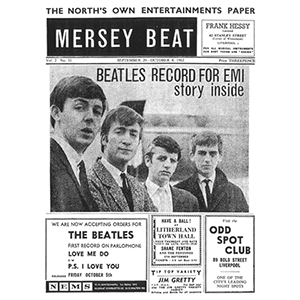
Beat music, British beat, or Merseybeat (for bands from Liverpool beside the River Mersey) is a pop and rock music genre that developed in the United Kingdom in the early 1960s. Beat music is a fusion of rock and roll, doo wop, skiffle, R&B and soul. The beat movement provided most of the bands responsible for the British invasion of the American pop charts in the period after 1964, and provided the model for many important developments in pop and rock music, including the format of the rock group around lead, rhythm and bass guitars with drums.
The exact origins of the terms Beat music and Merseybeat are uncertain. Beat music seems to have had little to do with the Beat Generation literary movement of the 1950s, and more to do with driving rhythms, which the bands had adopted from their rock and roll, rhythm and blues and soul music influences. As the initial wave of rock and roll declined in the later 1950s ‘big beat’ music, later shortened to ‘beat,’ became a live dance alternative to the balladeers like Tommy Steele who was dominating the charts.
read more »
Posted in Art, Money, World |
Leave a Comment »
January 25, 2012

The ‘Jumpman‘ logo is used by Nike to promote its Michael Jordan-related merchandise, including the famous and successful Air Jordan brand of basketball shoes. The logo is a silhouette of a studio photograph of Jordan performing a ballet move, not an actual dunk as many believe. Beginning in 1985, the Jumpman photo or logo always accompanied ‘Jordan’ branded products, even when the only word displayed on the product was ‘Jordan.’
The Air Jordan III, released in 1988, was the first Air Jordan shoe to feature the Jumpman logo, replacing the ‘Wings’ logo, which had been a feature of the Air Jordans I and II. This model was one of the most popular ever. The Jumpman logo would retain a fairly consistent look throughout the Air Jordan line’s history, except on the Air Jordan VIII, on which it was reminiscent of a peace sign. In 1993-94, Nike ran a series of Air Jordan commercials pairing Michael Jordan with Warner Brothers’ own Bugs Bunny. As a tie-in, Nike created a line of merchandise which featured a spoof of the Jumpman using Bugs’ silhouette, combined with a “Hare Jordan” caption. This led to the film ‘Space Jam.’
Posted in Games, Money |
Leave a Comment »
January 24, 2012

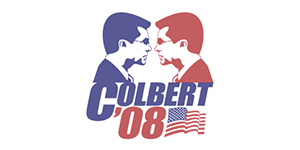
Americans for a Better Tomorrow, Tomorrow (also known as the Colbert Super PAC) is a United States political action committee (PAC) established by Stephen Colbert, who portrays a conservative political pundit on the television series ‘The Colbert Report.’ As a super PAC the organization can raise unlimited sums of money from corporations, unions and other groups, as well as wealthy individuals. Speaking in character, Colbert said the money will be raised not only for political ads, but also ‘normal administrative expenses, including but not limited to, luxury hotel stays, private jet travel, and PAC mementos from Saks Fifth Avenue and Neiman Marcus.’
During the January 12, 2012 episode of The Colbert Report, Colbert announced his plans to form an exploratory committee to lay the groundwork for his possible candidacy for ‘President of the United States of South Carolina.’ In the process, he transferred control of the Super PAC to Jon Stewart, renaming it The Definitely Not Coordinating With Stephen Colbert Super PAC.
read more »
Posted in Humor, Money, Politics |
Leave a Comment »
January 24, 2012


The 2010 midterm election marked the rise of a new political committee, dubbed ‘super PACs,’ and officially known as ‘independent-expenditure only committees,’ which can raise unlimited sums from corporations, unions and other groups, as well as individuals.
The super PACs were made possible by two judicial decisions. The first was the U.S. Supreme Court decision in Citizens United v. Federal Election Commission which held that government may not prohibit unions and corporations from making independent expenditures about politics. Soon after, in Speechnow.org v. FEC, the Federal Court of Appeals for the D.C. Circuit held that contributions to groups that only make independent expenditures could not be limited.
read more »
Posted in Money, Politics |
Leave a Comment »
January 24, 2012
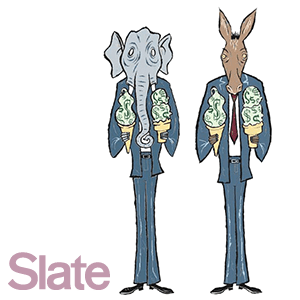
Political money in the United States is often divided into two categories, ‘hard’ money and ‘soft’ money. ‘Hard’ money is contributed directly to a candidate of a political party. It is regulated by law in both source and amount, and monitored by the Federal Election Commission (maximum $2500). ‘Soft’ money is contributed to the political party as a whole. Historically, ‘soft money’ referred to contributions made to political parties for purposes of party building and other activities not directly related to the election of specific candidates. Because these contributions were not used for specific candidate advocacy, they were not regulated by the Federal Election Campaign Act, as interpreted by the Supreme Court in Buckley v. Valeo. The Bipartisan Campaign Reform Act of 2002 (also known as McCain-Feingold) prohibited unregulated contributions to national party committees.
‘Soft money’ also refers to unlimited contributions to organizations and committees other than candidate campaigns and political parties (except, where legal, to state and local parties for use solely in state and local races). Organizations which receive ‘Soft money’ contributions are often called ‘527s,’ for the section of the tax code under which they operate. The term is generally used to refer to independent, nonprofit political organizations that are not regulated by the FEC or by a state elections commission, and are not subject to the same contribution limits as PACs. Such organizations can legally engage in political activity, but funds from ‘soft money’ contributions may not be spent on ads promoting the election or defeat of a specific candidate.
Posted in Money, Politics |
Leave a Comment »
January 24, 2012
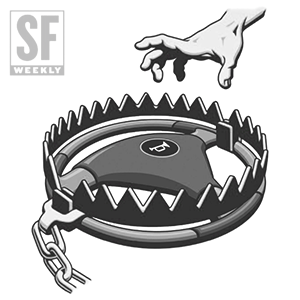
A bait car, also called a decoy car, is a vehicle used by law enforcement agencies to capture car thieves. The vehicles are modified, with features including GPS tracking and audio/video surveillance technology, and can be remotely monitored and controlled. A ‘kill switch’ may be installed in the vehicle allowing police to remotely disable the engine and lock all doors from the inside, preventing escape.
The bait car, often filled with valuable items to draw attention to it, is parked in a high auto-theft area. In some cases, the vehicle may be simply left unlocked with the keys in the ignition. When the car is stolen, officers are immediately alerted, and can monitor the vehicle and send commands to control it such as disabling the engine, locking the doors or honking the horn. Live audio/video streaming devices may be installed allowing law enforcement personnel to determine how many suspects are in the car, what they are planning and if they are armed.
Posted in Money, Politics, Technology |
Leave a Comment »
January 24, 2012
GAMAGO is a company that was started in 2001 by Greg Long and Chris Edmundson. The pair began silkscreening t-shirts with artwork from their friends in Long’s San Francisco garage. They wanted to help promote the San Francisco art scene and distract from their day jobs. Shortly after starting, one of Long’s friends, artist Tim Biskup joined them, and printed shirts with Biskup’s Gama-Goon character.
The three of them together took the basement hobby and turned it into a company. In 2006, Tim Biskup ceased his creative involvement with the company. In 2006, GAMAGO shifted their focus from apparel to gifts for the home and kitchen. 2009 saw the release of The Flipper, a guitar shaped spatula. The success of The Flipper.
Posted in Art, Money |
Leave a Comment »
January 24, 2012

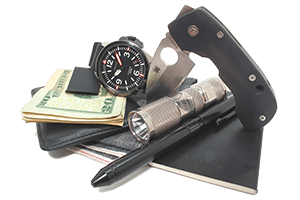
Everyday carry (EDC) refers to a small collection of tools, equipment and supplies that are carried on a daily basis. The term EDC also refers to the philosophy or spirit of ‘preparedness’ that goes along with the selection and carrying of these items. Implicit in the term is the sense that an EDC is an individual’s personal selection of equipment, arrived at after deliberation, rather than a standardized kit.
EDC items normally fit in a pocket, or small pack, or be attached to clothing. Emphasis is placed on the usefulness, accessibility and reliability of these items. As an example, the core elements of a typical EDC might include a folding pocket knife, a flashlight and a multi-tool. These items are often collected into a pack or organizer.
read more »
Posted in Money, Technology |
2 Comments »
January 24, 2012

Survivalism is a movement devoted to preparing for possible disruptions in social or political order, on scales ranging from local to international. Survivalists often have emergency medical and self-defence training, stockpile food and water, prepare for self-sufficiency, and build structures that will help them survive or ‘disappear’ (e.g. a survival retreat or underground shelter).
Anticipated disruptions include the following: clusters of natural disasters, patterns of apocalyptic planetary crises, or Earth Changes (in the form of tornadoes, hurricanes, earthquakes, blizzards, severe thunderstorms); disaster caused by the activities of humankind (chemical spills, release of radioactive materials, nuclear or conventional war, oppressive governments); societal collapse caused by the shortage or unavailability of resources such as electricity, fuel, food, or water; financial disruption or economic collapse (caused by monetary manipulation, hyperinflation, deflation, or depression); and global pandemic.
read more »
Posted in Money, Philosophy, War |
Leave a Comment »


 The Daily Omnivore