January 24, 2012


The American Preppers Network (APN) is a non-profit corporation and part of a growing international movement of survivalists who call themselves ‘preppers.’ The social network is organized by state and regional blogs and forums. The members are volunteer contributors who are dedicated to providing free information on survival, preparedness, self-sufficiency and sustainability. The individuals involved in the prepper network prefer to be called preppers instead of survivalists because they are regular people with normal lifestyles and jobs who prepare for a variety of reasons whether natural or man-made.
The network of blogs is based on the concept originally created by Riverwalker of the ‘Stealth Survival’ blog, who founded the first Preppers Network. The organization has also formed alliances with independent affiliates such as ‘Pioneer Living Survival Magazine,’ a homesteading and survival skills website for a range of survivalist, from those who just want to store extra food in case of a power cut, to people who want to embrace the ‘off the grid’ lifestyle of America’s western pioneers.
Posted in Money, Politics |
Leave a Comment »
January 24, 2012

James Surowiecki [soor-oh-wik-ee] (b. 1967) is an American journalist. He is a staff writer at ‘The New Yorker,’ where he writes a regular column on business and finance. He was born in Connecticut but grew up in Puerto Rico. He moved back to Connecticut for high school. In 1988 he graduated from the University of North Carolina. He pursued Ph.D. studies in American History on a Mellon Fellowship at Yale University before becoming a financial journalist. He currently lives in Brooklyn and is married to ‘Slate’ culture editor Meghan O’Rourke. He got his start on the Internet when he was hired from graduate school by ‘Motley Fool’ co-founder David Gardner.
In 2002, Surowiecki edited an anthology, ‘Best Business Crime Writing of the Year,’ a collection of articles from different business news sources that chronicle the fall from grace of various CEOs. In 2004, he published ‘The Wisdom of Crowds,’ in which he argued that in some circumstances, large groups exhibit more intelligence than smaller, more elite groups, and that collective intelligence shapes business, economies, societies and nations.
Posted in Language, Money |
Leave a Comment »
January 24, 2012

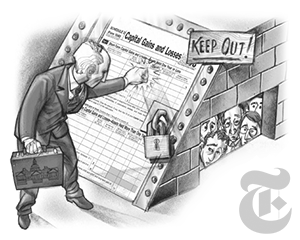
In North America, a tax shelter is generally defined as any method that recovers more than $1 in tax for every $1 spent, within 4 years. Some tax shelters are questionable or even illegal such as offshore companies that exploit differing tax rates and legislation. Others are part of financing arrangements; by paying unreasonably high interest rates to a related party, one may severely reduce the income of an investment (or even create a loss), but create a massive capital gain when one withdraws the investment. The tax benefit derives from the fact that capital gains are taxed at a lower rate than the normal investment income such as interest or dividend.
The offense of these questionable tax shelters are usually that transactions were not reported at fair market value or the interest rate was too high or too low. In general, if the purpose of a transaction is to lower tax liabilities but otherwise have no economic value, and especially when arranged between related parties, such transactions are often viewed as unethical.
read more »
Posted in Money, Politics |
Leave a Comment »
January 24, 2012


Private equity, in finance, is an asset class (investment strategy) consisting of equity securities (stocks) in operating companies that are not publicly traded on a stock exchange. A private equity investment will generally be made by a private equity firm (which specialize in just private equity), a venture capital firm (which invests in start-up companies), or an angel investor (an affluent individual who provides capital for start-ups). Each of these categories of investor has its own set of goals, preferences and investment strategies; each however providing working capital to a target company to nurture expansion, new product development, or restructuring of the company’s operations, management, or ownership.
Among the most common investment strategies in private equity are: leveraged buyouts, venture capital, growth capital, distressed investments, and mezzanine capital. In a typical leveraged buyout transaction, a private equity firm buys majority control of an existing or mature firm. This is distinct from a venture capital or growth capital investment, in which the investors (typically venture capital firms or angel investors) invest in young or emerging companies, and rarely obtain majority control.
Posted in Money, Politics |
Leave a Comment »
January 20, 2012

The analog hole is a fundamental and inevitable vulnerability in copy protection schemes. Once digital information is converted to a human-perceptible (analog) form, it is a relatively simple matter to digitally recapture that analog reproduction in an unrestricted form, thereby fundamentally circumventing any and all restrictions placed on copyrighted work.
Media publishers who use digital rights management (DRM), to restrict how a work can be used, perceive the necessity to make it visible and/or audible as a ‘hole’ in the control that DRM otherwise affords them.
read more »
Posted in Money, Politics, Technology |
Leave a Comment »
January 19, 2012

Lights out manufacturing is a methodology (or philosophy), rather than a specific process. Factories that run lights out are fully automated and require no human presence on-site. Thus, these factories can be run with the lights off. Many factories are capable of lights-out production, but very few run exclusively lights-out. Typically, workers are necessary to set up parts to be manufactured, and to remove the completed parts. As the technology necessary for lights-out production becomes increasingly available, many factories are beginning to utilize lights-out production between shifts (or as a separate shift) to meet increasing demand or to save money.
An automatic factory is a place where raw materials enter and finished products leave with little or no human intervention. One of the earliest descriptions of the automatic factory in fiction was the 1955 short story ‘Autofac.’ FANUC, the Japanese robotics company, has been operating a ‘lights out’ factory for robots since 2001. ‘Robots are building other robots at a rate of about 50 per 24-hour shift and can run unsupervised for as long as 30 days at a time. ‘Not only is it lights-out,’ says Fanuc vice president Gary Zywiol, ‘we turn off the air conditioning and heat too.’
Posted in Money, Technology |
Leave a Comment »
January 19, 2012
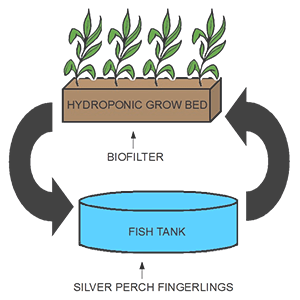
Aquaponics [ak-wuh-pon-iks] is a sustainable food production system that combines a traditional aquaculture (raising aquatic animals such as fish, crayfish or prawns in tanks) with hydroponics (cultivating plants in water) in a symbiotic environment. In the aquaculture, effluents accumulate in the water, increasing toxicity for the fish. This water is led to a hydroponic system where the by-products from the aquaculture are filtered out by the plants as vital nutrients, after which the cleansed water is recirculated back to the animals.
Aquaponic systems vary in size from small indoor or outdoor units to large commercial units, using the same technology. The systems usually contain fresh water, but salt water systems are plausible depending on the type of aquatic animal and which plants.
read more »
Posted in Food, Money, Technology |
Leave a Comment »
January 17, 2012


FreedomBox is a community project to develop, design and promote personal servers running free software for distributed social networking, email and audio/video communications. The project was announced by Columbia Law professor Eben Moglen at an ISOC (Internet Society) meeting in 2010.
The project currently describes a FreedomBox as, ‘a personal server running a free software operating system, with free applications designed to create and preserve personal privacy.’ The project aims to develop a software stack that can run on plug computers (small computers the size of a wall wart) that can easily be located in individual residences or offices. By promoting a decentralized deployment of hardware, the project hopes that FreedomBoxes will ‘provide privacy in normal life, and safe communications for people seeking to preserve their freedom in oppressive regimes.’
Posted in Money, Politics, Technology |
Leave a Comment »
January 16, 2012

Presenteeism [prez-uhn-tee-iz-uhm] is the act of attending work while sick. A topic that is at times considered its opposite, absenteeism, has historically received extensive attention in the management sciences, but presenteeism has only recently found a place in research literature. Management researchers in Europe, such as Simpson (1998), were some of the first to explore this topic, but those in epidemiology and other health related fields have also examined the effects of this behavior.
While the construct is often cited as coming to work while sick, Johns (2010) further noted that the definitions do not assign any motives to presenteeism. An employee, therefore, may come to work because he or she simply needs the money and cannot afford to take time off due to illness. Additionally, one could go to work due to a love and devotion to the job. In this case, presenteeism could be considered an act of organizational citizenship and inspire admiration from colleague. Therefore, simply viewing presenteeism as a negative act that leads to productivity loss and decreased health may be restricting potential analysis of the construct.
Posted in Health, Money |
Leave a Comment »
January 16, 2012

Gorilla Glass, manufactured by Corning, is an alkali-aluminosilicate sheet glass engineered specifically to be thin, light and damage-resistant. Its primary application is portable electronic devices with screens, such as phones and tablets. Corning experimented with chemically strengthened glass in 1960, as part of an initiative called ‘Project Muscle.’ Gorilla Glass was used in about 20 percent of the world’s approximately 200 million mobile handsets in 2010. Corning says that Gorilla Glass is RF compatible and has outstanding optical clarity, making it suitable for HD and 3-D television displays. Early in 2012, Corning announced a new version of Gorilla Glass that is 20 percent thinner, but continues to have the same scratch resistance and endurance as the original. The thinner glass will allow for greater touch sensitivity for the user.
The glass is placed in a hot bath of molten potassium salt at a temperature of approximately 400 °C (~750 °F). Smaller sodium ions leave the glass, and larger potassium ions from the salt bath replace them. These larger ions take up more room and are pressed together when the glass cools, producing a layer of compressive stress on the surface of the glass. Gorilla Glass’s special composition enables the potassium ions to diffuse far into the surface, creating high compressive stress deep into the glass. This layer of compression creates a surface that is more resistant to damage from everyday use. Like all glass, Gorilla glass can be recycled.
Posted in Money, Technology |
1 Comment »
January 15, 2012

Ester Hernandez (b. 1944) is a Chicana visual artist known for her pastels, paintings and prints primarily depicting Chicanas/Latinas. Her artwork captures time, and makes sense of the complex world we live in. She aspires to create a visual dialogue for women’s role in this new multi-cultural millennium. Her work reflects the political, social, ecological, and spiritual themes born from community pride, a commitment to political action, and an abiding sense of humor.
As a solo artist and member of Las Mujeres Muralistas, an influential San Francisco Mission district Latina women mural group in the early seventies, her career has marked her as a pioneer in the Chicana/Chicano civil rights art movement.
read more »
Posted in Art, Money, Politics |
1 Comment »
January 15, 2012

Plutocracy [ploo-tok-ruh-see] is rule by the wealthy, or power provided by wealth. The combination of both plutocracy and oligarchy is called plutarchy. The word ‘plutocracy’ is derived from the Ancient Greek root ‘ploutos,’ meaning ‘wealth’ and ‘kratos,’ meaning ‘to rule’ or ‘to govern.’
The term is generally used to describe these two distinct concepts: one of a historical nature and one of a modern political nature. The former indicates the political control of the state by an oligarchy of the wealthy. Examples of such plutocracies include the Roman Republic, some city-states in Ancient Greece, the civilization of Carthage, the Italian city-states/merchant republics of Venice, Florence, Genoa, and pre-WWII Empire of Japan zaibatsus.
read more »
Posted in Language, Money, Politics |
1 Comment »



 The Daily Omnivore