February 5, 2012
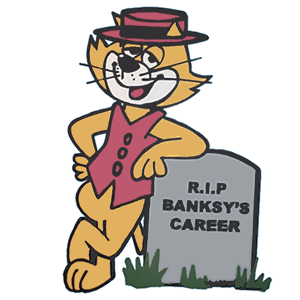
King Robbo is an English underground graffiti artist who became more widely known following a graffiti war with Banksy. Robbo painted his first train in 1985 and the ‘Merry Christmas’ train of 1988, a joint piece created with ‘Drax WD,’ received coverage in the British media.
His feud with Banksy burnished Robbo’s profile and he entered the commercial art world with a number of gallery shows and commissions in 2010. In 1985 King Robbo painted a large full color graffiti piece called ‘Robbo Incorporated’ on a wall beside Regent’s Canal in London which was only accessible by water. Over the years it became degraded with a few small pieces of graffiti over the top.
read more »
Posted in Art, Money |
Leave a Comment »
February 4, 2012
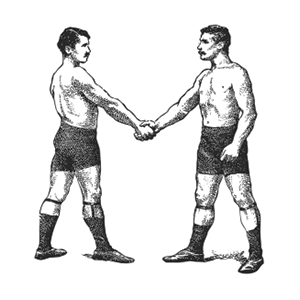
A gentlemen’s agreement is an informal agreement between two or more parties. It is typically oral, though may be written, or simply understood as part of an unspoken agreement by convention or through mutually beneficial etiquette.
The essence of a gentlemen’s agreement is that it relies upon the honor of the parties for its fulfillment, rather than being in any way enforceable. It is, therefore, distinct from a legal agreement or contract, which can be enforced if necessary. A variation on the gentlemen’s agreement is the gentlemen’s bet, wherein there is nothing to win or lose through the bet, other than the honor of winning and shame of losing.
read more »
Posted in Language, Money, Politics |
Leave a Comment »
February 2, 2012

Goldbricking, in today’s terms, generally refers to staff who use their work internet access for personal reasons while maintaining the appearance of working, which can lead to inefficiency. The term originates from the confidence trick of applying a gold coating to a brick of worthless metal. Some employees do two non-work activities at once, a practice known as multishirking. In modern usage, the practice is also known as cyberslacking, cyberloafing or cyberbludging.
Instances of goldbricking have increased markedly since broadband Internet connections became commonplace in workplaces. Before that the slow speed of dial-up connections meant that the practice was rarely worthwhile. Many firms employ surveillance software to track employees’ Internet activity in an effort to limit liability and improve productivity. Other methods used to reduce goldbricking include installation of proxy servers to prevent programs from accessing resources like Internet Relay Chat, AOL Instant Messenger, or some online gambling services, strict disciplinary measures for employees found goldbricking, and carrot and stick measures like providing free or subsidized Internet access for employees outside of working hours.
read more »
Posted in Language, Money, Technology |
Leave a Comment »
January 31, 2012

Pixy Stix is a powdered candy packaged in a wrapper that resembles a drinking straw. Pixy Stix used to be made by Sunline which was started 1952 in St. Louis. Originally it was a drink mix in the late 1940s, sold as Frutola, but J. Fish Smith found that kids were eating the sweet & sour powder right from the package instead of putting it in water. He shifted the name to Fruzola and added a spoon. Later it was repackaged with a dipping candy stick as Lik-M-Aid and also sold in little straws called Pixy Stix. It wasn’t until parents complained about the grainy, sticky powder that Sunline came up with a compressed tablet form, the SweeTart in 1963.
The candy is usually poured into the mouth from the wrapper, which is made out of plastic (large size) or paper (small). The ingredients in Pixy Stix are as follows: Dextrose, Citric Acid, less than 2% artificial and natural flavors. Pixy Stix do not contain protein or essential vitamins or minerals.
Posted in Food, Money |
Leave a Comment »
January 30, 2012

A maven [mey-vuhn] is a trusted expert in a particular field, who seeks to pass knowledge on to others. The word maven comes from Hebrew, via Yiddish, and means one who understands, based on an accumulation of knowledge. The Hebrew word ‘mevin’ (‘one who understands’) relates to the word ‘binah,’ which denotes understanding or wisdom in general.
It was first recorded in English around 1952, and popularized in the United States in the 1960s by a series of commercials created by Martin Solow for Vita Herring, featuring The Beloved Herring Maven. In network theory and sociology, a maven is someone who has a disproportionate influence on other members of the network. The role of mavens in propagating knowledge and preferences has been established in various domains, from politics to social trends.
Posted in Language, Money, Science |
Leave a Comment »
January 30, 2012

The Pareto [pah-re-taw] principle states that, for many events, roughly 80% of the effects come from 20% of the causes. Business-management consultant Joseph M. Juran suggested the principle and named it after Italian economist Vilfredo Pareto, who observed in 1906 that 80% of the land in Italy was owned by 20% of the population. He then carried out surveys on a variety of other countries and found to his surprise that a similar distribution applied. He even found that 20% of the pea pods in his garden contained 80% of the peas.
It is a common rule of thumb in business; e.g., ‘80% of your sales come from 20% of your clients.’ The Pareto principle is only tangentially related to Pareto efficiency, which was also introduced by the same economist. Pareto developed both concepts in the context of the distribution of income and wealth among the population.
Posted in Money, Politics, World |
Leave a Comment »
January 30, 2012
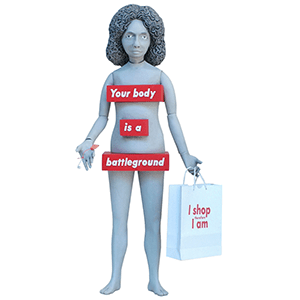
Barbara Kruger (b. 1945) is an American conceptual artist. Much of her work consists of black-and-white photographs overlaid with declarative captions—in white-on-red Futura Bold Oblique or Helvetica Ultra Condensed. The phrases in her works often include use of pronouns such as ‘you,’ ‘your,’ ‘I,’ ‘we,’ and ‘they.’ Much of Kruger’s work engages the merging of found photographs from existing sources with pithy and aggressive text that involves the viewer in the struggle for power and control that her captions speak to. In their trademark white letters against a slash of red background, some of her instantly recognizable slogans read ‘I shop therefore I am,’ and ‘Your body is a battleground.’
Much of her text questions the viewer about feminism, consumerism, and individual autonomy and desire, although her black-and-white images are culled from the mainstream magazines that sell the very ideas she is disputing. Kruger juxtaposes imagery and text critical of sexism; the circulation of power within cultures is a recurring motif in her work. A larger category that threads through her work is the appropriation and alteration of existing images. The importance of appropriation art in contemporary culture lay in its ability to play with preponderant imagistic and textual conventions: to mash up meanings and create new ones.
Posted in Art, Money, Politics |
Leave a Comment »
January 27, 2012

The Bonnaroo Music and Arts Festival is an annual four day music festival created and produced by Superfly Productions and AC Entertainment, held at Great Stage Park on a 700-acre farm in Manchester, Tennessee. It hosted its tenth annual event in 2011. The main attractions of the festival are the multiple stages of live music, featuring a diverse array of musical styles including indie rock, world music, hip hop, jazz, bluegrass, country music, folk, gospel, reggae, electronica, and other alternative music. The festival began with a primary focus on jam bands, but has diversified greatly in recent years. The festival features craftsmen and artisans selling unique products, food and drink vendors, a comedy tent, a silent disco, and a cinema tent, and a Ferris wheel.
The word Bonnaroo, popularized by New Orleans R&B singer Dr. John with his 1974 album ‘Desitively Bonnaroo,’ means ‘a really good time.’ It is a Ninth Ward slang construction taken from the French ‘bon’ meaning ‘good,’ and ‘rue’ from the French ‘street,’ translating to ‘the best on the streets.’ The name was chosen both for its literal meaning and to honor the rich Louisiana music tradition. The first Bonnaroo took place in 2002 and took inspiration from music festivals like Coachella in California and Glastonbury in England.
Posted in Art, Money |
1 Comment »
January 26, 2012


The term Groovebox was originally used by Roland corporation to refer to its MC-303 mobile music synthesizer, but the term has since entered into general use. It refers to a self-contained instrument for the production of live, loop-based electronic music with a high degree of user control facilitating improvisation.
A groovebox consists of three integrated elements: one or more sound sources, such as a drum machine, a synthesizer or a sampler, a music sequencer (recorder), and a control surface, i.e. a combination of knobs (potentiometer or rotary encoder), sliders and buttons, and display elements (LED and/or LCD).
read more »
Posted in Art, Money, Technology |
Leave a Comment »
January 26, 2012
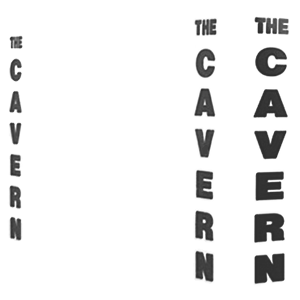
The Cavern Club is a rock and roll club in Liverpool, England. Opened in 1957, the club had their first performance by The Beatles in 1961. Alan Sytner opened the club having been inspired by the Jazz district in Paris, where there were a number of clubs in cellars.
Sytner returned to Liverpool and wanted to open a club similar to Le Caveau in Paris. He eventually found a perfect cellar for his club — which had been used as an air raid shelter during the war. The first act to open the club was the Merseysippi Jazz Band.
read more »
Posted in Art, Money, World |
Leave a Comment »
January 26, 2012
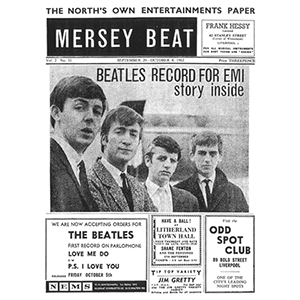
Beat music, British beat, or Merseybeat (for bands from Liverpool beside the River Mersey) is a pop and rock music genre that developed in the United Kingdom in the early 1960s. Beat music is a fusion of rock and roll, doo wop, skiffle, R&B and soul. The beat movement provided most of the bands responsible for the British invasion of the American pop charts in the period after 1964, and provided the model for many important developments in pop and rock music, including the format of the rock group around lead, rhythm and bass guitars with drums.
The exact origins of the terms Beat music and Merseybeat are uncertain. Beat music seems to have had little to do with the Beat Generation literary movement of the 1950s, and more to do with driving rhythms, which the bands had adopted from their rock and roll, rhythm and blues and soul music influences. As the initial wave of rock and roll declined in the later 1950s ‘big beat’ music, later shortened to ‘beat,’ became a live dance alternative to the balladeers like Tommy Steele who was dominating the charts.
read more »
Posted in Art, Money, World |
Leave a Comment »
January 25, 2012

The ‘Jumpman‘ logo is used by Nike to promote its Michael Jordan-related merchandise, including the famous and successful Air Jordan brand of basketball shoes. The logo is a silhouette of a studio photograph of Jordan performing a ballet move, not an actual dunk as many believe. Beginning in 1985, the Jumpman photo or logo always accompanied ‘Jordan’ branded products, even when the only word displayed on the product was ‘Jordan.’
The Air Jordan III, released in 1988, was the first Air Jordan shoe to feature the Jumpman logo, replacing the ‘Wings’ logo, which had been a feature of the Air Jordans I and II. This model was one of the most popular ever. The Jumpman logo would retain a fairly consistent look throughout the Air Jordan line’s history, except on the Air Jordan VIII, on which it was reminiscent of a peace sign. In 1993-94, Nike ran a series of Air Jordan commercials pairing Michael Jordan with Warner Brothers’ own Bugs Bunny. As a tie-in, Nike created a line of merchandise which featured a spoof of the Jumpman using Bugs’ silhouette, combined with a “Hare Jordan” caption. This led to the film ‘Space Jam.’
Posted in Games, Money |
Leave a Comment »




