November 12, 2011

In poker, a hole cam (or pocket cam) is a camera that displays a player’s face-down cards (known as ‘hole cards’) to television viewers. The hole cam became popular in 1999 when it was first used by the BBC. In some cases, the camera is placed under a glass panel in the table and players are instructed to place their cards over the glass. In other cases, the rail of the table is elevated and a small camera placed within the rail, and players are instructed to examine their cards in the usual manner, but while they’re in front of the camera.
The goal in both cases is to allow for the filming and broadcast of the player’s hole cards to the spectators without exposing them to the other players. This has led to the audience garnering a greater understanding of what is going on at the table and an increased interest in the thought processes of the players.
read more »
Posted in Games, Money, Technology |
1 Comment »
November 10, 2011

Slow playing (also called sandbagging or trapping) is deceptive play in poker that is roughly the opposite of bluffing: betting weakly or passively with a strong holding rather than betting aggressively with a weak one. The flat call is one such play. The objective of the passive slow play is to lure opponents into a pot who might fold to a raise, or to cause them to bet more strongly than they would if the player had played aggressively (bet or raised). Slow playing sacrifices protection against hands that may improve and risks losing the pot-building value of a bet if the opponent also checks.
Against observant opponents, the frequency of bluffing affects the effectiveness of slow playing, and vice versa. If a player’s table image is that of an aggressive bluffer, slow playing is less important because his opponents will be more willing to call his usual bets and raises. Similarly, if a player is perceived as a ‘trappy’ player (uses frequent slow plays), his bluffs are less likely to be respected (i.e., more likely to be called) because his opponents expect him to slow play his strong hands. Fishing for the overcall occurs when the last card a player is dealt makes him a very strong hand, an opponent in front of him bets, and there are more opponents yet to act behind him. While the player might normally raise with his hand, just calling may encourage the opponents behind him to overcall when they would have folded to a raise.
Posted in Games, Money |
Leave a Comment »
November 10, 2011
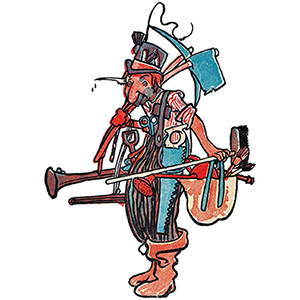
‘Jack of all trades, master of none’ refers to a person that is competent in many skills but not outstanding in any particular one. The earliest recorded versions of the phrase do not contain the second part (indeed they are broadly positive in tone).
A Jack of all trades may be a master of integration, as such an individual knows enough from many learned trades and skills to be able to bring their disciplines together in a practical manner. This person is a generalist rather than a specialist. A person who is exceptional in many disciplines is known as a polymath or a ‘Renaissance man’; a typical example is Leonardo da Vinci. The phrase became increasingly cynical in connotation during the 20th century.
read more »
Posted in Language, Money |
1 Comment »
November 10, 2011

Microblogging is a broadcast medium in the form of blogging. A microblog differs from a traditional blog in that its content is typically smaller in both actual and aggregate file size. Microblogs ‘allow users to exchange small elements of content such as short sentences, individual images, or video links.’ As with traditional blogging, microbloggers post about topics ranging from the simple, such as ‘what I’m doing right now,’ to the thematic, such as ‘sports cars.’ Commercial microblogs also exist, to promote websites, services and/or products, and to promote collaboration within an organization. Some microblogging services offer features such as privacy settings, which allow users to control who can read their microblogs, or alternative ways of publishing entries besides the web-based interface. These may include text messaging, instant messaging, E-mail, or digital audio.
The first microblogs were known as tumblelogs. The term was coined by ‘why the lucky stiff’ in a blog post in 2005, while describing Christian Neukirchen’s Anarchaia: ‘Blogging has mutated into simpler forms (specifically, link- and mob- and aud- and vid- variant), but I don’t think I’ve seen a blog like Chris Neukirchen’s Anarchaia, which fudges together a bunch of disparate forms of citation (links, quotes, flickrings) into a very long and narrow and distracted tumblelog.’
read more »
Posted in Money, Politics, Technology |
1 Comment »
November 10, 2011

Artificial scarcity describes the scarcity of items even though the technology and production capacity exists to create an abundance. The term is aptly applied to non-rival resources, i.e. those that do not diminish due to one person’s use, although there are other resources which could be categorized as artificially scarce. The most common causes are monopoly pricing structures, such as those enabled by intellectual property rights or by high fixed costs in a particular marketplace. The inefficiency associated with artificial scarcity is formally known as a deadweight loss.
An example of artificial scarcity is often used when describing proprietary, or closed-source, computer software. Any software application can be easily duplicated billions of times over for a relatively cheap production price (an initial investment in a computer, an internet connection, and any power consumption costs; and these are already fixed costs in most environments). On the margin, the price of copying software is next to nothing, costing only a small amount of power and a fraction of a second. Things like serial numbers, license agreements, and intellectual property create artificial scarcity, and give monetary value to otherwise free copies. Technocrats argue that if the price system were removed, there would be no personal incentive to artificially create scarcity in products, and thus something similar to the open source model of distribution would dominate.
read more »
Posted in Money, Politics, Technology |
Leave a Comment »
November 10, 2011

Post scarcity is a hypothetical form of economy or society, in which things such as goods, services and information are free, or practically free. This would be due to an abundance of fundamental resources (matter, energy and intelligence), in conjunction with sophisticated automated systems capable of converting raw materials into finished goods, allowing manufacturing to be as easy as duplicating software.
Scarcity is the fundamental economic problem of having seemingly unlimited human needs and wants, in a world of limited resources. It states that society has insufficient productive resources to fulfill all human wants and needs. Alternatively, scarcity implies that not all of society’s goals can be pursued at the same time; trade-offs are made of one good against others. As such, the term post-scarcity economics may be somewhat paradoxical. To quote a 1932 essay by Lionel Robbins, economics is ‘the science which studies human behavior as a relationship between ends and scarce means which have alternative uses.’
read more »
Posted in Money, Politics, Technology |
Leave a Comment »
November 10, 2011


A vanity label (related to the term ‘vanity press’) is an informal name given to a record label founded as a wholly or partially owned subsidiary of another, larger and better established (at least at the time of the vanity label’s founding) record label, where the subsidiary label is (at least nominally) controlled by a successful recording artist, designed to allow this artist to release music by other artists he or she admires. The parent label handles the production and distribution and funding of the vanity label, but the album is usually released with the vanity label brand name prominent. Usually, the artist/head of the vanity label is signed to the parent label, and this artist’s own recordings will be released under the vanity label’s brand name.
Creating a vanity label can be an attractive idea for the parent label primarily as a ‘perk’ to keep a successful artist on the label’s roster happy, providing an ego boost and a venue to bring fellow artists to the public’s attention. The parent label also hopes that the vanity label’s association with the famous artist will entice that artist’s audience to purchase other records on the vanity label, although only a relatively small number of new artists introduced by vanity labels have gone on to become major successes in their own right.
Posted in Art, Money |
Leave a Comment »
November 10, 2011
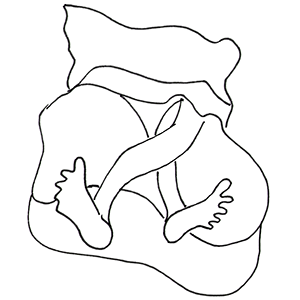
Restless legs syndrome (RLS) or Willis-Ekbom disease is a neurological disorder characterized by an irresistible urge to move one’s body to stop uncomfortable or odd sensations. It most commonly affects the legs, but can affect the arms, torso, and even phantom limbs. Moving the affected body part modulates the sensations, providing temporary relief. RLS sensations can most closely be compared to an itching or tickling in the muscles, like ‘an itch you can’t scratch’ or an unpleasant ‘tickle that won’t stop.’ The sensations typically begin or intensify during quiet wakefulness, such as when relaxing, reading, studying, or trying to sleep.
As with many diseases with diffuse symptoms, there is controversy among physicians as to whether RLS is a distinct syndrome. The U.S. National Institute of Neurological Disorders and Stroke publishes an information sheet characterizing the syndrome but acknowledging it as a difficult diagnosis. Physicians generally consider it a real entity that has specific diagnostic criteria., but many doctors express the view that the incidence of restless leg syndrome is exaggerated by manufacturers of drugs used to treat it. Others believe it is an underrecognized and undertreated disorder.
Posted in Drugs, Health, Money |
Leave a Comment »
November 10, 2011

In popular usage, eccentricity [ek-suhn-tris-i-tee] (also called quirkiness or kookiness) refers to unusual or odd behavior on the part of an individual. This behavior would typically be perceived as unusual or unnecessary, without being demonstrably maladaptive. Eccentricity is contrasted with ‘normal’ behavior, the nearly universal means by which individuals in society solve given problems and pursue certain priorities in everyday life. People who consistently display benignly eccentric behavior are labeled as ‘eccentrics.’
Derived from Greek ekkentros, ‘out of the center,’ the word ‘eccentric’ first appeared in English in 1551 as an astronomical term meaning ‘a circle in which the earth, sun, etc. deviates from its center.’ Five years later, in 1556, an adjective form of the word was added. 129 years later, in 1685, the definition evolved from the literal to the figurative, and eccentric began being used to describe unconventional or odd behavior. A noun form of the word – a person who possesses and exhibits these unconventional or odd qualities/behaviors – didn’t appear until 1832.
read more »
Posted in Health, Language, Money |
1 Comment »
November 10, 2011
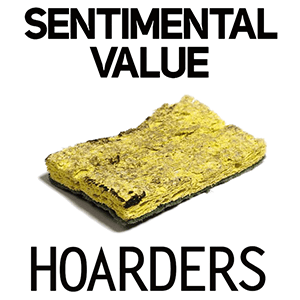
Compulsive hoarding (or disposophobia) is the acquisition of possessions (and failure to use or discard them) in excess of socially normative amounts, even if the items are worthless, hazardous, or unsanitary. Compulsive hoarding may impair mobility and interfere with basic activities, including cooking, cleaning, hygiene, sanitation, bathroom use and sleeping. It is not clear whether compulsive hoarding is an isolated disorder, or rather a symptom of another condition, such as obsessive-compulsive disorder.
While there is no clear definition of compulsive hoarding in accepted diagnostic criteria (such as the current DSM), there are several defining features: the acquisition of, and failure to discard, a large number of possessions that appear to be useless or of limited value; living spaces sufficiently cluttered so as to preclude activities for which those spaces were designed; significant distress or impairment in functioning caused by the hoarding; and reluctance or inability to return borrowed items; as boundaries blur, impulsive acquisitiveness could sometimes lead to stealing or kleptomania.
read more »
Posted in Health, Money |
2 Comments »
November 9, 2011

The development of the airliner has had a big effect on the wine business. It has made it easier for individuals to directly supervise viticulture and winemaking in different countries across the globe, rather than exchanging ideas by mail as they have for centuries. This means closer control of the wine, and has seen new technologies such as Drip irrigation, trellis systems, and other developments spread rapidly. This all leads to a homogenous product, influenced more by the winemaker’s background than the local terroir and history.
On the other hand, that ‘history’ often included overoaking and dirty facilities that partly oxidized the wines, which are rapidly fixed by flying winemakers. Many of the early flying winemakers were Australians who had been educated in modern techniques, and used the fact that their autumn was six months ahead of the Northern Hemisphere to ‘moonlight’ when things were quiet at home. They have had some dramatic success in improving the quality of Old World wines, particularly in the South of France and in the former Communist countries.
read more »
Posted in Food, Money, Technology |
Leave a Comment »
November 9, 2011
The term ‘Super Tuscan‘ describes any Tuscan red wine that does not adhere to traditional blending laws for the region. For example, Chianti Classico wines are made from a blend of grapes with Sangiovese as the dominant variety in the blend. Super Tuscans often use other grapes, especially cabernet sauvignon, making them ineligible for classification under the traditional rules.
In 1968 Azienda Agricola San Felice produced the first ever ‘Super Tuscan’ called Vigorello, and in the 1970s Piero Antinori, whose family had been making wine for more than 600 years, also decided to make a richer wine by eliminating the white grapes from the Chianti blend, and instead adding Bordeaux varietals (namely, Cabernet Sauvignon and Merlot).
read more »
Posted in Food, Money, World |
Leave a Comment »


 The Daily Omnivore