June 21, 2011


Mr. Brainwash (‘MBW’) is a pseudonym for Thierry Guetta in the film ‘Exit Through the Gift Shop,’ directed by Banksy. Guetta is presented in the 2010 film as a French citizen who now lives in Los Angeles, having been a proprietor of a clothing store and videographer who evolved into a street artist and gallery artist, influenced by the street artists he documented through video over the years.
According to the film, Guetta was first introduced to street art by his cousin, the French street artist, Invader. The film includes authentic documentation of Space Invader, Shepard Fairey, Banksy, and other well-known street artists at work on the streets, and is directed by Banksy with significant participation from Fairey.
read more »
Posted in Art, Money |
1 Comment »
June 21, 2011

The Wall of Sound was an enormous public address system designed specifically for the Grateful Dead’s live performances by audio engineer Owsley ‘Bear’ Stanley. Used in 1974, the Wall of Sound fulfilled the band’s desire for a distortion-free sound system that could also serve as its own monitoring system. The Wall of Sound was the largest concert sound system built at that time.
As Stanley described it, ‘The Wall of Sound is the name some people gave to a super powerful, extremely accurate PA system that I designed and supervised the building of in 1973 for the Grateful Dead. It was a massive wall of speaker arrays set behind the musicians, which they themselves controlled without a front of house mixer. It did not need any delay towers to reach a distance of half a mile from the stage without degradation.’
read more »
Posted in Art, Money, Technology |
Leave a Comment »
June 21, 2011
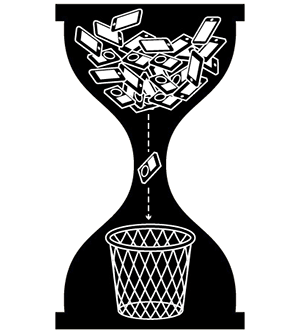
Planned obsolescence in industrial design is a policy of deliberately planning a product with a limited useful life, so it will become obsolete or nonfunctional after a certain period of time. Planned obsolescence has potential benefits for a producer because to obtain continuing use of the product the consumer is under pressure to purchase again, whether from the same manufacturer (a replacement part or a newer model), or from a competitor.
For an industry, planned obsolescence stimulates demand by encouraging purchasers to buy sooner if they still want a functioning product. Built-in obsolescence is used in many different products. There is, however, the potential backlash of consumers who learn that the manufacturer invested money to make the product obsolete faster; such consumers might turn to a producer (if any exists) that offers a more durable alternative.
read more »
Posted in Money, Technology |
1 Comment »
June 21, 2011
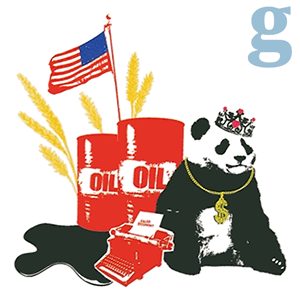
A false economy refers to an action which saves money at the beginning but which, over a longer period of time, results in more money being wasted than being saved. For example, if a city government decided to purchase the least expensive automobiles for use by city workers, it might be termed false economy, as cheap automobiles have a record of traditionally needing more frequent repairs in the long term and the repair costs will eradicate any initial savings garnered.
The concept is similar to planned obsolescence, whereby the lower initial cost of a false economy attracts buyers mostly on the basis of low cost, who may later be at a disadvantage.
read more »
Posted in Money |
Leave a Comment »
June 16, 2011
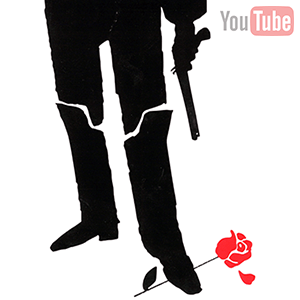
Barry Lyndon is a 1975 period film directed by Stanley Kubrick based on the 1844 novel ‘The Luck of Barry Lyndon’ by William Makepeace Thackeray which recounts the exploits of an 18th century a man of the Irish gentry trying to become a member of the English aristocracy.
The film is divided into two halves each headed with a title card: ‘I. By What Means Redmond Barry Acquired the Style and Title of Barry Lyndon.’ ‘II. Containing an Account of the Misfortunes and Disasters Which Befell Barry Lyndon.’ The epilogue read: ‘It was in the reign of King George III that the aforesaid personages lived and quarreled; good or bad, handsome or ugly, rich or poor, they are all equal now.’
read more »
Posted in Art, Money |
Leave a Comment »
June 16, 2011

Tapatío is a hot sauce, produced in Vernon, California, that can be found at many grocery stores in the United States.
It rates 3,000 on the scale of Scoville units (Tabasco sauce is 2100 Scovilles) ‘Tapatío’ is the name given to people from Guadalajara, Jalisco. The company’s founders come from Guadalajara.
Posted in Food, Money |
Leave a Comment »
June 15, 2011

BC Bud is a generic term for several varieties of potent cannabis grown in the Canadian province of British Columbia. The term has almost become a brand name, especially in California, Oregon, Alaska, Idaho and Washington, to where most of the province’s cannabis is exported.
The United States Drug Enforcement Administration considers BC production to be a major problem, given the porous United States-Canada border, and has launched several major initiatives to cut down on its flow, including collaborative operations targeting marijuana activists such as Marc Emery.
read more »
Posted in Drugs, Money, Politics |
Leave a Comment »
June 14, 2011


Vaporware is a term in the computer industry that describes a product, typically computer hardware or software, that is announced to the general public but is never actually released nor officially canceled. The term also generally applies to a product that is announced months or years before its release, and for which public development details are lacking.
The word has been applied to a growing range of products including consumer electronics, automobiles, and some stock trading practices. At times, vendors are criticized for intentionally producing vaporware in order to keep customers from switching to competitive products that offer more features.
read more »
Posted in Money, Technology |
Leave a Comment »
June 12, 2011

Every year in the United States, there are approximately 2.5 million weddings, and the wedding industry has grown into a $40 billion a year market. The wedding industry is a modern phenomenon. In the past, women were viewed as possessions and sold as wives; today, couples spend thousands of dollars to have their ideal of the perfect day of union.
Until the Middle Ages, the Wedding ceremony or betrothal involved of the exchange of a ring or a piece of fruit, a kiss, and then the bride moved into the groom’s home. Today however, the ceremonial aspect of marriage has become more extravagant and more detailed. The average couple will spend up to $4,411 for the engagement ring, and $2,067 for his and hers wedding bands, and the average American couple today spends more than $20,000 on their wedding. For a middle class family, this can be about 51 percent of their income.
read more »
Posted in Money |
Leave a Comment »
June 7, 2011

An early adopter (or lighthouse customer or trendsetter) is an early consumer of a given company, product, or technology; in politics, fashion, art, and other fields, this person would be referred to as a trendsetter. The term originates from communications scholar Everett M. Rogers’ 1962 sociology text, ‘Diffusion of Innovations.’ Early adopters often provide considerable and candid feedback to help vendors refine future product releases, as well as the associated means of distribution, service, and support.
The relationship is synergistic, with the customer having early (and sometimes unique, or at least uniquely early) access to a new product or technology, but also serving as a test subject. In exchange for being an early adopter, and thus being exposed to the problems, risks, and annoyances common to early-stage product testing and deployment, the lighthouse customer is sometimes given especially attentive vendor assistance and support, even to the point of having personnel at the customer’s work site to assist with implementation. The customer is sometimes given preferential pricing, terms, and conditions, although new technology is very often expensive.
Posted in Money, Technology |
Leave a Comment »
June 6, 2011

Chiclets is a brand of candy coated chewing gum made by Cadbury Adams. The colors of chiclets are: yellow, green, orange, red, white, and pink. The product’s name is derived from Nahuatl word tziktli, in English chicle, the substance from which chewing gum was traditionally made. The original flavor was peppermint but many flavors have been added and discontinued over the decades since the introduction in 1906.
In some countries the term ‘Chiclet’, ‘Chic’ or ‘Chicla’ is often used to refer to any brand and/or type of chewing gum. In Spain, Peru, and many other Spanish or Portuguese speaking countries, as a result of the brand’s popularity the term ‘Chicle’ is used in every-day language to refer to chewing gum, this ias particular in Mexico as the Nahuatl term derives from there. Furthermore, in Iran any type of chewing gum is referred to as ‘Adams’. The gum is the biggest gum brand in the Middle East, especially in Egypt where it has a huge market share. In South America, and Thailand, Chiclets is also produced, but the brand has been extended to include various formats like bubble gum and stick gum.
Posted in Food, Money, World |
Leave a Comment »
June 6, 2011
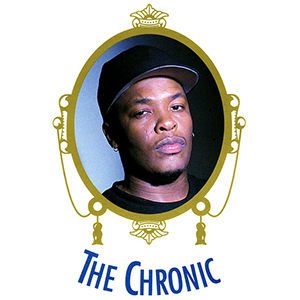
Andre Romelle Young (b. 1965), primarily known by his stage name Dr. Dre, is an American record producer, rapper, and record executive. He is the founder and current CEO of Aftermath Entertainment and a former co-owner and artist of Death Row Records, also having produced albums for and overseeing the careers of many rappers signed to those record labels, such as Snoop Dogg, Eminem and 50 Cent. As a producer he is credited as a key figure in the popularization of West Coast G-funk, a style of rap music characterized as synthesizer-based with slow, heavy beats.
Dr. Dre began his career in music as a member of the World Class Wreckin’ Cru and he later found fame with the influential gangsta rap group N.W.A with Eazy-E, Ice Cube, Mc Ren, and DJ Yella which popularized the use of explicit lyrics in rap to detail the violence of street life. His 1992 solo debut, ‘The Chronic,’ released under Death Row Records, led him to become one of the best-selling American performing artists of 1993. In 1996, he left Death Row to establish his own label, Aftermath Entertainment. Under that label he produced and released a solo album titled ‘2001’ in 1999.
read more »
Posted in Art, Money |
Leave a Comment »



 The Daily Omnivore