January 3, 2011

The Coffee Party USA is a grassroots political movement that was formed in January, 2010, as an alternative to the Tea Party movement, and has since grown into an increasingly diverse organization. Its mission states that it is based on the underlying principle that the government is ‘not the enemy of the people, but the expression of our collective will, and that we must participate in the democratic process in order to address the challenges we face as Americans’ Its goals include getting cooperation in government and removing corporate influence from politics.
Posted in Humor, Politics |
Leave a Comment »
January 3, 2011


Academi (previously known as Xe Services and Blackwater Worldwide)—is a private military company founded in 1997 by former Navy SEALs Erik Prince and Al Clark. Academi is currently the largest of the U.S. State Department’s three private security contractors, and provided diplomatic security services in Iraq to the United States federal government on a contractual basis. Academi also has a research and development wing that was responsible for developing the Grizzly APC (an armored urban combat vehicle) along with other military technology. The company’s headquarters is located in Arlington County, Virginia.
In explaining Blackwater’s purpose in 1997, Prince stated that ‘We are trying to do for the national security apparatus what FedEx did for the Postal Service.’ Blackwater USA received its first government contract after the bombing of the USS Cole off of the coast of Yemen in October 2000. Blackwater trained over 100,000 sailors. Documents obtained from the Iraq War documents leak of 2010 argue that Blackwater employees committed serious abuses in Iraq, including killing civilians.
read more »
Posted in Money, Politics, War |
Leave a Comment »
January 1, 2011
TED (Technology Entertainment and Design) is a global set of conferences curated by the American private non-profit Sapling Foundation, formed to disseminate ‘ideas worth spreading.’ over 700 talks are available free online. TED was founded in 1984, and the conference was held annually from 1990 in Monterey, California. The speakers are given a maximum of 18 minutes to present their ideas in the most innovative and engaging ways they can
Past presenters include Bill Clinton, Jane Goodall, Malcolm Gladwell, Al Gore, Richard Dawkins, Bill Gates, and Larry Page and Sergey Brin. TED’s current curator is the British former computer journalist and magazine publisher Chris Anderson. TED’s early emphasis was largely technology and design, consistent with a Silicon Valley center of gravity. The events are now held in Long Beach and Palm Springs in the U.S. as well as in Europe and Asia, offering live streaming of the talks. They address an increasingly wide range of topics within the research and practice of science and culture.
Posted in Politics, Technology, World |
Leave a Comment »
January 1, 2011


Neurodiversity is an idea which asserts that atypical neurological development is a normal human difference that is to be recognized and respected as any other human variation. Differences may arise in ways of processing information, including language, sound, images, light, texture, taste, or movement. The concept of neurodiversity is embraced by some autistic individuals and people with related conditions.
Some groups apply the concept of neurodiversity to conditions potentially unrelated to autism such as bipolar disorder, ADHD, schizophrenia, circadian rhythm disorders, developmental speech disorders, Parkinson’s disease (and other motor control disorders), and dyslexia.
Posted in Health, Politics |
Leave a Comment »
January 1, 2011
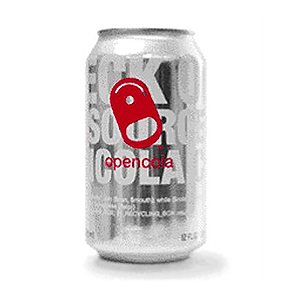
OpenCola is a brand of cola unique in that the instructions for making it are freely available and modifiable. Anybody can make the drink, and anyone can modify and improve on the recipe as long as they, too, license their recipe under the GNU General Public License. Since recipes are, by themselves, not copyrightable, the legal basis for this is untested.
The original version 1.0 was released on 27th January 2001. Current Version is 1.1.3. Although originally intended as a promotional tool to explain free and open source software, the drink took on a life of its own and 150,000 cans were sold. The Toronto-based company Opencola founded by Grad Conn, Cory Doctorow, and John Henson became better known for the drink than the software it was supposed to promote. Laird Brown, the company’s senior strategist, attributes its success to a widespread mistrust of big corporations and the ‘proprietary nature of almost everything.’
Posted in Food, Money, Politics |
Leave a Comment »
December 22, 2010
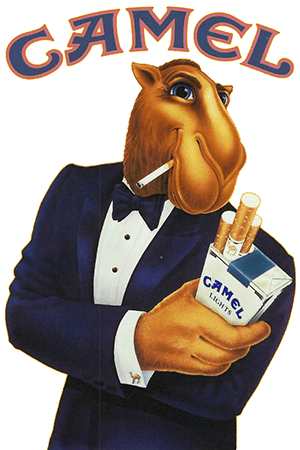
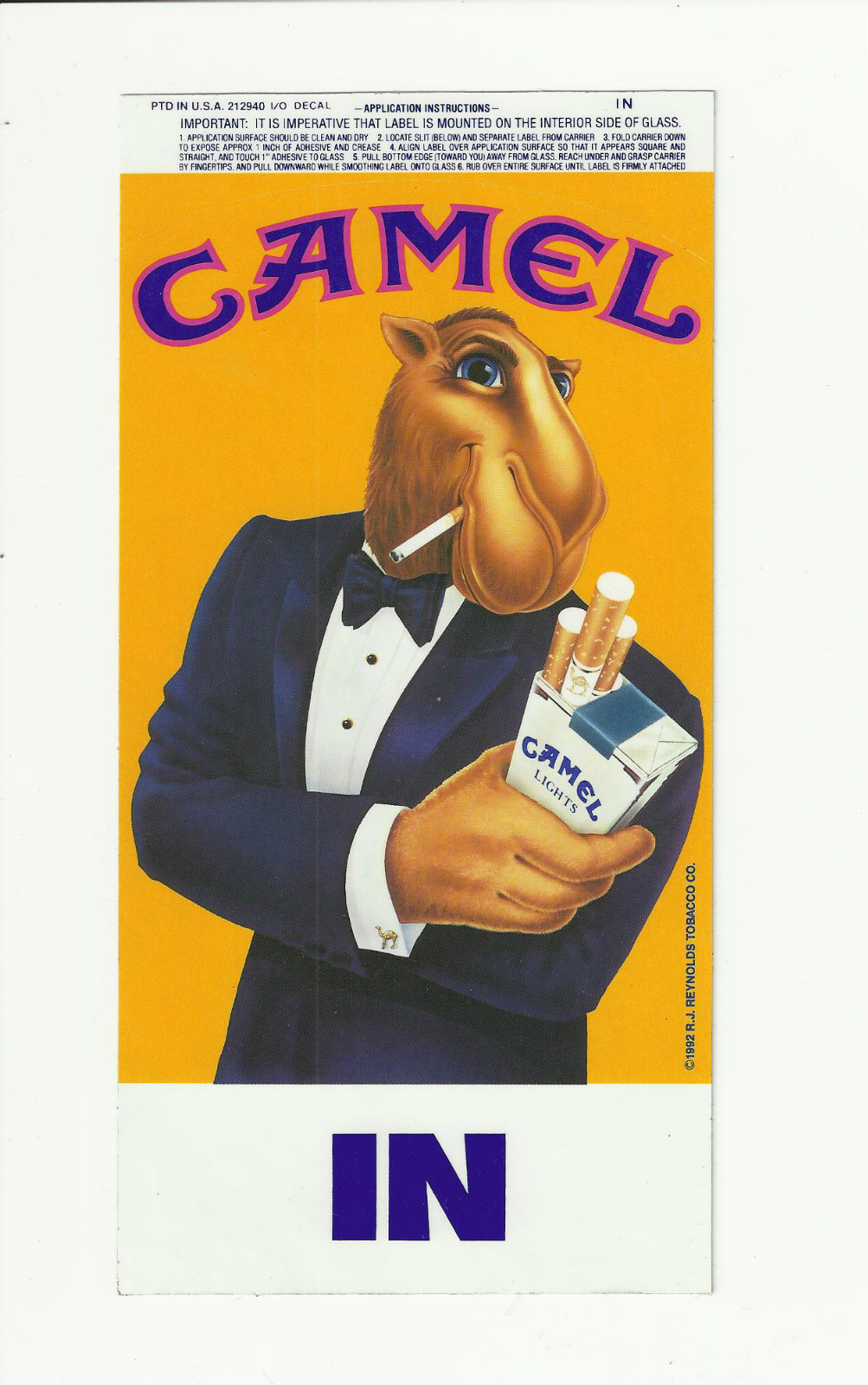
Joe Camel (officially Old Joe) was the advertising mascot for Camel cigarettes from 1987 – 1997, appearing in magazine advertisements, billboards, and other print media. The U.S. marketing team of R. J. Reynolds, looking for an idea to promote Camel’s 75th anniversary, re-discovered Joe in the company’s archives in the late 1980s. The caricatured camel was created in 1974 by a British artist, Billy Coulton, for a French advertising campaign that subsequently ran in other countries in the 1970s.
In 1991, the ‘Journal of the American Medical Association’ published a study showing that by age six nearly as many children could correctly respond that ‘Joe Camel’ was associated with cigarettes as could respond that the ‘Disney Channel’ logo was associated with Mickey Mouse, and alleged that the ‘Joe Camel’ campaign was targeting children, despite R. J. Reynolds’ contention that the campaign had been researched only among adults and was directed only at the smokers of other brands.
read more »
Posted in Drugs, Money, Politics |
Leave a Comment »
December 20, 2010

The hammer and sickle is a part of communist symbolism and its usage indicates an association with Communism, a Communist party, or a Communist state. It features a hammer and a sickle overlapping each other. The two tools are symbols of the industrial proletariat and the peasantry; placing them together symbolizes the unity between industrial and agricultural workers. This emblem was conceived during the Bolshevik Revolution. It is best known from having been incorporated into the red flag of the Soviet Union, along with the Red Star.
read more »
Posted in Money, Politics, World |
Leave a Comment »
December 19, 2010

The New Yorker cover (March 29, 1976) ‘View of the World from 9th Avenue,’ has come to represent Manhattan’s telescoped interpretation of the country beyond the Hudson River. The cartoon showed the supposedly limited mental geography of Manhattanites. The image shows Manhattan’s 9th Avenue, 10th Avenue, and the Hudson River (appropriately labeled), while the top half depicts the rest of the world. The rest of the United States is drawn as a square, with a thin brown strip along the Hudson representing New Jersey, the names of five cities (Los Angeles, Washington D.C., Las Vegas, Kansas City, and Chicago) and three states (Texas, Utah, and Nebraska) are scattered among a few rocks for the U.S. beyond New Jersey.
The Pacific Ocean, perhaps twice as wide again as the Hudson, separates the U.S. from three flattened land masses labeled China, Japan, and Russia. The illustration, depicting New Yorkers’ self-image, inspired many similar works, including the poster for the 1984 film Moscow on the Hudson; that movie poster led to a lawsuit, Steinberg v. Columbia Pictures Industries, Inc., 663 F. Supp. 706 (S.D.N.Y. 1987), which held that Columbia Pictures violated the copyright that Steinberg held on his work. Another homage was created for the cover of The Economist newspaper’s March 21–27, 2009 issue entitled ‘How China sees the world.’
Posted in Art, Humor, Politics |
Leave a Comment »
December 17, 2010

Oscar Zeta Acosta (1935 – disappeared 1974) was an American attorney, politician, and minor novelist, perhaps best known for his friendship with the American author Hunter S. Thompson, who characterized him as his Samoan Attorney, Dr. Gonzo, in his novel ‘Fear and Loathing in Las Vegas.’ In 1967, Acosta began working as an antipoverty attorney for the East Legal Aid Society in Oakland, California. In 1968 he moved to East Los Angeles and joined the Chicano Movement as an activist attorney. His controversial defense earned him the ire of the LAPD, who considered the ‘Brown Pride’ movement more dangerous than the Black Panthers.
In the summer of 1967 Acosta met Hunter S. Thompson, who would write an article on Acosta and the injustice in the barrios of East L.A. for ‘Rolling Stone’ in 1971 titled ‘Strange Rumblings in Aztlan.’ When working on the article, Thompson and Acosta visited Las Vegas (inspiring Hunter’s later novel on the city). In 1972, Acosta disappeared while traveling in Mexico. His son, Marco Acosta, believes that he was the last person to talk to his father. In May 1972, Acosta telephoned his son, telling him that he was ‘about to board a boat full of white snow.’ Marco is later quoted in reference to his father’s disappearance: ‘The body was never found, but we surmise that probably, knowing the people he was involved with, he ended up mouthing off, getting into a fight, and getting killed.’
Posted in Drugs, Humor, Politics |
Leave a Comment »
December 16, 2010

The current drug policy of Portugal was put in place in 2000, to be legally effective from July 2001. The EU had in effect forced the Portuguese government to make radical measures to reduce Portugal’s record high incidence of HIV/AIDS. In 1999 Portugal had the highest rate of HIV amongst injecting drug users in the European Union.
read more »
Posted in Drugs, Health, Politics |
Leave a Comment »
December 15, 2010


The United States Cyber Command (USCYBERCOM), located on Ft. Meade in Maryland, was officially activated in May of 2010. The command is led by National Security Agency Director General Keith B. Alexander. Elements of the command are responsible for the evolving mission of Computer Network Attack (CNA) – destroying networks and penetrating enemy computers to steal or manipulate data, and taking down command-and-control systems, for example. Some of these capabilities are known as Special Technical Operations (STO).
It has been suggested within the military that the cultures of the Army, Navy and Air Force are fundamentally incompatible with that of cyber warfare, and requires a fourth branch, a cyber-warfare branch. COL John Surdu (chief of staff of the United States Army Research, Development and Engineering Command) stated that the three major services are ‘properly positioned to fight kinetic wars, and they value skills such as marksmanship, physical strength, the ability to leap out of airplanes and lead combat units under enemy fire. These skills are irrelevant in cyber warfare.’
Posted in Politics, Technology, War |
Leave a Comment »
December 15, 2010
The Gini coefficient is a measure of statistical dispersion developed by the Italian statistician Corrado Gini in 1912. It has found application in the study of inequalities in disciplines as diverse as economics, health science, ecology, chemistry and engineering. It is commonly used as a measure of inequality of income or wealth. Worldwide, on a scale of 0 (total equality) to 1 (total inequality) Gini coefficients for income range from approximately 0.23 (Sweden) to 0.70 (Namibia) although not every country has been assessed.
Posted in Politics, Science, World |
Leave a Comment »