December 10, 2010

‘Red tape‘ is a derisive term for excessive regulation or rigid conformity to formal rules that is considered redundant or bureaucratic and hinders or prevents action or decision-making. It is usually applied to governments, corporations and other large organizations. Red tape generally includes the filling out of seemingly unnecessary paperwork, obtaining of unnecessary licenses, having multiple people or committees approve a decision and various low-level rules that make conducting one’s affairs slower, more difficult, or both.
The origins of the term are somewhat obscure, but it is first noted in historical records in the 16th century, when Henry VIII besieged Pope Clement VII with around eighty or so petitions for the annulment of his marriage to Catherine of Aragon. The documents were rolled, sealed and bound with the obligatory red tape, as was the custom. To this day, most U.K. barristers’ briefs are tied in a pink-colored ribbon known as ‘pink tape’ or ‘legal tape.’ All American Civil War veterans’ records were bound in red tape, and the difficulty in accessing them led to the modern American use of the term. Karl Marx wrote about the phenomenon of changing from one person in control of a complete task, to having multiple people each with specialties in specific tasks. He saw this occurring as society shifts from a Seigneurial system to a capitalist system.
Posted in Language, Politics |
Leave a Comment »
December 10, 2010

Gonzo journalism is a style of journalism that is written subjectively, often including the reporter as part of the story via a first-person narrative. The word Gonzo was first used in 1970 to describe an article by Hunter S. Thompson, who later popularized the style. The term has since been applied to other subjective artistic endeavors.
Gonzo journalism tends to favor style over accuracy and often uses personal experiences and emotions to provide context for the topic or event being covered. It disregards the ‘polished’ edited product favored by newspaper media and strives for a more gritty approach. Use of quotations, sarcasm, humor, exaggeration, and profanity is common.
read more »
Posted in Humor, Language, Politics |
Leave a Comment »
December 9, 2010
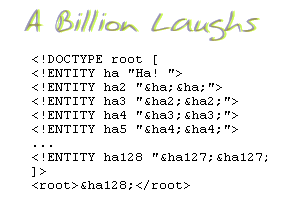
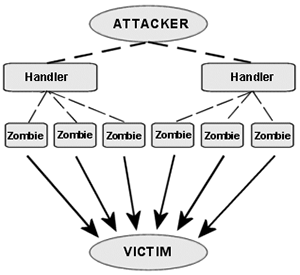
A denial-of-service attack (DoS attack) or distributed denial-of-service attack (DDoS attack) is an attempt to make a computer resource unavailable to its intended users. Perpetrators of DoS attacks typically target sites or services hosted on high-profile web servers such as banks, credit card payment gateways, and even root nameservers. The term is generally used with regards to computer networks, but is not limited to this field, for example, it is also used in reference to CPU resource management. DoS attacks are prosecuted in a number of nations under a variety of computer crime laws. They can also constitute acts of cyberwarfare.
One common method of attack involves saturating the target machine with external communications requests, such that it cannot respond to legitimate traffic, or responds so slowly as to be rendered effectively unavailable. In general terms, DoS attacks are implemented by either forcing the targeted computer(s) to reset, or consuming its resources so that it can no longer provide its intended service or obstructing the communication media between the intended users and the victim so that they can no longer communicate adequately.
Posted in Politics, Technology, War |
Leave a Comment »
December 9, 2010
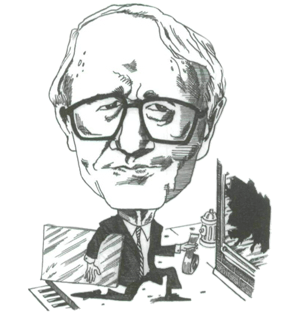
Broken windows theory states that monitoring and maintaining urban environments in a well-ordered condition prevents vandalism as well as an escalation into more serious crime, i.e. failure to replace a broken window invites further vandalism to the building and neighborhood. It is a criminological theory introduced in an 1982 article in the ‘Atlantic Monthly’ by social scientists James Q. Wilson and George L. Kelling, which has received support from several empirical studies, and has also been the subject of a large body of criticism. Former NY mayor, Rudy Giuliani was a proponent of the broken windows theory, and aggressively policed minor offenses like subway fare evasion, public urination, and ‘squeegee men,’ and other panhandlers. Crime dropped precipitously during Giuliani’s tenure, but so did crime nationwide during a period of extended economic growth in the 1990s.
A successful strategy for preventing vandalism, according to the theory, is to fix the problems when they are small. Repair the broken windows within a short time, a day or a week, and the tendency is that vandals are much less likely to break more windows or do further damage. Clean up the sidewalk every day, and the tendency is for litter not to accumulate (or for the rate of littering to be much less). The theory thus makes two major claims: that further petty crime and low-level anti-social behavior will be deterred, and that major crime will, as a result, be prevented. Criticism of the theory has tended to focus only on the latter claim.
Posted in Politics |
Leave a Comment »
December 9, 2010

The parable of the broken window was introduced by French economist and political theorist Frédéric Bastiat in his 1850 essay Ce qu’on voit et ce qu’on ne voit pas (That Which Is Seen and That Which Is Unseen) to illustrate the hidden costs associated with destroying property of others. The parable, also known as the broken window fallacy, demonstrates how the law of unintended consequences affects economic activity people typically see as beneficial.
read more »
Posted in Money, Politics, War |
Leave a Comment »
December 7, 2010
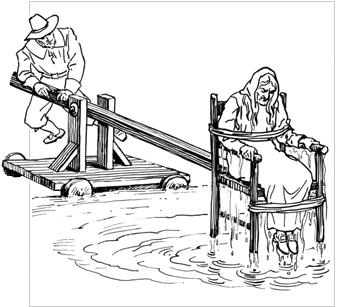
Ducking-stools and cucking-stools are chairs formerly used for punishment. They were both instruments of social humiliation and censure, primarily for the offense of scolding or back biting, and less often for sexual offenses like having an illegitimate child or prostitution. They were technical devices which formed part of the wider method of law enforcement through social humiliation.
Most were simply chairs into which the victim could be tied and exposed at her door or the site of her offence and publicly shamed. Some were on wheels and could be dragged around the parish. Some were put on poles so that they could be plunged into water, hence ‘ducking’ stool.
read more »
Posted in Language, Philosophy, Politics |
Leave a Comment »
December 7, 2010

Kangura was a Kinyarwanda- and French-language magazine in Rwanda that served to stoke ethnic hatred in the run-up to the Rwandan Genocide. It was established in 1990, following the invasion of the rebel Rwandan Patriotic Front (RPF), and continued publishing up to the genocide. Sponsored by the dominant MRND party and edited by founder Hassan Ngeze, the magazine was a response to the RPF-sponsored Kanguka, adopting a similar informal style.
‘Kangura’ was a Kinyarwanda word meaning ‘wake others up,’ as opposed to ‘Kanguka,’ which meant ‘wake up.’ The magazine was the print equivalent to the later-established Radio Télévision Libre des Mille Collines (RTLM), publishing articles harshly critical of the RPF and of Tutsis generally. Its sensationalist news was passed by word-of-mouth through the largely illiterate population. Copies of Kangura were read in public meetings and, as the genocide approached, during Interahamwe militia rallies.
Posted in Language, Politics, War |
Leave a Comment »
December 7, 2010

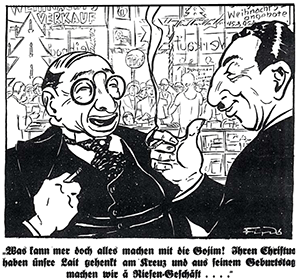
Der Stürmer (literally, ‘The Stormer;’ or more accurately, ‘The Attacker’) was a weekly Nazi newspaper published from 1923 to the end of World War II in 1945. It was a significant part of the Nazi propaganda machinery and was vehemently anti-Semitic. Unlike the ‘Völkischer Beobachter’ (‘The People’s Observer’), the official party paper which gave itself an outwardly serious appearance, the tabloid-style ‘Der Stürmer’ often ran obscene materials such as anti-Semitic caricatures and accusations of blood libel, pornography, anti-Catholic, anti-capitalist and anti-reactionary propaganda. The paper originated at Nuremberg; the first copy was published April 20, 1923. Its circulation grew over time, distributing to a large percentage of the German population as well as Argentina, Brazil, Canada and the United States.
‘Der Stürmer’ was best-known for its effective anti-semitic caricatures, which revealed Jews as ugly characters with exaggerated facial features and misshapen bodies. Many of these drawing were the work of Philipp Rupprecht, known as Fips, who was one of the best-known anti-Semitic cartoonists, his virulent attacks wedding ‘Jewish capitalists’ with ‘Jewish Communism.’ At the bottom of the title page there was always the motto ‘Die Juden sind unser Unglück!’ (‘The Jews are our misfortune!’), coined by German historian, Heinrich von Treitschke in the 1880s. The paper’s other motto was: ‘Deutsches Wochenblatt zum Kampfe um die Wahrheit’ (‘German Weekly Newspaper in the Fight for Truth’).
Posted in Language, Politics, War |
Leave a Comment »
December 7, 2010
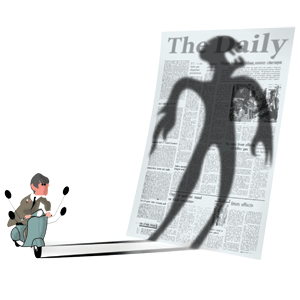
A folk devil is a person or group of people who are portrayed in folklore or the media as outsiders and deviant, and are blamed for crimes or other sorts of social problems. The pursuit of folk devils frequently intensifies into a mass movement that is called a moral panic. When a moral panic is in full swing, the folk devils are the subject of loosely organized but pervasive campaigns of hostility through gossip and the spreading of urban legends. The concept of the folk devil was introduced by sociologist Stanley Cohen in 1972, in his study ‘Folk Devils and Moral Panics,’ which analyzed media controversies concerning the Mods and Rockers subcultures in the United Kingdom of the 1960s.
The basic pattern of agitations against folk devils can be seen in the history of witch hunts and similar manias of persecution (Christian Europeans branded adherents of the rival faiths folk devils). Minorities and immigrants have often been seen as folk devils; in the long history of anti-Semitism, which frequently targeted Jews with allegations of dark, murderous practices, such as blood libel; or the Roman persecution of Christians (blaming the military reverses suffered by the Roman Empire on the Christians’ abandonment of paganism). In modern times, political and religious leaders in many nations have sought to present atheists and secularists as deviant outsiders who threaten the social and moral order.
Posted in Language, Politics, War |
Leave a Comment »
December 7, 2010

Area code 321 is the area code serving Brevard County, Florida and home to the Kennedy Space Center. It has been in use since November 1, 1999, and was assigned to the area after a successful petition drive due to the Space Coast’s impact on the county (if pronounced properly – ‘three, two, one’– the code resembles the countdown which launches the many spacecraft from Cape Canaveral).
Posted in Humor, Politics, Technology |
Leave a Comment »
December 4, 2010

The Scramble for Africa, also known as the Race for Africa or African fever, was a process of invasion, attack, occupation, and annexation of African territory by European powers during the New Imperialism period, between 1881 and World War I in 1914. As a result of the heightened tension between European states in the last quarter of the 19th century, the partitioning of Africa may be seen as a way for the Europeans to eliminate the threat of a Europe-wide war over Africa.
Popular European ideas in the 19th century also aided the partitioning of Africa. The eugenics movement and racism helped to foster European expansionist policy. The last 20 years of the nineteenth century saw transition from ‘informal imperialism’ of control through military influence and economic dominance to that of direct rule. Many African polities, states and rulers (such as the Ashanti, the Abyssinians, the Moroccans and the Dervishes) sought to resist this wave of European aggression.
Posted in Politics, War, World |
Leave a Comment »
December 3, 2010
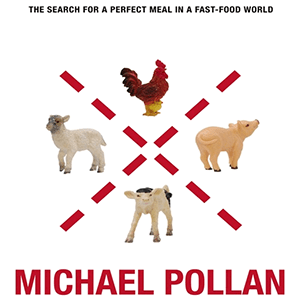
The Omnivore’s Dilemma: A Natural History of Four Meals is a nonfiction book by Michael Pollan published in 2006.
As omnivores – the most unselective eaters – humans are faced with a wide variety of food choices, resulting in a dilemma. Pollan investigates industrial food, organic food, and foraged food.
read more »
Posted in Food, Money, Politics |
Leave a Comment »
.png/1024px-Ducking-Stool_1_(PSF).png "ducking stool")





