July 16, 2014

Napster was a peer-to-peer (P2P) music sharing application first developed in 1999 by Shawn Fanning at Northeastern University. The original program was available for three years before being shut down by a court order for copyright violations. The company’s brand and other assets was subsequently acquired at a bankruptcy proceeding by Roxio, maker of CD burning software. In its second incarnation Napster became an online music store until it was bought by music streaming site Rhapsody in late 2011.
Fanning lead the original company along with his uncle John Fanning and entrepreneur Sean Parker (who would go on to make billions as an early employee of Facebook). Later companies and projects successfully followed its P2P file sharing example such as Gnutella, Freenet, and many others. Some services, like LimeWire, Grokster, Madster and the original eDonkey network, were brought down or changed due to similar circumstances.
read more »
Posted in Money, Politics, Technology |
Leave a Comment »
July 14, 2014


Neo-Luddism is a philosophy opposing many forms of modern technology. According to a manifesto drawn up by the ‘Second Luddite Congress’ in 1996: Neo-Luddism is ‘a leaderless movement of passive resistance to consumerism and the increasingly bizarre and frightening technologies of the Computer Age.’ The name is based on the historical legacy of the British Luddites, textile artisans who rebelled against the Industrial Revolution and newly developed labor-saving machinery that threatened their livelihoods. Both the original Luddites and their modern counterparts are characterized by the practice of destroying or avoiding technological equipment as well as advocating simple living.
Neo-Luddism stems from the concept that technology has a negative impact on individuals, their communities and the environment. It also seeks to examine the unknown effects that new technologies might unleash. The modern Neo-Luddite movement has connections with the anti-globalization movement, anarcho-primitivism (a political critique of the origins and progress of civilization), radical environmentalism, and Deep Ecology (a contemporary environmental philosophy advocating for the inherent worth of living beings regardless of their instrumental utility to humans). The word Luddite is also used as ‘a derogatory term applied to anyone showing vague technophobic leanings.’
read more »
Posted in Politics, Technology |
Leave a Comment »
July 11, 2014
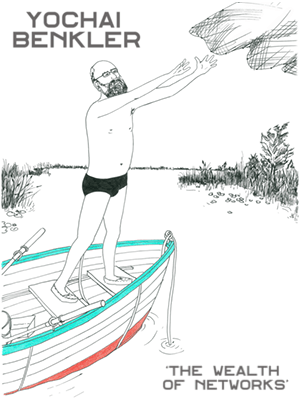

Open-source economics is an economic platform (a two-sided market with two distinct user groups that provide each other with network benefits) based on open collaboration for the production of software, services, or other products. First applied to the open-source software industry, this economic model may be applied to a wide range of enterprises. The system requires work or investment to be carried out without an expressed expectation of return; products or services are produced through collaboration between users and developers; there is no direct individual ownership of the enterprise itself.
The structure of open source is based on user participation. According to technology law professor Yochai Benkler, ‘networked environment makes possible a new modality of organizing production: radically decentralized, collaborative, and non-proprietary; based on sharing resources and outputs among widely distributed, loosely connected individuals who cooperate with each other without relying on either market signals or managerial commands.’
read more »
Posted in Money, Politics, Technology |
1 Comment »
July 1, 2014

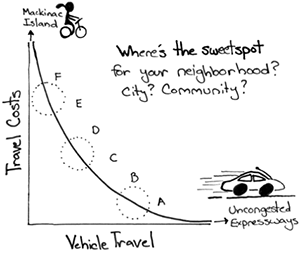
Induced demand, or latent demand, refers to the phenomenon that after supply increases, more of a good is consumed. This is entirely consistent with the economic theory of supply and demand; however, the idea has become important in the debate over the expansion of transportation systems, and is often used as an argument against widening roads, such as major commuter roads. It is considered by some to be a contributing factor to urban sprawl.
Latent demand has been recognized by road traffic professionals for many decades. J. J. Leeming, a British road-traffic engineer and county surveyor between 1924 and 1964, described the phenomenon is his 1969 book: ‘Motorways and bypasses generate traffic, that is, produce extra traffic, partly by inducing people to travel who would not otherwise have done so by making the new route more convenient than the old, partly by people who go out of their direct route to enjoy the greater convenience of the new road, and partly by people who use the towns bypassed because they are more convenient for shopping and visits when through traffic has been removed.’
read more »
Posted in Money, Politics, Technology |
Leave a Comment »
June 18, 2014


Gamesmanship is the use of dubious (although not technically illegal) methods to win or gain a serious advantage in a game or sport. It has been described as ‘Pushing the rules to the limit without getting caught, using whatever dubious methods possible to achieve the desired end.’ It may be inferred that the term derives from the idea of playing for the game (i.e., to win at any cost) as opposed to sportsmanship, which derives from the idea of playing for sport. The term originates from British author Stephen Potter’s humorous 1947 book, ‘The Theory and Practice of Gamesmanship (or the Art of Winning Games without Actually Cheating).’
Potter cites the origin of gamesmanship to be a tennis match in which he and the philosopher C. E. M. Joad competed against two younger and fitter men who were outplaying them fairly comfortably. On returning a serve, Joad hit the ball straight into the back-netting twelve feet behind the back-line. While the opponents were preparing for the next serve, Joad ‘called across the net, in an even tone: ‘Kindly state clearly, please, whether the ball was in or out.’ Being young, polite university students, their opponents offered to replay the point, but Joad declined. Because they were young and polite, the slight suggestion by Joad that their etiquette and sportsmanship were in question was extremely off-putting, and distracted them for the rest of contest. Potter and Joad went on to win the match.
read more »
Posted in Games, Politics |
Leave a Comment »
June 17, 2014
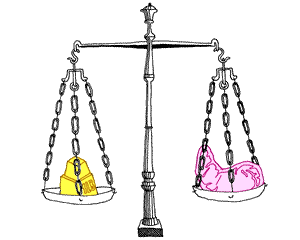
The letter of the law versus the spirit of the law is an idiomatic antithesis (a common expression where two opposites are introduced for contrasting effect): When one obeys the letter of the law but not the spirit, one is obeying the literal interpretation of the words (the ‘letter’) of the law, but not the intent of those who wrote the law. Conversely, when one obeys the spirit of the law but not the letter, one is doing what the authors of the law intended, though not necessarily adhering to the literal wording.
‘Law’ originally referred to legislative statute, but in the idiom may refer to any kind of rule. Intentionally following the letter of the law but not the spirit may be accomplished through exploiting technicalities, loopholes, and ambiguous language.
read more »
Posted in Language, Philosophy, Politics |
Leave a Comment »
June 13, 2014

Chronocentrism has been defined as ‘the egotism that one’s own generation is poised on the very cusp of history.’ The term had been used earlier in a study about attitudes to ageing in the workplace. Chronocentricity (‘only seeing the value of one’s own age cohort’) described the tendency for younger managers to hold negative perceptions of the abilities or other work-related competencies of older employees. This type of discrimination is a form of ageism.
Another usage is related to ethnocentrism (judging another culture solely by the values and standards of one’s own culture). By comparison, chronocentrism is perceiving and judging a culture’s historical values in terms of contemporary standards. An example of this usage is racism. In times prior to the advances of the civil rights movement, racist views and public expression were much more acceptable than they are today. This results in a tendency to judge those then making such statements in a harsher light.
Posted in Language, Philosophy, Politics |
1 Comment »
June 12, 2014
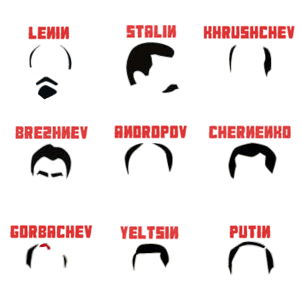
Bald–hairy is a common Russian joke that there is, apparently, a strict rule applying to the country’s politics for the latest two centuries: a bald (or balding) state leader is succeeded by a non-bald (‘hairy’) one, and vice versa. Whilst this pattern is most likely a coincidence, it has held true since 1825 (with the exception of Georgy Malenkov, who was Premier of the Soviet Union from 1953 to 1955), starting from Nicholas I. However, some videos of Joseph Stalin at the Potsdam Conference showed that he was balding.
Nicholas I’s son Alexander II formed the first ‘bald–hairy’ pair of the sequence with his father. The current pair of Russian rulers are the balding Vladimir Putin and the hairy Dmitry Medvedev. Putin was the president from 2000 until 2008, Medvedev held the post until 2012, and Putin became president again in 2012.
read more »
Posted in Humor, Politics, World |
1 Comment »
May 28, 2014


‘Thank God for Mississippi’ is a common adage in the US, particularly in the south, that is generally used when discussing rankings of states (e.g. educational achievement, overall health, poverty rate, quality of life). Since the state of Mississippi generally ranks at the bottom of such lists, residents of other states ranking near the bottom frequently proclaim, ‘Thank God for Mississippi,’ for sparing them from the shame of finishing in last place.
The saying has been attributed since before the induction of Alaska and Hawaii as states in 1959, and is especially common in Alabama, which shares significant cultural and historical ties with its neighbor and former Mississippi Territory co-constituent. Its use is also noted in nearby Arkansas and other frequently low-ranking states such as West Virginia and Texas.
Posted in Humor, Politics |
Leave a Comment »
May 14, 2014
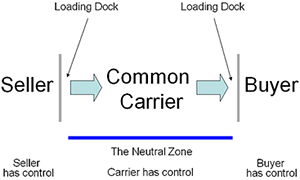
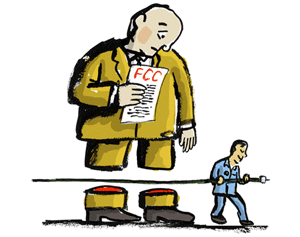
Common carrier is a legal term for a company that transports goods or people and is responsible for any loss in transit. Such services are offered to the general public under license or authority provided by a regulatory body, which may create, interpret, and enforce its regulations upon the common carrier (subject to judicial review) with independence and finality, as long as it acts within the bounds of the enabling legislation.
A common carrier is distinguished from a contract carrier, which transports goods for only a certain number of clients and that can refuse to transport goods for anyone else, and from a private carrier (a company that transports only their own goods). A common carrier holds itself out to provide service to the general public without discrimination (to meet the needs of the regulator’s quasi judicial role of impartiality toward the public’s interest) for the ‘public convenience and necessity.’
read more »
Posted in Money, Politics, Technology |
Leave a Comment »
May 13, 2014

Mirrors for princes refers to a genre of political writing during the Middle Ages (5th to the 15th century) and the Renaissance (14th to the 17th century). They are best known in the form of textbooks which directly instruct kings or lesser rulers on certain aspects of rule and behavior, but in a broader sense, the term is also used to cover histories or literary works aimed at creating images of kings for imitation or avoidance.
They were often composed at the accession of a new king, when a young and inexperienced ruler was about to come to power. They could be viewed as a species of self-help book. Possibly the best known European ‘mirror’ is ‘Il Principe’ (‘The Prince’) (c. 1513) by Machiavelli, although this was not a typical example.
Posted in Language, Politics |
Leave a Comment »
May 6, 2014

The Long Peace is a term for the historical period following the end of World War II in 1945. The ensuing half century was marked by the absence of major wars between the great powers of the period, the USA and the USSR, who were locked in a Cold War. Following the collapse of the Soviet Union in 1991 and the rise of China as a major power, there followed two decades of continued absence of direct conflict between major states, though lesser military conflicts occurred.
It is speculated that the obvious political errors leading to World War I and World War II with their consequent horrors and, thereafter, the acquisition of thermonuclear weapons by the opposing powers of the United States and the Soviet Union exerted a restraining influence on the leaderships of the major powers. A jockular expression in Europe to describe the strangely long stretch of peace is: ‘It has been 2,000 years since an army has not crossed the Rhine for so long a time.’
Posted in Politics, War, World |
Leave a Comment »


 The Daily Omnivore