September 25, 2013
Ronald Dworkin (1931 – 2013) was an American philosopher and scholar of constitutional law. His theory of law as integrity, in which judges interpret the law in terms of consistent and communal moral principles, especially justice and fairness, is among the most influential contemporary theories about the nature of law.
Dworkin advocated a ‘moral reading’ of the United States Constitution, and an interpretivist approach to law and morality. He was a frequent commentator on contemporary political and legal issues, particularly those concerning the Supreme Court of the United States, often in the pages of ‘The New York Review of Books.’
read more »
Posted in Philosophy, Politics |
Leave a Comment »
September 16, 2013

Moral Mazes is a 1988 book from sociologist Robert Jackall that documents an investigation into the world of corporate managers in the United States. In the introduction, Jackall writes that he ‘went into these organizations to study how bureaucracy – the prevailing organizational form of our society – shapes moral consciousness.’ He called the book, ‘an interpretive sociological account of how managers think the world works.’
Jackall describes the ‘fundamental rules of corporate life’: ‘(1) You never go around your boss. (2) You tell your boss what he wants to hear, even when your boss claims that he wants dissenting views. (3) If your boss wants something dropped, you drop it. (4) You are sensitive to your boss’s wishes so that you anticipate what he wants; you don’t force him, in other words, to act as a boss. (5) Your job is not to report something that your boss does not want reported, but rather to cover it up. You do your job and you keep your mouth shut.’
read more »
Posted in Language, Money, Politics |
2 Comments »
September 11, 2013

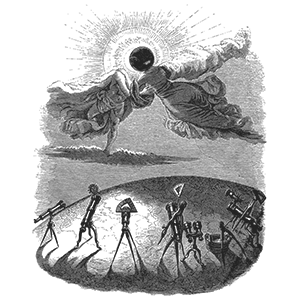
The phrase “the empire on which the sun never sets” has been used with variations to describe certain global empires that were so extensive that there was always at least one part of their territory in daylight.
It was originally used for the Spanish Empire in the 16th and 17th centuries, and for the British Empire in the 19th and early 20th centuries. German historian of language Georg Büchmann traces the idea to a speech in Herodotus’ Histories, made by Xerxes I of Persia before invading Greece.
read more »
Posted in Language, Politics, World |
3 Comments »
September 3, 2013
Left-libertarianism is a school of political thought that stresses equally both individual freedom and social justice. There are three overlapping subgroups within left-libertarianism:
1) Anti-authoritarian, anti-propertarian varieties of left-wing politics, and in particular of the socialist movement. 2) The Steiner–Vallentyne school, a political philosophy in the liberal tradition which embraces egalitarian views concerning natural resources, holding that it is not legitimate for someone to claim private ownership of such resources to the detriment of others. 3) Left-wing market anarchism, which stresses the socially transformative potential of non-aggression and free markets.
read more »
Posted in Money, Philosophy, Politics |
1 Comment »
August 25, 2013
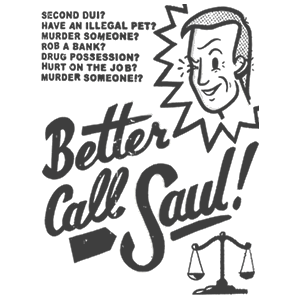
Saul McGill, known almost exclusively by his professional alias Saul Goodman, was a character on the TV show ‘Breaking Bad’ on AMC. He was portrayed by comedian Bob Odenkirk and was created by Peter Gould, a writer of the series. Saul is a criminal lawyer and can be easily found in the yellow pages of Albuquerque.
His made up surname ‘Goodman’ is a play on words to better attract clients: ”S’all good, man!’ becomes ‘Saul Goodman.’ (Additionally, he claims his clients feel more comfortable with a Jewish lawyer instead of a generic white guy.) He is also known for his low-budget commercials in Albuquerque, where he advertises mainly under the tagline ‘Better Call Saul!’
read more »
Posted in Humor, Money, Politics |
1 Comment »
August 25, 2013
A shyster [shahy-ster] is a slang word for someone who acts in a disreputable, unethical, or unscrupulous way, especially in the practice of law, politics or business. The etymology of the word is not generally agreed upon. The Merriam-Webster Dictionary says it is based on the German ‘Scheißer’ (literally ‘defecator’ but also used to refer to deceivers), but the Oxford English Dictionary describes it as ‘of obscure origin,’ possibly deriving from a historical sense of ‘shy’ meaning disreputable. Various false etymologies have suggested an anti-Semitic origin, but there is no proof for that. One source claims that the term originated in Philadelphia in 1843 from a disreputable attorney named ‘Schuster.’
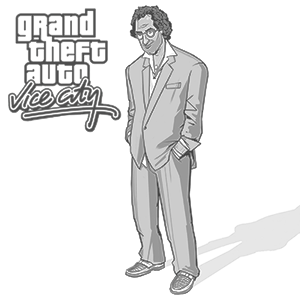
Notable ‘shysters’ of fiction include Sylvester Shyster (a Walt Disney cartoon character introduced in 1930), a disbarred attorney who schemes to deprive Minnie Mouse of her inheritance; and Dave Kleinfeld, a mob lawyer in ‘Carlito’s Way’ (1993) who was parodied in ‘Grand Theft Auto: Vice City’ as Ken Rosenberg.
Posted in Language, Money, Politics |
1 Comment »
August 25, 2013
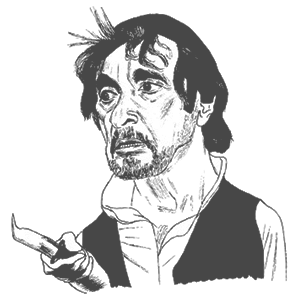
Shylock [shahy-lok] is a fictional Jewish moneylender in Shakespeare’s ‘The Merchant of Venice’ who lends money to his Christian rival, Antonio, setting the security at a pound of Antonio’s flesh. When a bankrupt Antonio defaults on the loan, Shylock demands the pound of flesh as revenge for Antonio having previously insulted and spat on him.
Meanwhile, Shylock’s daughter, Jessica, elopes with Antonio’s friend Lorenzo and becomes a Christian, further fuelling his rage. She also takes money and jewels from Shylock. During Shakespeare’s day, money lending was a fairly common occupation among Jews because usury, charging interest on a loan, was a sin for Christians at the time.
read more »
Posted in Money, Philosophy, Politics |
1 Comment »
August 23, 2013

The Illuminati [ih-loo-muh-nah-tee] (‘enlightened’) was a secret society founded by university professor Adam Weishaupt in 1776, in Upper Bavaria, Germany. The movement consisted of advocates of freethought, secularism, liberalism, republicanism and gender equality, recruited in the German Masonic Lodges (Freemasonry is a fraternal organization that traces its origins to the loose organization of medieval Stonemasonry), who sought to teach rationalism through mystery schools (Western esotericism, which places emphasis on spiritual ‘knowledge’ or Gnosis and the rejection of blind faith).
In 1785, the order was infiltrated, broken up and suppressed by the government agents of Charles Theodore, Elector of Bavaria, in his preemptive campaign to neutralize the threat of secret societies ever becoming hotbeds of conspiracies to overthrow the Bavarian monarchy and its state religion, Roman Catholicism.
read more »
Posted in Philosophy, Politics |
Leave a Comment »
August 19, 2013

‘More popular than Jesus‘ was a controversial remark made by musician John Lennon of the Beatles in 1966: Lennon said that Christianity was in decline and that the Beatles had become more popular than Jesus Christ.
When the quote appeared in the American teen magazine ‘Datebook,’ angry reactions flared up from Christian communities. Lennon had originally made the remark in March 1966 during interviews with Maureen Cleave on the lifestyles of the four individual Beatles. When Lennon’s words were first published, in the ‘London Evening Standard’ in the United Kingdom, they had provoked no public reaction.
read more »
Posted in Language, Philosophy, Politics |
Leave a Comment »
August 17, 2013
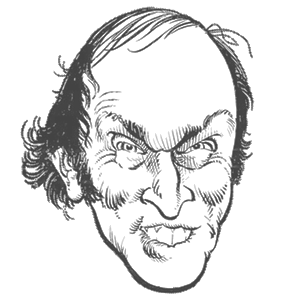
‘Just watch me‘ is a phrase made famous by Canadian Prime Minister Pierre Trudeau on October 13, 1970, during the October Crisis (two kidnappings of government officials by Québécois separatists). The term is still regularly used in Canadian political discussion. Trudeau, who had in previous years been a strong proponent of civil liberties, spoke of the need for drastic action to restore order in Quebec.
When questioned by CBC reporter Tim Ralfe on how far he would go in the suspension of civil liberties to maintain order, Trudeau replied ‘Well, just watch me.’ Three days later he invoked the ‘War Measures Act,’ which led to police action against many Quebec dissidents and great public controversy.
Posted in Language, Politics |
1 Comment »
August 13, 2013
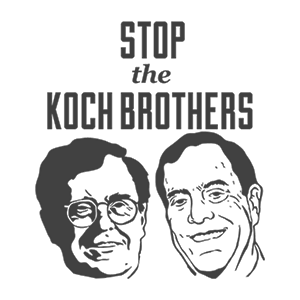
‘Citizen Koch‘ is a 2013 documentary film directed by Tia Lessin and Carl Deal, concerning the political influence of American plutocrats on the political process following the ‘Citizens United’ Supreme Court decision, which granted corporations the ability to anonymously spend unlimited money to influence public policy and elections.
The film focuses on the eponymous Koch brothers, in particular, and their support for Wisconsin governor Scott Walker, who represents the Citizen Koch in the title. The film also chronicles the rise of the Tea Party movement in response to the election of the first African-American President in 2008.
Posted in Money, Politics |
Leave a Comment »
August 8, 2013

Women have been portrayed in comic books since the medium’s beginning, and their portrayals are often the subject of controversy. Sociologists with an interest in gender roles and stereotyping have outlined the role of women as both supporting characters and as potential leaders finding limited success at being accepted as equals.
Another point of study has been the depiction of women in comics, in which, as in other forms of popular culture, body types are unrealistically portrayed.
read more »
Posted in Art, Politics, Sex |
1 Comment »


 The Daily Omnivore